Pilates at Home Best picks
The Best Pilates Balls, Mini and Full Size
Two completely different products share the same name. One is a squishy thing you put between your knees; the other is the big one you sit on. They are not alternatives to each other.
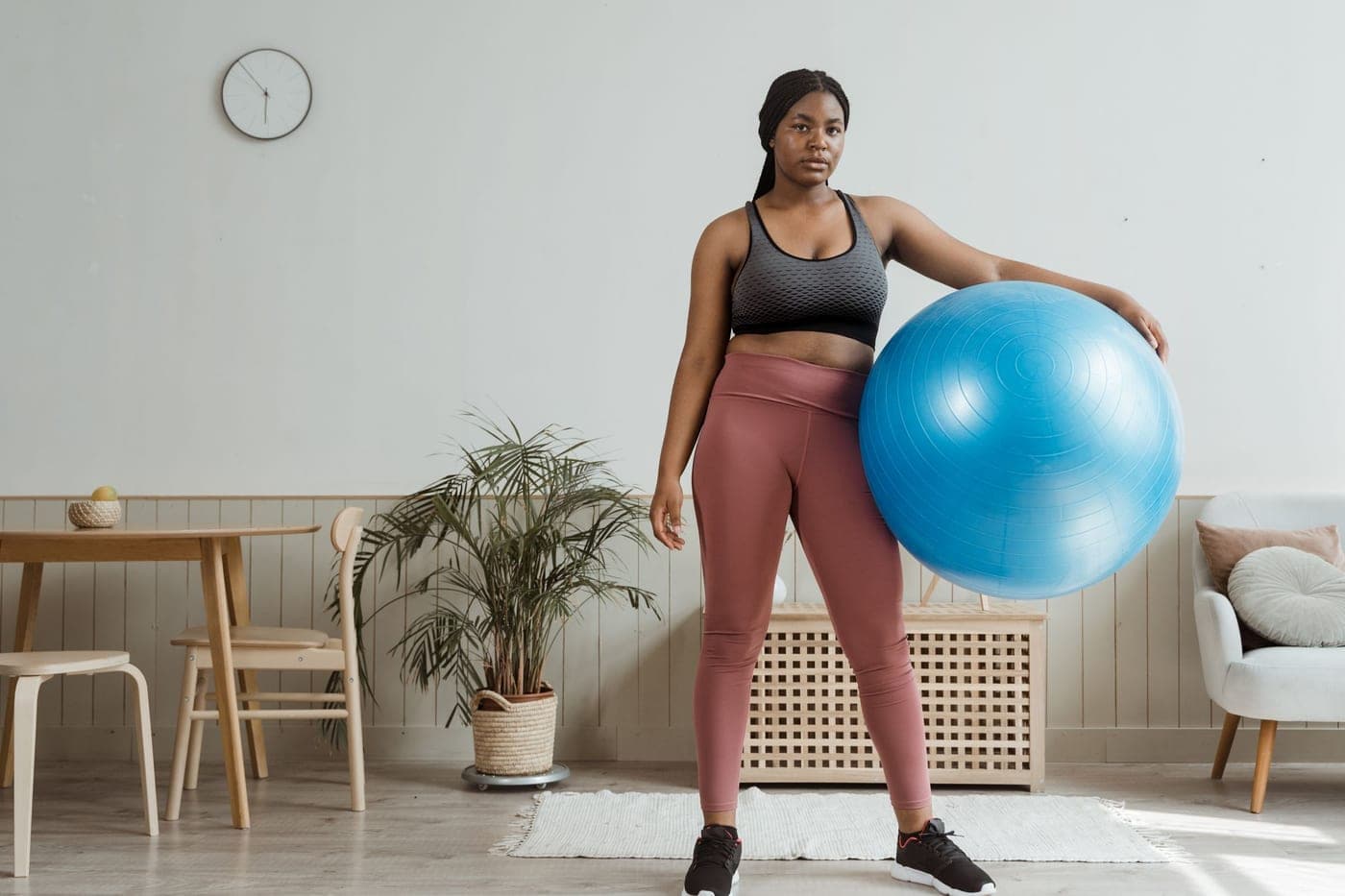
We earn a commission when you buy through links on this page, at no extra cost to you. It never decides a ranking: the method is published. How we are funded
Quick picks
The short answer
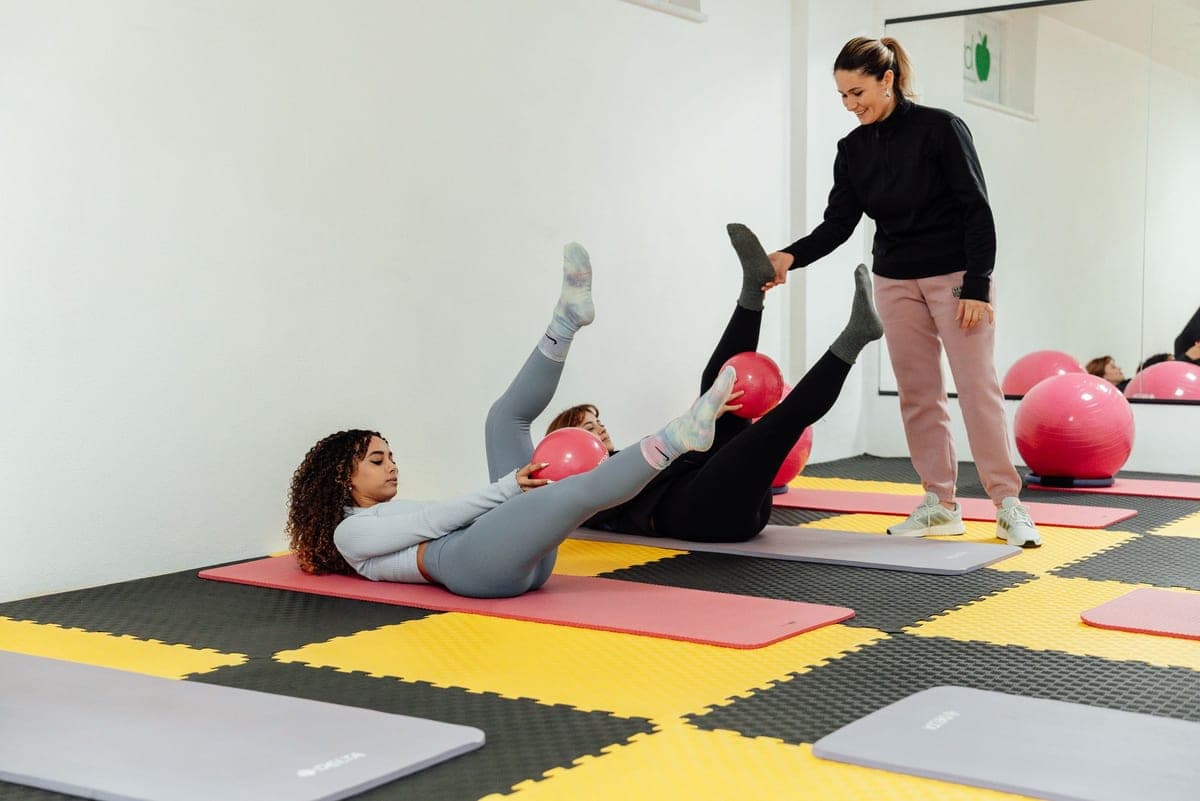
1 · Best ball for most people
Trideer Pilates Ball 9 inNine inches, textured so it does not squirt out from between your knees, and flat in a drawer when you are done. If you buy one ball, buy this shape.
Maker lists diameter: 9 in
2 · Best latex-free mini ball
ProBody Pilates Small Exercise Ball 9 inThe same nine inches, listed by its maker as latex free, from the brand behind the ring and prop kit elsewhere on this site. Check whether your listing includes a pump.
Maker lists diameter: 9 in
3 · Best for choosing a diameter
STOTT PILATES Mini Stability BallThree sizes instead of one, so you can support a short torso or a long one properly. The ball studio instructions are usually written around.
Maker lists diameters: 7.5 in, 10 in and 12 in (sold separately or as a set)
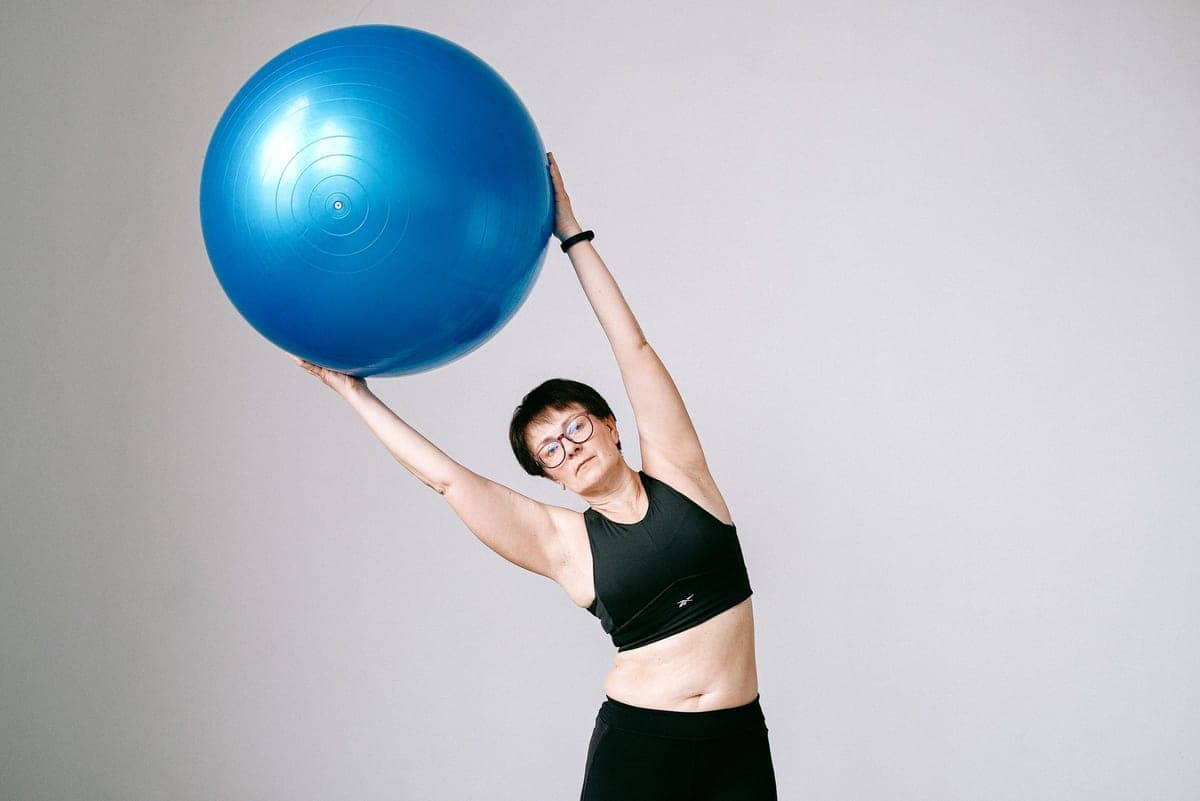
4 · Best full-size ball
TheraBand Pro Series SCP Exercise BallFive color-coded sizes and a slow-deflate wall. If you intend to use a big ball for years rather than for a month, this is the one.
Maker lists sizes: 45, 55, 65, 75 and 85 cm
5 · Best first full-size ball
Trideer Exercise BallA pump in the box and five sizes. Buy it to find out whether a big ball earns its floor space before paying for the clinical version.
Maker lists sizes: 45, 55, 65, 75 and 85 cm
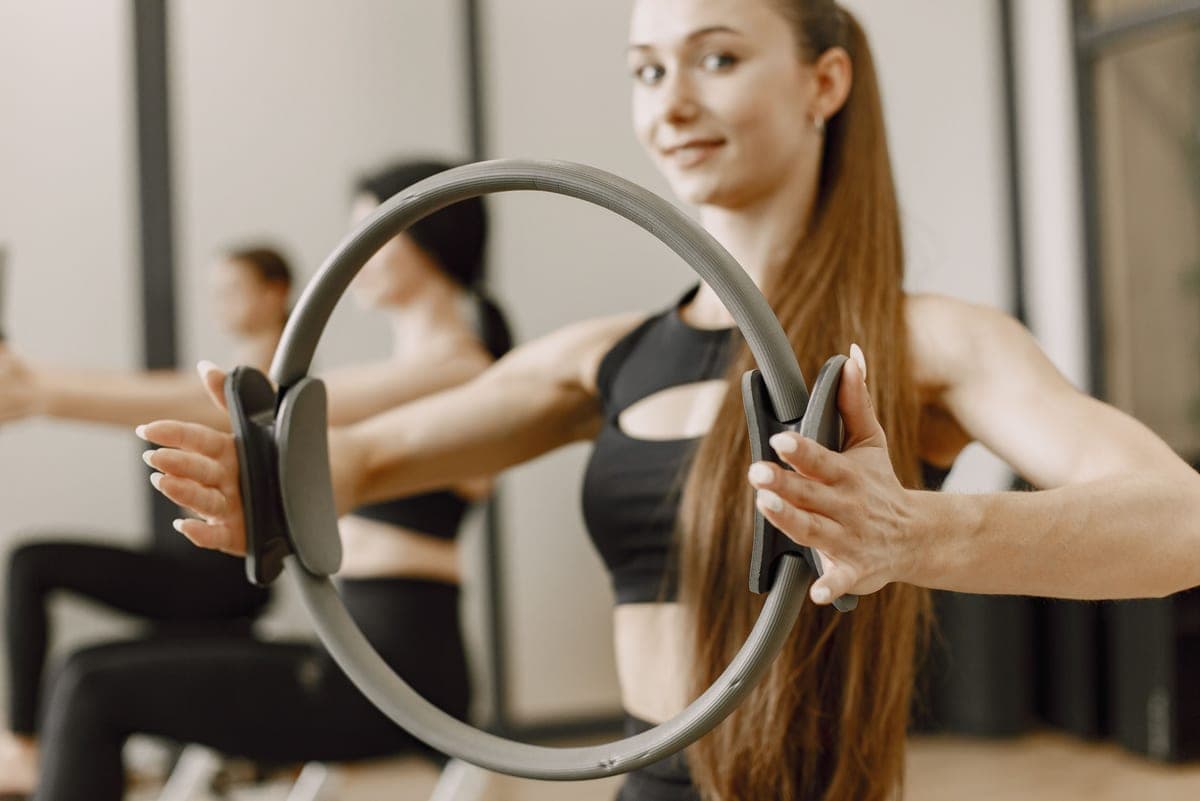
6 · If you want the props together
ProBody Pilates Ring, Ball and Band KitA nine inch ball arrives in this box alongside the ring and the bands, which is most of a beginner mat setup in one purchase.
Maker lists included: 14 in ring, 9 in ball, resistance bands, pump and bag
#ad · Prices are set by Amazon and change often, so we do not print them. Figures here are the manufacturer's own. The ranking is editorial, made against the criteria on our How We Pick page, not from lab work. Photos are stock. Tap a pick for the full write-up.
The short answer
Buy a nine inch mini ball. That is the ball pilates instructions mean nine times out of ten, it costs less than a single class, it stores flat, and it makes a long list of ordinary mat exercises noticeably harder or noticeably kinder depending on where you put it.
A full-size stability ball — the 55 to 75 cm one you sit on — is a genuinely useful piece of equipment and a completely different purchase. It is bulky, it never fully disappears from a room, and nothing it does overlaps with what a mini ball does. Buy one deliberately, not as an upgrade.
Two products, one name
Search for a pilates ball and you will be shown both, side by side, at similar prices, with the same photos of someone smiling on a mat. They are not variants of one product. They are two tools that happen to be round and inflatable.
| Mini ball | Full-size stability ball | |
|---|---|---|
| Typical size | 7.5 to 12 in | 45 to 85 cm |
| Where it goes | Between knees, under the lower back, between the hands | Under your back, under your feet, or you sit on it |
| What it adds | Feedback and a small amount of resistance | Instability, and support for a large body part |
| Storage | Deflates flat into a drawer | Lives in the corner of a room |
| Published burst ratings | Usually a few hundred pounds | Commonly 600 lb and up |
The practical consequence: if you are reading a mat pilates sequence and it says “place the ball between your knees,” it means the small one. If it says “sit on the ball,” it means the big one. A surprising number of first purchases are the wrong object for the class the buyer is following.
What a mini ball does
Two separate jobs, and it is worth knowing which one you are buying it for, because they pull in opposite directions.
As resistance. Squeezed between the knees or the ankles during bridges, leg lowers or the hundred, it recruits the inner thighs and gives the whole exercise something to organize around. This is the same idea as a pilates ring, with much less force: the ball gives, the ring pushes back hard. For someone whose knees dislike a firm ring, the ball is the gentler way to get the same cue.
As support. Placed under the lower back, the sacrum or between the shoulder blades, a part-inflated ball holds a joint in a position the floor cannot. This is the use that physical therapy settings care about, and it is the reason mini balls are sold in several diameters: how far you want to be lifted off the floor is personal.
The second job is the one people underrate. A ball under the sacrum turns a bridge into a supported stretch; a ball between the shoulder blades opens a chest that has been at a desk all day. Neither of those is harder work. Both are reasons to own one.
A ball also does something a ring cannot: it rolls. Spine articulation drills where you roll the ball away along the floor with your hands, or balance work where your foot rests on an unstable surface, need a ball specifically.
What a full-size ball does
Three things, all of which need the floor space.
- Instability under a big body part. A plank with your shins on the ball, or a bridge with your heels on it, is a different exercise from the floor version because the surface moves.
- Support for stretches you cannot otherwise reach. Lying backward over a ball supports the whole spine through an extension that most people cannot find unsupported.
- Sitting. Not a workout, but a real use — many people buy the big ball for a desk or for late pregnancy and never do a pilates exercise on it.
If none of those three is why you are shopping, you want the small one. A full-size ball has no mat-pilates exercise it is required for, which is why the beginner lists on this site — including what you need for pilates at home — don’t put one in the starter kit.
What size to buy
Mini balls are sized by what you want from them, not by your height.
| Mini diameter | Best at | Trade-off |
|---|---|---|
| 7.5 in | Precise placement under the sacrum or between the shoulder blades | Too small to squeeze comfortably between the knees |
| 9 in | Almost everything, and the size instructions assume | A compromise at both extremes |
| 10-12 in | Knee squeezes for taller people, bigger supported stretches | Takes up more of the gap it is meant to fill |
Full-size balls are sized by your height, and the rule is that your hips should sit level with or very slightly above your knees when you sit on an inflated ball with your feet flat.
| Your height | Ball size |
|---|---|
| Under 5 ft | 45 cm |
| 5 ft to 5 ft 6 in | 55 cm |
| 5 ft 7 in to 6 ft 1 in | 65 cm |
| Over 6 ft 1 in | 75 cm |
Those bands follow the sizing TheraBand publishes for its own color-coded balls, and the other makers here use close to the same ranges. If you are between two sizes, go up: an under-inflated large ball behaves far better than an over-inflated small one.
How much air to put in
This is the decision that makes the most difference, and almost nobody makes it on purpose.
A mini ball should be soft. Inflate it to roughly two-thirds and stop. Firm enough to hold shape, soft enough that it deforms around a knee or a spine. Blown up hard, it becomes a slippery sphere that shoots out from between your legs and presses uncomfortably into anything bony. Nearly every complaint about mini balls is a complaint about an over-inflated one.
A full-size ball should be firm but not drum-tight. Inflate it in two stages: most of the way, leave it a day to let the PVC stretch, then top it up. Makers specify a diameter rather than a pressure, so measure the height of the ball against a wall mark rather than guessing.
Both kinds lose air gradually. That is normal, not a fault, and it is why a pump in the box is worth more than it sounds.
In detail
Every pick, in full
1
Stock photoBest ball for most people
Trideer Pilates Ball 9 in
As the manufacturer lists it · Trideer
What it gets right
- Textured skin grips bare legs instead of squirting out
- Inflates in seconds and holds its air between sessions
- Deflates flat, so it lives in a drawer rather than a corner
What it does not
- One diameter only — no 7 in or 12 in option
- Straw inflation rather than a pump, so the first fill is fiddly
- Published anti-burst figures for mini balls are far below full-size balls; this is not a seat
Skip it if
you want a ball big enough to sit on, which is a different product entirely.
#ad · Price set by Amazon · Affiliate disclosure for the link to Trideer Pilates Ball 9 in
2
Stock photoBest latex-free mini ball
ProBody Pilates Small Exercise Ball 9 in
As the manufacturer lists it · ProBody Pilates
What it gets right
- Latex free, which matters if rubber props bother your skin
- Widely stocked in several colors, so it is easy to actually buy
- Matches the ring and prop kit from the same maker
What it does not
- Some listings include a pump and some do not — check before ordering
- Colors and packaging vary between sellers
- Does nothing the Trideer does not also do
Skip it if
you want a firmer, studio-grade ball built to survive a decade of weekly use.
#ad · Price set by Amazon · Affiliate disclosure for the link to ProBody Pilates Small Exercise Ball 9 in
3
Stock photoBest for choosing a diameter
STOTT PILATES Mini Stability Ball
As the manufacturer lists it · Merrithew
What it gets right
- Three diameters, so a short torso and a tall one are both supported
- Hypoallergenic and phthalate free, per the maker
- The ball most studio exercise instructions are written around
What it does not
- Lowest published anti-burst figure of any ball here
- Several times what an identical-looking mini ball costs
- Amazon stock comes and goes; the maker's own shop is the reliable source
Skip it if
you want one ball and the standard nine inches already suits you.
#ad · Price set by Amazon · Affiliate disclosure for the link to STOTT PILATES Mini Stability Ball
4
Stock photoBest full-size ball
TheraBand Pro Series SCP Exercise Ball
As the manufacturer lists it · TheraBand
What it gets right
- Slow-deflate construction instead of a sudden burst
- Five sizes, so it fits your height rather than nearly fitting
- Ridged, textured surface that does not slide on a hard floor
What it does not
- Costs several times what the cheapest full-size balls cost
- No pump in the box, only an inflation adapter
- Too big to do any of the jobs a mini ball does
Skip it if
you have nowhere to keep something the size of an armchair cushion.
#ad · Price set by Amazon · Affiliate disclosure for the link to TheraBand Pro Series SCP Exercise Ball
5
Stock photoBest first full-size ball
Trideer Exercise Ball
As the manufacturer lists it · Trideer
What it gets right
- A pump is included, which the professional ball here does not do
- Five sizes with a height guide on the maker's own listing
- Deflates slowly if punctured, per the maker
What it does not
- Capacity claims at this end of the market are the maker's own and unverified
- Sold under many near-identical listings, so check the size you are adding to the cart
- The bulkiest thing to store in this whole hub
Skip it if
you want the clinical build and documented slow-deflate wall of a professional ball.
#ad · Price set by Amazon · Affiliate disclosure for the link to Trideer Exercise Ball
6
Stock photoIf you want the props together
ProBody Pilates Ring, Ball and Band Kit
As the manufacturer lists it
What it gets right
- Covers nearly every prop a beginner mat class calls for
- Cheaper than buying the pieces separately
- Everything fits in the supplied bag
What it does not
- Individual pieces are budget-grade
- Bands are the first thing you will replace
- You may only ever use two of the four items
Skip it if
you already own bands and only want a ring.
#ad · Price set by Amazon · Affiliate disclosure for the link to ProBody Pilates Ring, Ball and Band Kit
What to look for
- A published burst or capacity figure, and the word anti-burst. It means the wall is built to deflate slowly through a puncture rather than fail all at once. Every ball on this page states one; plenty of listings state nothing at all, and those are the ones to pass over.
- A surface with some texture. Glossy balls slide — out from between your knees on the small ones, across a hard floor on the big ones. Ridges or a matte finish are worth more than they look.
- A pump, or your own. A straw inflator is fine for a mini ball and miserable for a 65 cm one. If the full-size ball you want doesn’t include a pump, budget for one.
- Latex-free labeling if you need it. Mini balls are usually PVC, which is latex free, but resistance bands sold in the same kits often are not. If latex is a problem for you, read the kit contents rather than the headline.
- The right diameter, stated in the listing. “Mini” is not a size. Nine inches is the default; anything else should be a decision you made.
The mistakes people make
Buying the big one first. It photographs better and it is the one most new buyers reach for, but the small ball is the one that appears in mat classes. If your budget is one ball, the mini is the one that gets used.
Inflating to the maximum. Covered above, and worth repeating because it is the single difference between a ball you keep and a ball that annoys you.
Buying a ball when a ring is what the class wants. They look interchangeable and are not. The ring gives firm, consistent resistance; the ball gives feedback and support. The ring page sets out which exercises call for which, and the beginner pilates kit puts both in order against everything else.
Forgetting the floor underneath. Ball work puts your spine and sacrum on the ground for long stretches, and a thin mat makes all of it less pleasant. The mats for pilates page covers why a denser mat matters more here than it does for yoga.
How we picked
Chosen on published criteria, and we say so
Most gear sites open by telling you how many hours they spent with the products. We have not used most of these, and we would rather say so than imply otherwise. Every pick here is chosen against criteria we publish — grip, cushioning, size options, what buyers report after a year of use, and whether the thing is still actually sold — and every manufacturer figure on the page is labeled as the maker's claim.
Nobody pays for a place on this page, no product was supplied free in exchange for coverage, and a specification the maker does not publish is never guessed at. See the full criteria and weighting.
FAQ
Questions people ask
Is a pilates ball the same as a yoga ball?
What size pilates ball do I need?
How much should I inflate a mini pilates ball?
Do I need a pilates ball if I already have a ring?
Are exercise balls safe to sit on?
Related
Keep reading
Update log
What changed
- First published.
Receipts
Sources
- 1.Pilates Collective Club — Best Pilates Ball
- 2.Yahoo Life — The best exercise balls
- 3.THERABAND — exercise balls and product specifications
- 4.Trideer — exercise and Pilates balls
- 5.ProBody Pilates — mini exercise balls
- 6.Merrithew — Mini Stability Ball (sizes and specifications)
- 7.NCCIH (US National Institutes of Health) — Yoga: What You Need To Know
We have not used every product on this page, and we do not pretend otherwise. Thicknesses, materials, sizes and warranty terms are the manufacturer's published figures, shown as their claims. Anything about materials, skin or injury is linked to a source. Prices are set by Amazon and change constantly, so we never print one. Read the full method.