Yoga Mats Guide
How Thick Should a Yoga Mat Be?
Thicker is kinder to your knees and worse for your balance. The whole decision is choosing where on that line you want to sit.
We earn a commission when you buy through links on this page, at no extra cost to you. It never decides a ranking: the method is published. How we are funded
The short answer
Most people should buy a 5 to 6 mm mat. It is enough padding to kneel without discomfort and still firm enough to balance on one leg. Go thicker only if joints are the limiting factor; go thinner if you practice on carpet or need to pack the mat.
Every thickness, in a table
| Thickness | Best for | What it costs you |
|---|---|---|
| 1.5-2 mm | Travel; folding into a bag | All cushioning. Unpleasant on a hard floor |
| 3-4 mm | Carpet; standing-heavy practice; stability | Kneeling gets uncomfortable on wood or tile |
| 5-6 mm | Almost everyone. The default | Very little. This is the compromise band |
| 8 mm | Sensitive knees, lots of floor work | Standing balance gets noticeably harder |
| 10-12 mm | Floor exercise, stretching, joint pain | Balance is genuinely difficult. Not really a yoga mat |
The band you want is decided by one question: do your knees hurt more than your balance wobbles? If knees, go up. If balance, go down. If neither, stay at 5 to 6.
Density matters as much as thickness
Two mats can both say 6 mm and feel completely different, and this is the thing thickness numbers hide. A dense 6 mm mat compresses a little under a knee and then holds; a soft 6 mm mat keeps giving until your kneecap is effectively on the floor.
So a dense 6 mm mat is frequently more comfortable to kneel on than a soft 8 mm one, while also being more stable to stand on. Density is the free win in this decision, and it is why premium mats feel thicker than their number suggests. We compare two nominally identical mats in Manduka PRO versus Gaiam Premium, and the difference is almost entirely density.
How to judge it without holding the mat: dense mats are heavier for the same size, and they are usually PVC or rubber rather than foam. The cheapest thick mats are almost always low-density foam.
The picks
One mat per thickness band
 Stock photo
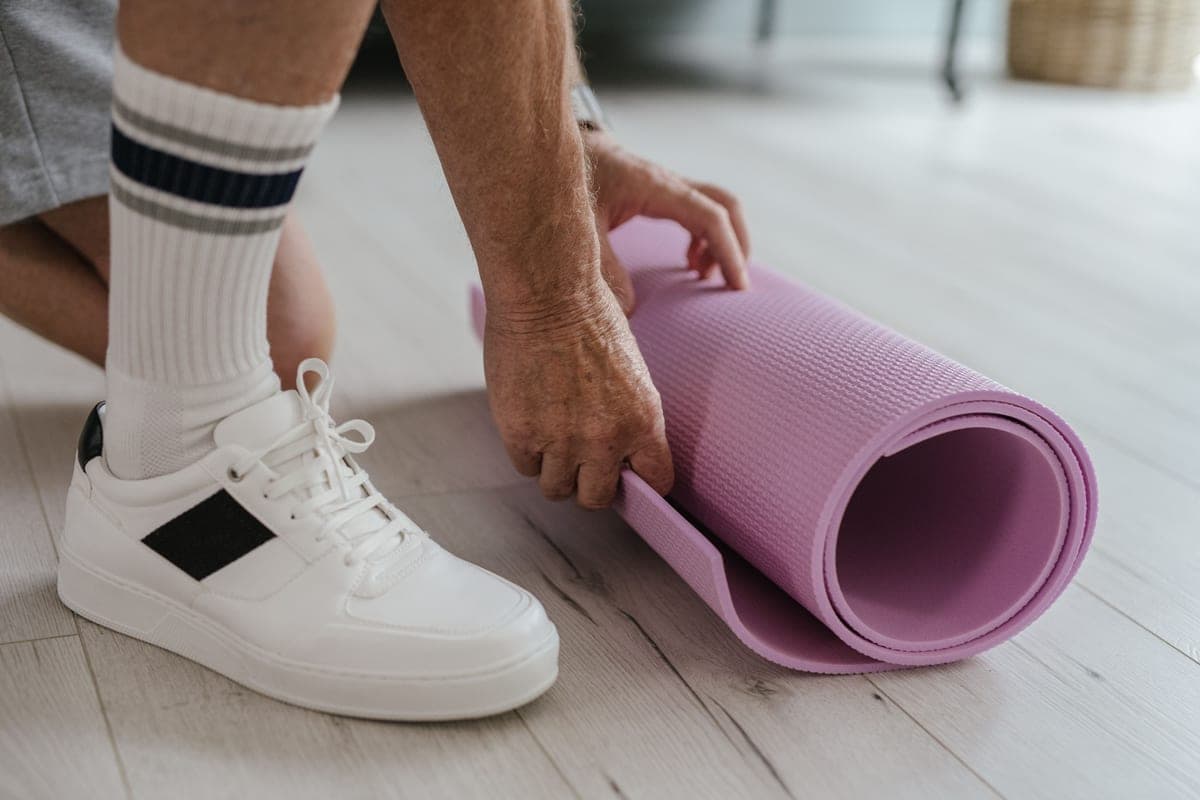
A first mat
Gaiam Premium 6mm Yoga Mat
The default first mat. Enough cushion for a beginner, a printed design you will not hate, and a price that makes quitting after a month painless.
Check price on Amazon#ad · Price set by Amazon · Affiliate disclosure for the link to Gaiam Premium 6mm Yoga Mat
 Stock photo
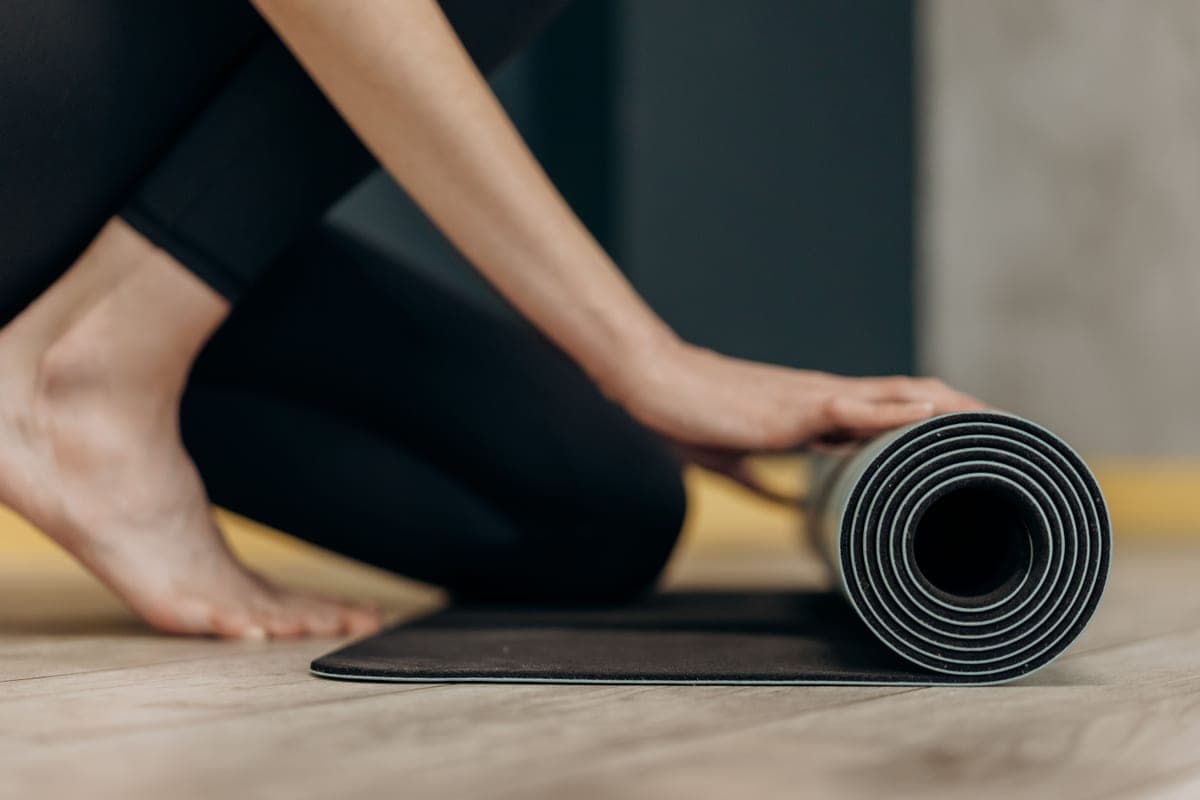
Sensitive knees and wrists
Manduka PRO 6mm
The most cushioned mat most people will ever need, and the one that outlives every other mat in this list. It is also heavy, and it is slippery until you break it in.
Check price on Amazon#ad · Price set by Amazon · Affiliate disclosure for the link to Manduka PRO 6mm
 Stock photo
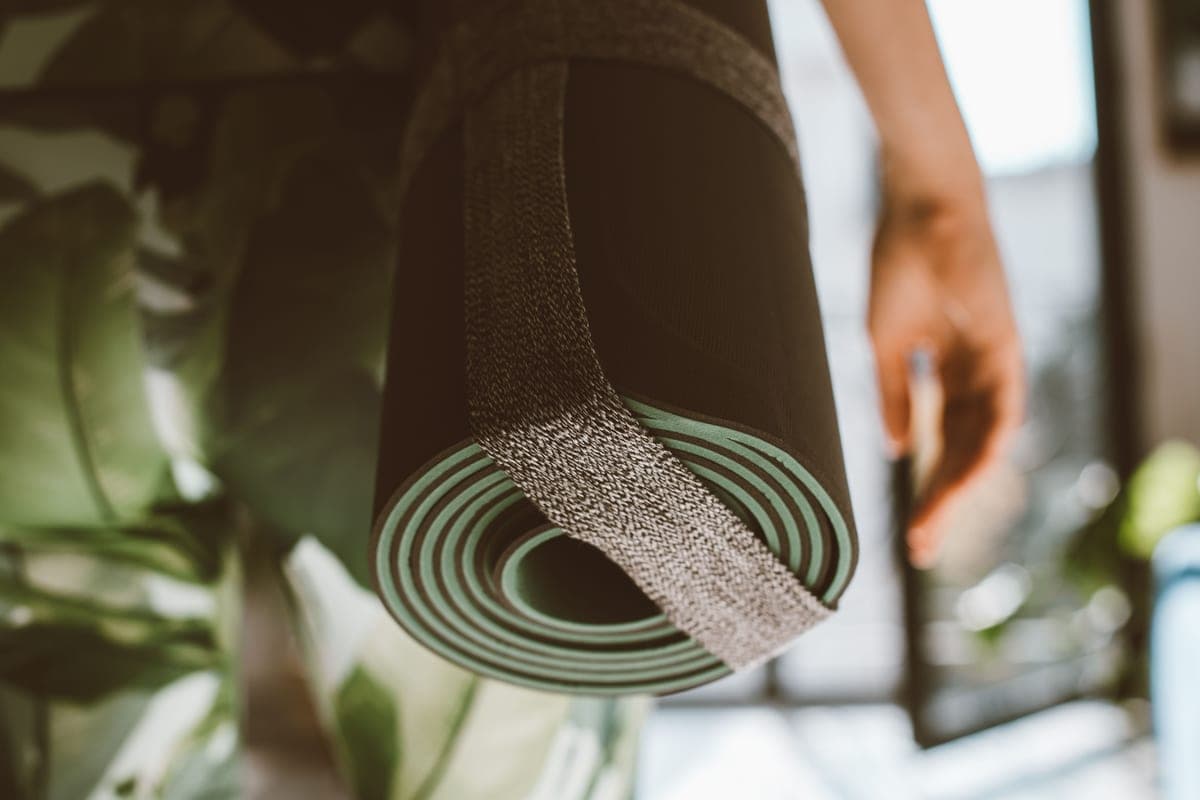
Folding into a carry-on
Manduka eKO Superlite 1.5mm
A folding travel mat that packs to about the size of a sweater and grips properly. There is no cushion at all, which is the point.
Check price on Amazon#ad · Price set by Amazon · Affiliate disclosure for the link to Manduka eKO Superlite 1.5mm
The two exceptions
Carpet
On carpet the whole scale shifts down. The carpet supplies the cushioning, so a 3 to 5 mm dense mat is right, and adding thickness on top produces two soft layers and no stability. Full detail in mats for carpet and practicing on carpet.
Pilates
Mat pilates wants firm more than it wants thick, because rolling along a soft surface removes the feedback the exercises depend on. 5 to 6 mm dense is the band, and anything above 8 mm is working against you — see mats for pilates.
And one non-exception
Height does not change the thickness you want. It changes the length — see the size guide — and those two get confused surprisingly often.
How to judge thickness without holding the mat
You are almost always buying online, which means you are choosing a number rather than a feel. Four things tell you more than the number does.
- Weight for the size. The single best proxy for density. Two 6 mm mats where one weighs half what the other does are not comparable objects: the heavy one is dense rubber or PVC, the light one is foam, and they will behave completely differently under a knee.
- The material. Foam and TPE are soft for their thickness; natural rubber and dense PVC are firm for theirs. If a listing only gives you a millimeter figure, the material tells you the rest — the materials guide has the whole picture.
- Fractions of an inch, translated. Budget mats are usually specified in inches and the numbers sound smaller than they are. 1/8 in is about 3 mm, 1/4 in about 6 mm, and 1/2 in about 12.7 mm — which is a floor-exercise mat rather than a yoga mat, however it is described.
- What buyers say about the knee, not the thickness. Reviews that mention kneeling comfort are worth ten that mention how thick it looks in the photograph.
And a note on what wears out: thickness is not permanent. Soft foam compresses permanently where your knees, hands and hips land, so a 10 mm foam mat after a year of regular use is thinner in exactly the places you bought the thickness for. Dense mats hold their loft for years, which is most of why they cost more.
How we picked
Chosen on published criteria, and we say so
Most gear sites open by telling you how many hours they spent with the products. We have not used most of these, and we would rather say so than imply otherwise. Every pick here is chosen against criteria we publish — grip, cushioning, size options, what buyers report after a year of use, and whether the thing is still actually sold — and every manufacturer figure on the page is labeled as the maker's claim.
Nobody pays for a place on this page, no product was supplied free in exchange for coverage, and a specification the maker does not publish is never guessed at. See the full criteria and weighting.
FAQ
Questions people ask
How thick should a yoga mat be for beginners?
How thick should a yoga mat be for bad knees?
How thick should a yoga mat be for pilates?
Is a 10 mm yoga mat too thick?
How wide should a yoga mat be?
Does a thicker mat protect my wrists?
Related
Keep reading
Update log
What changed
- First published.
Receipts
Sources
- 1.OutdoorGearLab — The Best Yoga Mats
- 2.Healthline — The Best Workout Mats
- 3.Reviewed — The Best Yoga Mats
- 4.Manduka — product information
We have not used every product on this page, and we do not pretend otherwise. Thicknesses, materials, sizes and warranty terms are the manufacturer's published figures, shown as their claims. Anything about materials, skin or injury is linked to a source. Prices are set by Amazon and change constantly, so we never print one. Read the full method.