Start Here Guide
Do You Need a Yoga Mat If You Have Carpet?
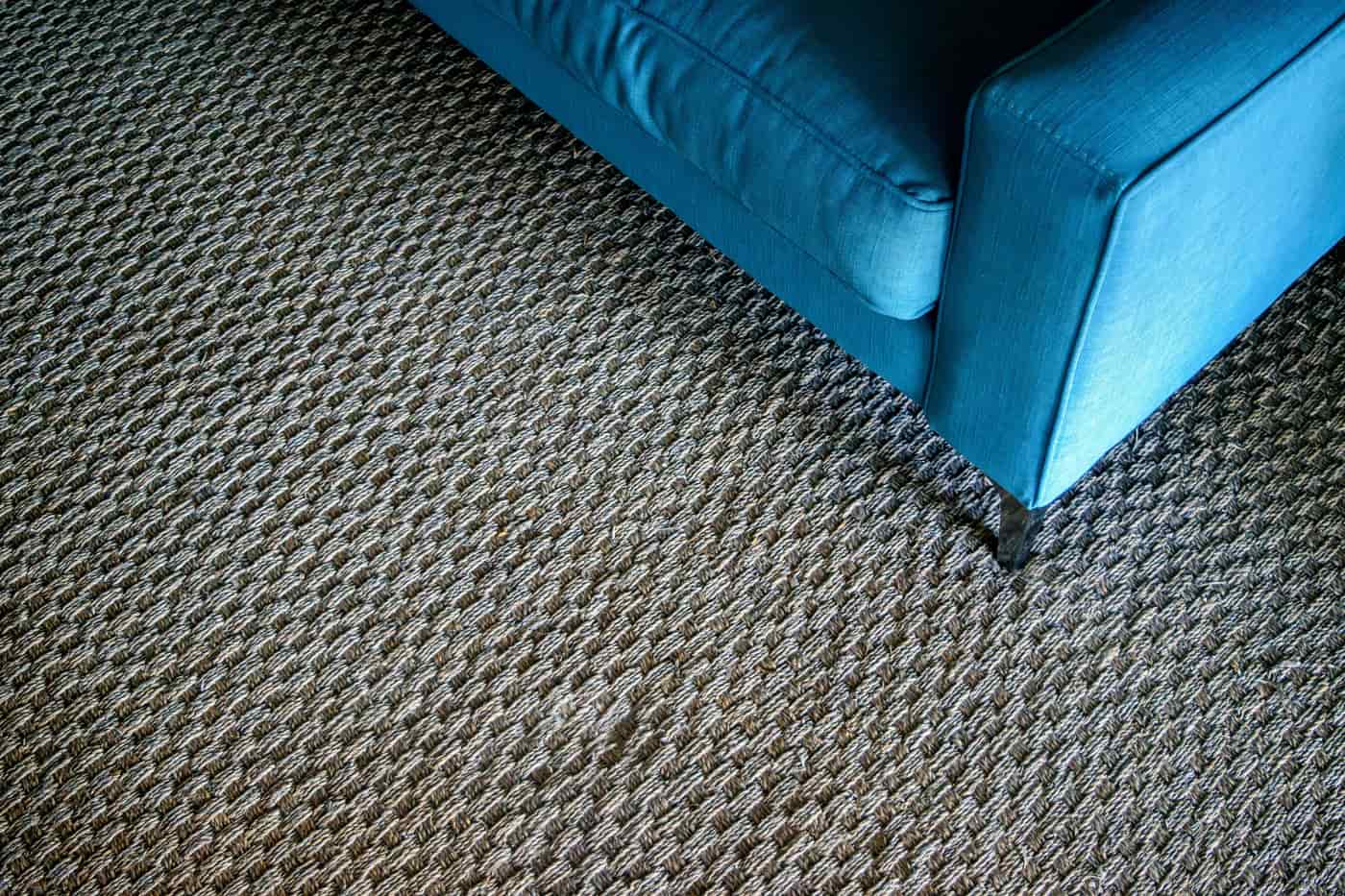
Carpet solves the cushioning problem and creates a different one. The fix is a thinner, grippier mat than you would otherwise buy.
We earn a commission when you buy through links on this page, at no extra cost to you. It never decides a ranking: the method is published. How we are funded
The short answer
Yes, you still need a mat — but a thinner and grippier one than you would buy for a hard floor. Carpet already provides the cushioning. What it cannot provide is a stable, non-slip surface, and hands and feet slide on pile in exactly the poses where sliding is worst.
The instinct is to think carpet plus a thick mat equals extra comfort. In practice it equals a soft stack that shifts under you, and standing balances become genuinely difficult. Thinner is better here, which is the opposite of the usual advice.
What carpet actually changes
It removes the cushioning problem
The main reason people buy a thick mat is kneeling on a hard floor. On carpet, that reason mostly evaporates. A 4 to 5 mm mat over carpet is more comfortable underfoot than a 6 mm mat over tile, which frees you to choose a mat for grip instead of padding. The thickness guide has the full range.
It creates a stability problem
Every soft layer between your foot and something solid makes balancing harder, and carpet is already one such layer. Add a squishy mat on top and a simple standing pose starts to feel like standing on a mattress. A dense mat spreads your weight rather than sinking, which is why the picks below skew firm.
It lets the mat move
On a hard floor a rubber-backed mat grips the floor and stays put. On pile there is nothing to grip, so the mat creeps forward as you move through a flow. Denser, heavier mats creep less. So do mats with a textured rather than smooth underside.
It holds everything
Dust, hair and sweat all end up in the pile rather than on a surface you can wipe. This is a genuine hygiene point, and it is the strongest argument for a mat even if you find the cushioning fine without one.
The picks
Mats that work on carpet
 Stock photo
The PRO without the weight
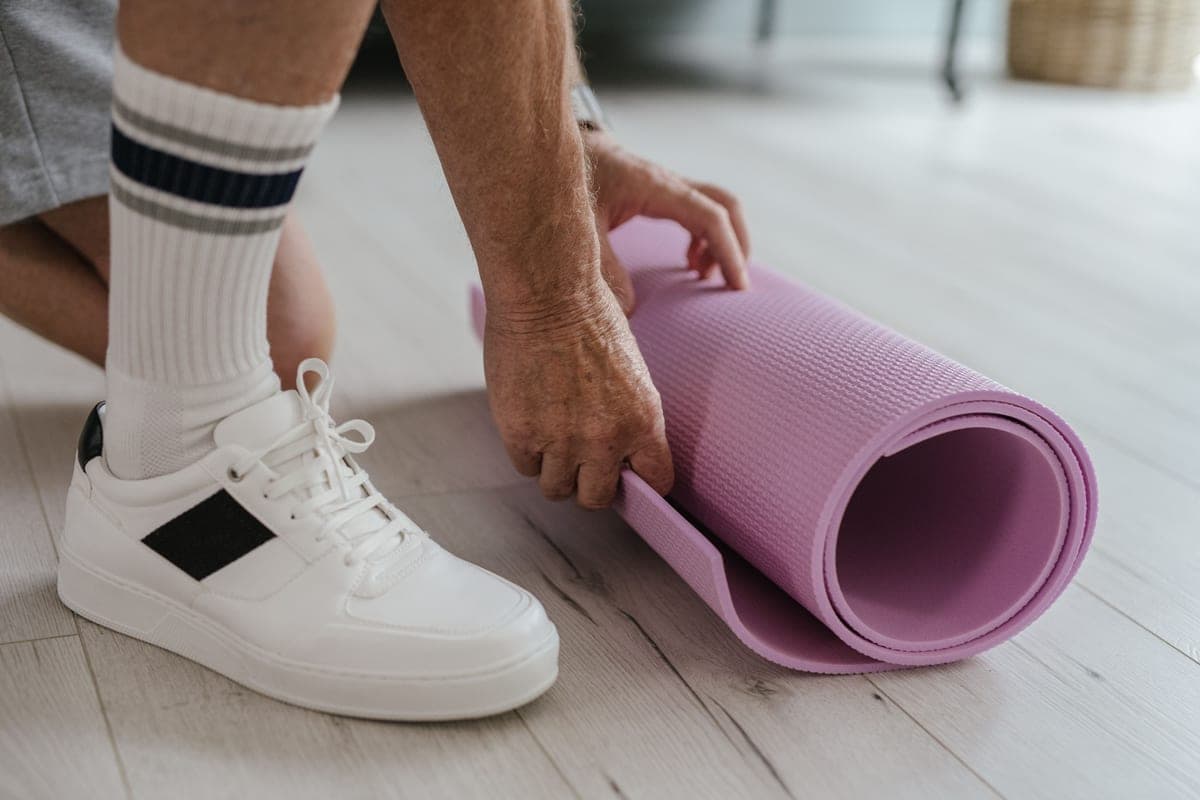
Manduka PROlite 4.7mm
The PRO with about a third of the weight taken out. You lose some cushion and keep the durability, which is the right trade for most people who ever move their mat.
Check price on Amazon#ad · Price set by Amazon · Affiliate disclosure for the link to Manduka PROlite 4.7mm
 Stock photo
The grippiest dry surface
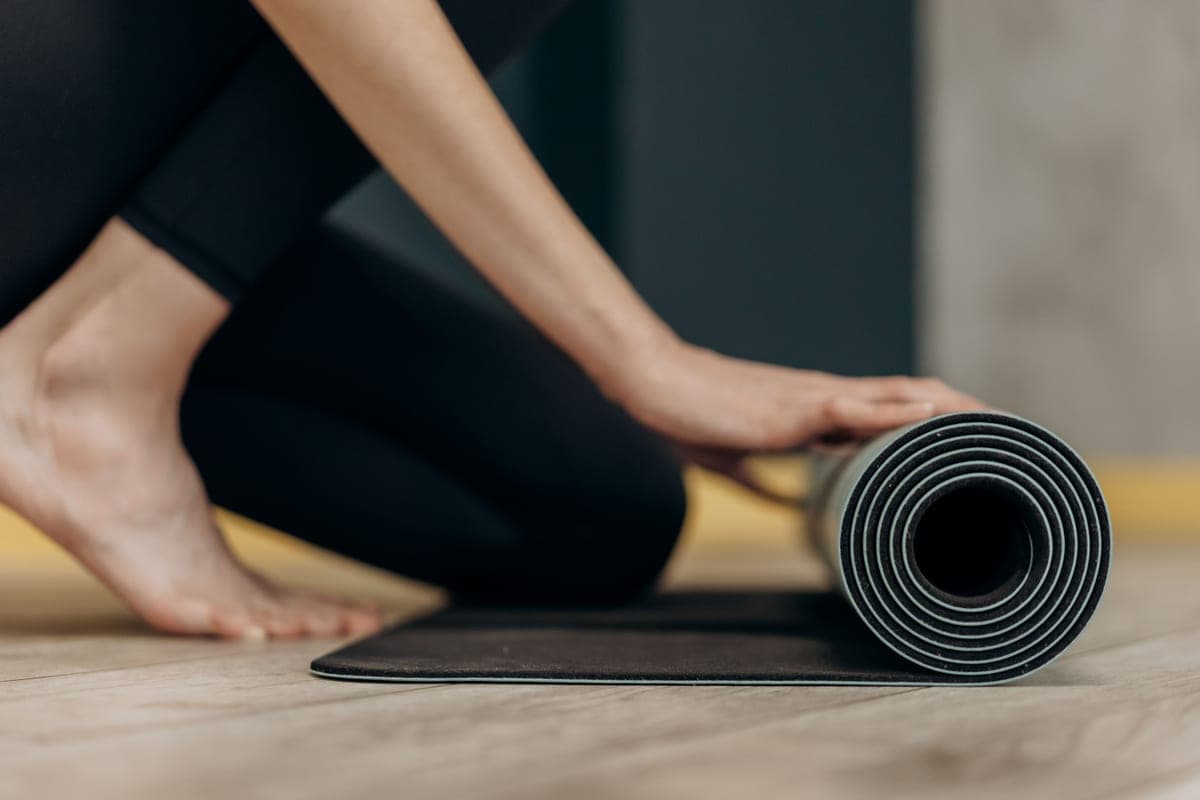
JadeYoga Harmony Mat
Open-cell natural rubber with the stickiest dry grip here. It drinks sweat rather than shedding it, so it needs proper airing and eventually wears out.
Check price on Amazon#ad · Price set by Amazon · Affiliate disclosure for the link to JadeYoga Harmony Mat
- Stock photo
Mat pilates and floor work
Manduka X Mat 5mm
Built for the kind of floor work pilates and cross-training actually involve: dense, stable, easy to wipe. It is a worse pure-yoga mat than the PRO and a better mat-pilates one.
Check price on Amazon#ad · Price set by Amazon · Affiliate disclosure for the link to Manduka X Mat 5mm
Practicing on bare carpet
Plenty of people start this way and it is a perfectly reasonable few weeks. It is worth knowing what you are trading.
What works. Anything seated, lying or kneeling. Carpet is more forgiving under a knee than almost any mat, and for a gentle floor-based practice you will not miss anything at all.
What does not. Anything that loads your hands. In downward dog or plank your palms push backwards against the pile and slide, which puts the load onto your wrists and shoulders at an angle they do not want it. The same applies to your feet in a lunge: the front foot creeps forward and the stance opens out without you noticing.
What nobody mentions. Carpet takes the sweat. A mat gets wiped; a carpet absorbs it into the pile, and after a few months of regular practice in the same spot that becomes noticeable. If you are going to practice on bare carpet for a while, put a towel down and wash it.
The short version: bare carpet is fine for a stretching habit and wrong for a yoga habit. If you are doing anything with weight through your hands, a mat is not optional.
Thick pile, thin pile and rugs
Not all carpet behaves the same, and the depth of the pile changes which mat you want more than the price of the mat does.
| Surface | What to buy | What to expect |
|---|---|---|
| Low-pile or commercial carpet | A dense 4-5 mm mat | Behaves almost like a hard floor. The easy case |
| Medium household pile | A dense 3-5 mm mat, the heavier the better | It will creep forward in a flow; a heavier mat creeps less |
| Deep or shag pile | The densest mat you can find | Standing balances stay genuinely hard. Consider a different room |
| A flat rug over floorboards | Treat it as a hard floor | Watch the rug sliding on the floor, not the mat on the rug |
| A thick rug over carpet | Practice somewhere else | Three soft layers. Nothing fixes this |
On deep pile there is a limit to what any mat can do, and it is worth being honest about that rather than buying three mats looking for the one that solves it. If there is another room with a hard floor and enough space, that room is the answer — setting up a practice space covers how to find it, and it is usually somewhere you have not thought of.
One last thing specific to carpet: check what is underneath before you do anything with impact. Carpet over concrete is a very different surface from carpet over floorboards, and the two feel identical right up until you kneel on them.
How we picked
Chosen on published criteria, and we say so
Most gear sites open by telling you how many hours they spent with the products. We have not used most of these, and we would rather say so than imply otherwise. Every pick here is chosen against criteria we publish — grip, cushioning, size options, what buyers report after a year of use, and whether the thing is still actually sold — and every manufacturer figure on the page is labeled as the maker's claim.
Nobody pays for a place on this page, no product was supplied free in exchange for coverage, and a specification the maker does not publish is never guessed at. See the full criteria and weighting.
FAQ
Questions people ask
Can I do yoga on carpet without a mat?
What thickness of yoga mat is best on carpet?
Why does my mat slide on carpet?
Is a rug better than carpet for yoga?
Related
Keep reading
- Best yoga mats for carpetThe full ranked list for practicing on pile.
- How thick should a mat be?Every thickness band with the trade-off named.
- Setting up a home practice spaceWhere the mat lives, and why that decides whether you use it.
- Why is my mat slippery?Causes in order of likelihood, and what fixes each.
Update log
What changed
- First published.
Receipts
Sources
- 1.OutdoorGearLab — The Best Yoga Mats
- 2.Healthline — The Best Workout Mats
- 3.Manduka — product information
- 4.JadeYoga — product information
We have not used every product on this page, and we do not pretend otherwise. Thicknesses, materials, sizes and warranty terms are the manufacturer's published figures, shown as their claims. Anything about materials, skin or injury is linked to a source. Prices are set by Amazon and change constantly, so we never print one. Read the full method.