Start Here Guide
Setting Up a Home Practice Space in a Normal-Sized Room
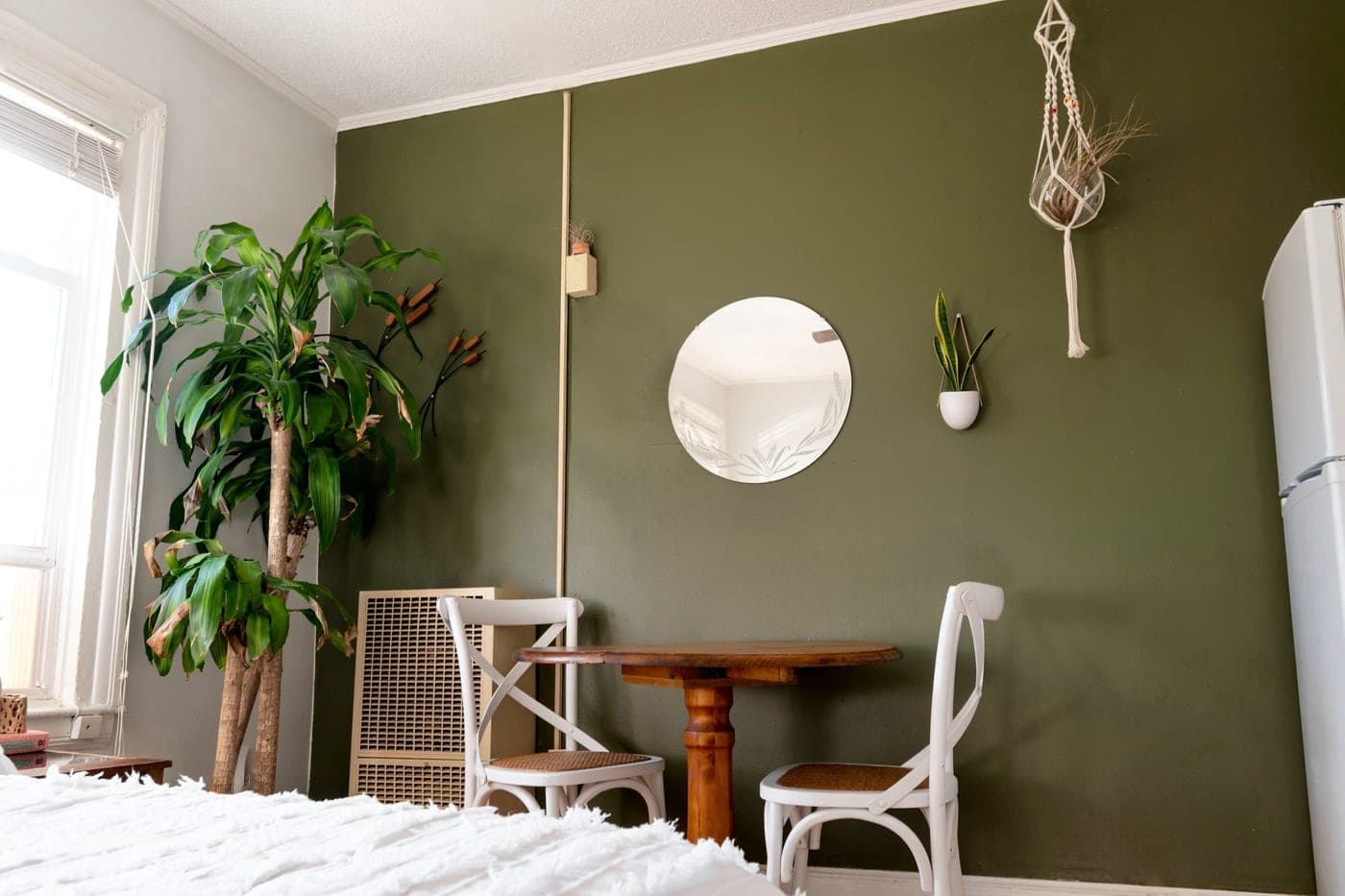
The space matters less than the friction. A corner you can use in thirty seconds beats a beautiful studio you have to build every time.
We earn a commission when you buy through links on this page, at no extra cost to you. It never decides a ranking: the method is published. How we are funded
How much space you need
About 7 ft by 5 ft of clear floor. That is a standard mat plus enough room either side to take your arms out wide without hitting anything, and enough at the head end that you are not nose to the skirting board in a forward fold. It is a rectangle, not a room.
Measure it properly before you rearrange anything. Lay the mat where you think it goes, lie down, and put both arms straight out to the sides. Then sit up and reach forward. If you touch furniture in either position, the spot is too small and you will resent it by session four.
| What you are doing | Clear floor needed |
|---|---|
| Seated and lying work only | Mat length plus about 1 ft at each end |
| Standard beginner practice | About 7 ft by 5 ft |
| Flowing sequences with wide stances | About 8 ft by 6 ft |
| Mat pilates | About 7 ft by 4 ft; less width, same length |
Finding it in a small flat
Almost every flat has one, and it is rarely where people first look.
- Parallel to the sofa, not in front of it. The gap between a sofa and a wall is frequently the longest uninterrupted run of floor in a living room.
- The foot of the bed. Usually clear, usually the right length, and the bed is a useful prop to rest a foot or a forearm on.
- A hallway. Unglamorous and often the only 8 ft of clear floor in the place. Fine for everything except wide-legged standing poses.
- Diagonally across a room. A diagonal is longer than either wall. It looks odd and it works.
If you are also weighing up a pilates machine, do this measuring exercise first — a reformer needs considerably more than a mat, and the space requirements page has the numbers.
The friction problem
This is the part that actually determines whether you practice, and almost nobody writes about it. Every step between deciding to practice and standing on the mat is a chance to not bother. Moving a coffee table is a step. Finding the mat is a step. Unrolling a mat that keeps curling is a step.
The target is under thirty seconds from decision to first breath. In practice that means:
- The mat lives in the room you practice in, not in a cupboard down the hall. Rolled and standing in a corner is fine; a mat on display is not untidy, it is a reminder.
- Nothing heavy needs moving. If your spot requires shifting an armchair, pick a different spot. You will move the armchair twice and then stop practicing.
- Props live with the mat. Two blocks stacked beside the rolled mat, strap looped around it.
- A mat that lies flat. New rubber and cork mats curl for a week or two. Store them rolled the opposite way for a few days, or weigh the corners down overnight.
The picks
What makes a small space work
 Stock photo
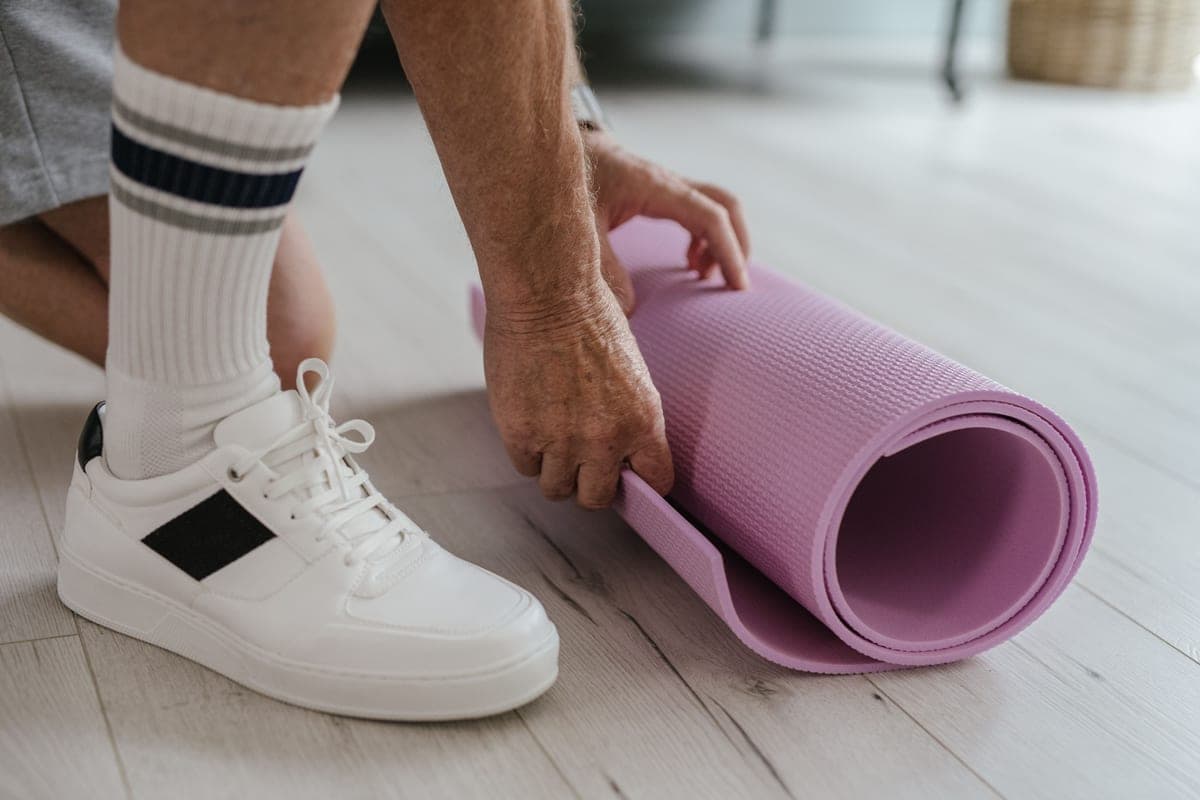
The PRO without the weight
Manduka PROlite 4.7mm
The PRO with about a third of the weight taken out. You lose some cushion and keep the durability, which is the right trade for most people who ever move their mat.
Check price on Amazon#ad · Price set by Amazon · Affiliate disclosure for the link to Manduka PROlite 4.7mm
 Stock photo
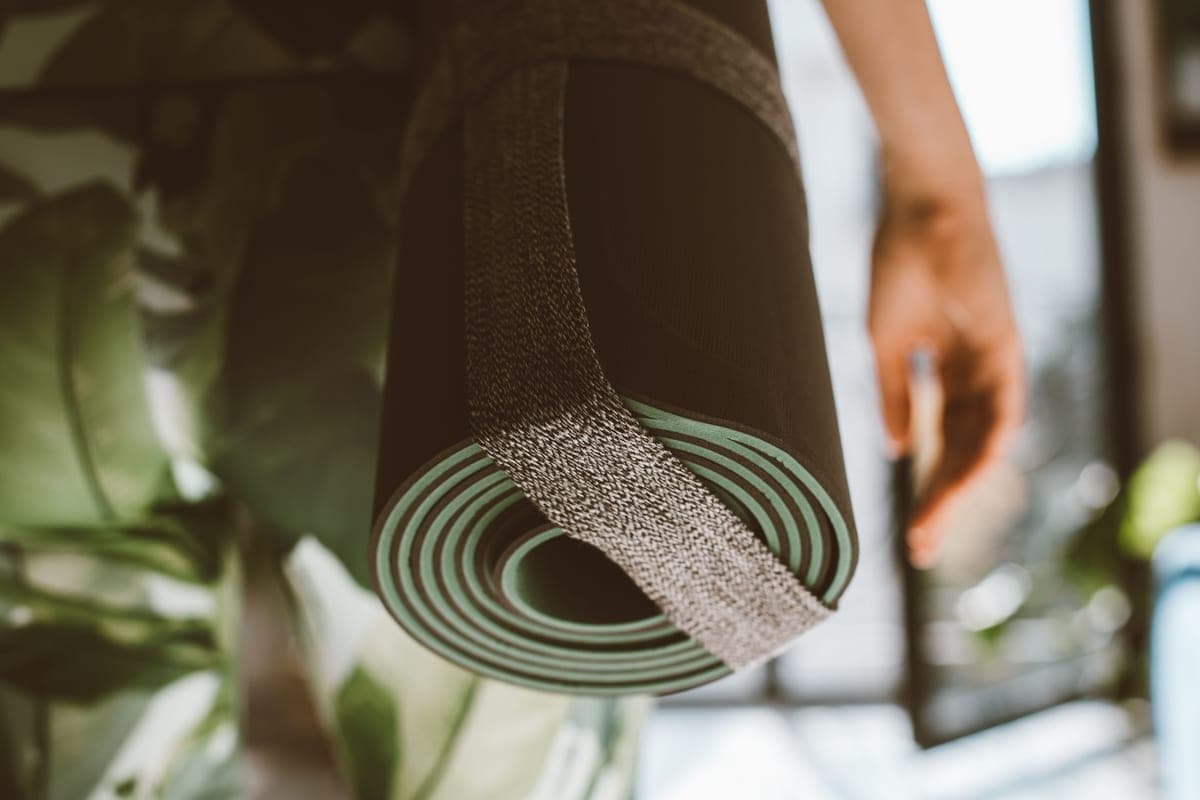
Carrying a mat without a bag
Gaiam Easy-Cinch Yoga Mat Sling
A strap, not a bag. It weighs nothing, it never needs drying out, and it costs less than a coffee round. The mat gets rained on, which is the trade.
Check price on Amazon#ad · Price set by Amazon · Affiliate disclosure for the link to Gaiam Easy-Cinch Yoga Mat Sling
 Stock photo
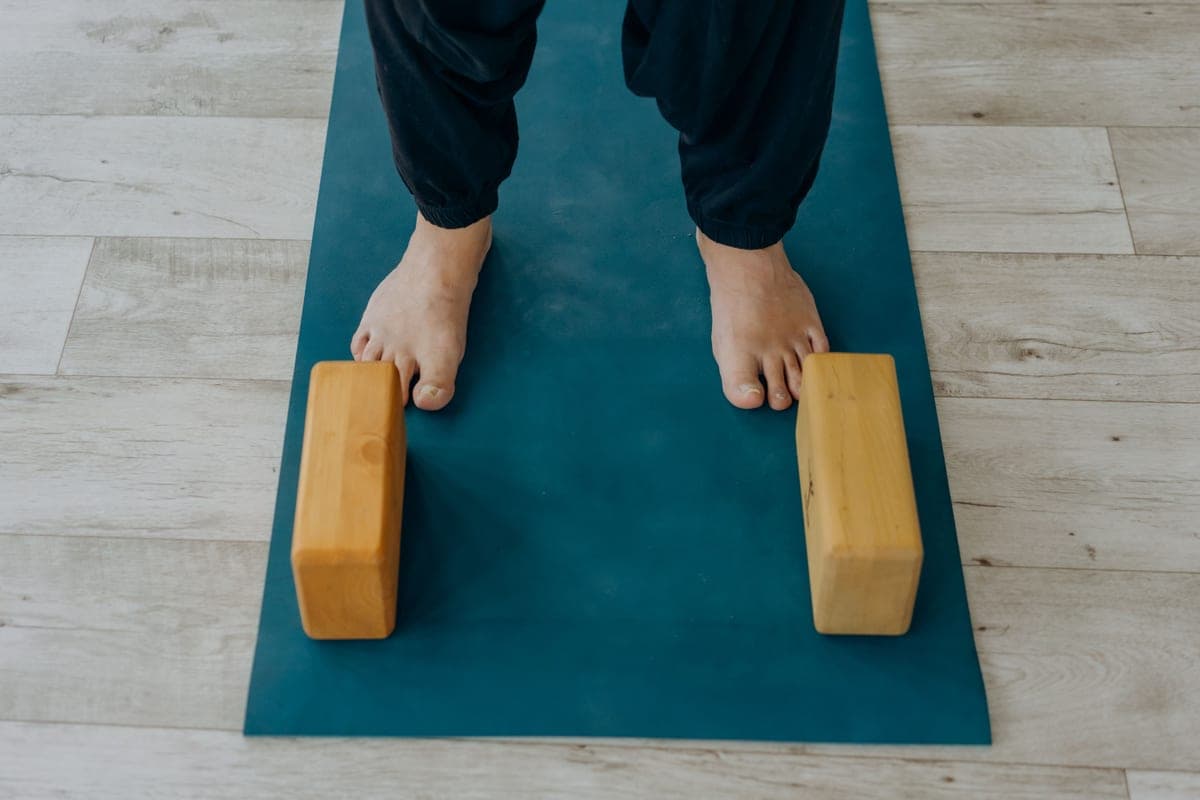
The whole prop kit at once
Gaiam Yoga Block & Strap Combo Set
Two foam blocks and a strap in one box, which is the exact prop kit a beginner needs and nothing more. Buying the pieces separately costs more and takes longer.
Check price on Amazon#ad · Price set by Amazon · Affiliate disclosure for the link to Gaiam Yoga Block & Strap Combo Set
Floor, light and everything else
Once you have the rectangle, four things about the room itself make a noticeable difference. None of them costs anything.
The floor
Hard floors want cushioning, carpet wants stability, and the two pull in opposite directions — which is why practicing on carpet has its own page. The one combination to avoid is a mat on a rug on carpet: three soft layers, and every standing pose becomes a balance exercise you did not sign up for.
If the floor is cold, that matters more than people expect. A cold floor pulls heat out of you during the still parts of a practice, which is precisely when you want to be warm. A folded blanket under the mat for the last five minutes solves it.
The light
Facing a window is pleasant and makes any balance pose harder, because a bright background washes out the fixed point your eyes want. Set up so a window is beside you or behind you, and pick something matt on the opposite wall to look at.
The ceiling and the walls
Check the ceiling height where you will stand with your arms overhead — low-ceilinged attics and basements catch people out. And a clear stretch of wall is genuinely useful: it is a prop for legs-up-the-wall, a support for standing balances while you are learning, and eventually a place to try an inversion safely.
The interruptions
A hallway is a terrible spot in a shared house and a fine one in an empty flat. If someone will walk through your practice, you will stop practicing rather than ask them not to. This is worth weighing against the quality of the floor, and it usually wins.
How we picked
Chosen on published criteria, and we say so
Most gear sites open by telling you how many hours they spent with the products. We have not used most of these, and we would rather say so than imply otherwise. Every pick here is chosen against criteria we publish — grip, cushioning, size options, what buyers report after a year of use, and whether the thing is still actually sold — and every manufacturer figure on the page is labeled as the maker's claim.
Nobody pays for a place on this page, no product was supplied free in exchange for coverage, and a specification the maker does not publish is never guessed at. See the full criteria and weighting.
FAQ
Questions people ask
How much space do I need for yoga at home?
Can I do yoga in a small apartment?
Should I practice on carpet or a hard floor?
Do I need a mirror?
Related
Keep reading
Update log
What changed
- First published.
Receipts
Sources
- 1.NCCIH (US National Institutes of Health) — Yoga: What You Need To Know
- 2.Manduka — product information
- 3.Gaiam — product information
- 4.US Physical Activity Guidelines for Americans
We have not used every product on this page, and we do not pretend otherwise. Thicknesses, materials, sizes and warranty terms are the manufacturer's published figures, shown as their claims. Anything about materials, skin or injury is linked to a source. Prices are set by Amazon and change constantly, so we never print one. Read the full method.