Start Here Guide
Your First 30 Days of Yoga at Home
Choosing the mat takes an afternoon. Showing up eight times in a month is the part that decides whether any of it was worth buying.

We earn a commission when you buy through links on this page, at no extra cost to you. It never decides a ranking: the method is published. How we are funded
The shape of the month
Aim for three short sessions a week rather than one long one. Twenty minutes three times beats an hour once, by a wide margin, for the same reason that anything practiced often beats anything practiced rarely. The US physical activity guidelines are built around frequency for the same reason.
Twelve sessions in a month is a good target and nine is a success. If you manage three, the problem is almost never motivation — it is friction, and the space page is more useful to you than any amount of encouragement.
Week by week
Week one: get on the mat
The only goal is repetition. Pick one beginner sequence and do the same one three times. Repeating it is not boring at this stage — it is the only way to stop spending the whole session reading what comes next. Fifteen to twenty minutes is plenty.
Expect the mat to feel slippery. New mats often are, and it is a surface residue rather than your technique — this page explains it. Wipe it down and carry on.
Week two: notice what hurts
Wrists in plank, knees in any kneeling pose, hamstrings in anything forward. All three are normal and all three have a prop answer. Write down which one shows up most; it decides your next purchase.
Start paying attention to your breath rather than the shape. Most beginners hold their breath in anything difficult, and noticing that is genuinely more useful than getting deeper into the pose.
Week three: add variety
Now change the sequence. Two different classes a week keeps you interested and exposes you to poses the first one never covered. This is also the week to try a slower restorative session if the fast ones are putting you off.
Week four: buy the props
You now know which thing hurts, which means you know which prop to buy. If it was knees, a thicker mat or a knee pad. If it was hamstrings, a strap. If it was reaching the floor, two blocks. This is the informed purchase the whole first month was buying you.
Where people quit
Between days ten and eighteen, almost universally. The novelty has gone, nothing visible has changed yet, and the sessions start feeling like admin. Nothing is wrong at this point; it is simply what the middle of a new habit feels like.
Three things get people through it. Shorten the sessions rather than skipping them — ten minutes counts. Change the style, because being bored is a real reason and a fixable one. And stop measuring progress by flexibility, which changes on a scale of months, and start measuring it by whether you showed up.
The picks
What you will want by week four
 Stock photo
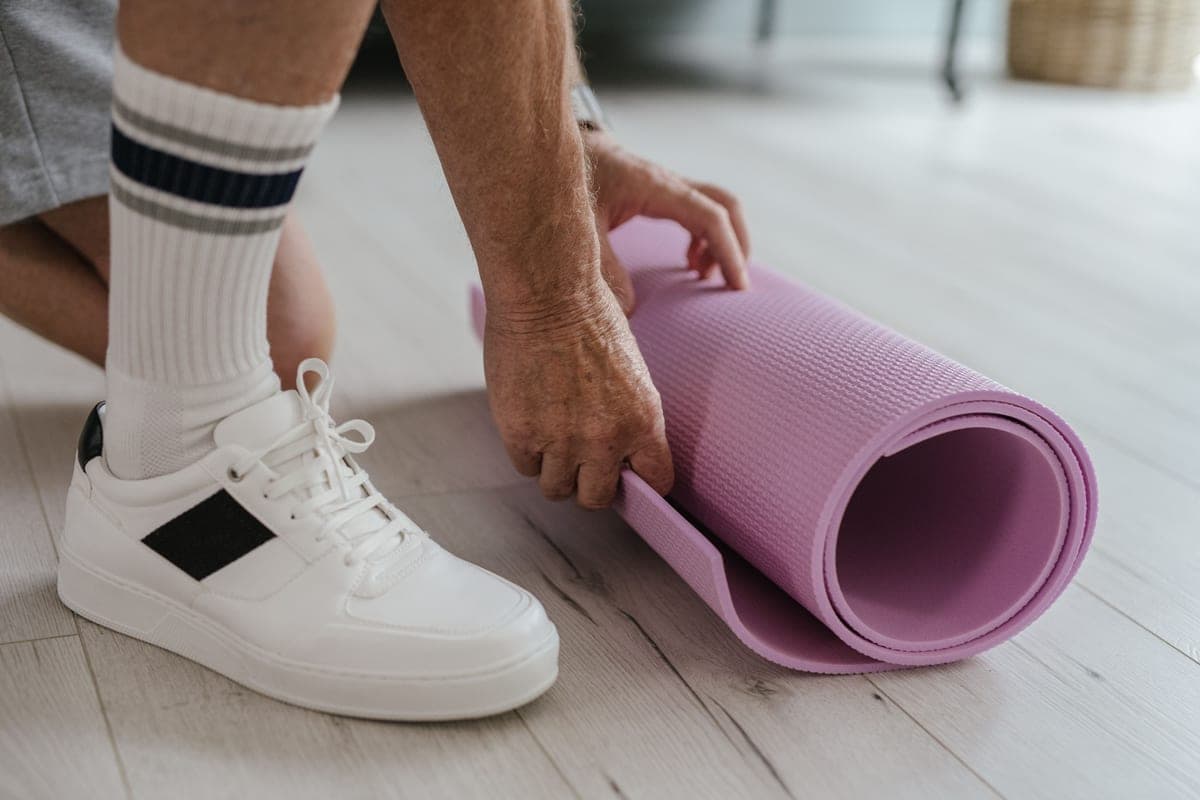
A first mat
Gaiam Premium 6mm Yoga Mat
The default first mat. Enough cushion for a beginner, a printed design you will not hate, and a price that makes quitting after a month painless.
Check price on Amazon#ad · Price set by Amazon · Affiliate disclosure for the link to Gaiam Premium 6mm Yoga Mat
 Stock photo
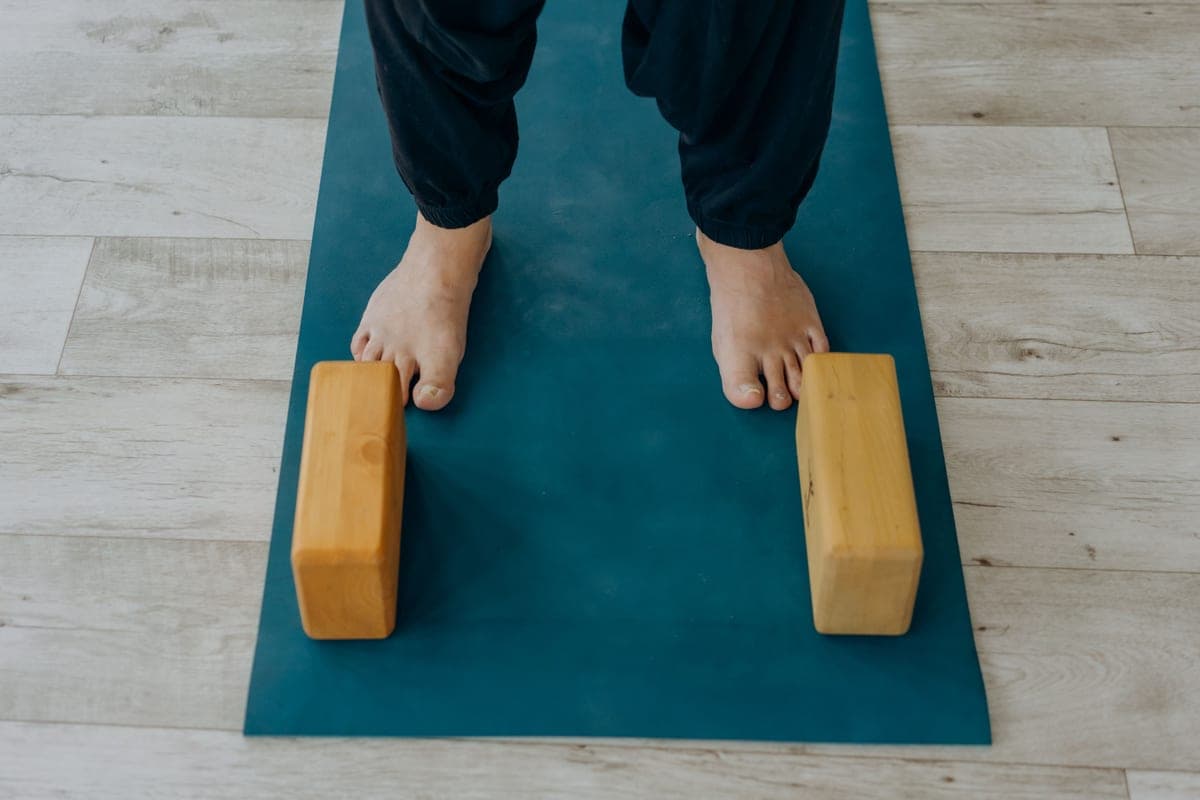
A first block
Gaiam Yoga Essentials Foam Block
The standard foam block. Light, cheap, soft enough to rest against, and it will compress under your standing weight. For most beginners that is fine.
Check price on Amazon#ad · Price set by Amazon · Affiliate disclosure for the link to Gaiam Yoga Essentials Foam Block
 Stock photo
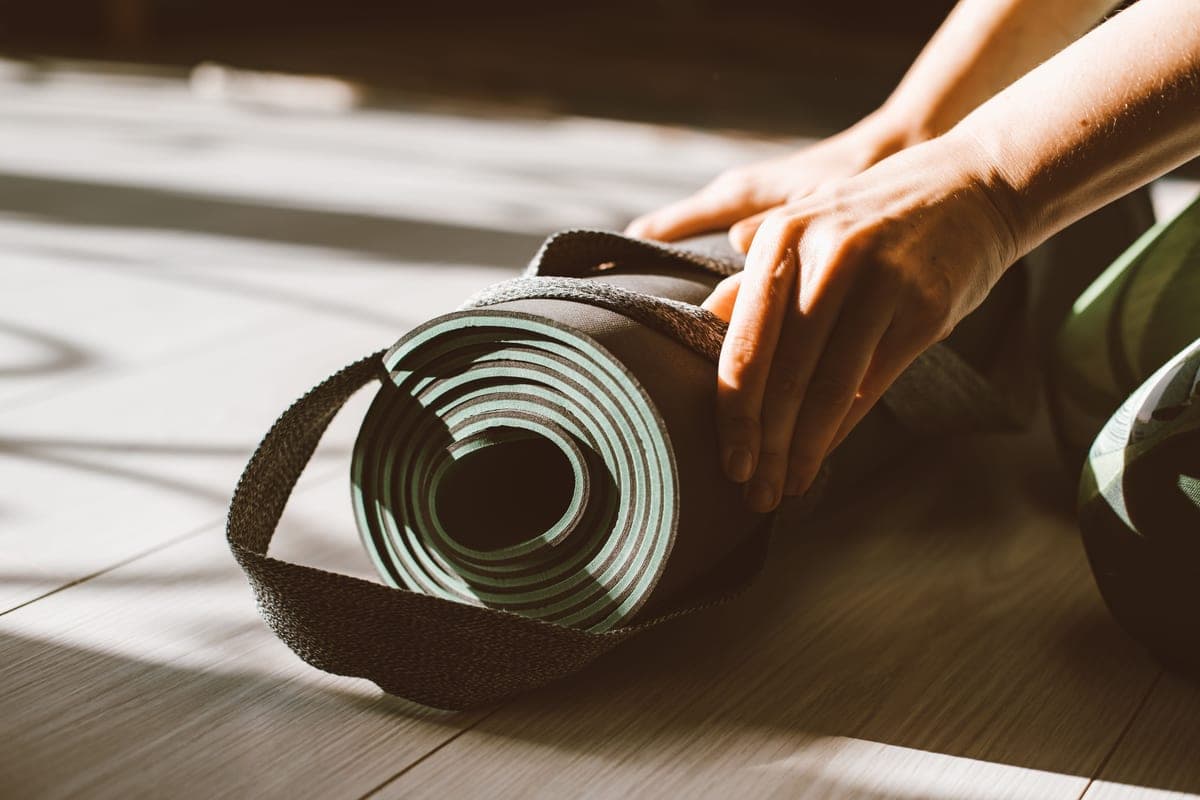
A first strap
Trideer Yoga Strap
A cotton strap with a metal D-ring buckle, sold in three lengths. There is very little to get wrong here, and this one does not slip.
Check price on Amazon#ad · Price set by Amazon · Affiliate disclosure for the link to Trideer Yoga Strap
What is normal and what is not
| What you feel | Normal? | What to do |
|---|---|---|
| Muscles sore a day later | Yes | Carry on; it settles within a few weeks |
| Wrists ache in plank | Common | Spread the fingers, press through the knuckles, shorten the hold |
| Knees sore when kneeling | Common | More padding under the knee, or a knee pad on top of the mat |
| Sharp pain anywhere | No | Stop. Sharp is a different signal from effort |
| Numbness or tingling | No | Come out of the pose and get it looked at if it repeats |
The general rule is that dull and diffuse is fine, sharp and specific is not. This site is gear guidance rather than clinical advice — if something hurts in the sharp, specific way, see someone qualified rather than working around it with props.
What to keep track of, and what to ignore
Almost everyone measures the wrong thing in month one. Flexibility is the slowest signal in the whole practice — it changes over months — so using it as your progress marker guarantees that four weeks of real work looks like nothing happened.
Track sessions, not inches. Mark a calendar. Nine sessions in a month is a success and twelve is excellent, and that is the number that predicts whether you are still doing this in June.
Notice the things that change quickly. Balance improves within two or three weeks and is obvious if you are paying attention: a pose you wobbled through on day one becomes a pose you hold. So does body awareness — knowing where your hip is without looking. Both are real progress and neither shows up in how far you can reach.
Record one sequence. Prop a phone against something and film a two-minute sequence in week one. Do not watch it. Film the same sequence in week four and then watch both. It is the single most convincing evidence you will get, and it costs nothing.
Ignore other people entirely. Including whoever is teaching the video. They have been doing this for years, the shape they are making is not the shape you are aiming for this month, and comparing is the fastest route to deciding you are bad at it.
How we picked
Chosen on published criteria, and we say so
Most gear sites open by telling you how many hours they spent with the products. We have not used most of these, and we would rather say so than imply otherwise. Every pick here is chosen against criteria we publish — grip, cushioning, size options, what buyers report after a year of use, and whether the thing is still actually sold — and every manufacturer figure on the page is labeled as the maker's claim.
Nobody pays for a place on this page, no product was supplied free in exchange for coverage, and a specification the maker does not publish is never guessed at. See the full criteria and weighting.
FAQ
Questions people ask
How often should a beginner do yoga?
How long should a beginner yoga session be?
When will I see results?
Should I practice if I am sore?
Related
Keep reading
Update log
What changed
- First published.
Receipts
Sources
- 1.NCCIH (US National Institutes of Health) — Yoga: What You Need To Know
- 2.US Physical Activity Guidelines for Americans
- 3.OutdoorGearLab — The Best Yoga Mats
- 4.Yoga Journal — The Best Yoga Blocks
We have not used every product on this page, and we do not pretend otherwise. Thicknesses, materials, sizes and warranty terms are the manufacturer's published figures, shown as their claims. Anything about materials, skin or injury is linked to a source. Prices are set by Amazon and change constantly, so we never print one. Read the full method.