Yoga Mats Guide
What Size Yoga Mat Do I Need?
The standard mat is 68 inches. If you are taller than about five foot six, that is the mat sticking your heels onto the floor every session.
We earn a commission when you buy through links on this page, at no extra cost to you. It never decides a ranking: the method is published. How we are funded
The short answer
Buy a mat at least 4 inches longer than you are tall. The standard 68 in mat suits people up to roughly 5 ft 4 in comfortably. Above that, 71 or 72 in is the sensible default, and above about 6 ft you want a 79 or 85 in mat.
Length, by height
| Your height | Mat length | Notes |
|---|---|---|
| Under 5 ft 4 in | 68 in (standard) | The standard mat is genuinely fine |
| 5 ft 4 in - 5 ft 9 in | 71-72 in | The most common upgrade, and cheap |
| 5 ft 9 in - 6 ft 1 in | 74-79 in | Several mainstream mats offer this |
| Over 6 ft 1 in | 85 in | A small number of mats go this long |
Why 4 inches of margin rather than exactly your height: in a lunge or a wide-legged stance your feet end up further apart along the mat than your standing height, and in a lying pose you want your head on the mat rather than on the floor behind it. Four inches is the practical minimum.
The mats that offer genuinely long versions are limited, and it is usually a premium option rather than a separate product. The beginner roundup notes which do.
Width, and when it matters
Standard width is 24 in. Wide mats run 26 to 28 in, and occasionally more.
For most practice, 24 in is fine — your hands and feet stay within it in nearly everything. Width starts to matter in three situations: wide-legged standing poses where a foot ends up off the edge, lying twists where an arm goes out to the side, and any practice where you simply find yourself checking the edges. If you have broad shoulders, a wide mat is a noticeable comfort improvement.
The cost of width is storage and carrying. A 28 in mat rolls to a fatter cylinder and is heavier, which matters a lot if you carry it and not at all if you do not.
The picks
Mats that come in a longer version
 Stock photo
Sensitive knees and wrists
Manduka PRO 6mm
The most cushioned mat most people will ever need, and the one that outlives every other mat in this list. It is also heavy, and it is slippery until you break it in.
Check price on Amazon#ad · Price set by Amazon · Affiliate disclosure for the link to Manduka PRO 6mm
 Stock photo
The grippiest dry surface
JadeYoga Harmony Mat
Open-cell natural rubber with the stickiest dry grip here. It drinks sweat rather than shedding it, so it needs proper airing and eventually wears out.
Check price on Amazon#ad · Price set by Amazon · Affiliate disclosure for the link to JadeYoga Harmony Mat
- Stock photo
Padding on a hard floor
Gaiam Essentials Thick Yoga Mat
A very thick foam mat that is really a floor-exercise mat. If kneeling is the thing that hurts, this fixes it for very little money. Balancing on it is harder.
Check price on Amazon#ad · Price set by Amazon · Affiliate disclosure for the link to Gaiam Essentials Thick Yoga Mat
How to check before you order
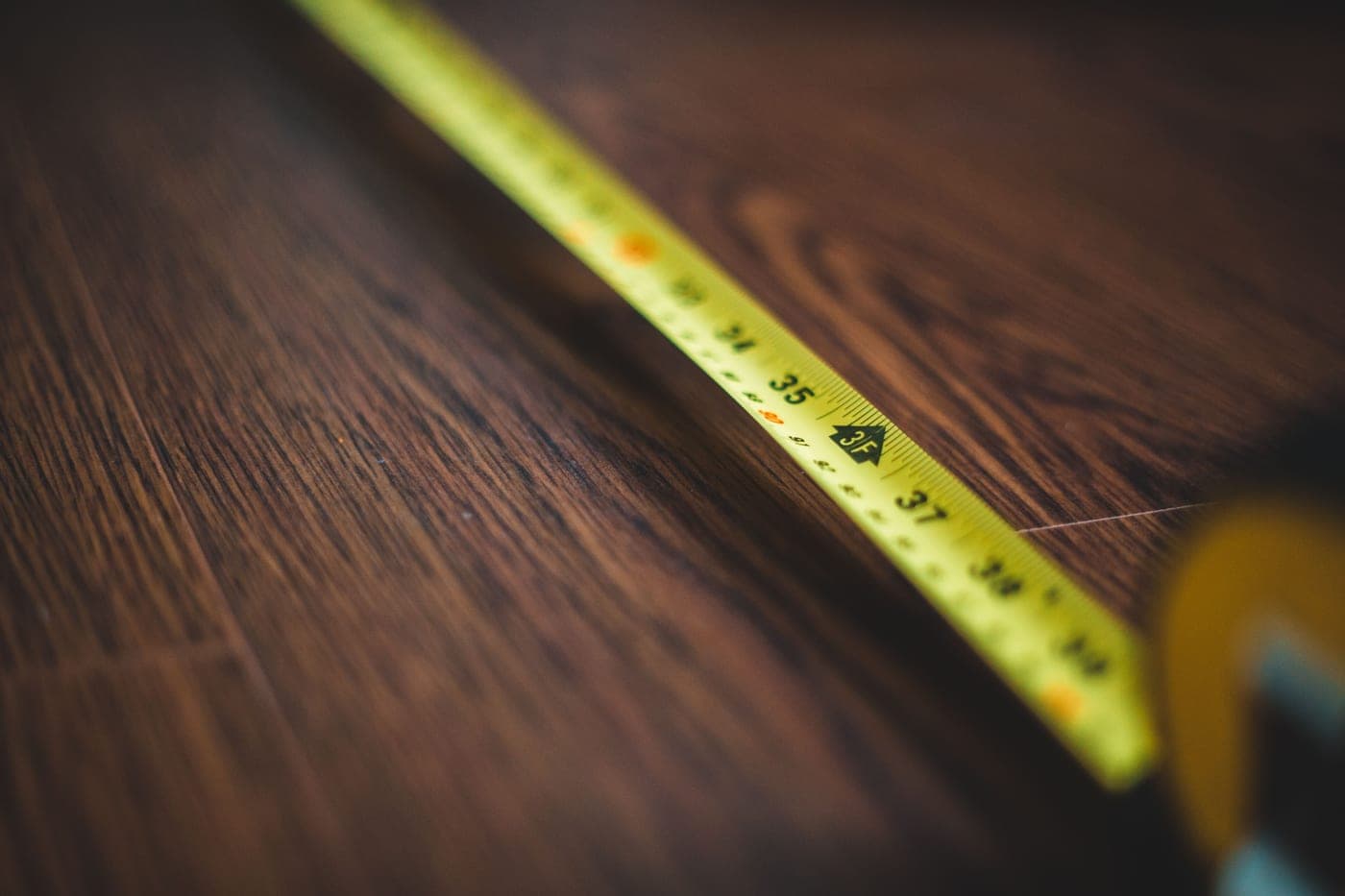
Two minutes with a tape measure saves a return.
- Lie down where the mat will go and mark the floor at the top of your head and the bottom of your heels. Add 4 in. That is your minimum length.
- Take your arms out to the sides while lying down and see how much width you actually use. Most people use less than they expect.
- Check the listed dimensions, not the category. "Extra long" means different things to different makers, and the actual number is always published.
- Check the space too. A longer mat needs a longer clear run — setting up a practice space has the room maths.
One note on travel mats: they are frequently shorter than standard as well as thinner, and that catches people out. If you are tall, check the length on travel mats specifically.
What to do if your mat is already too small
Most people discover this after buying, so it is worth saying that you do not necessarily need a new mat.
If your heels hang off the back in a lunge, the fix is usually your setup rather than the mat. Start standing further forward than feels natural — most people habitually set up in the middle, which wastes 8 inches behind them. It sounds trivial and it solves the problem for a lot of people.
If your head is off the mat when you lie down, a folded blanket at the top end costs nothing, and it is more comfortable than the mat anyway.
If your hands slide off the sides in a wide stance, that is a width problem and a blanket will not fix it. Turning the mat 90 degrees for that part of the sequence works, looks odd and is what a lot of people in a crowded studio actually do.
If it is short for standing poses specifically, the honest answer is a longer mat. This is the one case where you will keep noticing it every session, and it is the reason a long mat is worth its small premium when you buy rather than after.
And when you do replace it: an old short mat is a perfectly good second mat to keep at a parent's house, leave in a car, or double up under your knees on a hard floor. Very few mats need throwing away.
How we picked
Chosen on published criteria, and we say so
Most gear sites open by telling you how many hours they spent with the products. We have not used most of these, and we would rather say so than imply otherwise. Every pick here is chosen against criteria we publish — grip, cushioning, size options, what buyers report after a year of use, and whether the thing is still actually sold — and every manufacturer figure on the page is labeled as the maker's claim.
Nobody pays for a place on this page, no product was supplied free in exchange for coverage, and a specification the maker does not publish is never guessed at. See the full criteria and weighting.
FAQ
Questions people ask
What size yoga mat do I need for my height?
How wide should a yoga mat be?
Is a longer yoga mat worth it?
Are all yoga mats the same size?
Related
Keep reading
Update log
What changed
- First published.
Receipts
Sources
- 1.Manduka — product information
- 2.JadeYoga — product information
- 3.OutdoorGearLab — The Best Yoga Mats
- 4.Gaiam — product information
We have not used every product on this page, and we do not pretend otherwise. Thicknesses, materials, sizes and warranty terms are the manufacturer's published figures, shown as their claims. Anything about materials, skin or injury is linked to a source. Prices are set by Amazon and change constantly, so we never print one. Read the full method.