Yoga Mats Guide
Yoga Mat Materials, Explained
Four materials cover almost every mat sold. Choose the material first and the shortlist of mats writes itself.
We earn a commission when you buy through links on this page, at no extra cost to you. It never decides a ranking: the method is published. How we are funded
The short answer
PVC for durability, natural rubber for dry grip, cork for damp grip, TPE for light weight and no smell. Pick the property you care about most and the material follows; the individual mat is then a much smaller decision.
All four, side by side
| PVC | Natural rubber | TPE | Cork over rubber | |
|---|---|---|---|---|
| Grip dry | Good after break-in | Excellent | Fair | Good |
| Grip damp | Poor | Good | Poor | Excellent |
| Weight | Medium-heavy | Heavy | Light | Heavy |
| Smell when new | Mild | Strong, fades | Almost none | Almost none |
| Lifespan | Longest | Good | Shortest | Long |
| Latex | No | Yes | No | Yes (base) |
| Cleaning | Wipe, easy | Wipe; never soak open cell | Wipe, easy | Wipe, easy |
Each material
PVC
Polyvinyl chloride. Dense, hardwearing and cheap to produce at good quality, which is why it dominates the market. Closed-cell, so sweat stays on the surface rather than soaking in — good for hygiene, bad for grip once you are wet. Most premium long-life mats are PVC, and several carry lifetime guarantees from their makers.
New PVC mats frequently have a manufacturing film that makes them slippery for the first week or two. That is expected and it wears off; it is also the source of most "my expensive mat is useless" complaints.
Natural rubber
Tree rubber, usually with a textured surface. The best dry grip available, biodegradable at end of life, and heavy. Comes as closed-cell (sheds sweat) or open-cell (absorbs it, grips better when slightly damp, needs real airing). Smells strongly for the first weeks. Contains latex.
TPE
A thermoplastic elastomer, generally a blend. Light, low-odor, latex-free and usually cheaper than rubber. The trade is grip and lifespan: TPE mats grip less well than either rubber or broken-in PVC, and they dent and wear faster. A reasonable choice for someone carrying a mat daily in a cool room.
Cork
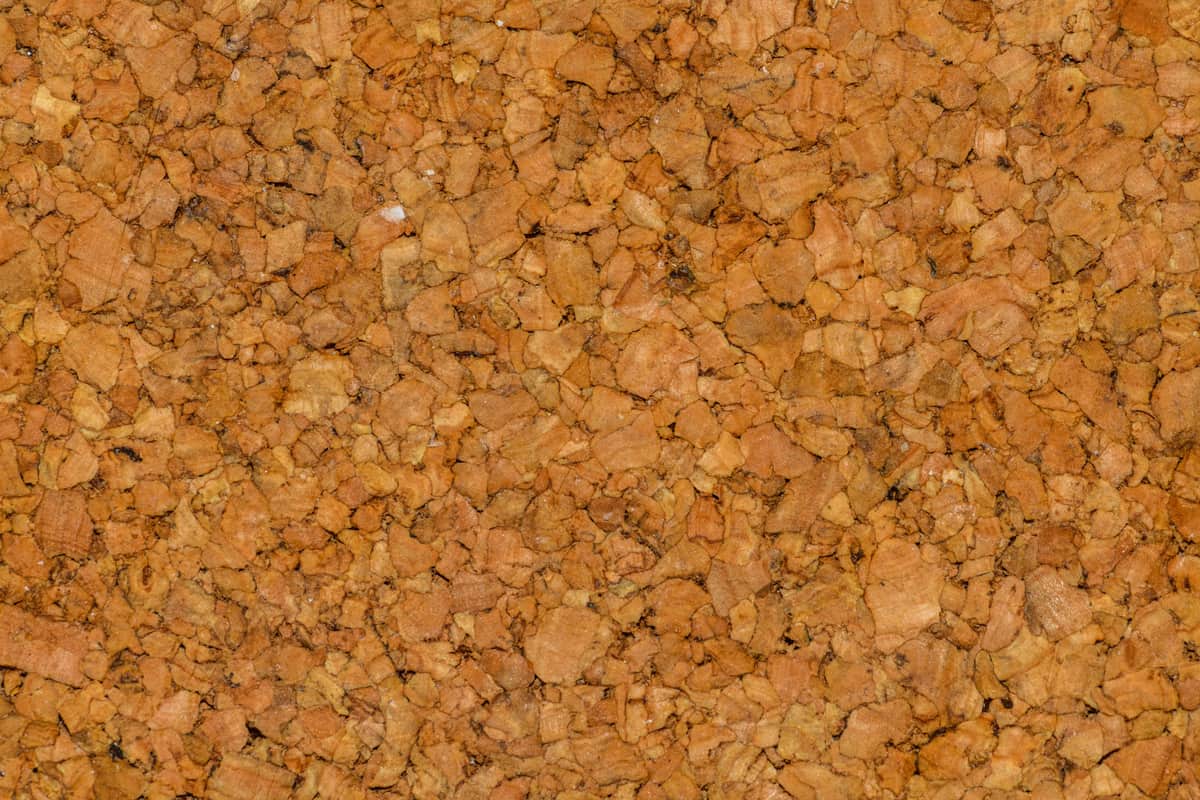
Almost always a cork surface bonded to a rubber base. The only common surface that grips better damp than dry. Naturally resists odor, wipes clean, and looks like furniture. Heavy, firm rather than cushioned, and it curls for the first week or two. Covered in full in cork mats and cork versus rubber.
The picks
One mat per material
 Stock photo
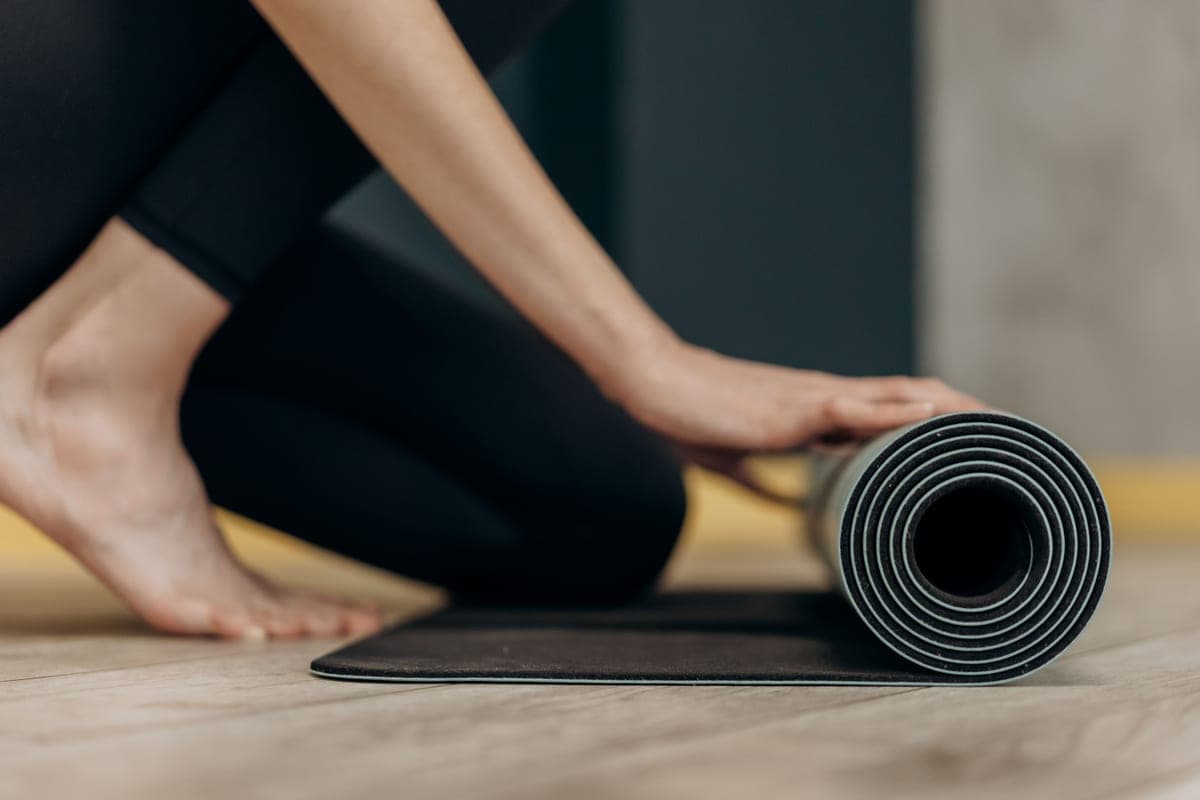
The grippiest dry surface
JadeYoga Harmony Mat
Open-cell natural rubber with the stickiest dry grip here. It drinks sweat rather than shedding it, so it needs proper airing and eventually wears out.
Check price on Amazon#ad · Price set by Amazon · Affiliate disclosure for the link to JadeYoga Harmony Mat
 Stock photo
Cork that grips when damp
Yoloha Original Cork Yoga Mat
Cork over a rubber base: the grip gets better as your hands get damp, which is the opposite of every PVC mat. Heavy, and it needs a few sessions to stop wanting to re-roll itself.
Check price on Amazon#ad · Price set by Amazon · Affiliate disclosure for the link to Yoloha Original Cork Yoga Mat
 Stock photo
Alignment lines on a budget
Heathyoga Eco Friendly TPE Mat
Alignment lines at a fraction of the Liforme price, on a TPE mat that is wider than standard. TPE grip is middling, and that is the compromise.
Check price on Amazon#ad · Price set by Amazon · Affiliate disclosure for the link to Heathyoga Eco Friendly TPE Mat
 Stock photo
A first mat
Gaiam Premium 6mm Yoga Mat
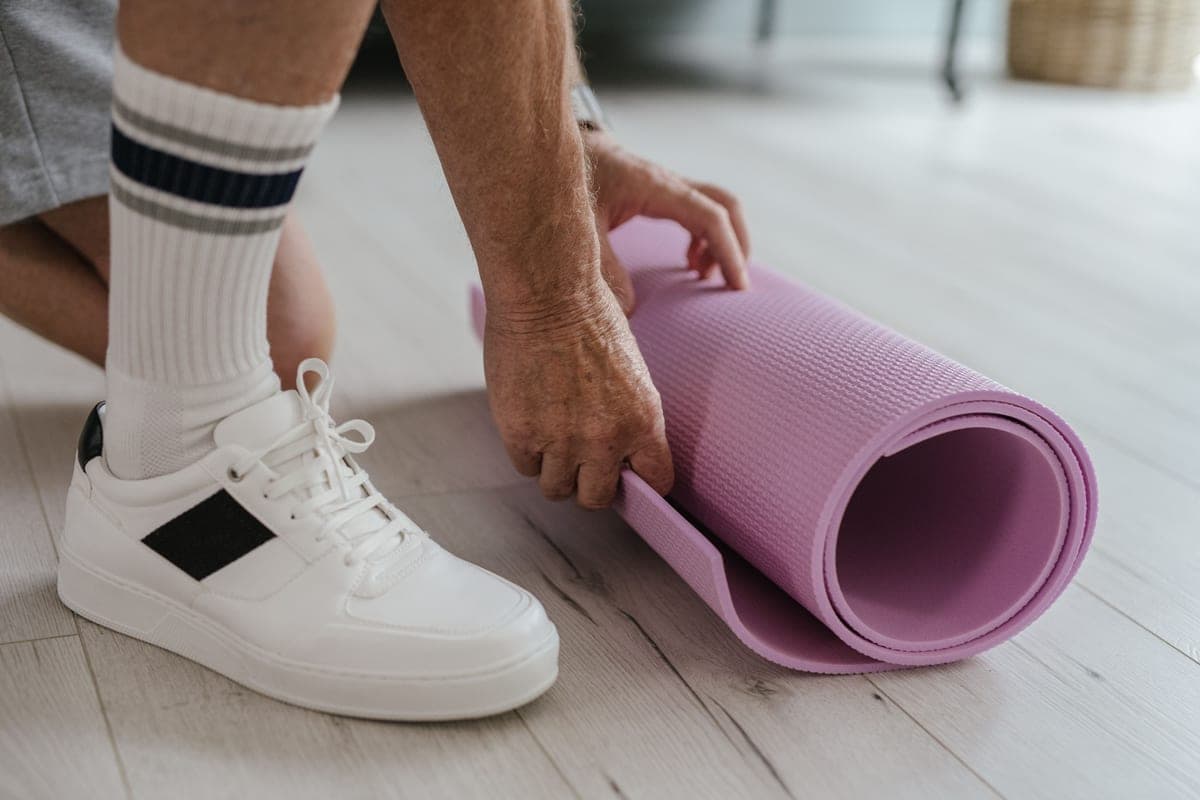
The default first mat. Enough cushion for a beginner, a printed design you will not hate, and a price that makes quitting after a month painless.
Check price on Amazon#ad · Price set by Amazon · Affiliate disclosure for the link to Gaiam Premium 6mm Yoga Mat
Latex, smell and what is in a mat
Latex
Natural rubber contains latex proteins, which can cause a reaction in people with a latex allergy. This is the one material question on this page that is about safety rather than preference; the AAAAI overview of latex allergy is the place to read about it. PVC and TPE are latex-free. Cork mats almost always have a rubber base, so cork is not a way around the issue.
Smell
Rubber mats smell of rubber for one to three weeks and then stop. PVC has a mild plastic smell that fades within days. TPE and cork have almost none. If you practice in a small room with the door shut, this is worth weighing more heavily than it sounds.
The phthalate question
Older PVC mats used phthalate plasticizers, and many current mats are marketed as free of the most-restricted ones. Where a maker states that, we quote it on the product card as their claim. We are not in a position to verify chemical composition, and we would rather say so than imply a test we did not run.
Recyclability
Natural rubber biodegrades. TPE is recyclable in principle and rarely in practice, because curbside programs do not take mats. PVC is not readily recyclable. The most environmentally useful thing in this category is buying a mat that lasts a decade instead of three that last a year each.
Picking a material in three questions
The table above is the reference. This is how to use it in about thirty seconds.
1. Do your hands get damp during a session? If yes, you want cork or a grip-top surface, and you can stop reading the rest of the specification. This one property separates a mat you trust from one you fight, and it is what most people discover the hard way three weeks in.
2. Does the mat move, or live in one room? Rubber and cork are heavy — heavy enough that people quietly stop carrying them. If you walk to a class, TPE or a lighter PVC mat is the honest choice even though it grips less, because the mat you actually bring beats the better mat left at home.
3. Is there a latex allergy in the household? Then rubber is out, and so is cork, because cork mats are almost always cork bonded to a rubber base. PVC and TPE are the latex-free options. This is the one question on the page with a safety answer rather than a comfort one.
Three answers, one material. After that the individual mat is a far smaller decision than it looks, and the beginner roundup covers the shortlist in each one.
How we picked
Chosen on published criteria, and we say so
Most gear sites open by telling you how many hours they spent with the products. We have not used most of these, and we would rather say so than imply otherwise. Every pick here is chosen against criteria we publish — grip, cushioning, size options, what buyers report after a year of use, and whether the thing is still actually sold — and every manufacturer figure on the page is labeled as the maker's claim.
Nobody pays for a place on this page, no product was supplied free in exchange for coverage, and a specification the maker does not publish is never guessed at. See the full criteria and weighting.
FAQ
Questions people ask
What is the best material for a yoga mat?
Are natural rubber yoga mats safe for latex allergies?
Are PVC yoga mats bad?
Which material grips best?
Related
Keep reading
Update log
What changed
- First published.
Receipts
Sources
- 1.OutdoorGearLab — The Best Yoga Mats
- 2.Healthline — The Best Workout Mats
- 3.AAAAI — Latex allergy
- 4.Manduka — product information
- 5.JadeYoga — product information
- 6.Yoloha Yoga — cork mats
We have not used every product on this page, and we do not pretend otherwise. Thicknesses, materials, sizes and warranty terms are the manufacturer's published figures, shown as their claims. Anything about materials, skin or injury is linked to a source. Prices are set by Amazon and change constantly, so we never print one. Read the full method.