Pilates at Home Comparison
Pilates Bar vs Reformer: Which Belongs in Your Living Room?
One fits in a drawer. The other is the length of a sofa. The question is what you lose going down, and the answer is more specific than price.
We earn a commission when you buy through links on this page, at no extra cost to you. It never decides a ranking: the method is published. How we are funded
Side by side
The two, next to each other
 Stock photo
The bar
Ayombo 3-Section Pilates Bar Kit
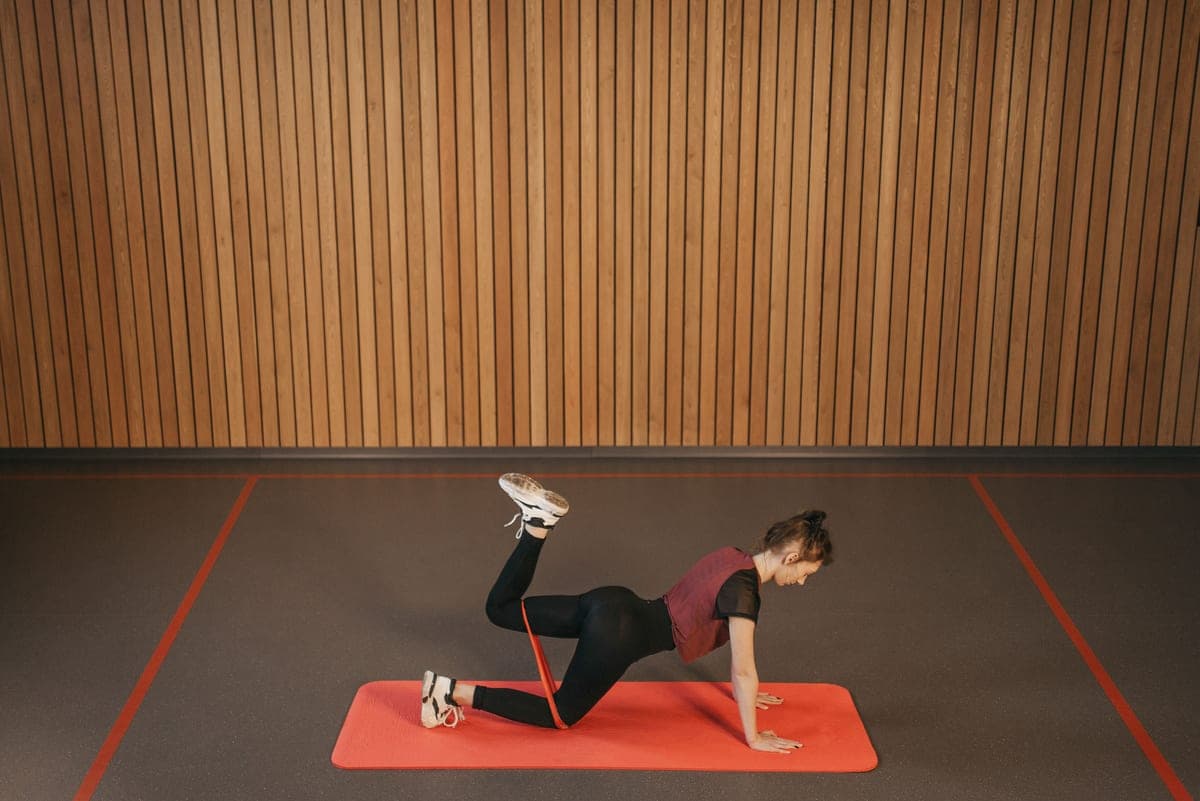
Band resistance, stores in a drawer, and it travels. It cannot make you slide, which is most of what a reformer does.
Check price on Amazon#ad · Price set by Amazon · Affiliate disclosure for the link to Ayombo 3-Section Pilates Bar Kit
 Stock photo
The reformer
Merrithew At Home SPX Reformer
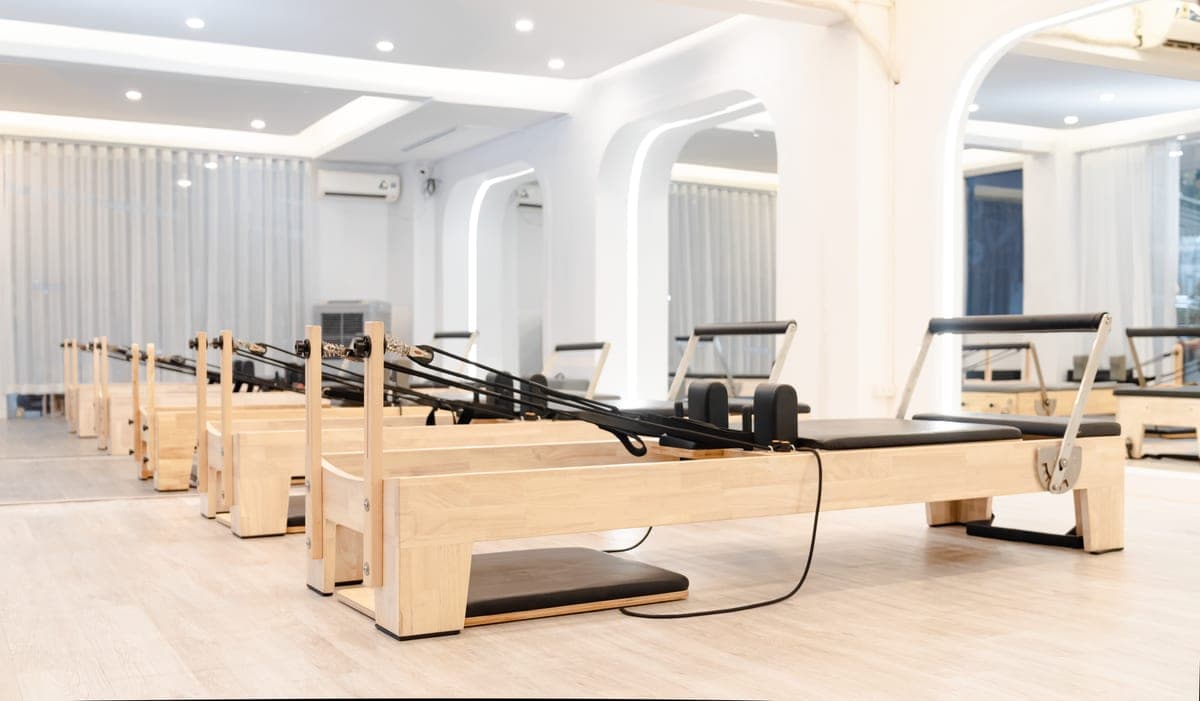
Springs and a carriage, folding flat. The real thing, at a real price and a real footprint.
Check price on Amazon#ad · Price set by Amazon · Affiliate disclosure for the link to Merrithew At Home SPX Reformer
The verdict
If you have under about seven feet of clear floor or you are new to pilates, buy the bar. If you have the room, the budget and twenty mat sessions behind you, the reformer is a different exercise and worth it. That is not a hedge; the two answers genuinely serve different people.
Side by side
| Pilates bar | Reformer | |
|---|---|---|
| Relative cost | Lowest in the category | Many times the bar |
| Storage | A drawer | A permanent footprint, or a fold-flat frame |
| Resistance | Elastic bands | Springs or cords |
| You slide | No | Yes |
| Exercise range | Limited but real | The full repertoire |
| Setup time | A minute | None, if it lives out |
| Travels | Yes | No |
| Learning curve | Shallow | Steeper; worth some instruction |
Bands vs springs
This is the substantive difference, and it is not about quality. It is about the shape of the resistance curve.
A band is easy at the start of the movement and much harder at the end, because resistance rises with stretch. A spring is far closer to even through its travel. That changes which part of an exercise is difficult: on a band, the hardest point is full extension; on a spring, the effort is distributed, and the control demand sits at the start where you initiate the movement.
Pilates exercises were designed around springs, so the sequencing of effort in the original repertoire assumes that curve. That does not make band work invalid — it is good training — but it does mean an exercise you know from a studio class will feel noticeably different on a bar.
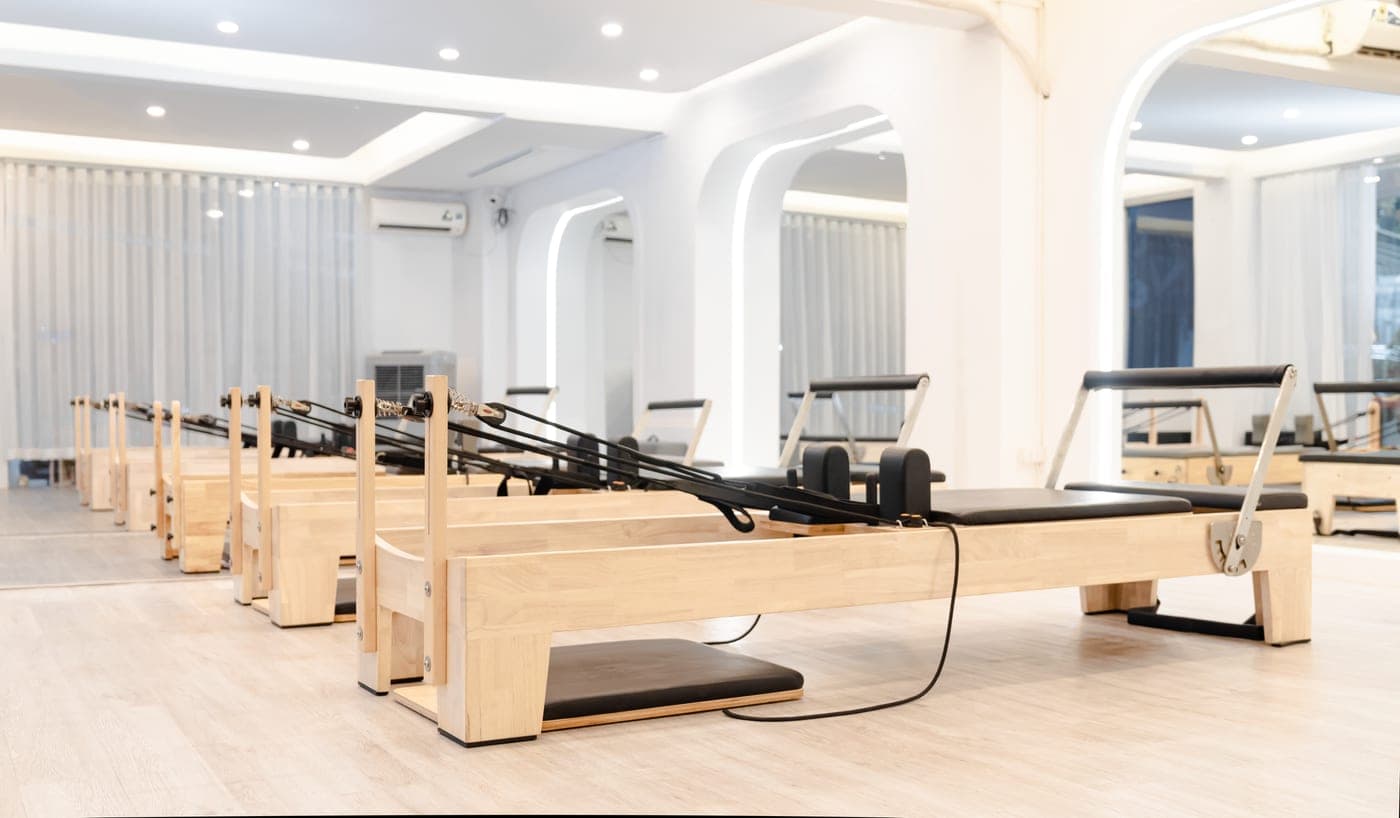
The second difference is the carriage. Everything distinctive about reformer work comes from a platform that moves while you control it. A bar cannot produce that. If it is specifically the reformer feeling you want and the bar is too far from it, a reformer board sits between the two — see bar versus board.
In detail
Both, in full
Stock photoThe bar
Ayombo 3-Section Pilates Bar Kit
As the manufacturer lists it
What it gets right
- Packs into a drawer
- Band strengths cover beginner to reasonably strong
- Costs less than a month of studio classes
What it does not
- Screw-together joints work loose and need checking
- Band resistance rises through the range, unlike springs
- Footstraps are the first thing to wear
Skip it if
you want the carriage movement of a reformer — a bar cannot give you that.
#ad · Price set by Amazon · Affiliate disclosure for the link to Ayombo 3-Section Pilates Bar Kit
Stock photoThe reformer
Merrithew At Home SPX Reformer
As the manufacturer lists it · Merrithew
What it gets right
- Springs, not cords — the resistance curve is the studio one
- Folds down, so a living room is viable
- Merrithew carriage quality and a full accessory range
What it does not
- Expensive next to a bar or a board
- Still large and heavy even folded
- Four springs rather than five limits the top end
Skip it if
you want to try reformer-style work before committing real money.
#ad · Price set by Amazon · Affiliate disclosure for the link to Merrithew At Home SPX Reformer
Who should buy which
| You | Buy | Because |
|---|---|---|
| Are new to pilates | The bar | You do not yet know whether this is a habit |
| Live in a small flat | The bar, or a board | A reformer needs clear floor at both ends |
| Take studio reformer classes | A reformer | Nothing else will feel like the class |
| Travel often | The bar | It is the only option that packs |
| Want progression over years | A reformer | The repertoire keeps going long after a bar has plateaued |
| Are buying it as a gift | Neither, without asking | Both are room-defining or size-dependent |
One more consideration people skip: instruction. A bar is largely self-explanatory. A reformer is not, and buying one without some structured teaching is how machines end up as clothes racks. Factor a few classes into the decision rather than treating the machine as the whole purchase.
What each one looks like a year in
The purchase decision is made on day one and lived with for years, so it is worth projecting forward past the unboxing.
The bar, twelve months on. Either it is in a drawer and comes out twice a week, or it is in a drawer. That is genuinely the distribution: it is small enough to be forgotten and small enough to be trivially easy to restart. The failure mode is boredom rather than regret — you have exhausted what a bar can do and you want something that moves. The money involved is small enough that this is not a bad outcome.
The reformer, twelve months on. Either it is the center of a three-times-a-week habit, or it is a very large object in a room you now walk around. There is not much middle ground, and which one you get is decided mostly by two things that have nothing to do with the machine: whether you had a structured program to follow, and whether it lives somewhere you pass every day rather than behind a door.
The honest predictor
Not enthusiasm — everybody has that in week one. It is whether you were already practicing before you bought anything. Someone with twenty mat sessions and a class habit buying a reformer is extending something that exists. Someone buying a reformer to start is buying the intention, and that is the purchase that ends up resold. Reformer versus mat pilates is the page to read if that describes you, and the answer there costs nothing.
How we picked
Chosen on published criteria, and we say so
Most gear sites open by telling you how many hours they spent with the products. We have not used most of these, and we would rather say so than imply otherwise. Every pick here is chosen against criteria we publish — grip, cushioning, size options, what buyers report after a year of use, and whether the thing is still actually sold — and every manufacturer figure on the page is labeled as the maker's claim.
Nobody pays for a place on this page, no product was supplied free in exchange for coverage, and a specification the maker does not publish is never guessed at. See the full criteria and weighting.
FAQ
Questions people ask
Can a pilates bar replace a reformer?
Is a pilates bar good for beginners?
Should I buy a reformer if I take studio classes?
Related
Keep reading
Update log
What changed
- First published.
Receipts
Sources
- 1.Saran Pilates — Which reformer should I buy?
- 2.Merrithew — Pilates equipment shop
- 3.Pilates Collective Club — Best home Pilates reformer
- 4.WorkoutHealthy — Pilates reformers for home and small spaces
We have not used every product on this page, and we do not pretend otherwise. Thicknesses, materials, sizes and warranty terms are the manufacturer's published figures, shown as their claims. Anything about materials, skin or injury is linked to a source. Prices are set by Amazon and change constantly, so we never print one. Read the full method.