Pilates at Home Comparison
Pilates Bar vs Reformer Board: Which Should You Buy?
Two cheap ways into resistance pilates. One of them moves you along a surface, and that is the entire decision.
We earn a commission when you buy through links on this page, at no extra cost to you. It never decides a ranking: the method is published. How we are funded
Side by side
The two, next to each other
 Stock photo
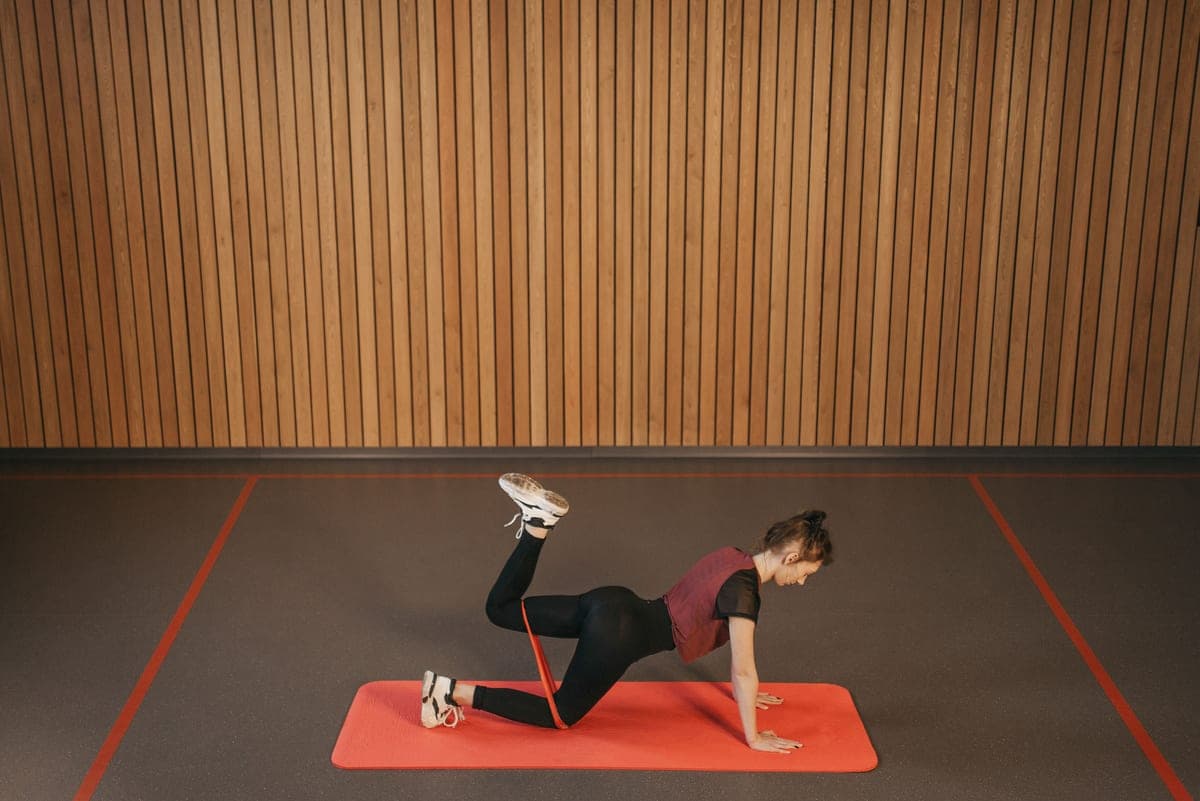
The bar
Ayombo 3-Section Pilates Bar Kit
Cheaper, smaller, and it travels. Resistance without the sliding that makes reformer work feel the way it does.
Check price on Amazon#ad · Price set by Amazon · Affiliate disclosure for the link to Ayombo 3-Section Pilates Bar Kit
 Stock photo
The board
BetterMe Mini Pilates Reformer
You actually slide, which is the thing a bar cannot give you. Stores under a bed rather than in a drawer.
Check price on Amazon#ad · Price set by Amazon · Affiliate disclosure for the link to BetterMe Mini Pilates Reformer
The verdict
Buy the board if you want something that feels like a reformer class. Buy the bar if you want cheap, portable resistance and do not care about the sliding. They cost far less than a machine and they are not close substitutes for each other.
Side by side
| Pilates bar | Reformer board | |
|---|---|---|
| You slide along a surface | No | Yes |
| Resistance | Bands | Bands |
| Storage | A drawer | Under a bed or against a wall |
| Relative cost | Lowest | A step up, still far below a machine |
| Travels | Yes | No |
| Setup time | About a minute | About a minute |
| Closest to a reformer class | Not close | Noticeably closer |
| Standing work | Good | Limited |
Note the last row. A bar is better for standing and upright work because you can hold it anywhere; a board is better for the supine and kneeling sliding work that dominates reformer repertoire. They lean in different directions.
The sliding difference
On a reformer, the carriage moves and you control it. That produces two things a fixed exercise cannot: a continuous stability demand, because the surface under you is not a fixed reference, and immediate feedback, because a sloppy trunk shows up as the carriage wandering.
A board reproduces the first fairly well and the second partly. You slide, you have to control the slide, and you feel it when you do not. The direction of movement is reversed — you move along a fixed platform rather than riding a moving one — and in practice the sensation is much closer to a reformer than to a bar.
A bar gives you neither. Your body is fixed, the band stretches, and the exercise is a resistance exercise rather than a control exercise. That is a legitimate and useful thing to train; it is just not the thing that makes reformer pilates distinctive.
In detail
Both, in full
Stock photoThe bar
Ayombo 3-Section Pilates Bar Kit
As the manufacturer lists it
What it gets right
- Packs into a drawer
- Band strengths cover beginner to reasonably strong
- Costs less than a month of studio classes
What it does not
- Screw-together joints work loose and need checking
- Band resistance rises through the range, unlike springs
- Footstraps are the first thing to wear
Skip it if
you want the carriage movement of a reformer — a bar cannot give you that.
#ad · Price set by Amazon · Affiliate disclosure for the link to Ayombo 3-Section Pilates Bar Kit
Stock photoThe board
BetterMe Mini Pilates Reformer
As the manufacturer lists it
What it gets right
- Fits under a bed
- Cheap enough to try the style of training before committing
- Sets up and packs away in a minute
What it does not
- Band resistance is not spring resistance
- No carriage, so the movement quality differs
- Limited progression once you get strong
Skip it if
you already know reformer pilates is your main training and you have the space.
#ad · Price set by Amazon · Affiliate disclosure for the link to BetterMe Mini Pilates Reformer
Who should buy which
| You | Buy | Because |
|---|---|---|
| Take reformer classes and want to train between them | The board | It is the cheapest thing that feels related |
| Want the smallest possible footprint | The bar | A drawer against under a bed |
| Travel regularly | The bar | The board does not pack |
| Want standing and upper-body resistance | The bar | Easier to use upright |
| Have a hard floor and no rug | Either, but check floor protection | Boards can mark a wooden floor |
| Are not sure pilates will stick | The bar | Lowest cost to find out |
Either way, you will want grip socks for board work, and a firm mat underneath for comfort — see mats for pilates. And if this comparison has made you want the actual machine, bar versus reformer is the next page.
The thing both of them share, and its lifespan
Bar and board are different shapes around the same engine: elastic resistance bands. That has two consequences worth knowing before you buy either.
The resistance curve is the same on both. Light at the start of a movement, much heavier at full extension. A spring is far more even. This is not a defect and it does mean that an exercise you know from a studio reformer feels different on either of these, in the same way and for the same reason. Nobody selling a bar or a board will tell you that; it is the single most useful thing to know going in.
Bands are consumables. They stretch out, lose snap and eventually develop surface cracks, and with regular use that is a matter of months rather than years. Neither of these is a purchase you make once.
So the question to ask before ordering either
Are replacement bands sold separately for this specific kit, and do they use a standard clip? A kit whose bands are sewn in, or whose attachment is proprietary and no longer stocked, becomes landfill the first time a band goes. A kit with carabiner clips takes generic replacements from anywhere.
Check it on the listing before you buy. It costs nothing to look, it is the difference between a two-year purchase and a six-month one, and it is the question almost nobody asks about the cheapest tier of this category.
How we picked
Chosen on published criteria, and we say so
Most gear sites open by telling you how many hours they spent with the products. We have not used most of these, and we would rather say so than imply otherwise. Every pick here is chosen against criteria we publish — grip, cushioning, size options, what buyers report after a year of use, and whether the thing is still actually sold — and every manufacturer figure on the page is labeled as the maker's claim.
Nobody pays for a place on this page, no product was supplied free in exchange for coverage, and a specification the maker does not publish is never guessed at. See the full criteria and weighting.
FAQ
Questions people ask
Is a pilates board better than a bar?
Can you get a reformer workout from a board?
Which stores better?
Related
Keep reading
Update log
What changed
- First published.
Receipts
Sources
- 1.Woman & Home — Two weeks with an at-home Pilates board
- 2.Fit&Well — BetterMe mini Pilates reformer
- 3.WorkoutHealthy — Pilates reformers for home and small spaces
- 4.Merrithew — Pilates equipment shop
We have not used every product on this page, and we do not pretend otherwise. Thicknesses, materials, sizes and warranty terms are the manufacturer's published figures, shown as their claims. Anything about materials, skin or injury is linked to a source. Prices are set by Amazon and change constantly, so we never print one. Read the full method.