Pilates at Home Best picks
The Best Pilates Sliders
The cheapest thing that makes mat work feel like a carriage, and the one piece of home pilates gear where the makers openly disagree about how to use it.
We earn a commission when you buy through links on this page, at no extra cost to you. It never decides a ranking: the method is published. How we are funded
Quick picks
The short answer
1 · Best overall
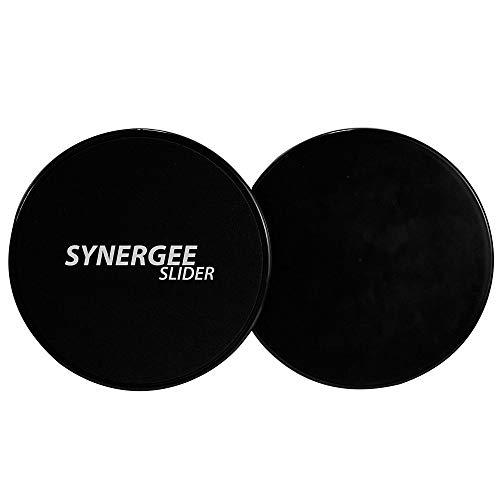
Synergee Core SlidersA 7-inch dual-sided disc at a middling half-inch thickness: padded enough for a hand, flat enough that a foot stays level.
Maker lists diameter: 7 in (retailer-listed)
2 · Best first pair
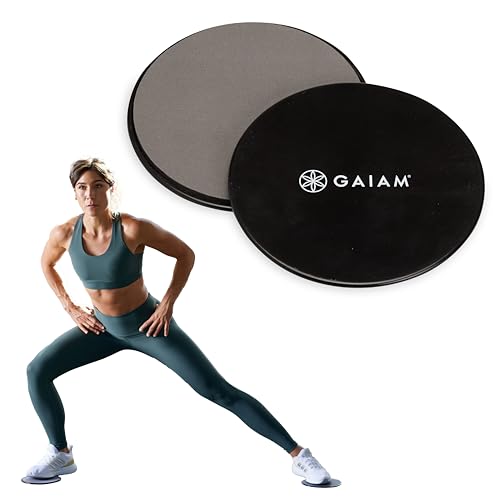
Gaiam Core Sliding DiscsThe cheapest bracket, a listed load figure, and the brand the rest of a beginner kit already comes from. The thinnest here.
Maker lists diameter: 7 in (retailer-listed)
3 · Best under the hands
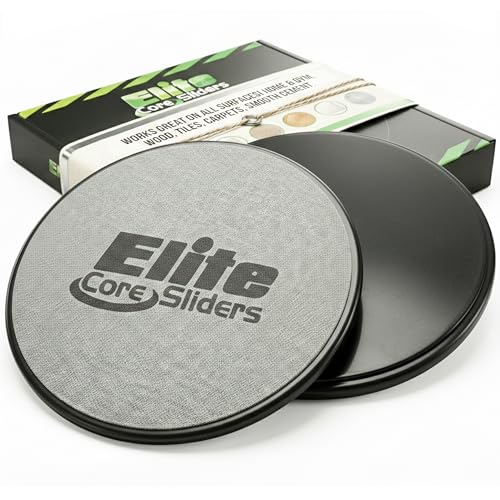
Elite Sportz Core SlidersNearly an inch of disc, which your wrists feel in a plank. The same thickness is why a bare foot can tip over the rim.
Maker lists diameter: About 7 in (retailer-listed)
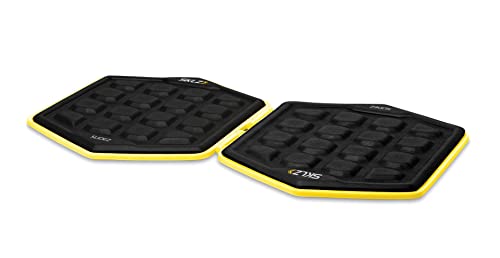
4 · Best big footprint
SKLZ SlidezHexagonal and wider than everything else here, with one low-friction base instead of two faces to choose between. Several times the price.
Maker lists size: 9 in L x 8 in W (retailer-listed)
#ad · Prices come live from Amazon, last checked November 28, 2026. Figures here are the manufacturer's own. The ranking is editorial, made against the criteria on our How We Pick page, not from lab work. Photos come from Amazon. Tap a pick for the full write-up.
The short answer
Buy a pair of 7-inch dual-sided discs and spend the two minutes to find out which face works on your floor. That is the entire decision. These things cost about what a coffee costs, four of the five differences between brands are a tenth of an inch of foam, and the variable that actually decides whether you enjoy them is your floor rather than the disc.
What you get for the money is real, though, and it is the reason this page exists. A disc removes friction, and removing friction is how a reformer carriage makes a lunge or a hamstring curl feel different from the mat version. It is the cheapest thing on this site that changes the character of an exercise rather than just making it heavier — which is the opposite of what ankle weights do, and a good reason to own both.
What actually decides it
Four things, in this order. Notice that price is not one of them, because three of the four pairs here sit within about a dollar of each other at the bottom of the category:
- Diameter. About 7 inches, or the hexagonal pads at roughly 9 by 8. Anything smaller is for a hand, not a foot, whatever the listing says.
- Thickness. The real spread here, from about a quarter of an inch to nearly a full inch. A thick disc is kinder under a hand and less stable under a foot. There is no pair that is good at both, which is why the picks below are sorted by it.
- How many faces. Dual-sided discs let you pick a surface for your floor. The single-base pads are meant to slide on anything, which is simpler and gives you nothing to try when the answer on your floor is wrong.
- Whether the maker publishes anything at all. Almost none of them do. One brand in this whole category publishes a diameter, a thickness, both materials and a care instruction, and it is not sold on Amazon — which tells you how much documentation this category thinks it owes you.
What does not matter: the printed exercise card, the colors, the bag, and the load rating. Two of these pairs publish a maximum load — 300 pounds on one and about 400 on the other — and in practice a disc under a foot carries a fraction of your body weight, not a multiple of it. The number is reassurance, not a specification you need.
Which side goes down
This is the part everybody gets wrong on their first session, and it is genuinely not your fault: the sources disagree with each other. A dual-sided disc has a hard plastic face and a soft foam or fabric face, and the two most detailed sources we could find say the plastic face goes down on carpet and the foam face goes down on wood or tile. Several retailer listings for other brands say precisely the reverse.
| Your floor | Start with | What to expect |
|---|---|---|
| Hardwood, laminate or tile | The soft face down | A smooth glide. If it skates away, flip it |
| Low-pile carpet | The hard plastic face down | Plastic rides on top of the pile instead of digging in |
| Thick or shag carpet | The hard face down, and lower expectations | Deep pile grabs. This is the floor sliders suit least |
| A yoga or exercise mat | Try both, then give up on the mat | Sticky mat surfaces are designed not to slide |
| A rug over a hard floor | Hard face down, and weight the rug corners | The rug will move before the disc does |
The honest instruction is to test it rather than to trust anyone, including this table. Put both discs down one way up, do four slow mountain climbers, flip them, do four more. The difference is obvious within about thirty seconds, and it is floor-specific enough that your kitchen and your living room may want opposite answers.
One thing all the sources do agree on: a yoga mat is the worst surface for a slider. Mats are engineered for grip, which is the entire point of a mat that is not slippery, and a grippy surface and a sliding disc are working against each other. Slide on the bare floor beside your mat, and keep the mat for the parts of the sequence that put your spine on the ground.
How many you need
Sliders are sold in pairs, which is an awkward number, because a good proportion of what you would want them for uses four points of contact. A mountain climber, a plank-position knee tuck and a bodysaw all want hands on discs and feet on the floor or the reverse; a sliding lunge, a hamstring curl and a standing inner-thigh glide want one or two feet.
- One pair is enough for every standing and supine exercise, which is most of what a pilates sequence does with sliders: lunges, curtsy slides, hamstring curls, inner-thigh glides, bridges with a sliding foot.
- Two pairs if you want the plank family — knee tucks, mountain climbers, a bodysaw, pike-ups. Two cheap pairs still costs less than almost anything else in home pilates.
- Buy the second pair in a different color if you can. Thickness matters under a hand and under a foot in opposite directions, and telling the two apart in a drawer is worth the trouble.
This is also the one argument for the thinner and thicker discs being a sensible combination rather than a contradiction: a flat pair under your feet and a padded pair under your hands is the setup that actually suits the whole exercise list, and two cheap pairs together land in the same bracket as a single pair of studio grip socks.
What sliders actually change
Sliders are not a general intensity dial either. They change a specific family of movements, and the change is about control rather than load:
- Reverse and curtsy lunges. The best single use. Sliding the back foot out means the front leg controls the whole descent and the whole return, with nothing to push off at the bottom.
- Hamstring curls and bridges with a sliding foot. Lying down, heels on the discs, pressing the hips up and sliding the feet out. This is the closest a mat gets to the feeling of a carriage going out under load.
- Inner-thigh and side glides. One foot on a disc, slide it out to the side and draw it back. The adductors have to brake and then pull, which almost nothing else at home asks them to do.
- The plank family. Knee tucks, mountain climbers, pike-ups, bodysaws. Harder than they look, every time, and the family most likely to make your wrists complain.
- Not the hundred, roll-ups, teasers, spine stretch, or any seated or supine exercise where nothing travels. A disc under a stationary foot is just a disc.
The honest warning about all of it: sliders make an exercise harder by taking away the thing that lets you stop. That is the point and it is also the risk, especially in the lunge family, where a slide that goes further than you intended ends in a position your hip flexor was not expecting. Start with half the range you think you want and build out. Socks are not the answer either — bare feet or grip socks on the standing leg, because a plain sock turns the whole floor into a slider.
What a slider is not
Worth being blunt, because sliders get sold as reformer-at-home and they are not that. A reformer carriage does three things a disc cannot: it is guided, so it travels along one axis and nowhere else; it is sprung, so it pushes back and returns you; and it is loaded, so the resistance can be dialed up and down. A disc has none of the three. It takes friction away and leaves you to supply everything else.
That trade has a real upside. Because nothing guides the disc, your own stabilizers do the guiding, and there is a reasonable argument that an unguided slide is a harder stability exercise than a guided carriage. It just is not the same exercise, and it does not produce the same sensation.
If the carriage feeling is specifically what you are after, the honest options are a different purchase entirely — a reformer board gives you a sprung, guided platform for a fraction of a machine, and the reformer alternatives page ranks every way in by how close it actually gets. If you have not decided whether you need any of it, whether pilates works without a reformer is the argument rather than the shopping list.
In detail
Every pick, in full
1
Best overall
Synergee Core Sliders
As the manufacturer lists it · Synergee
What it gets right
- Half an inch of foam, between the thin discs and the thick ones
- Flat enough underfoot that the foot does not tip, padded enough for a hand
- Sold in several colors, which makes two pairs easy to tell apart
- Its retailers are consistent about which face goes down on carpet
What it does not
- Synergee publishes no specification page, so every figure here is a retailer's
- Listings disagree about the exact plastic used
- Nothing distinguishes it from a cheaper disc except the thickness
- No published load rating, which both of the other round discs have
Skip it if
you want the most cushion you can get under your wrists — a thicker disc exists.
#ad · Price as of November 28, 2026 · Affiliate disclosure for the link to Synergee Core Sliders
2
Best first pair
Gaiam Core Sliding Discs
As the manufacturer lists it · Gaiam
What it gets right
- In the cheapest bracket, which is the right bracket for a first pair
- A listed load figure, which two of the other three discs here do not give
- Light enough to live in the same bag as a mat
- The plastic face washes rather than just wipes
What it does not
- Gaiam does not publish the thickness anywhere, and it is the thinnest here
- No foam depth at all, so a hand feels the floor through it
- PVC rather than the ABS some competitors list
- Retailer listings disagree on the pair weight
Skip it if
you will be putting your hands on them — go up to a thicker disc and save your wrists.
#ad · Price as of November 28, 2026 · Affiliate disclosure for the link to Gaiam Core Sliding Discs
3
Best under the hands
Elite Sportz Core Sliders
As the manufacturer lists it
What it gets right
- Roughly twice the depth of a standard quarter-inch disc, which your wrists notice
- A published load rating and a lifetime warranty claim
- Light — the pair weighs a few ounces
- Dual-sided, so one pair handles a wood floor and a rug
What it does not
- Tall enough that a bare foot can tip over the rim
- Reviewers report it catches rather than glides on some foam mats
- Retailer listings disagree about the plastic used and the exact diameter
- No maker spec sheet to check any of it against
Skip it if
your work is mostly foot slides — a flatter disc keeps the foot level and this one does not.
#ad · Price as of November 28, 2026 · Affiliate disclosure for the link to Elite Sportz Core Sliders
4
Best big footprint
SKLZ Slidez
As the manufacturer lists it · SKLZ
What it gets right
- The biggest footprint here, which is what a whole hand or a bare foot wants
- One base that is meant to slide on any floor, so there is no side to get wrong
- Non-marking base, which matters on a finished wood floor
- The pads clip together, which no round disc does
What it does not
- Costs more than the round discs by a clear margin
- A single base means no option if it is too slippery or not slippery enough on your floor
- Several variants are sold under similar names, so the listing has to be read carefully
- Retailer listings disagree about the material
Skip it if
your floor is carpet — the dual-sided discs let you pick a face for pile and this does not.
#ad · Price as of November 28, 2026 · Affiliate disclosure for the link to SKLZ Slidez
What to look for
- About 7 inches across. A whole foot has to fit. Bulk packs of 12 or 24 small discs are sold for group classes and the discs in them are smaller than they look in the photo.
- Dual-sided, unless you only ever train on one floor. Two faces means one pair covers a wood floor at home and a carpeted room at your parents’.
- Thin for feet, thick for hands. A quarter-inch disc keeps a foot level; a three-quarter-inch disc is kinder under a wrist in a plank. If you only buy one pair, the half-inch middle is the sane compromise.
- A flat rim, not a raised lip. You want to be able to step onto the disc and off it without catching an edge.
- A non-marking base if your floor is finished wood. Only one pair here says so explicitly, and it is worth the premium if the floor is not yours to scuff.
- Ignore the exercise card, the carry bag and the load rating. You will not use the first two and the third is not a constraint you will ever meet.
Two caveats about the category rather than any one pair. The first is that almost nobody in it publishes specifications: of the four pairs here, one publishes a load figure, one publishes nothing at all, and every diameter and thickness quoted on this page comes from a retailer or a reviewer rather than from a manufacturer’s spec sheet. We have labeled which is which on every card, and that labeling is the honest state of the information rather than an oversight.
The second is that sliders are not a substitute for the two things that come before them. If you own nothing yet, a firm mat is the first purchase and the beginner pilates kit is the order the rest goes in. Sliders are the cheap fourth thing that keeps a sequence you already do from going stale — the same job a light pair of ankle weights does from the other direction.
And if it turns out your floor simply will not cooperate — thick carpet, a rug that walks, nothing but mat in the room — do not keep buying discs. Spend the same money on a flat band instead. It works on any surface, and on a bad floor it will get more use than the best disc here.
How we picked
Chosen on published criteria, and we say so
Most gear sites open by telling you how many hours they spent with the products. We have not used most of these, and we would rather say so than imply otherwise. Every pick here is chosen against criteria we publish — grip, cushioning, size options, what buyers report after a year of use, and whether the thing is still actually sold — and every manufacturer figure on the page is labeled as the maker's claim.
Nobody pays for a place on this page, no product was supplied free in exchange for coverage, and a specification the maker does not publish is never guessed at. See the full criteria and weighting.
FAQ
Questions people ask
Which side of a slider goes down on carpet?
Can you use pilates sliders on a yoga mat?
How many sliders do I need?
Are pilates sliders the same as a reformer?
What size should pilates sliders be?
Do sliders work on hardwood floors?
Related
Keep reading
Update log
What changed
- First published.
Receipts
Sources
- 1.ProsourceFit — Core Sliders (the only maker-published numbers in this category: 7 in diameter, 1/4 in height, ABS plastic and EVA foam, and the care instruction)
- 2.Living.Fit — Synergee Core Sliders (size, materials, and the FAQ on which face goes down on carpet versus a hard floor)
- 3.BestReviews (via KTLA) — Best Core Sliders: which side suits a hard floor and which suits carpet
- 4.Rogue Fitness — SKLZ Slidez (published 9 in x 8 in size, weight, hexagonal shape, non-marking base and the clip-together feature)
- 5.Marie Claire — the best pilates sliders, tested with instructors
- 6.Gaiam — product information
We have not used every product on this page, and we do not pretend otherwise. Thicknesses, materials, sizes and warranty terms are the manufacturer's published figures, shown as their claims. Anything about materials, skin or injury is linked to a source. Prices are set by Amazon and change constantly, so we never type one into the text — every figure comes from Amazon's own data, dated, and disappears rather than going stale. Read the full method.