Pilates at Home Best picks
The Best Ankle Weights for Pilates
The side-lying leg series stops being hard long before your legs stop needing it. A pound an ankle is the cheapest way to make it hard again, and the gym aisle will try to sell you five.
We earn a commission when you buy through links on this page, at no extra cost to you. It never decides a ranking: the method is published. How we are funded
Quick picks
The short answer
1 · Best for mat work
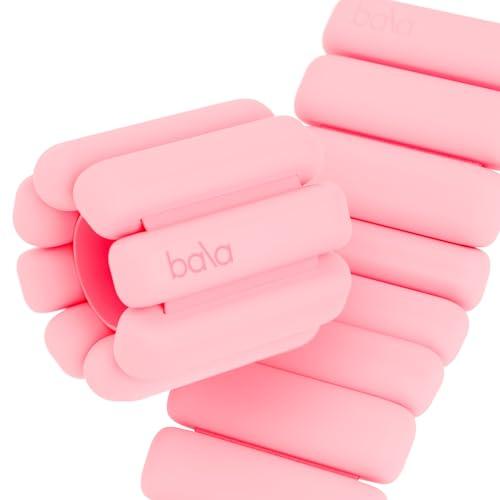
Bala Bangles 1 lbA pound of steel in a slim silicone band. It is the lightest and the slimmest pair here, which in pilates are the two things that matter.
Maker lists weights sold: 1 lb, 2 lb and 3 lb (per bangle)
2 · Best cheap pair
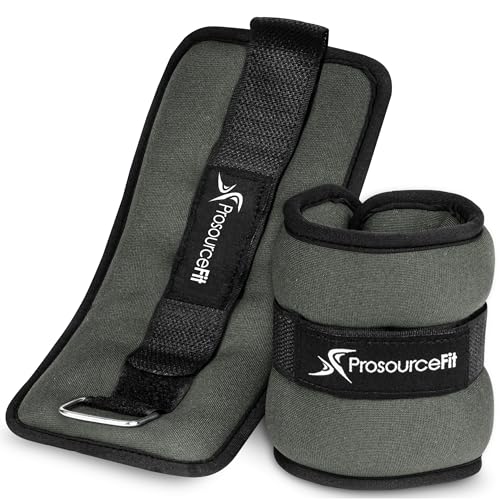
ProsourceFit Ankle Weights 2 lbA plain sand-filled neoprene cuff in the weight most mat sequences want. The thing you buy to find out whether you will use ankle weights at all.
Maker lists weights sold: 1 lb to 5 lb per weight (maker's range)
3 · Best for progressing
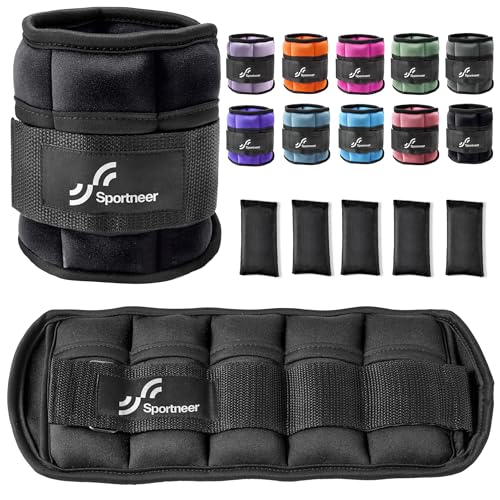
Sportneer Adjustable Ankle Weights 2-10 lb PairFive removable pound pouches per side, so one purchase covers a pound an ankle through to five. The pouches are stiff, and reviewers say so.
Maker lists range: 2 lb to 10 lb per pair
4 · Best heavier pair
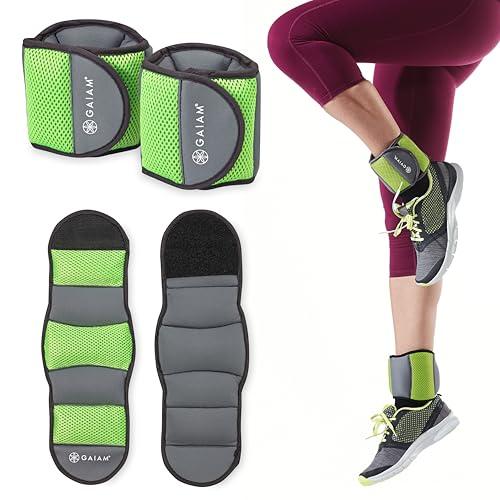
Gaiam Ankle Weights 5 lb PairTwo and a half pounds an ankle for the standing and bridging work, once a lighter pair has stopped registering.
Maker lists sold as: A pair, 2.5 lb each (the 5 lb set)
#ad · Prices come live from Amazon, last checked November 28, 2026. Figures here are the manufacturer's own. The ranking is editorial, made against the criteria on our How We Pick page, not from lab work. Photos come from Amazon. Tap a pick for the full write-up.
The short answer
Buy one to two pounds per ankle, in the slimmest cuff you can find. Not a five-pound pair, not an adjustable set loaded to the top, and not the ten-pound pair the running aisle sells. Mat pilates moves slowly, holds positions, and works the leg at full extension, which is the one situation where a very small weight does a very large amount of work.
Ankle weights are also one of the cheapest real upgrades left once you own a mat — the plain cuffs cost less than a pilates ring, though the slim silicone pairs cost rather more. They take up no storage at all, and they make the side-lying leg series, the bridge series and the standing leg work meaningfully harder without changing a single thing about how you do them. If you are working through the order of purchases, what you actually need for pilates at home puts them after the mat and alongside the band rather than anywhere near the machines.
What actually decides it
Four things separate these four pairs, and only one of them is the number printed on the cuff:
- Weight per ankle. Not per pair. Listings quote both, constantly, and a “5 lb pair” usually means two and a half pounds on each leg. Read which one you are being sold.
- Bulk. The one criterion nobody writes about and everybody notices. A sand cuff is about an inch and a half thick, and pilates spends a lot of time with your ankles crossed, stacked or pressed together. Anything thick gets in the way of the position itself.
- Whether it also fits a wrist. The arm series wants the same small load the leg series does. A pair that fits both is twice the purchase for the same money.
- Whether the weight can change. Fixed is simpler and slimmer. Adjustable means one purchase covers a year of getting stronger, at the cost of being the bulkiest thing in the drawer.
What does not matter: the exercise card in the box, the carry case, and whether the filling is sand or iron sand. Nothing in a pilates sequence can tell the difference between a pound of sand and a pound of steel, and the only reason the material shows up here at all is that steel takes up less room.
How heavy, really
| Per ankle | What it is for | Honest verdict |
|---|---|---|
| Half a pound | Rehab-style work, a very recent injury, anything at a long hold | Real, but you will outgrow it inside a month |
| 1 lb | The side-lying leg series, leg circles, the arm series, most mat sequences | The default. Buy this first |
| 2 lb | Bridges, standing leg work, anything where the leg is bent rather than straight | The second pair, or the first if you already strength train |
| 2.5 to 3 lb | Standing glute work, step-ups, walking | Heavy for mat pilates and fine for everything around it |
| 5 lb and up | Gym leg machines, running drills | Wrong tool. Skip it entirely for pilates |
The reason the useful band is so narrow is the lever, not your strength. In almost every pilates exercise that an ankle weight improves, your leg is long and your hip is the joint doing the work, so the weight sits about three feet from the joint that has to move it. One of the trainers NBC Select quotes in its ankle weight roundup makes exactly this point: a light weight feels heavy because it is a long way from the center of your body. The cuff is not the load. The cuff times the length of your leg is the load.
That is also why a pair you have outgrown is not wasted. The same one-pound cuffs that stop registering in bent-knee bridges are still hard work in a straight-leg side series, and they are still the right weight for the arm work. Going heavier is a second purchase for a different set of exercises, not a replacement.
Bangle, cuff or adjustable
| Silicone bangle | Neoprene cuff | Adjustable cuff | |
|---|---|---|---|
| Thickness under the ankle | Slimmest | About 1.5 in | Thickest |
| Weight options | Fixed, 1 to 3 lb | Fixed, 1 to 5 lb | Pound steps across a range |
| Fits a wrist too | Yes, by design | Usually, loosely | No, too long |
| Ankles crossed or stacked | Fine | Noticeable | In the way |
| Sweat and washing | Wipes clean | Holds it | Holds it |
| Cost per pound owned | Highest | Lowest | Middle |
Read the first row and the last row together, because that is the whole decision. The bangle is the best object and the worst value: a pound of steel in silicone costs several times what a pound of sand in neoprene costs, and what you are paying for is the millimeters it does not take up. If your sequences are full of side-lying work with the legs together, that is worth real money. If they are not, it is not.
The adjustable cuff is a different kind of purchase. It is the only one of the three that answers the question “what do I buy when this gets easy” at the time of the first purchase rather than six months later, and the trainers in that NBC roundup recommend adjustable sets for exactly that reason. The catch is physical: a cuff that holds five removable pouches is a long, thick thing wrapped halfway up your shin, and nobody unloads a pouch between two exercises.
The plain neoprene cuff is still the right first purchase for most people, because it costs about as much as a bag of coffee and it answers a question you cannot answer in advance, which is whether you will use these at all. Ankle weights have a very high buy-and-forget rate. Find out cheaply.
The sequences they change
Ankle weights are not a general-purpose intensity dial. They help a specific list of things a lot and do nothing for the rest:
- The side-lying leg series. Lifts, circles, front-and-back, the lot. This is the single best use, because the leg is straight, the hip is isolated, and the series is the part of a class that gets easy first.
- Leg circles and the hundred. Anything supine with a long leg. A pound changes how hard your deep abdominals have to work to keep your pelvis still, which is the actual point of the exercise.
- Bridges and the shoulder bridge series. Bent knee, so the lever is short and you can afford two pounds here when one is plenty elsewhere.
- Standing leg work and the arm series, if the pair also fits your wrists. Light wrist weights change the arm circles and the overhead work more than they have any right to.
- Not planks, teasers, roll-ups, or anything where your feet are the anchor. Adding weight to an anchor achieves nothing, and in a roll-up it just lets you cheat with momentum.
If what you actually want is more load through the arms and the center rather than the legs, a flat band is the better buy and costs less, and a ring loads the inner thighs and the chest in a way nothing strapped to an ankle can.
And if the reason you want more resistance is that mat work has stopped being hard in general, the honest answer is that ankle weights fix one part of that and the difference between reformer and mat work explains the rest of it.
Why a pound feels like three
It is worth understanding this properly, because it is the reason every piece of advice on this page points downward in weight. Torque is force times distance. A one-pound cuff at your ankle with the leg straight out sits roughly thirty inches from your hip joint; the same pound held at your knee sits about half that. The hip sees roughly twice the demand in the first case for an identical weight, and pilates picked the straight-leg version on purpose, long before anybody strapped anything to it.
Two practical consequences. First, the weight you can comfortably use for bent-knee work is not the weight you can use straight-legged, so a pair that feels trivial in bridges can be genuinely hard in a side series. Use the lighter judgment, not the heavier one. Second, the slow tempo is doing work that the number hides: holding a straight leg at the top of a lift for three counts with a pound on it is more demanding than snapping twenty reps with three pounds, and only one of those keeps your pelvis still.
In detail
Every pick, in full
1
Best for mat work
Bala Bangles 1 lb
As the manufacturer lists it · Bala
What it gets right
- Slim profile, so the weight sits flat instead of rolling around the ankle bone
- The same pair works on wrists, which doubles what it is useful for
- Silicone wipes clean and does not hold sweat the way neoprene does
- Bala publishes the fit range, so you can check it against your own ankle before ordering
What it does not
- Costs several times what a neoprene cuff of the same weight costs
- Fixed weight — progressing means buying another pair, not adding to this one
- The maker says the band gets thicker as the weight goes up, so the 3 lb sits noticeably higher off you
- Hook-and-loop against bare skin can catch on leggings
Skip it if
you want to be able to add load later — an adjustable cuff does that and this does not.
#ad · Price as of November 28, 2026 · Affiliate disclosure for the link to Bala Bangles 1 lb
2
Best cheap pair
ProsourceFit Ankle Weights 2 lb
As the manufacturer lists it · ProsourceFit
What it gets right
- Soft neoprene is comfortable directly against bare skin
- The maker publishes the actual dimensions, which almost nobody in this category does
- Wide hook-and-loop strap adjusts over a sock or a bare ankle
- Sold in 1 lb steps, so you can buy the exact load you want
What it does not
- An inch and a half thick, which you feel when your ankles cross or stack
- Sand fill settles to one end and has to be shaken back
- Neoprene holds sweat and eventually smells unless it is aired
- No way to change the weight once you own it
Skip it if
your mat work involves a lot of ankles-crossed or ankles-stacked positions — the bulk gets in the way.
#ad · Price as of November 28, 2026 · Affiliate disclosure for the link to ProsourceFit Ankle Weights 2 lb
3
Best for progressing
Sportneer Adjustable Ankle Weights 2-10 lb Pair
As the manufacturer lists it
What it gets right
- One pair covers the whole load range rather than one point on it
- Starts at a pound an ankle, which is where mat pilates actually starts
- Long strap and a published fit range, so it suits a wide ankle
- Removing pouches makes it a light cuff again for slow sequences
What it does not
- Reviewers consistently report the pouches are stiff to get in and out
- One-pound steps, so there is nothing between 1 lb and 2 lb an ankle
- At 14.5 in long it wraps high up the shin, not just the ankle
- Sportneer publishes no spec sheet, so the figures here come from retailers and reviewers
Skip it if
you want to change the load mid-workout — unloading a pouch is a two-minute job, not a two-second one.
#ad · Price as of November 28, 2026 · Affiliate disclosure for the link to Sportneer Adjustable Ankle Weights 2-10 lb Pair
4
Best heavier pair
Gaiam Ankle Weights 5 lb Pair
As the manufacturer lists it · Gaiam
What it gets right
- Heavy enough to still feel like something once 1 lb has become easy
- Mesh panel breathes better than a solid neoprene wrap
- A yoga brand's sizing, cut for an ankle rather than for a gym machine
- Also sold in a heavier set if the lower body work is the goal
What it does not
- 2.5 lb an ankle is too much for most slow mat sequences
- Bulky through the ankle, same as any sand cuff
- Sand fill shifts and needs redistributing
- Fixed weight, so it is a second purchase rather than a first one
Skip it if
this is your first pair — start at 1 lb to 2 lb and come back to this when that stops being work.
#ad · Price as of November 28, 2026 · Affiliate disclosure for the link to Gaiam Ankle Weights 5 lb Pair
What to look for
- One to two pounds per ankle. Check whether the listing means per weight or per pair. A “5 lb pair” is usually 2.5 lb a side, and a “5 lb set of 2” is usually five pounds a side. Those are very different purchases.
- As slim as you can afford. Thickness is the thing you will notice every session. If your sequences keep the legs together, pay for the slim one.
- A strap that actually fits your ankle. The published fit ranges are real and they vary: one pair here covers 5.5 to 11 inches and another 7.5 to 12.5. Measure before you order.
- Hook-and-loop that closes away from your skin. The strap is what fails first on cheap pairs, and it is also what catches on leggings.
- Fits your wrists too, if you can get it. The arm series wants the same small load and a pair that does both is the better value whatever it costs.
- Skip the exercise card, the carry bag and the filling material. None of the three changes anything. The weight, the thickness and the strap are the whole product.
One honest caveat about the whole category. Ankle weights are the most abandoned item in home fitness after the exercise bike, because they make a sequence harder rather than making it new, and harder is a thing people avoid. If you are not already doing the side-lying series regularly, a pair of cuffs will not get you doing it. Build the habit first — the first thirty days at home is written for exactly that — and buy the weights when a sequence you already do has stopped being work.
The other thing worth saying plainly: if you own nothing yet, this is not the purchase to start with. A firm mat comes first, because all of this work happens with your spine on the floor — the mats written for pilates are the first thing to buy, and the beginner pilates kit is the order the rest of it goes in. Ankle weights are a fourth or fifth purchase that happens to be cheap, not a first one.
If you want the other cheap thing that changes mat work rather than just loading it, a pair of sliders is the same money and makes the movement itself different instead of heavier. The two are complementary: the weight makes a lift harder, the disc makes a glide less stable.
Shopping around one brand in particular? Bala Bangles alternatives sets out which of these pairs match the original on weight range or on fit, and what the saving costs you.
How we picked
Chosen on published criteria, and we say so
Most gear sites open by telling you how many hours they spent with the products. We have not used most of these, and we would rather say so than imply otherwise. Every pick here is chosen against criteria we publish — grip, cushioning, size options, what buyers report after a year of use, and whether the thing is still actually sold — and every manufacturer figure on the page is labeled as the maker's claim.
Nobody pays for a place on this page, no product was supplied free in exchange for coverage, and a specification the maker does not publish is never guessed at. See the full criteria and weighting.
FAQ
Questions people ask
How heavy should ankle weights be for pilates?
Do ankle weights work for the side-lying leg series?
Can I use ankle weights on my wrists?
Are adjustable ankle weights worth it?
Are ankle weights bad for your knees?
Should I buy ankle weights or resistance bands first?
Related
Keep reading
Update log
What changed
- First published.
Receipts
Sources
- 1.Bala — Bala Bangles (the weights sold, the 5.5-11 in fit range, and the maker's note that the band thickens as the weight goes up)
- 2.ProsourceFit — Ankle Weights (published per-weight range, the 2 lb and 3 lb dimensions, neoprene shell and iron sand fill)
- 3.Gaiam — Ankle Weights (the pair weights sold, neoprene/polyester/mesh shell and sand fill)
- 4.Garage Gym Reviews — Sportneer Adjustable Ankle Weights (measured size, strap length and the pouch complaint)
- 5.NBC Select — the best ankle and wrist weights, including the trainers quoted on light weights for pilates-style work
- 6.Merrithew — Pilates equipment shop
We have not used every product on this page, and we do not pretend otherwise. Thicknesses, materials, sizes and warranty terms are the manufacturer's published figures, shown as their claims. Anything about materials, skin or injury is linked to a source. Prices are set by Amazon and change constantly, so we never type one into the text — every figure comes from Amazon's own data, dated, and disappears rather than going stale. Read the full method.