Pilates at Home Guide
What Size Exercise Ball Do I Need?
Stability balls are sized by your height, mini pilates balls by what you are doing with them. Two different questions that get asked with the same words.
We earn a commission when you buy through links on this page, at no extra cost to you. It never decides a ranking: the method is published. How we are funded
The short answer
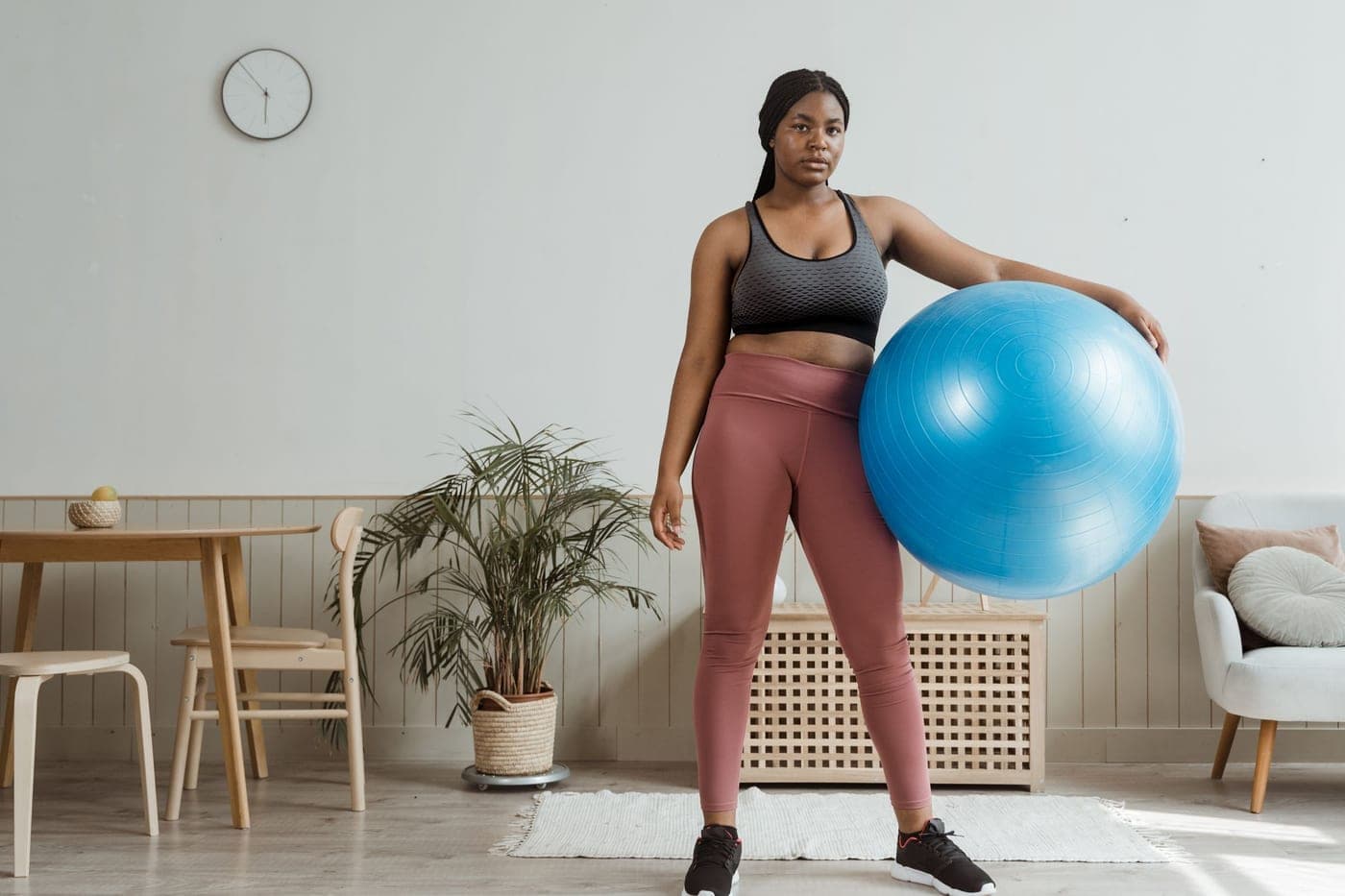
For a full-size stability ball, choose by your height: 55 cm if you are up to about 5 foot 6, 65 cm from there to about 6 foot, and 75 cm above that. The target is simple — sitting on the inflated ball with your feet flat, your hips should be level with or very slightly above your knees.
For a mini pilates ball, height is irrelevant. Those are sized by what you do with them: 9 inches is the general-purpose choice, 7 inches suits smaller frames and tighter placements between the knees or under the neck. The ranked options for both are in the ball roundup.
Stability ball size by height
| Your height | Ball diameter | Also sold as |
|---|---|---|
| Under 4 ft 10 | 45 cm | Small or 18 inch |
| 4 ft 10 to 5 ft 5 | 55 cm | Medium or 22 inch |
| 5 ft 6 to 6 ft 0 | 65 cm | Large or 26 inch |
| 6 ft 1 to 6 ft 7 | 75 cm | Extra large or 30 inch |
| Above 6 ft 7 | 85 cm | Rarely stocked |
These are the bands the major makers publish, and they agree with each other closely. Two situations push you up a size rather than down. If you are heavier, the ball compresses more under load and effectively sits lower, so the next size up frequently fits better. And if the ball is for sitting at a desk rather than for exercise, the larger of two adjacent sizes is usually the more comfortable choice.
One situation pushes you down: if you want the ball mainly for floor work — hamstring curls, planks with forearms on the ball, stretching over it — a smaller ball is easier to control and the height table matters less.
The sitting test
Height tables are a starting point and your proportions are not the average. The test that actually settles it takes ten seconds with the ball fully inflated.
Sit on top with your feet flat on the floor and roughly hip-width apart. Look at your thighs. They should be level with the floor or sloping very slightly downward from hip to knee, with your knees at about a right angle. If your knees are higher than your hips, the ball is too small. If you are perched and reaching for the floor with your toes, it is too big.
The reason the test beats the table is leg length. Two people of identical height can differ by several inches in inseam, and the ball cares about your legs rather than your total height. If you are between sizes and you have long legs for your height, size up.
Remember that a ball sitting in a box is smaller than a ball in use. Most need a day to settle after the first inflation, and almost all of them are inflated in two stages — part way, left to stretch, then topped up. Judging the size before that has happened is how people conclude they bought the wrong one.
Mini pilates balls are a different question
A mini ball is not a small stability ball. It is a soft, deliberately under-inflated ball used as support and as a destabilizer, and the sizes are chosen by placement rather than by your body.
| Mini ball size | Best for | Notes |
|---|---|---|
| 7 in | Between the knees, under the neck, smaller frames | Easier to keep in place in tight placements |
| 9 in | General mat pilates, under the sacrum, bridges | The default; most exercise videos assume this |
| 12 in | Larger supports, under the hips, gentle backbends | Harder to control, more support |
If you are buying one mini ball, buy 9 inches. If you are buying two, 7 and 9 covers almost everything. And if you are choosing between a mini ball and a magic circle as your first prop, that comparison is here — the ball is the more useful first purchase for most home practices.
The picks
One ball per size decision
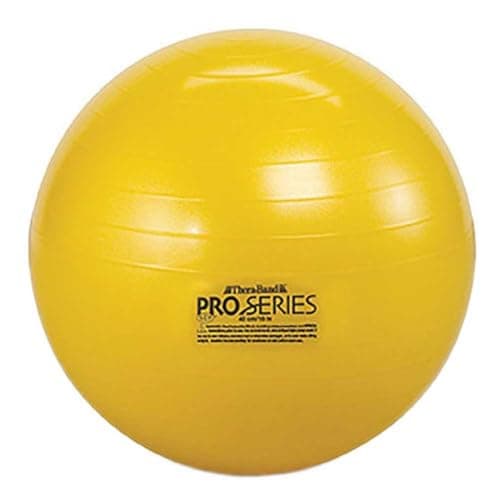
A full-size ball that lasts
TheraBand Pro Series SCP Exercise Ball
The full-size ball worth paying for. Five color-coded sizes, a 600 lb static rating, and a wall built to let you down slowly rather than drop you if it is ever punctured.
$42.95Amazon#ad · Price as of November 3, 2026 · Affiliate disclosure for the link to TheraBand Pro Series SCP Exercise Ball
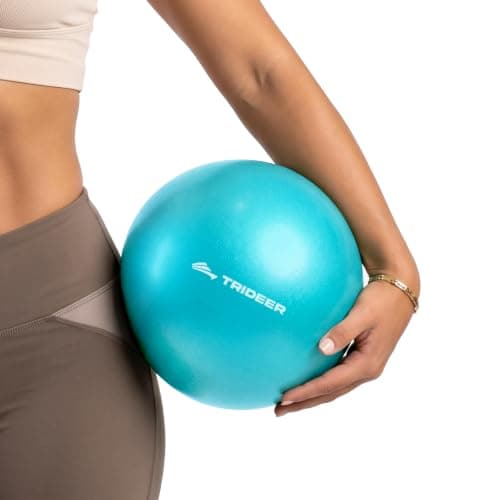
Finding out if you want one
Trideer Exercise Ball
The one to buy to find out whether you will use a full-size ball at all. Five sizes, a pump in the box, and the maker's own anti-burst figure sits far above anything you will put through it.
$7.98Amazon#ad · Price as of November 3, 2026 · Affiliate disclosure for the link to Trideer Exercise Ball
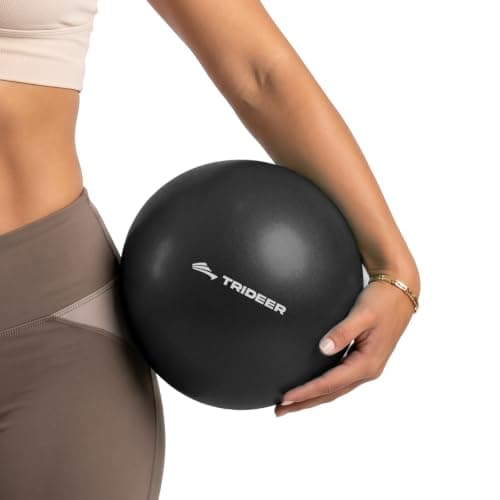
Most mat pilates work
Trideer Pilates Ball 9 in
The mini ball to buy if you are only buying one. Nine inches, a lightly textured skin that stays put against bare legs, and it goes flat in seconds when you want it out of the way.
$8.09Amazon#ad · Price as of November 3, 2026 · Affiliate disclosure for the link to Trideer Pilates Ball 9 in
- MerrithewNo image
Picking a diameter
STOTT PILATES Mini Stability Ball
The ball studios hand you, and the only one here sold in three diameters — so you can match the ball to the exercise and to your own torso instead of the other way around.
Check price on Amazon#ad · Price as of November 3, 2026 · Affiliate disclosure for the link to STOTT PILATES Mini Stability Ball
Inflation matters as much as diameter
Diameter is printed on the box; firmness is up to you, and it changes how the ball behaves more than one size step does.
- Stability balls: firm, but not drum tight. A properly inflated ball flattens slightly where you sit and rolls predictably. Under-inflated, it sags and sits you too low; over-inflated, it is skittish and stresses the seams.
- Inflate in two stages. Most makers ask for roughly 80 percent, a day to let the material stretch, then a top-up. Skipping the wait is the main cause of a ball that seems too small.
- Mini balls: deliberately soft. Under-inflation is the feature. Softer means more support and more instability; firmer means springier and easier to control. Start soft.
- Check the burst rating on a full-size ball. Anti-burst construction deflates slowly rather than popping, which matters when you are sitting on it with weights.
- Expect to top it up. Every inflatable loses a little pressure over weeks. Keep the pump.
A note on latex: some balls contain it and some do not, which matters if you have a sensitivity. If latex is a problem for you, it is the same material question that rules out natural rubber mats — cork versus rubber covers the alternatives on the mat side. For where a full-size ball fits into a home pilates kit at all, the kit list is here.
How we picked
Chosen on published criteria, and we say so
Most gear sites open by telling you how many hours they spent with the products. We have not used most of these, and we would rather say so than imply otherwise. Every pick here is chosen against criteria we publish — grip, cushioning, size options, what buyers report after a year of use, and whether the thing is still actually sold — and every manufacturer figure on the page is labeled as the maker's claim.
Nobody pays for a place on this page, no product was supplied free in exchange for coverage, and a specification the maker does not publish is never guessed at. See the full criteria and weighting.
FAQ
Questions people ask
What size exercise ball do I need for my height?
Should I size up or down if I am between sizes?
What size pilates ball should I buy?
How firm should an exercise ball be?
Is a stability ball the same as a pilates ball?
Related
Keep reading
Update log
What changed
- First published.
Receipts
Sources
- 1.Merrithew — Mini Stability Ball (sizes and specifications)
- 2.THERABAND — exercise balls and product specifications
- 3.Trideer — exercise and Pilates balls
- 4.Pilates Collective Club — Best Pilates Ball
- 5.Yahoo Life — The best exercise balls
We have not used every product on this page, and we do not pretend otherwise. Thicknesses, materials, sizes and warranty terms are the manufacturer's published figures, shown as their claims. Anything about materials, skin or injury is linked to a source. Prices are set by Amazon and change constantly, so we never type one into the text — every figure comes from Amazon's own data, dated, and disappears rather than going stale. Read the full method.