Pilates at Home Comparison
Pilates Ring vs Ball: Which Should You Buy First?
They look like alternatives and they are not. One adds resistance you squeeze against; the other takes stability away and gives support back. Most people should own the ball first.
We earn a commission when you buy through links on this page, at no extra cost to you. It never decides a ranking: the method is published. How we are funded
Side by side
The two, next to each other
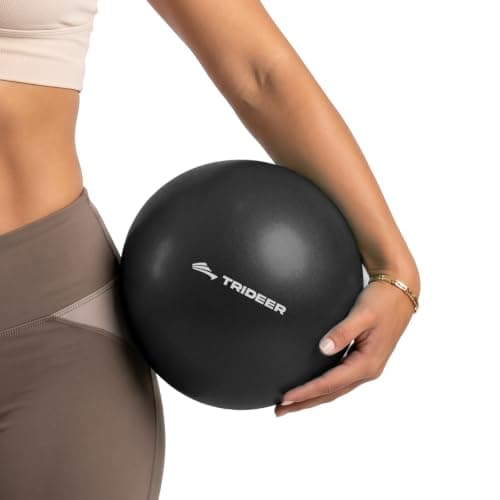
Buy this first
Trideer Pilates Ball 9 in
Deflates to fit a drawer, supports a lower back, props a head, and makes a bridge harder. The most versatile of the four.
$8.09Amazon#ad · Price as of November 3, 2026 · Affiliate disclosure for the link to Trideer Pilates Ball 9 in
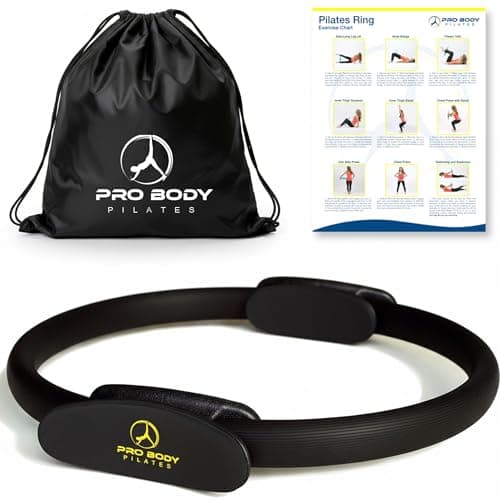
Buy for resistance work
ProBody Pilates Ring (Magic Circle)
The standard magic circle: squeeze it between the thighs or the palms and the exercise gets harder immediately.
$23.95Amazon#ad · Price as of November 3, 2026 · Affiliate disclosure for the link to ProBody Pilates Ring (Magic Circle)
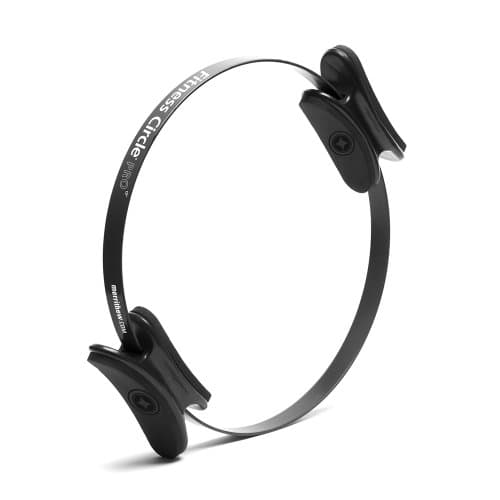
Buy if you want one that lasts
Merrithew Fitness Circle
Firmer and better built than the budget rings, from a company that makes studio equipment. Less give, more feedback.
$80.00Amazon#ad · Price as of November 3, 2026 · Affiliate disclosure for the link to Merrithew Fitness Circle
Buy if latex is a problem
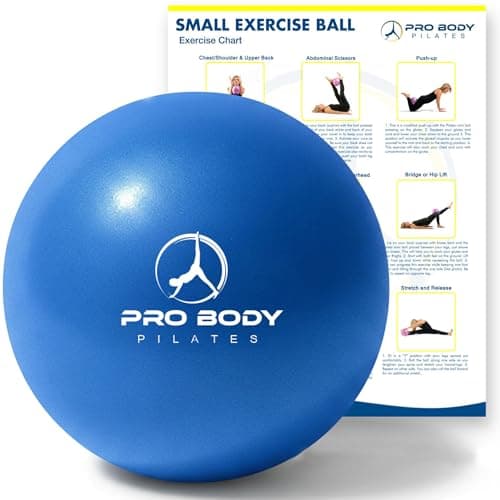
ProBody Pilates Small Exercise Ball 9 in
The same job as the Trideer in a latex-free build, which matters if a rubber sensitivity rules out most inflatables.
$7.95Amazon#ad · Price as of November 3, 2026 · Affiliate disclosure for the link to ProBody Pilates Small Exercise Ball 9 in
The verdict
Buy the mini ball first. For a home mat practice it does more jobs than the ring: it props your head so your neck is not straining, it sits under your lower back for support, it goes between your knees in a bridge, and it makes almost any floor exercise harder by removing stability. It also deflates into a drawer, which matters more in a small flat than it sounds.
Buy the ring if inner-thigh, chest and arm resistance work is specifically what you want. A magic circle gives you something to squeeze against, and nothing else in a home kit does that. It is the better second purchase, not the better first one.
Side by side
| Magic circle (ring) | Mini ball | |
|---|---|---|
| What it adds | Resistance to squeeze against | Instability, and support where you need it |
| Typical size | About 13 to 15 inches across | 7 to 9 inches inflated |
| Main muscle focus | Inner thighs, chest, arms, upper back | Deep core, glutes, whatever is stabilizing |
| Used as support | No | Yes, under the head, back, hips or knees |
| Adjustable difficulty | No, the ring is the ring | Yes, inflate less for softer and harder to control |
| Storage | Rigid hoop, leans in a corner | Deflates completely |
| Good for beginners | Yes, but less immediately useful | Yes, and useful from day one |
| Durability | Years; cheap pads tear first | A year or two; it is an inflatable |
The row that decides it for most people is the fourth one. The ball is both a challenge and a support, so it shows up in gentle practices and hard ones. The ring is only ever a challenge.
What the ring is for
A magic circle is a sprung hoop with a pad on each side. You squeeze it and it pushes back, which lets you load muscles that are otherwise difficult to load without weights — adductors, pectorals, the muscles between the shoulder blades.
The classic placements are between the thighs in a bridge or a hundred, between the palms at chest height, and under one foot in a side-lying series. In all of them the ring does one thing: it gives the muscle something to work against so the exercise stops being easy.
That makes it a progression tool rather than a starter tool. If mat pilates is still hard without any equipment, the ring adds difficulty you do not need yet. Once the standard mat series is comfortable, it is the cheapest way to make it demanding again. The options are ranked in the ring roundup. There is a third progression tool worth knowing about before you choose between these two: a flat resistance band loads the arms and the footwork in a way neither the ring nor the ball reaches, and it costs less than either.
Two practical notes. Firmness varies a lot between rings, and a soft ring is a ring you squeeze flat without much happening; a firmer one gives better feedback. And the pads are the weak point on inexpensive rings — they tear before the hoop fails.
What the ball is for
A mini ball is a small, soft, partly inflated ball, and its usefulness comes from being deliberately under-inflated. Put it under your sacrum and it supports your lower back. Put it behind your head and your neck stops straining in a hundred. Put it between your knees and a bridge becomes an adductor exercise. Put it under one foot and everything becomes a balance problem.
That range is why it is the better first purchase. It helps a beginner do the exercises properly, and it makes the same exercises harder for someone who has outgrown them — frequently in the same session. Inflation is the dial: softer is more supportive and more unstable, firmer is more springy and easier to control.
Size is worth getting right. A 9 inch ball is the general-purpose choice; 7 inch balls suit smaller frames and tighter placements. Both are covered in the ball roundup, which also explains where a full-size stability ball fits, and the size guide matches diameters to height.
The main caveat is that it is an inflatable. It will need topping up, it can be punctured, and most are made of PVC with some containing latex, which matters if you have a sensitivity.
In detail
Both, in full
Buy this first
Trideer Pilates Ball 9 in
As the manufacturer lists it · Trideer
What it gets right
- Textured skin grips bare legs instead of squirting out
- Inflates in seconds and holds its air between sessions
- Deflates flat, so it lives in a drawer rather than a corner
What it does not
- One diameter only — no 7 in or 12 in option
- Straw inflation rather than a pump, so the first fill is fiddly
- Published anti-burst figures for mini balls are far below full-size balls; this is not a seat
Skip it if
you want a ball big enough to sit on, which is a different product entirely.
#ad · Price as of November 3, 2026 · Affiliate disclosure for the link to Trideer Pilates Ball 9 in
Buy for resistance work
ProBody Pilates Ring (Magic Circle)
As the manufacturer lists it
What it gets right
- Turns easy mat exercises into difficult ones instantly
- Costs less than a single class
- Stores on a hook
What it does not
- Narrow use case — it is one tool for one job
- Padded grips compress over time
- Too springy for some people's knees
Skip it if
you have knee pain that inner-thigh squeezing aggravates.
#ad · Price as of November 3, 2026 · Affiliate disclosure for the link to ProBody Pilates Ring (Magic Circle)
Buy if you want one that lasts
Merrithew Fitness Circle
As the manufacturer lists it · Merrithew
What it gets right
- Firmer, more consistent resistance than budget rings
- Pads are properly finished and stay put
- The ring most studios hand you
What it does not
- Several times the price of a budget ring
- Firm resistance is too much for some beginners
- Does nothing a cheaper ring cannot roughly do
Skip it if
this is your first ring and you are not sure you will use it.
#ad · Price as of November 3, 2026 · Affiliate disclosure for the link to Merrithew Fitness Circle
Buy if latex is a problem
ProBody Pilates Small Exercise Ball 9 in
As the manufacturer lists it · ProBody Pilates
What it gets right
- Latex free, which matters if rubber props bother your skin
- Widely stocked in several colors, so it is easy to actually buy
- Matches the ring and prop kit from the same maker
What it does not
- Some listings include a pump and some do not — check before ordering
- Colors and packaging vary between sellers
- Does nothing the Trideer does not also do
Skip it if
you want a firmer, studio-grade ball built to survive a decade of weekly use.
#ad · Price as of November 3, 2026 · Affiliate disclosure for the link to ProBody Pilates Small Exercise Ball 9 in
Buying both, and in what order
The honest sequence for a home pilates practice, assuming you already have a mat:
- Mini ball. Useful from the first session, as support and as a challenge.
- Grip socks, if a studio is anywhere in your future, because most require them — socks here.
- Magic circle, once the mat series is comfortable without equipment.
- A resistance bar or a reformer board, much later and only if you want the reformer feel — bar versus board is that decision.
A ring-and-ball kit short-circuits the first and third steps and usually costs less than the two bought separately. The trade is that kit components are built to a kit price, so the ring in a bundle is rarely as firm as a good standalone one. If you expect to use the ring heavily, buy it on its own.
Neither of these is where to start if you have no equipment at all. The mat comes first, and the full ordered list is in what you actually need for pilates at home.
If the ring wins, how to use one covers the placements and how hard to squeeze, which is the part nobody puts on the packaging.
There is a third option people weigh against the ring, and it is a bigger step rather than a sideways one. A pilates bar against a ring is the comparison to read if what you actually want is added resistance rather than a sharper mat session.
How we picked
Chosen on published criteria, and we say so
Most gear sites open by telling you how many hours they spent with the products. We have not used most of these, and we would rather say so than imply otherwise. Every pick here is chosen against criteria we publish — grip, cushioning, size options, what buyers report after a year of use, and whether the thing is still actually sold — and every manufacturer figure on the page is labeled as the maker's claim.
Nobody pays for a place on this page, no product was supplied free in exchange for coverage, and a specification the maker does not publish is never guessed at. See the full criteria and weighting.
FAQ
Questions people ask
Should I buy a pilates ring or a ball first?
What is the difference between a pilates ring and a pilates ball?
Is a pilates ring worth it for beginners?
What size pilates ball should I get?
Related
Keep reading
Update log
What changed
- First published.
Receipts
Sources
- 1.Merrithew — Pilates equipment shop
- 2.Merrithew — Mini Stability Ball (sizes and specifications)
- 3.ProBody Pilates — mini exercise balls
- 4.Pilates Collective Club — Best Pilates Ball
- 5.AAAAI — Latex allergy
We have not used every product on this page, and we do not pretend otherwise. Thicknesses, materials, sizes and warranty terms are the manufacturer's published figures, shown as their claims. Anything about materials, skin or injury is linked to a source. Prices are set by Amazon and change constantly, so we never type one into the text — every figure comes from Amazon's own data, dated, and disappears rather than going stale. Read the full method.