Pilates at Home Guide
How to Choose a Pilates Reformer
Reformers look interchangeable and are not. Seven decisions in the order they matter, and the two specs that quietly rule out half the market for your room.
We earn a commission when you buy through links on this page, at no extra cost to you. It never decides a ranking: the method is published. How we are funded
The short answer
Measure your room first, decide whether it has to fold, and only then compare machines. Those two answers eliminate most of the market before any spec sheet is involved. After that the order is spring system, footbar adjustability, carriage width, frame length for your height, and assembly.
The reason to work in that order is that the specs people compare first — spring count, accessory bundles, finish — are the ones least likely to make a machine unusable. A reformer that does not fit the room, or that has to be dragged out from behind a sofa every session, is a reformer you stop using in month three.
The seven decisions, in order
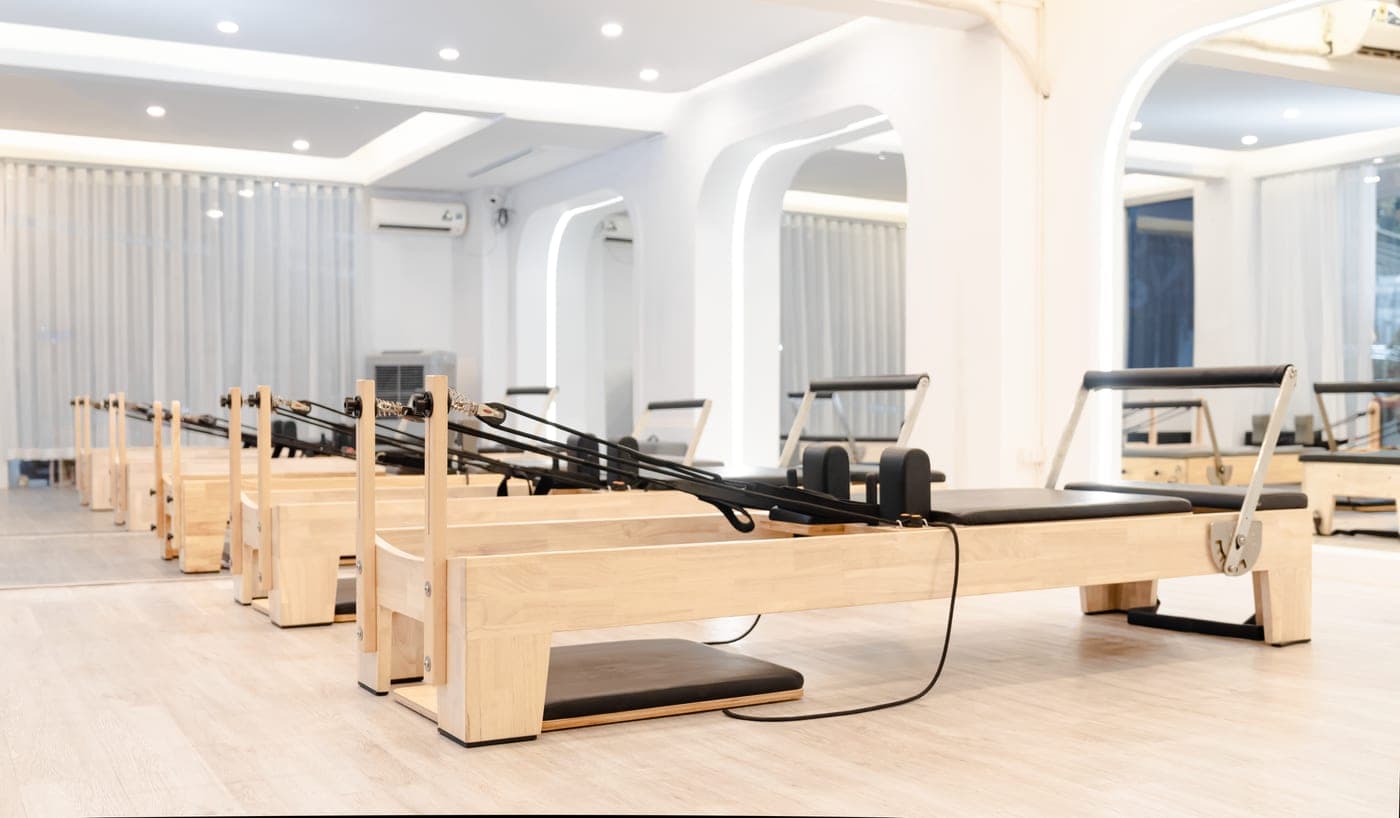
1. Footprint and where it lives. A full-size reformer is roughly the length of a sofa and you need clearance at both ends — behind the headrest for straps, past the footbar for standing work. The real number is bigger than the machine. The space guide has the measurements and it is the first thing to settle.
2. Folding, or not. Folding costs you rigidity and adds hinges that can develop play over years. Not folding costs you a permanent piece of furniture. There is no free answer here, and the question is simply whether the machine can stay out. If it cannot, the folding models are the shortlist.
3. Spring system. Steel springs or elastic cords, and how many. This is the decision that most changes how the machine feels, and it gets its own section below.
4. Footbar adjustability. A footbar with three or four positions lets the machine fit different heights and different exercises. A fixed footbar is a real limitation, especially if more than one person will use it.
5. Carriage width and padding. A narrow carriage makes side-lying work precarious and makes anyone broad-shouldered feel perched. Padding depth matters for the same reason a mat's density does: thin padding over a hard carriage is uncomfortable within ten minutes.
6. Frame length for your height. Many reformers list a maximum user height, and it is worth taking seriously. Over about six foot, check whether an extension or a longer frame is offered before falling for a machine.
7. Assembly and weight. Some arrive largely built; some are a two-person afternoon. The weight matters afterwards too, because a machine that has to be moved to be used had better be liftable by one person.
What each decision rules out
| Decision | What to measure or check | What it rules out |
|---|---|---|
| Footprint | Machine length plus clearance at both ends | Full-size frames in a small room |
| Folding | Whether it can stay set up | Non-folding models if it cannot |
| Spring system | Steel springs vs elastic cords | Cord machines for heavy loading |
| Footbar | Number of positions | Fixed-bar models for shared use |
| Carriage | Width and padding depth | Narrow carriages for side-lying work |
| Frame length | Maker's stated maximum user height | Shorter frames if you are tall |
| Assembly | Built or flat-packed, and total weight | Heavy frames if it must be moved |
Every figure to check in that middle column is published by the maker. None of it requires you to try the machine, which is useful, because almost nobody gets to try a reformer before buying one.
Springs and cords, properly
This is the spec that separates machines that feel like a studio reformer from machines that feel like a resistance trainer on rails.
Steel springs. What studio reformers use. Resistance builds smoothly through the range and holds steady at the end of it, which is what lets you move slowly under load — the whole point of the method. Springs are usually color-coded by tension and you combine them to set resistance. They last, and they are heavy.
Elastic cords. Lighter, quieter and much cheaper to ship. Resistance rises steeply the further you go, so the hardest point is the end of the movement rather than the middle. That changes the exercise. Cords also lose tension over years and need replacing, which is a consumable cost springs do not have.
How many. Four springs is the studio standard and gives you enough combinations to load a beginner and a strong intermediate on the same machine. Two springs is limiting fast. More than four is rarely the thing holding you back.
If a listing does not say whether the resistance is springs or cords, assume cords. Machines with real steel springs say so, because it is the expensive part.
The picks
One machine per brief
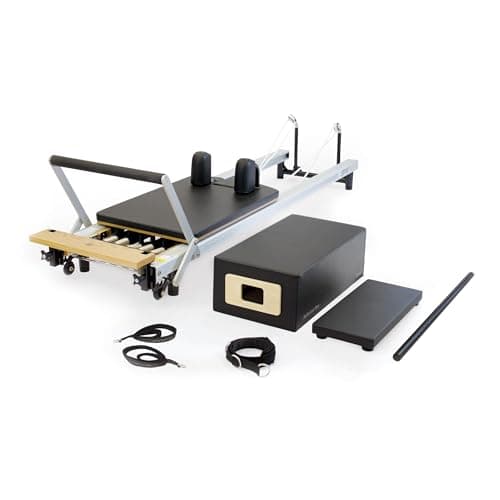
Real springs in a small room
Merrithew At Home SPX Reformer
A real spring reformer from the STOTT Pilates company in a frame that folds flat. It is the sensible answer for someone who wants studio mechanics and does not have a studio.
$3,349.00Amazon#ad · Price as of November 3, 2026 · Affiliate disclosure for the link to Merrithew At Home SPX Reformer
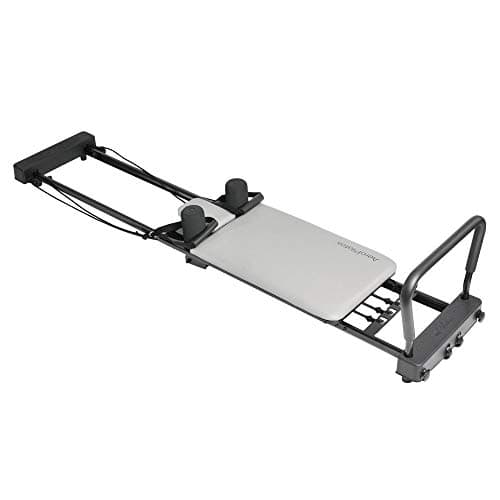
The cheapest real reformer
AeroPilates Reformer 287
The budget route into a reformer-shaped machine. Cords instead of springs, a built-in rebounder, and it folds. The resistance feels different from a studio reformer, and you should know that before you buy.
$349.99Amazon#ad · Price as of November 3, 2026 · Affiliate disclosure for the link to AeroPilates Reformer 287
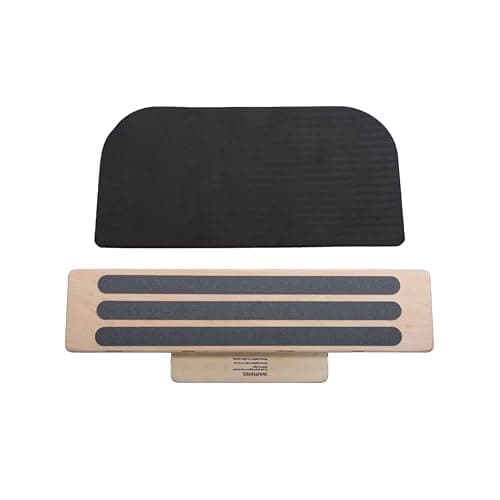
Studio-grade at home
Balanced Body Allegro 2 Reformer
The machine a lot of actual studios run. Five color-coded springs and a ten-position footbar mean it fits nearly every body and nearly every exercise. It is a serious piece of furniture and a serious purchase.
$205.00Amazon#ad · Price as of November 3, 2026 · Affiliate disclosure for the link to Balanced Body Allegro 2 Reformer
Before you commit
- Measure the room with tape on the floor. Mark the machine footprint plus clearance, then live with the tape for a day. This single step prevents the most expensive mistake in this category.
- Check the stated maximum user height. It is published and people skip it. Being an inch over it ruins footwork.
- Find out what the straps and handles are. Ropes with proper hardware adjust; sewn webbing loops often do not. It is a small part that affects every session.
- Confirm what comes in the box. Reformer, standing platform, box, pole — the accessories are frequently sold separately and the headline figure hides that.
- Ask whether springs are replaceable and from whom. A machine from a brand with no parts channel is a machine with a fixed lifespan.
- Read the cost tiers before you shortlist. What separates the tiers is a more useful filter than any single spec.
And if, at the end of all that, the honest answer is that the room is too small and the machine is too much, that is a legitimate conclusion rather than a failure. The bar versus reformer comparison covers what you actually give up, and it is less than most people assume.
One specification worth checking before you order anything, because it decides the delivery as much as the workout: a home machine runs from around 56 pounds to about 140, and the number is set by whether it uses cords or springs — what a reformer weighs has the published figures and what each band means on a staircase.
How we picked
Chosen on published criteria, and we say so
Most gear sites open by telling you how many hours they spent with the products. We have not used most of these, and we would rather say so than imply otherwise. Every pick here is chosen against criteria we publish — grip, cushioning, size options, what buyers report after a year of use, and whether the thing is still actually sold — and every manufacturer figure on the page is labeled as the maker's claim.
Nobody pays for a place on this page, no product was supplied free in exchange for coverage, and a specification the maker does not publish is never guessed at. See the full criteria and weighting.
FAQ
Questions people ask
How do I choose a Pilates reformer for home?
Are springs or cords better on a reformer?
How many springs does a Pilates reformer need?
How much space do I need for a reformer?
Should I buy a folding reformer?
Related
Keep reading
Update log
What changed
- First published.
Receipts
Sources
- 1.Merrithew — Pilates equipment shop
- 2.Balanced Body — Pilates equipment
- 3.Saran Pilates — Which reformer should I buy?
- 4.Pilates Collective Club — Best home Pilates reformer
- 5.NBC Select — The best Pilates reformers
- 6.Reformer Registry — Pilates reformers for home use
We have not used every product on this page, and we do not pretend otherwise. Thicknesses, materials, sizes and warranty terms are the manufacturer's published figures, shown as their claims. Anything about materials, skin or injury is linked to a source. Prices are set by Amazon and change constantly, so we never type one into the text — every figure comes from Amazon's own data, dated, and disappears rather than going stale. Read the full method.