Start Here Best picks
The Best Home Yoga Equipment
A first kit is bought to find out whether you will keep practicing. This is the one you buy once you know you will, and it is a different list.
We earn a commission when you buy through links on this page, at no extra cost to you. It never decides a ranking: the method is published. How we are funded
Quick picks
The short answer
1 · Best overall
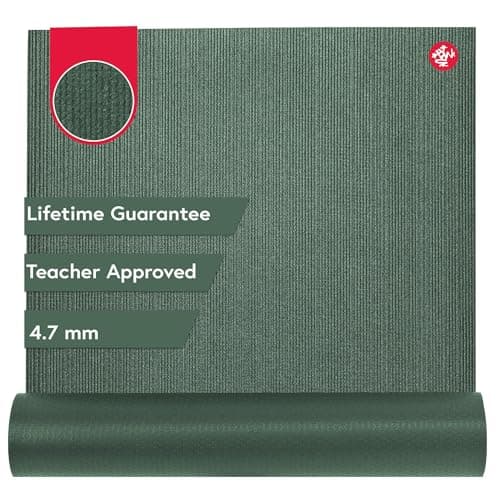
Manduka PROlite 4.7mmThe mat worth owning once you know you will keep going: dense, sealed, and likely to outlast every other item on this page combined.
Maker lists thickness: 4.7 mm
2 · Buy two of these
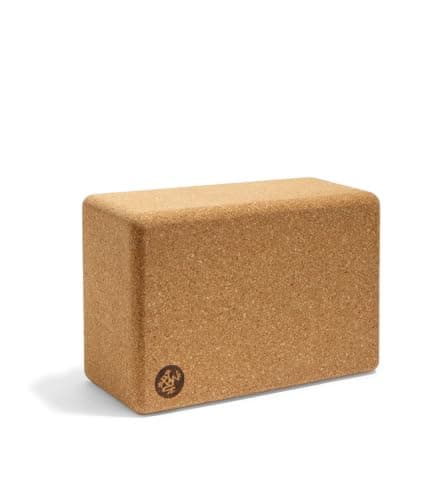
Manduka Cork Yoga BlockCork rather than foam, because a block that holds its height through a long hold is the upgrade you actually notice.
Maker lists material: Recycled cork
3 · The one nobody plans for
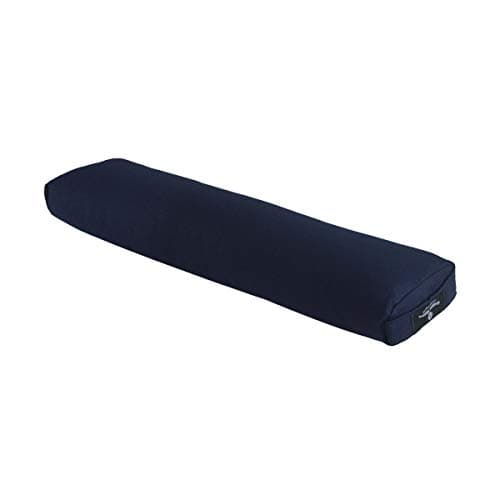
Hugger Mugger Pranayama Yoga BolsterThe purchase that turns a home practice into something you can do on a tired evening rather than only on a good one.
Maker lists shape: Long and narrow
4 · Best for sweaty sessions
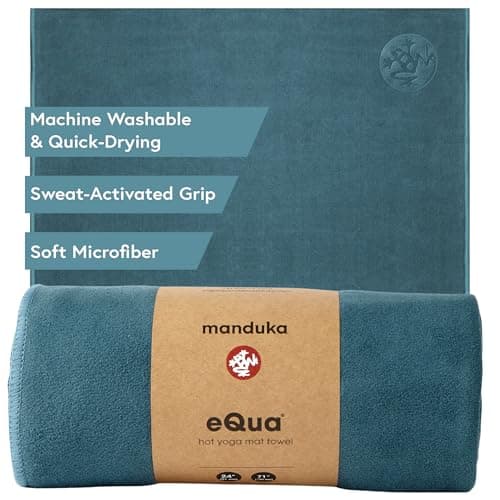
Manduka eQua Mat TowelA mat towel does two jobs at once: grip when your hands are wet, and it takes the sweat so the mat does not.
Maker lists material: 80% polyester / 20% nylon
5 · Best joint insurance
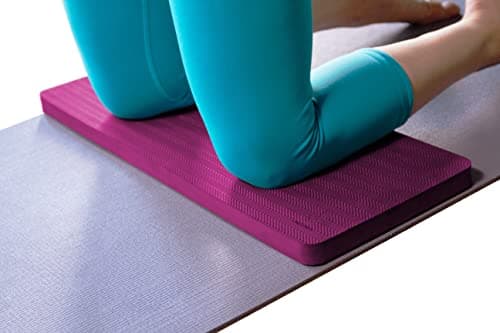
SukhaMat Yoga Knee PadAn inch of foam exactly where a knee lands, which is what lets you keep a thin mat you can still balance on.
Maker lists format: Small pad used on top of a mat
6 · A first mat
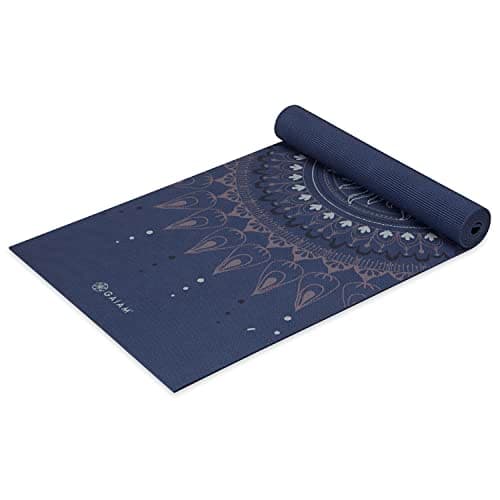
Gaiam Premium 6mm Yoga MatThe default first mat. Enough cushion for a beginner, a printed design you will not hate, and a price that makes quitting after a month painless.
Maker lists thickness: 6 mm
#ad · Prices come live from Amazon, last checked November 28, 2026. Figures here are the manufacturer's own. The ranking is editorial, made against the criteria on our How We Pick page, not from lab work. Photos come from Amazon. Tap a pick for the full write-up.
The short answer
Buy one dense mat, two cork blocks and a bolster, in that order. The Manduka PROlite is the mat worth owning once you know the habit has stuck: it will outlast every other item on this page. Cork blocks hold their height through a long hold where foam compresses out of it. And the bolster is the purchase almost nobody plans for and almost everybody keeps using, because it turns a home practice into something available on a tired evening rather than only on a good one. The Gaiam Premium is the budget pick, included deliberately: if the props are where your money should go, keep the mat you already have.
Why a second kit is a different list
A first kit and a permanent setup are solving different problems, and that is why the lists barely overlap.
A first kit is bought under uncertainty. The right strategy is to spend as little as possible on things that cover the widest range of classes, because there is a real chance you practice four times and stop. A foam block, a cheap mat and a strap do that job perfectly.
A permanent setup is bought under knowledge. You know what you practice, how often, on what floor, and what hurts. That changes three decisions: the mat becomes a durability purchase rather than a cheap one, the props become firm rather than soft because you hold positions longer, and you add the restorative items a first kit has no reason to include.
The order to buy in
- The mat. The item you touch every session and the one where longevity actually compounds. Mats at the premium band covers the tier this pick sits in.
- Two firm blocks. Cork or bamboo. Not one block, and not foam if you hold shapes. Cork versus foam explains the difference.
- A bolster. The highest-value surprise on this page, and the gateway to restorative practice.
- A mat towel, if you sweat at all. It protects the mat and fixes grip at the same time.
- A knee pad, if kneeling has ever made you cut a sequence short.
Nothing in that list depends on the one before it, so you can buy it over months. What matters is the order, because each step solves the biggest remaining complaint.
The part that is not equipment
The single biggest determinant of whether a home practice continues is not on this page: it is whether the mat can stay out, or at least come out in under a minute. Every person who stops practicing at home has the same story, and it is about friction rather than gear.
| The friction | The fix | Cost |
|---|---|---|
| Mat lives in a cupboard behind things | Give it a hook or a corner | Nothing |
| Floor is cold or hard | A thicker mat, or a layer under it | One purchase |
| Not enough clear floor | A 7 by 4 foot patch is enough | Nothing |
| Props scattered around the house | One basket near the mat | Almost nothing |
| Slippery wooden floor | Grip socks, or a mat with more mass | Very little |
The home space setup guide works through the floor, the wall space and the storage together, and it is worth more than any single item here.
Three things to skip
A page about what to buy should be clear about what not to.
- A second mat, unless you have two distinct practices. Two mats make sense for hot-and-standing or home-and-studio splits, and not otherwise. How to choose a mat covers it.
- A full prop set when you only use two of the props. Buy the two you reach for. Sets are a first-kit purchase, not a permanent-setup one.
- Anything that needs assembling or has a screen. Equipment with setup time competes with your practice rather than supporting it.
What to look for
- Durability on the mat, firmness on the props. Those are the two upgrades that genuinely change the practice.
- Match the mat to your floor and your sweat, not to a brand. Both decisions are made for you by facts you already know.
- Buy the bolster before the fourth prop. It gets used more than almost anything else once it exists.
- Spend on reducing friction first. A hook and a basket cost nothing and do more than another block.
In detail
Every pick, in full
1
Best overall
Manduka PROlite 4.7mm
As the manufacturer lists it · Manduka
What it gets right
- Noticeably easier to carry than the PRO
- Same closed-cell surface and the same long life
- Stable in standing balances because it does not sink
What it does not
- Less cushion than the PRO — kneeling is firmer
- Same break-in period before it grips
- Still costs like a long-term mat, not a first mat
Skip it if
your knees are the reason you are buying a mat — go up to the 6 mm PRO instead.
#ad · Price as of November 28, 2026 · Affiliate disclosure for the link to Manduka PROlite 4.7mm
2
Buy two of these
Manduka Cork Yoga Block
As the manufacturer lists it · Manduka
What it gets right
- Does not compress or skid under body weight
- Grippy even when your hands are damp
- Feels substantial rather than disposable
What it does not
- Hard edges are uncomfortable under a shoulder or hip
- Heavy to carry two of them
- Costs several times a foam block
Skip it if
you mainly want a block to lie on in restorative poses — foam is kinder there.
#ad · Price as of November 28, 2026 · Affiliate disclosure for the link to Manduka Cork Yoga Block
3
The one nobody plans for
Hugger Mugger Pranayama Yoga Bolster
As the manufacturer lists it · Hugger Mugger
What it gets right
- The right shape for lying along, not across
- Firm enough to still support after a year
- Cover comes off for washing
What it does not
- Too narrow to sit on comfortably
- Bulky to store in a small flat
- Expensive for a cushion
Skip it if
you want a bolster mainly to sit on for meditation — get a rectangular one.
#ad · Price as of November 28, 2026 · Affiliate disclosure for the link to Hugger Mugger Pranayama Yoga Bolster
4
Best for sweaty sessions
Manduka eQua Mat Towel
As the manufacturer lists it · Manduka
What it gets right
- Grips harder the wetter your palms get
- Folds down to about the size of a paperback
- Softer underfoot than a nubbed towel
What it does not
- Nothing holds it to the mat, so it creeps until it is damp
- Fabric softener and dryer sheets reduce the grip, per the maker
- No padding at all - it is a surface, not a cushion
Skip it if
you practice in a cool room and barely sweat: a dry microfiber towel slides.
#ad · Price as of November 28, 2026 · Affiliate disclosure for the link to Manduka eQua Mat Towel
5
Best joint insurance
SukhaMat Yoga Knee Pad
As the manufacturer lists it
What it gets right
- Targets the padding where you actually need it
- Leaves the rest of the mat firm for balancing
- Small enough to keep in a bag
What it does not
- One more thing to move around mid-practice
- Can slide on a slick mat
- Not useful if your problem is wrist pain in plank
Skip it if
you want one surface and no extra pieces — get a 6 mm mat instead.
#ad · Price as of November 28, 2026 · Affiliate disclosure for the link to SukhaMat Yoga Knee Pad
6
A first mat
Gaiam Premium 6mm Yoga Mat
As the manufacturer lists it · Gaiam
What it gets right
- Cushioned enough that floor work is comfortable on day one
- Light and easy to roll
- Cheap enough to be a low-risk first purchase
What it does not
- Grip fades as you sweat
- 68 in is short if you are tall
- Will not last the years a Manduka or Jade will
Skip it if
you already know you sweat heavily, or you are over about 5 ft 10 in.
#ad · Price as of November 28, 2026 · Affiliate disclosure for the link to Gaiam Premium 6mm Yoga Mat
If a ceiling rather than a wish list is the constraint, the band pages are the better route: mats at the middle band, props at the entry ceiling and accessories at the lowest band between them cover a complete setup for a fraction of this list.
And if the practice you are equipping is Pilates rather than yoga, Pilates equipment at the middle band is the equivalent page, with the beginner Pilates kit for the first-month version.
How we picked
Chosen on published criteria, and we say so
Most gear sites open by telling you how many hours they spent with the products. We have not used most of these, and we would rather say so than imply otherwise. Every pick here is chosen against criteria we publish — grip, cushioning, size options, what buyers report after a year of use, and whether the thing is still actually sold — and every manufacturer figure on the page is labeled as the maker's claim.
Nobody pays for a place on this page, no product was supplied free in exchange for coverage, and a specification the maker does not publish is never guessed at. See the full criteria and weighting.
FAQ
Questions people ask
What equipment do I need for yoga at home?
Is it worth upgrading from a cheap yoga mat?
What is the most underrated piece of home yoga equipment?
How much space do I need for home yoga?
Should I buy a prop set or individual props?
Related
Keep reading
Update log
What changed
- First published.
Receipts
Sources
- 1.OutdoorGearLab — The Best Yoga Mats
- 2.OutdoorGearLab — The Best Yoga Blocks
- 3.Manduka — product information
- 4.Hugger Mugger — product information
- 5.NCCIH (US National Institutes of Health) — Yoga: What You Need To Know
- 6.SukhaMat — published thickness and materials for its yoga knee pad
We have not used every product on this page, and we do not pretend otherwise. Thicknesses, materials, sizes and warranty terms are the manufacturer's published figures, shown as their claims. Anything about materials, skin or injury is linked to a source. Prices are set by Amazon and change constantly, so we never type one into the text — every figure comes from Amazon's own data, dated, and disappears rather than going stale. Read the full method.