Blocks, Straps & Props Comparison
Cork vs Foam Yoga Blocks: Which Should You Buy?
One question decides it. Are you leaning on the block, or putting your weight through it?
We earn a commission when you buy through links on this page, at no extra cost to you. It never decides a ranking: the method is published. How we are funded
Side by side
The two, next to each other
 Stock photo
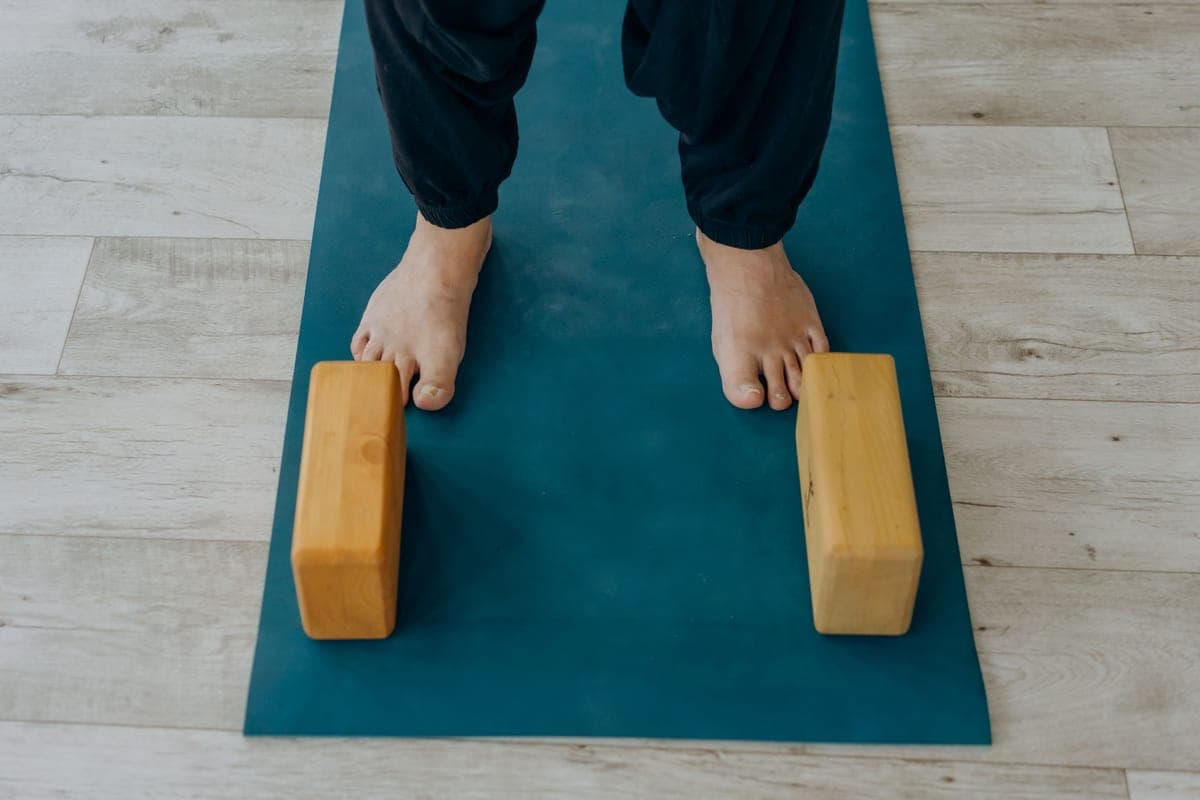
Cork: pick if you stand on it
Manduka Cork Yoga Block
Does not compress, does not skid, grips when your hands are damp. Hard against a hip, and heavy.
Check price on Amazon#ad · Price set by Amazon · Affiliate disclosure for the link to Manduka Cork Yoga Block
 Stock photo
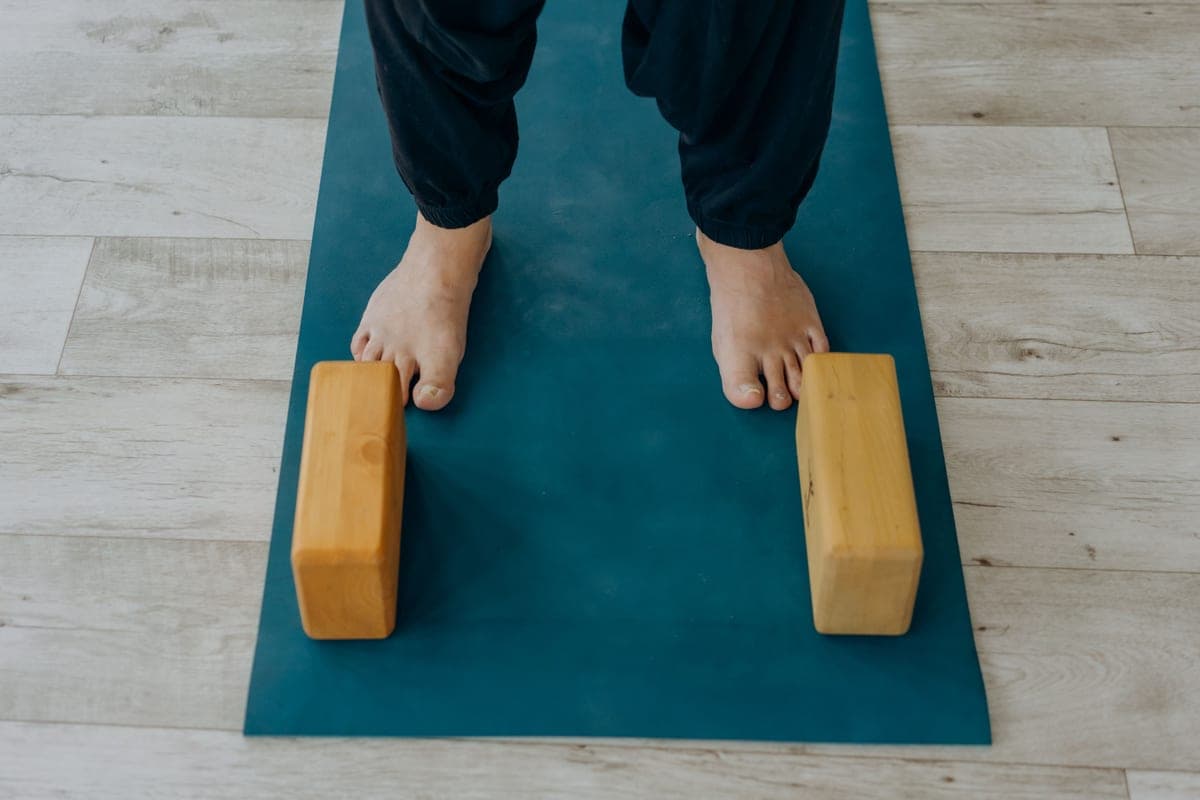
Foam: pick if you lean on it
Gaiam Yoga Essentials Foam Block
Light, soft-edged and cheap. Compresses under standing weight, which most beginners never apply.
Check price on Amazon#ad · Price set by Amazon · Affiliate disclosure for the link to Gaiam Yoga Essentials Foam Block
The verdict
Foam if you lean on the block, sit on it or lie over it. Cork if you stand on it or press weight through it. That is the whole decision, and almost everything else about these two materials is a consequence of it.
For a first pair of blocks, foam is right for most people, because the poses that require a rigid block sit further into a practice than beginners usually get in their first year.
Side by side
| Cork | Foam | |
|---|---|---|
| Weight | Heavy, noticeably | Very light |
| Under standing weight | Does not move | Compresses |
| Against a hip or shoulder | Hard | Comfortable |
| Grip when hands are damp | Good | Poor |
| Skidding on a hard floor | Stays put | Slides |
| Durability | Years | Dents and scuffs |
| Price | Several times foam | Lowest |
| Sound | Thunks | Silent |
The compression question
This is what people mean when they say cork is better, and it is worth being precise about.
Put a hand on a foam block in a seated forward fold and nothing happens; the load is a fraction of your body weight and the foam holds. Put your full weight on the same block in half moon and it visibly gives, which changes the height you thought you had and moves your balance point mid-pose. That is unsettling rather than dangerous, and it is the specific failure cork solves.
The second half of the same problem is skidding. A foam block on a wooden floor slides sideways under lateral load. Cork is heavy and grippy enough that it does not, which matters in the exact same poses.
So the honest framing is not "cork is better". It is: cork is better at the things a foam block is bad at, and foam is better at the things cork is bad at, and which set you care about depends on what you actually do on the mat. How to use blocks walks through the placements.
In detail
Both, in full
Stock photoCork: pick if you stand on it
Manduka Cork Yoga Block
As the manufacturer lists it · Manduka
What it gets right
- Does not compress or skid under body weight
- Grippy even when your hands are damp
- Feels substantial rather than disposable
What it does not
- Hard edges are uncomfortable under a shoulder or hip
- Heavy to carry two of them
- Costs several times a foam block
Skip it if
you mainly want a block to lie on in restorative poses — foam is kinder there.
#ad · Price set by Amazon · Affiliate disclosure for the link to Manduka Cork Yoga Block
Stock photoFoam: pick if you lean on it
Gaiam Yoga Essentials Foam Block
As the manufacturer lists it · Gaiam
What it gets right
- Light enough to hold overhead without fatigue
- Soft edges for hips, shoulders and the back of the head
- Cheap enough to buy two
What it does not
- Compresses under standing weight
- Dents and scuffs quickly
- Slides on a hard floor
Skip it if
you want to stand on the block in half-moon or standing splits.
#ad · Price set by Amazon · Affiliate disclosure for the link to Gaiam Yoga Essentials Foam Block
Cost, weight and longevity
Cork costs several times what foam does, and a pair of cork blocks is a real purchase rather than an afterthought. Against that, a cork block will outlive several foam ones: foam dents where your hand goes, scuffs where it touches the floor, and eventually loses its edges.
Weight cuts the other way. Two cork blocks in a bag with a mat is a load you notice walking to a studio. If your practice is entirely at home, that never matters. If you carry everything, it matters every time.
The compromise plenty of people land on: one cork block and one foam block. It sounds like a fudge and it works — the cork one for anything weight-bearing, the foam one for anything against skin. Buying a matched pair of each is the more expensive version of the same idea.
Bamboo and wood sit beyond cork on the same axis: even more rigid, even harder against skin. Covered in the block roundup.
Five poses where the difference shows up
The abstract version of this comparison is easy to agree with and hard to act on. Here it is as specific situations.
- Half moon, hand on the block. Cork. Your whole weight goes through one hand, foam visibly gives, and the height you set changes mid-pose. This is the case cork exists for.
- Sitting on the block for a seated fold. Foam. You are perched on an edge for several minutes and cork is genuinely uncomfortable there.
- Block between the thighs in bridge. Foam, easily. You are squeezing it between bare skin, and a hard-edged block turns a useful cue into an ordeal.
- Under the sacrum in supported bridge. Foam, with something folded over it. Cork under the base of the spine for three minutes is nobody's idea of restorative.
- Under both hands in a standing fold. Either, until your hands get damp — and then cork, because it holds when foam starts to skid.
Count the list and the honest conclusion is that foam wins on frequency and cork wins on the poses where getting it wrong actually matters. Which is why the pragmatic answer for a lot of people is one of each, and why how to use blocks is worth reading before you decide how many to buy.
How we picked
Chosen on published criteria, and we say so
Most gear sites open by telling you how many hours they spent with the products. We have not used most of these, and we would rather say so than imply otherwise. Every pick here is chosen against criteria we publish — grip, cushioning, size options, what buyers report after a year of use, and whether the thing is still actually sold — and every manufacturer figure on the page is labeled as the maker's claim.
Nobody pays for a place on this page, no product was supplied free in exchange for coverage, and a specification the maker does not publish is never guessed at. See the full criteria and weighting.
FAQ
Questions people ask
Are cork yoga blocks better than foam?
Do cork blocks hurt?
Can I mix cork and foam blocks?
Related
Keep reading
Update log
What changed
- First published.
Receipts
Sources
- 1.OutdoorGearLab — The Best Yoga Blocks
- 2.Yoga Journal — The Best Yoga Blocks
- 3.Gear Patrol — The Best Yoga Blocks
- 4.Manduka — product information
- 5.Hugger Mugger — product information
We have not used every product on this page, and we do not pretend otherwise. Thicknesses, materials, sizes and warranty terms are the manufacturer's published figures, shown as their claims. Anything about materials, skin or injury is linked to a source. Prices are set by Amazon and change constantly, so we never print one. Read the full method.