Blocks, Straps & Props Best picks
The Best Yoga Blocks for Beginners
A block brings the floor closer so you can hold a pose properly instead of approximating it. Which one depends entirely on whether you lean on it or stand on it.

We earn a commission when you buy through links on this page, at no extra cost to you. It never decides a ranking: the method is published. How we are funded
Quick picks
The short answer
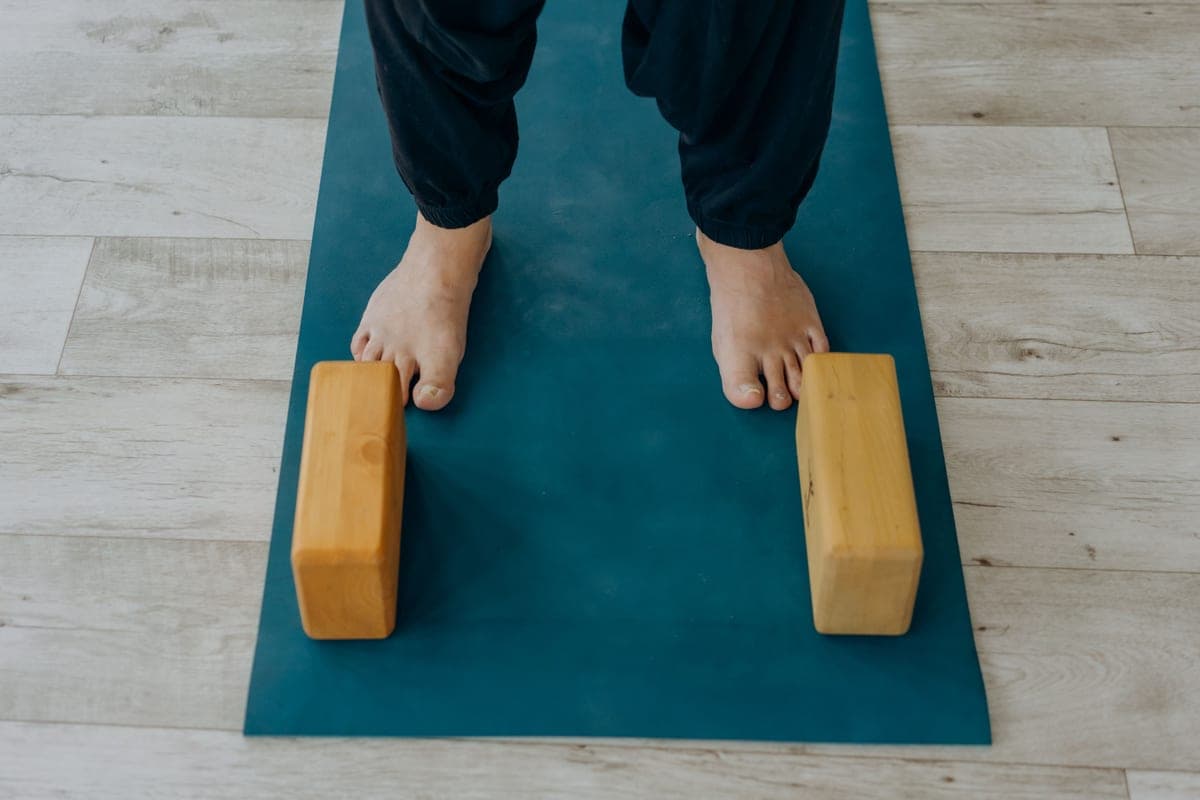
1 · Best first block
Gaiam Yoga Essentials Foam BlockLight, soft-edged and cheap enough to buy two. It compresses under standing weight, which most beginners never do.
Maker lists material: EVA foam
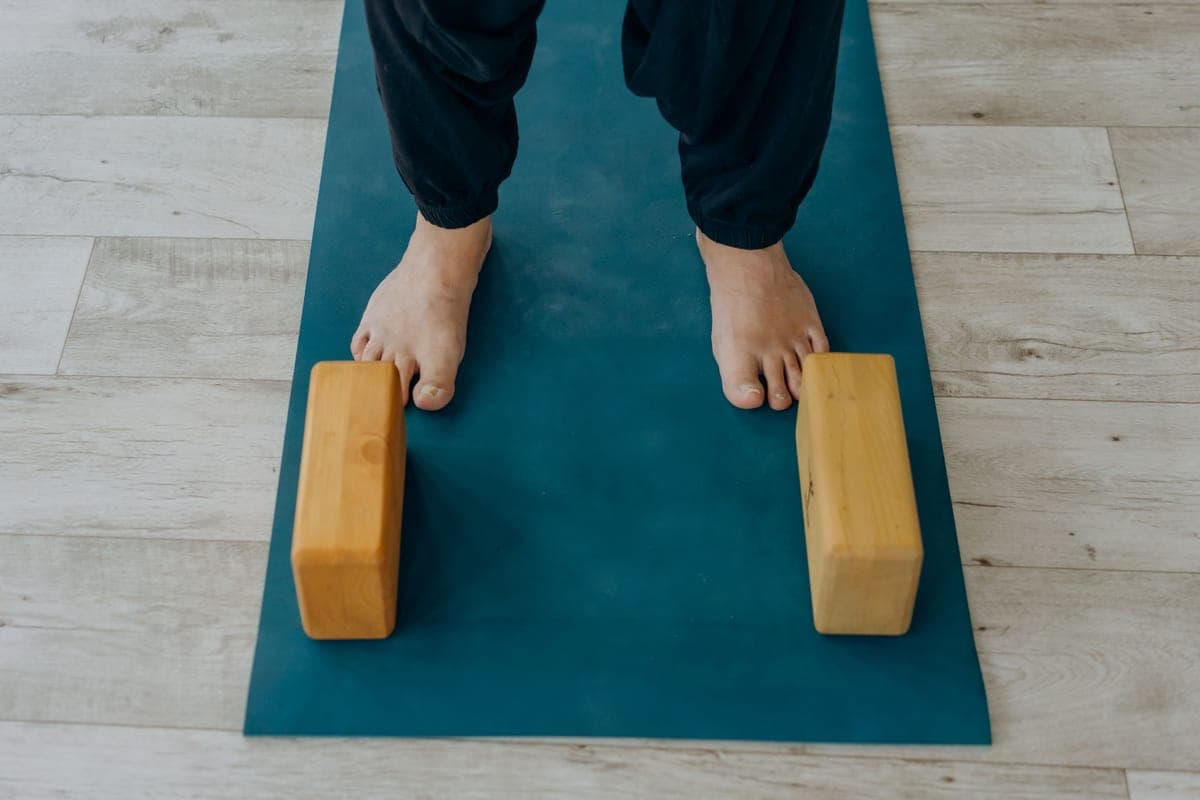
2 · Best if you stand on it
Manduka Cork Yoga BlockDoes not move and does not squash. The stability is the entire argument for cork, and it is a good one.
Maker lists material: Recycled cork
3 · Two blocks, least money
REEHUT High Density Yoga Blocks (2-Pack)Denser foam than the cheapest blocks, sold as a matching pair, which is what you actually want.
Maker lists material: High-density EVA foam
4 · Most comfortable cork
Hugger Mugger Cork Yoga BlockContoured edges, which sounds minor until you put a hip on one.
Maker lists material: Cork
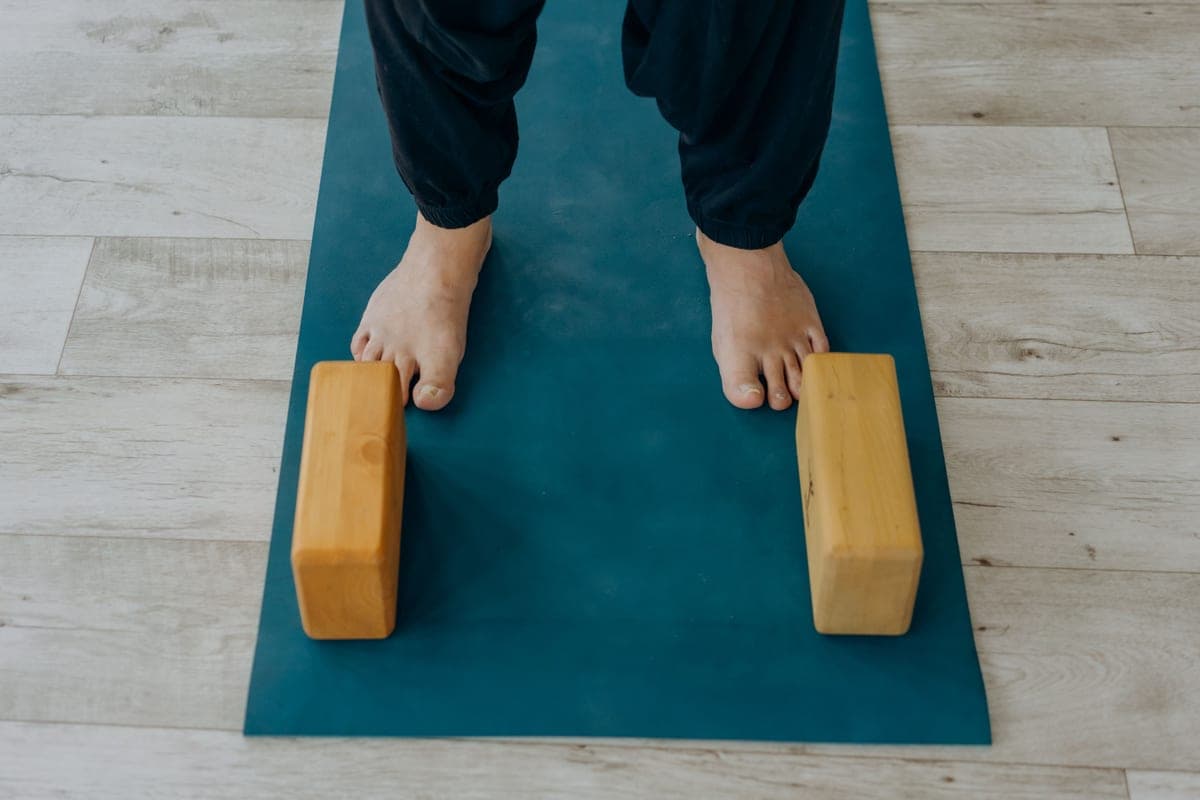
5 · Maximum rigidity
Hugger Mugger Bamboo Yoga BlockHollow bamboo: no give at all, and lighter than solid wood. Hard against skin.
Maker lists material: Bamboo, hollow construction
#ad · Prices are set by Amazon and change often, so we do not print them. Figures here are the manufacturer's own. The ranking is editorial, made against the criteria on our How We Pick page, not from lab work. Photos are stock. Tap a pick for the full write-up.
The short answer
Buy two foam blocks. For a beginner, foam is the right material, 9 by 6 by 4 inches is the right size, and two is the right number. It costs very little and covers almost every pose a beginner class asks for.
The exception is if you already know you will be standing on the block — half moon, standing splits, anything where your full weight goes through one hand on the block. Foam compresses under that and cork does not.
Foam, cork or wood
| Foam | Cork | Bamboo or wood | |
|---|---|---|---|
| Weight | Very light | Heavy | Medium |
| Under standing weight | Compresses | Solid | Solid |
| Against a hip or shoulder | Comfortable | Hard | Hard |
| Grip when damp | Poor | Good | Poor |
| Durability | Dents and scuffs | Years | Years |
| Price | Lowest | Middle to high | Highest |
Read that table as a single question: what are you doing with the block? Leaning on it, sitting on it and lying over it all favor foam, because those are the situations where a hard edge hurts. Standing on it and pressing through it favor cork, because that is where compression is the problem.
Most beginners spend their first year doing the first kind and none of the second, which is why the default recommendation is foam even though cork is the "better" material in a vacuum. We go deeper in cork versus foam.
What size to buy
The standard block is 9 by 6 by 4 inches, and the three dimensions are deliberate: rest it on any of its three faces and you get three heights. That is the whole design, and it is why a "block" is not a cube.
The main variation is depth. A 3 inch block is a little easier to grip if you have small hands, and a little lower at its lowest setting. A 4 inch block is the default and the one most classes assume. Neither is wrong, and the difference is smaller than the number suggests.
The word "brick" causes real confusion here, because different makers use it differently. Blocks versus bricks untangles the terminology with a table, because it genuinely is a mess.
In detail
Every pick, in full
1
Stock photoBest first block
Gaiam Yoga Essentials Foam Block
As the manufacturer lists it · Gaiam
What it gets right
- Light enough to hold overhead without fatigue
- Soft edges for hips, shoulders and the back of the head
- Cheap enough to buy two
What it does not
- Compresses under standing weight
- Dents and scuffs quickly
- Slides on a hard floor
Skip it if
you want to stand on the block in half-moon or standing splits.
#ad · Price set by Amazon · Affiliate disclosure for the link to Gaiam Yoga Essentials Foam Block
2
Stock photoBest if you stand on it
Manduka Cork Yoga Block
As the manufacturer lists it · Manduka
What it gets right
- Does not compress or skid under body weight
- Grippy even when your hands are damp
- Feels substantial rather than disposable
What it does not
- Hard edges are uncomfortable under a shoulder or hip
- Heavy to carry two of them
- Costs several times a foam block
Skip it if
you mainly want a block to lie on in restorative poses — foam is kinder there.
#ad · Price set by Amazon · Affiliate disclosure for the link to Manduka Cork Yoga Block
3
Stock photoTwo blocks, least money
REEHUT High Density Yoga Blocks (2-Pack)
As the manufacturer lists it
What it gets right
- Two blocks, which is what most beginners actually need
- Denser than the cheapest foam blocks
- Beveled edges are comfortable enough
What it does not
- Still compresses under full body weight
- Colors and finish vary between batches
- Foam surface picks up marks
Skip it if
you want one block you will keep for a decade — buy cork.
#ad · Price set by Amazon · Affiliate disclosure for the link to REEHUT High Density Yoga Blocks (2-Pack)
4
Stock photoMost comfortable cork
Hugger Mugger Cork Yoga Block
As the manufacturer lists it · Hugger Mugger
What it gets right
- Rounded edges make weight-bearing far more comfortable
- Naturally grippy surface for sweaty hands
- Stable enough to stand on
What it does not
- Still heavy
- Cork surface can shed slightly at the corners over years
- Premium price for a block
Skip it if
you need two blocks and a strap on a tight budget.
#ad · Price set by Amazon · Affiliate disclosure for the link to Hugger Mugger Cork Yoga Block
5
Stock photoMaximum rigidity
Hugger Mugger Bamboo Yoga Block
As the manufacturer lists it · Hugger Mugger
What it gets right
- Zero give under weight
- Lighter than a solid wood block
- Looks good enough to leave out in a living room
What it does not
- Hard and cold against skin
- Can be slippery under damp hands
- The most expensive way to buy a block
Skip it if
you want a prop for restorative or supported poses.
#ad · Price set by Amazon · Affiliate disclosure for the link to Hugger Mugger Bamboo Yoga Block
What to look for
- Buy two. A large share of the poses that use a block use a pair, and a mismatched second block bought three months later is a small permanent irritation.
- Beveled edges. Sharp corners on a block you put weight on are unpleasant. Almost all decent blocks have them; the very cheapest do not.
- Density over size. A denser block at 3 inches beats a soft one at 4 inches for anything load-bearing.
- Weight, if you carry them. Two cork blocks in a bag is a noticeable load. Two foam blocks is not.
If you also need a strap, buying the two together is usually cheaper — see the set guide — and if you are still deciding whether you want blocks at all, that question has its own page.
How we picked
Chosen on published criteria, and we say so
Most gear sites open by telling you how many hours they spent with the products. We have not used most of these, and we would rather say so than imply otherwise. Every pick here is chosen against criteria we publish — grip, cushioning, size options, what buyers report after a year of use, and whether the thing is still actually sold — and every manufacturer figure on the page is labeled as the maker's claim.
Nobody pays for a place on this page, no product was supplied free in exchange for coverage, and a specification the maker does not publish is never guessed at. See the full criteria and weighting.
FAQ
Questions people ask
How many yoga blocks do I need?
What is the best material for yoga blocks?
Are yoga blocks hard or soft?
What size yoga block should I buy?
Related
Keep reading
Update log
What changed
- First published.
Receipts
Sources
- 1.OutdoorGearLab — The Best Yoga Blocks
- 2.Yoga Journal — The Best Yoga Blocks
- 3.Gear Patrol — The Best Yoga Blocks
- 4.NBC Select — The best yoga props and apparel
- 5.Hugger Mugger — product information
We have not used every product on this page, and we do not pretend otherwise. Thicknesses, materials, sizes and warranty terms are the manufacturer's published figures, shown as their claims. Anything about materials, skin or injury is linked to a source. Prices are set by Amazon and change constantly, so we never print one. Read the full method.