Yoga Mats Best picks
The Best Yoga Mats for Hardwood Floors
A hard floor punishes thin mats and a smooth floor slides under light ones. The mat you want is dense and heavy, which is not the same thing as thick.
We earn a commission when you buy through links on this page, at no extra cost to you. It never decides a ranking: the method is published. How we are funded
Quick picks
The short answer
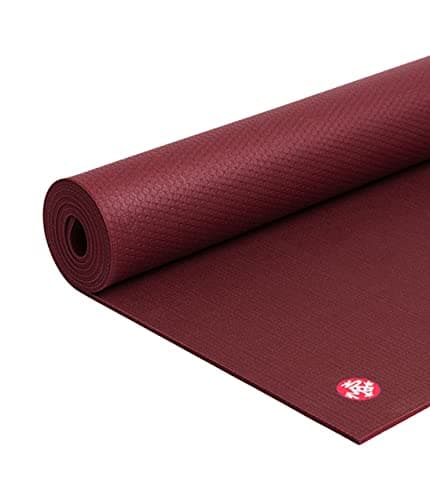
1 · Best mat for a hard floor
Manduka PRO 6mmDense 6 mm that compresses and then holds, and heavy enough that it does not travel across a polished board.
Maker lists thickness: 6 mm
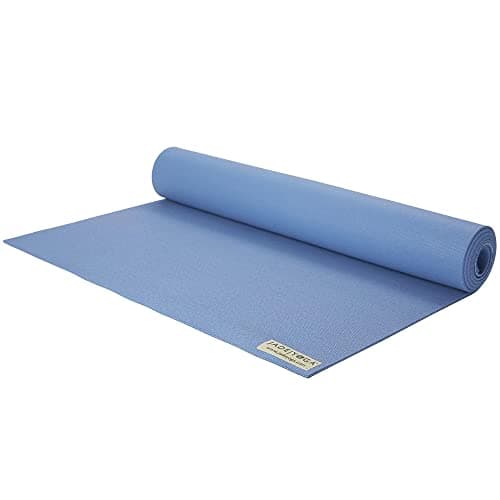
2 · Best grip against the floor
JadeYoga Harmony MatNatural rubber grabs a smooth floor better than any PVC mat, and grips your hands at the same time.
Maker lists thickness: 3/16 in (about 4.8 mm)
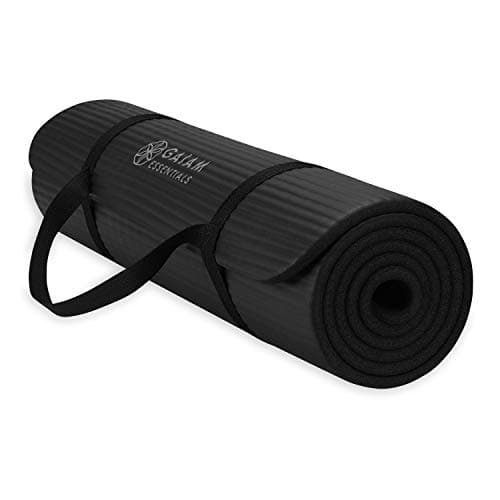
3 · Most padding for the money
Gaiam Essentials Thick Yoga MatSoft and generous under a kneecap. Lighter, so it wants a corner tucked against something on tile.
Maker lists thickness: 2/5 in (about 10 mm)
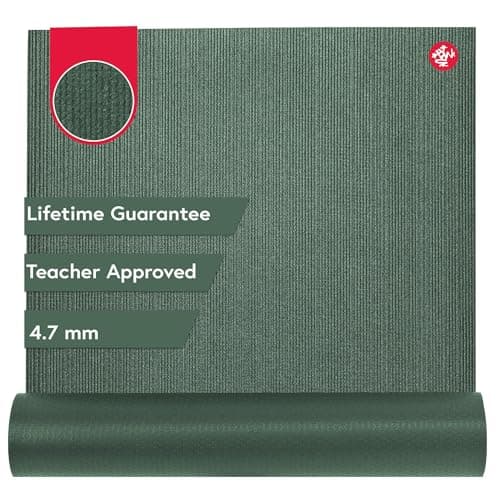
4 · Best if you move the mat daily
Manduka PROlite 4.7mmThe same dense surface as the PRO at a weight you can carry up stairs without resenting it.
Maker lists thickness: 4.7 mm
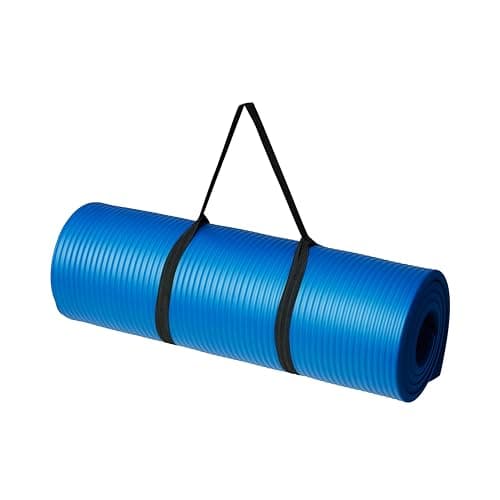
5 · Maximum cushioning, least money
Amazon Basics 1/2-Inch Extra Thick Exercise MatHalf an inch of foam over a hard floor is genuinely comfortable. It is also the least stable mat here.
Maker lists thickness: 1/2 in (about 12.7 mm)
#ad · Prices come live from Amazon, last checked November 3, 2026. Figures here are the manufacturer's own. The ranking is editorial, made against the criteria on our How We Pick page, not from lab work. Photos come from Amazon. Tap a pick for the full write-up.
The short answer
Buy the Manduka PRO. On a hardwood or tile floor the winning combination is density plus weight: dense enough that your knee stops sinking before it reaches the boards, heavy enough that the mat itself does not creep when you step into a lunge. The PRO is the clearest example of both.
If your floor is glossy or sealed and things slide, the JadeYoga Harmony is the better answer, because natural rubber grips a smooth surface in a way PVC does not. If kneeling is the only complaint, the Gaiam Essentials Thick costs far less and solves it with padding alone.
A hard floor creates two problems
Carpet forgives a thin mat and swallows a heavy one. Wood, tile and laminate do the opposite, and they do it in two separate ways that get confused with each other constantly.
Problem one: nothing underneath absorbs anything. On carpet, the pile does some of the work, so a 3 mm mat is tolerable to kneel on. On oak boards, the mat is the entire cushion. That is why the same mat feels fine in a carpeted bedroom and punishing in a tiled kitchen, and why the advice runs the other direction in the carpet roundup.
Problem two: the mat can slide on the floor. This is the one people misdiagnose. If you are slipping on top of the mat, that is a grip problem and the fix is a different surface or a towel. If the whole mat shifts across the room, that is a floor problem and the fix is weight, rubber, or both. Telling the two apart saves buying the wrong mat twice.
Sealed and waxed floors are the worst offenders, and underfloor heating makes it slightly worse again by keeping the surface dry and slick. A light foam mat on a polished board will walk. A heavy rubber mat on the same board will not move at all.
The five, side by side
| Mat | Thickness (maker) | Material | Stays put on wood | Kneeling comfort |
|---|---|---|---|---|
| Manduka PRO | 6 mm | Dense PVC | Excellent, mostly from weight | Very good |
| JadeYoga Harmony | 4.8 mm | Natural rubber | Excellent, from the rubber | Good |
| Gaiam Essentials Thick | 10 mm | NBR foam | Fair | Excellent |
| Manduka PROlite | 4.7 mm | Dense PVC | Good | Good |
| Amazon Basics Extra Thick | 13 mm | NBR foam | Poor | Excellent |
Notice that the two columns on the right pull against each other. The mats that cushion best are the lightest and slide most; the mats that stay put are denser and cushion less per millimeter. Every pick on this page is a position on that line, and the PRO sits closest to the middle.
The thickness that works on wood
5 to 6 mm in a dense material. That is the band where kneeling on a hard floor stops being uncomfortable and standing balance is still easy. Below 4 mm on wood you will feel your kneecaps in any kneeling pose; above 8 mm the mat starts moving under you during standing work, which on a hard floor is worse than on carpet because there is no friction underneath to help.
The exception is anyone whose knees are the whole reason they are shopping. If floor work dominates your practice and balance poses are rare, a 10 mm foam mat on wood is a reasonable trade and the sore knees roundup covers it properly. For the thickness argument in full, including why two mats labeled 6 mm can feel nothing alike, read the thickness guide.
In detail
Every pick, in full
1
Best mat for a hard floor
Manduka PRO 6mm
As the manufacturer lists it · Manduka
What it gets right
- Dense enough that kneeling and forearm work stop hurting
- Closed cell, so sweat sits on top instead of soaking in
- Genuinely lasts — the lifetime guarantee is the maker's own
- An 85 in version exists if you are tall
What it does not
- Heavy. This is not a mat you carry far
- Slippery out of the box until the surface is broken in
- Closed-cell grip drops away once your hands are wet
Skip it if
you want grip on day one, practice hot, or need to carry the mat anywhere.
#ad · Price as of November 3, 2026 · Affiliate disclosure for the link to Manduka PRO 6mm
2
Best grip against the floor
JadeYoga Harmony Mat
As the manufacturer lists it · JadeYoga
What it gets right
- Hands and feet stop sliding, immediately
- Three lengths, including a genuinely long option
- Jade states it plants a tree for every mat sold
What it does not
- Open cell absorbs sweat and needs drying between sessions
- Sheds a little rubber dust early on
- Wears faster than a closed-cell PVC mat
Skip it if
you practice hot and cannot air the mat properly afterwards.
#ad · Price as of November 3, 2026 · Affiliate disclosure for the link to JadeYoga Harmony Mat
3
Most padding for the money
Gaiam Essentials Thick Yoga Mat
As the manufacturer lists it · Gaiam
What it gets right
- The most forgiving surface here for knees and elbows
- Long enough for most people at 72 in
- Comes with a strap, so nothing extra to buy
What it does not
- Standing balances wobble on this much foam
- Foam dents and compresses over time
- Not a grippy surface once damp
Skip it if
your practice is mostly standing poses and balances.
#ad · Price as of November 3, 2026 · Affiliate disclosure for the link to Gaiam Essentials Thick Yoga Mat
4
Best if you move the mat daily
Manduka PROlite 4.7mm
As the manufacturer lists it · Manduka
What it gets right
- Noticeably easier to carry than the PRO
- Same closed-cell surface and the same long life
- Stable in standing balances because it does not sink
What it does not
- Less cushion than the PRO — kneeling is firmer
- Same break-in period before it grips
- Still costs like a long-term mat, not a first mat
Skip it if
your knees are the reason you are buying a mat — go up to the 6 mm PRO instead.
#ad · Price as of November 3, 2026 · Affiliate disclosure for the link to Manduka PROlite 4.7mm
5
Maximum cushioning, least money
Amazon Basics 1/2-Inch Extra Thick Exercise Mat
As the manufacturer lists it
What it gets right
- One of the longest cheap mats at 74 in
- Foam is soft enough for knees straight away
- Easy to replace when it wears out
What it does not
- Slippery once your hands are damp
- Foam edges curl after a few months
- No grip texture worth the name
Skip it if
you sweat much at all — you will be sliding within ten minutes.
#ad · Price as of November 3, 2026 · Affiliate disclosure for the link to Amazon Basics 1/2-Inch Extra Thick Exercise Mat
What to look for
- Weight is a feature here. Everywhere else on this site weight is a cost. On a smooth floor a heavy mat is a mat that stays where you put it.
- Rubber or dense PVC on the underside. Open-cell foam undersides glide on sealed wood. Rubber is the most reliable bottom surface on a hard floor.
- Dense beats thick. A dense 6 mm mat is more comfortable to kneel on than a soft 10 mm one, and much easier to stand on.
- Watch the floor finish, not just the mat. A freshly waxed floor will defeat almost any mat for a week or two. A thin rug under the mat is a legitimate fix.
- Tile is colder than wood. A thicker mat is also a warmer one, which matters more than it sounds like it should in a winter practice.
If the room itself is the problem rather than the mat, the layout advice in setting up a home practice space is the better place to start.
How we picked
Chosen on published criteria, and we say so
Most gear sites open by telling you how many hours they spent with the products. We have not used most of these, and we would rather say so than imply otherwise. Every pick here is chosen against criteria we publish — grip, cushioning, size options, what buyers report after a year of use, and whether the thing is still actually sold — and every manufacturer figure on the page is labeled as the maker's claim.
Nobody pays for a place on this page, no product was supplied free in exchange for coverage, and a specification the maker does not publish is never guessed at. See the full criteria and weighting.
FAQ
Questions people ask
What thickness yoga mat is best for hardwood floors?
How do I stop my yoga mat sliding on a wooden floor?
Can I do yoga directly on a hardwood floor?
Is a thicker mat always better on tile?
Related
Keep reading
Update log
What changed
- First published.
Receipts
Sources
- 1.OutdoorGearLab — The Best Yoga Mats
- 2.Healthline — The Best Workout Mats
- 3.Manduka — product information
- 4.JadeYoga — product information
- 5.Reviewed — The Best Yoga Mats
We have not used every product on this page, and we do not pretend otherwise. Thicknesses, materials, sizes and warranty terms are the manufacturer's published figures, shown as their claims. Anything about materials, skin or injury is linked to a source. Prices are set by Amazon and change constantly, so we never type one into the text — every figure comes from Amazon's own data, dated, and disappears rather than going stale. Read the full method.