Yoga Mats Guide
How to Break In a Yoga Mat
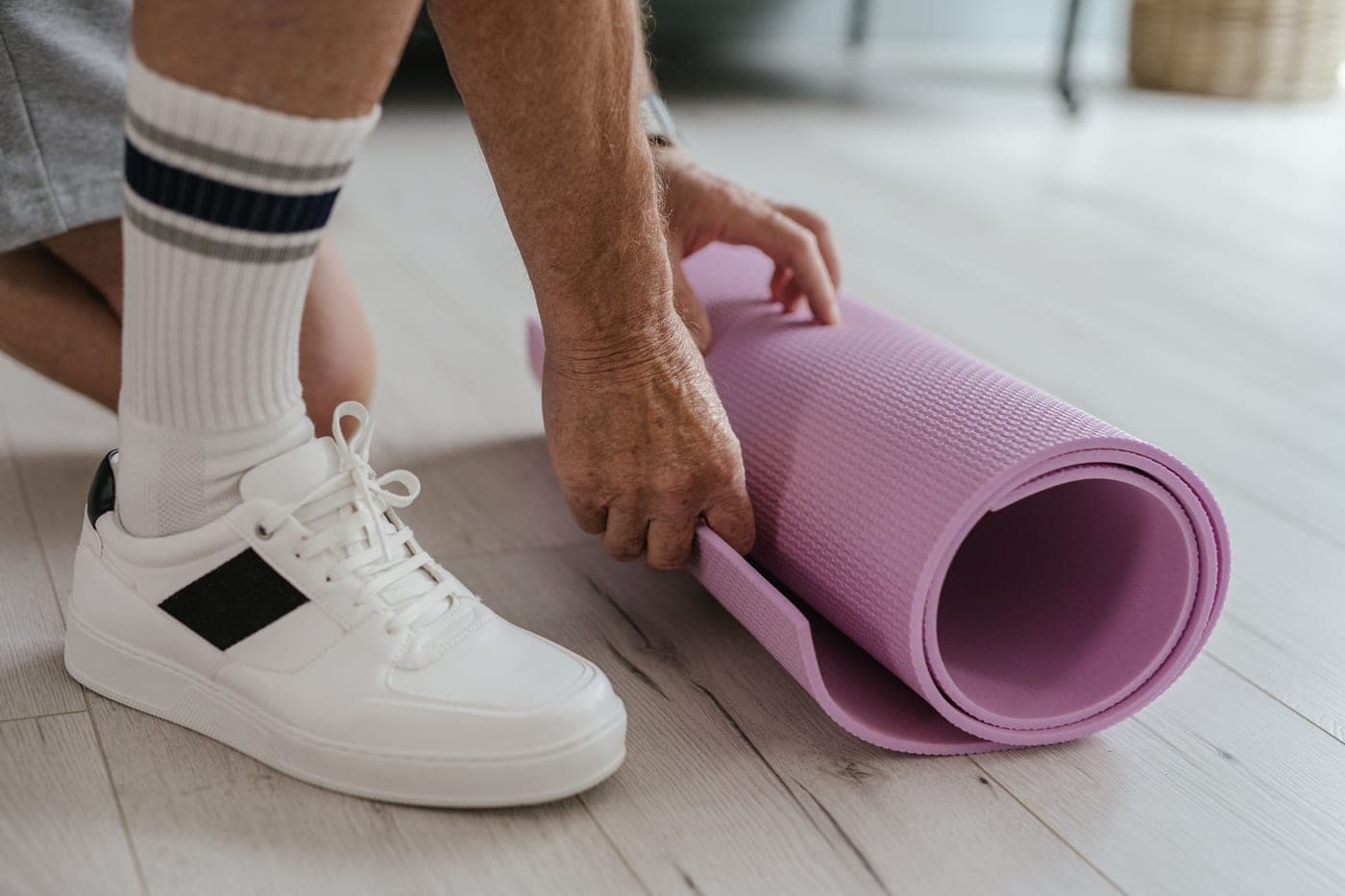
A brand-new mat that slides is not faulty. It has a factory release film on it, and getting that film off is the whole job.
We earn a commission when you buy through links on this page, at no extra cost to you. It never decides a ranking: the method is published. How we are funded
The short answer
Use the mat. Nothing breaks a mat in faster than practice, and most mats need two to four weeks of regular use before the surface grips. If you want to speed that up, the salt method is the one established brands actually publish: scatter coarse sea salt over the mat, leave it a day or two, scrub it in with a stiff brush, then wipe the salt off. It abrades the factory film without using any solvent.
What is happening is simple. Mats come out of a mold with a release agent on them, and some surfaces are additionally sealed. That film is slippery, it sits on top of the mat rather than being part of it, and the entire break-in process is removing it.
Why a new mat slides
Three separate things make a new mat slippery, and it helps to know which one you are dealing with because only the first responds to breaking in.
A manufacturing release film. Mats are formed against a mold surface, and a release agent stops them sticking to it. The residue is thin, even and very slick. Practice wears it off at the hands and feet first, which is why a half-broken-in mat grips in patches.
A sealed surface skin. Dense closed-cell PVC is manufactured with a smooth top skin. That skin does not come off — it wears, microscopically, into something with texture. This is the slower part of the process and it is why dense mats take weeks rather than days.
Sweat, which is not a break-in problem at all. If the mat grips fine when you start and becomes unusable twenty minutes in, breaking it in will not help. That is the closed-cell wet grip limit, it is permanent, and the fix is a towel or a different surface.
The four methods
Practice on it. The slowest and the best. Two to four weeks of regular use on a dense PVC mat and the difference is obvious. Nothing can go wrong, you need nothing, and the wear happens exactly where you use the mat. If you are not in a hurry, stop reading here.
Coarse sea salt. The method Manduka publishes for the PRO. Unroll the mat, sprinkle coarse sea salt across the whole surface, leave it for a day or two, then work it in with a stiff brush and wipe the salt away with a damp cloth. The salt crystals abrade the film mechanically. Repeat once if the mat is still glassy. This is safe on PVC and the fastest reliable option.
A thorough wash. Warm water and a very small amount of mild dish soap on a cloth, worked over the surface, then rinsed with a clean damp cloth and dried flat. This lifts a release film that has not yet been walked in. It does less than salt on a heavily sealed mat but it is quick and it cannot hurt anything. The method by material is in the cleaning guide.
A towel on top, as a bridge. Not a break-in method, but the right answer for the two or three weeks in between. A skidless mat towel gives you a usable surface immediately while the mat underneath wears in on its own schedule, and it stays useful afterwards for heated classes — whether you need one anyway is a separate question with a short answer.
How long each takes
| Method | Time to a grippy mat | Risk | Works on |
|---|---|---|---|
| Just practice on it | Two to four weeks | None | Every mat |
| Coarse sea salt scrub | One to three days, plus a session | Low | PVC, dense closed cell |
| Mild soap wash | Immediate, partial | None | Every mat |
| Skidless towel on top | Immediate, borrowed | None | Every mat |
| Solvents, alcohol, vinegar | Not recommended | High — can ruin the surface | Nothing |
The salt method is the only published break-in process from a major maker, which is why it is the one named here rather than one of the many household recipes that circulate.
The picks
The mats this applies to, and the towel for the meantime
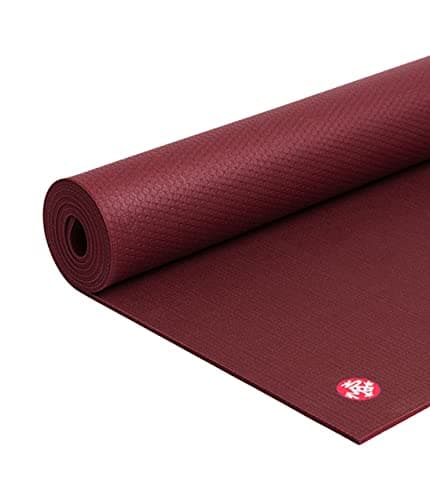
Sensitive knees and wrists
Manduka PRO 6mm
The most cushioned mat most people will ever need, and the one that outlives every other mat in this list. It is also heavy, and it is slippery until you break it in.
$144.00Amazon#ad · Price as of November 3, 2026 · Affiliate disclosure for the link to Manduka PRO 6mm
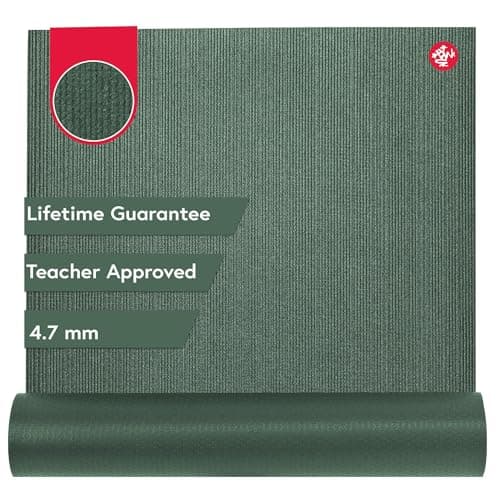
The PRO without the weight
Manduka PROlite 4.7mm
The PRO with about a third of the weight taken out. You lose some cushion and keep the durability, which is the right trade for most people who ever move their mat.
$112.00Amazon#ad · Price as of November 3, 2026 · Affiliate disclosure for the link to Manduka PROlite 4.7mm
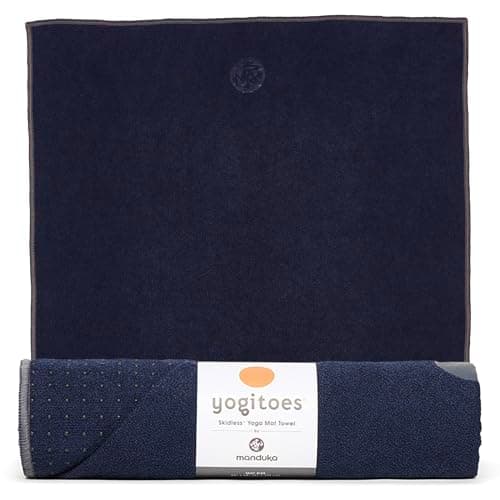
Rescuing a slippery mat
Manduka Yogitoes Skidless Mat Towel
The fix for a slippery mat you otherwise like. Silicone nubs hold it to the mat, and the top grips harder the wetter it gets.
$72.00Amazon#ad · Price as of November 3, 2026 · Affiliate disclosure for the link to Manduka Yogitoes Skidless Mat Towel
What not to do
- No alcohol, vinegar or solvent. They strip natural rubber and dull PVC. You will trade a temporary slip for permanent damage.
- No essential oils, and no oil of any kind. Oil leaves a film, and a film is the problem you are trying to remove. This is one of the most common causes of a mat that was fine and suddenly is not.
- No sunlight. Leaving a mat out in the sun to speed anything up degrades rubber and PVC. Ventilation yes, direct sun no.
- No machine wash. Only a cotton yoga rug goes in a washing machine. A foam, PVC or rubber mat will be damaged by the agitation.
- Do not sand it. Sandpaper and abrasive pads take off more than the film and leave a permanently rough patch. Salt is abrasive enough and it rinses away.
One last thing: if a mat is still slippery after a month of practice and a salt scrub, it may simply be the wrong mat for the way you practice rather than an unbroken one. A grippier surface is the fix, and the comparison between the two approaches explains why the surface material sets the ceiling.
How we picked
Chosen on published criteria, and we say so
Most gear sites open by telling you how many hours they spent with the products. We have not used most of these, and we would rather say so than imply otherwise. Every pick here is chosen against criteria we publish — grip, cushioning, size options, what buyers report after a year of use, and whether the thing is still actually sold — and every manufacturer figure on the page is labeled as the maker's claim.
Nobody pays for a place on this page, no product was supplied free in exchange for coverage, and a specification the maker does not publish is never guessed at. See the full criteria and weighting.
FAQ
Questions people ask
How long does it take to break in a yoga mat?
Does the salt method really work on a yoga mat?
Why is my brand new yoga mat so slippery?
Can I use my mat while breaking it in?
Do natural rubber mats need breaking in?
Related
Keep reading
Update log
What changed
- First published.
Receipts
Sources
- 1.Manduka — product information
- 2.Manduka — Yogitoes mat towels
- 3.OutdoorGearLab — The Best Yoga Mats
- 4.JadeYoga — product information
- 5.Treeline Review — Best Yoga Mats
We have not used every product on this page, and we do not pretend otherwise. Thicknesses, materials, sizes and warranty terms are the manufacturer's published figures, shown as their claims. Anything about materials, skin or injury is linked to a source. Prices are set by Amazon and change constantly, so we never type one into the text — every figure comes from Amazon's own data, dated, and disappears rather than going stale. Read the full method.