Yoga Mats Comparison
Manduka PRO vs PROlite: Which One Should You Buy?
Same closed-cell PVC, same break-in, same guarantee. The decision comes down to 1.3 millimeters of thickness and whether you carry the mat anywhere.
We earn a commission when you buy through links on this page, at no extra cost to you. It never decides a ranking: the method is published. How we are funded
Side by side
The two, next to each other
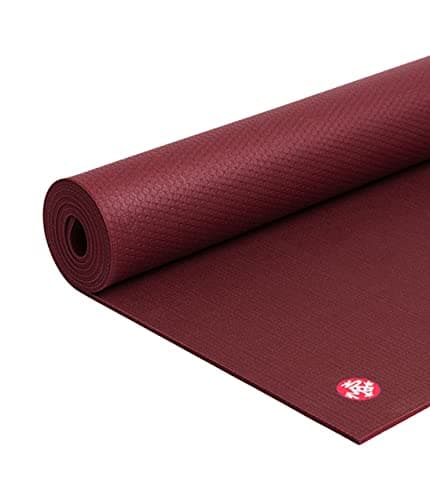
Buy if the mat stays home
Manduka PRO 6mm
6 mm and heavy. The most comfortable of the three to kneel on, and the one you will not want to carry across town.
$144.00Amazon#ad · Price as of November 3, 2026 · Affiliate disclosure for the link to Manduka PRO 6mm
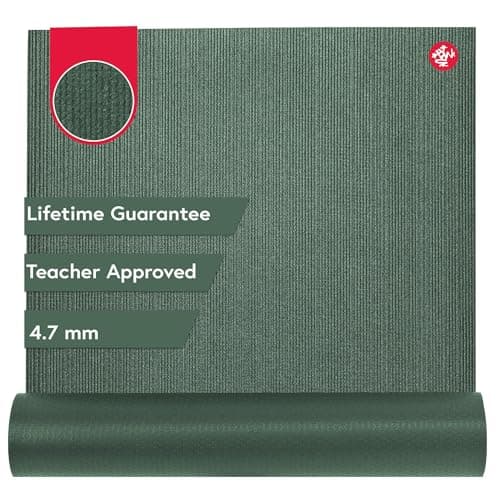
Buy if the mat travels with you
Manduka PROlite 4.7mm
4.7 mm of the same surface at roughly two-thirds the weight. You give up a little knee comfort and nothing else.
$112.00Amazon#ad · Price as of November 3, 2026 · Affiliate disclosure for the link to Manduka PROlite 4.7mm
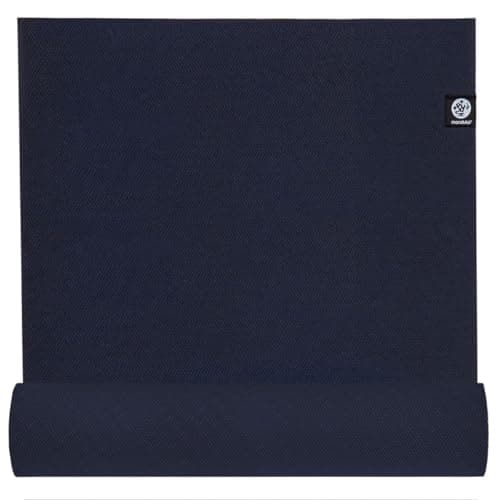
Buy if your practice is floor work
Manduka X Mat 5mm
A different animal: textured, firm, built for mat pilates and conditioning rather than for holding a long downward dog.
$72.00Amazon#ad · Price as of November 3, 2026 · Affiliate disclosure for the link to Manduka X Mat 5mm
The verdict
Buy the PRO if the mat lives in one room. Buy the PROlite if you carry it anywhere. They are the same mat in every way that affects how it feels under your hands: identical closed-cell PVC surface, identical break-in period, identical lifetime guarantee on the maker's terms. The PRO is 6 mm and heavy; the PROlite is 4.7 mm and noticeably lighter. That is the entire decision.
The mistake worth avoiding is buying the PRO because it is the flagship, then leaving it rolled up in a cupboard because hauling it to a studio twice a week is a chore. A mat you use is better than a mat you respect.
All three, side by side
| Manduka PRO | Manduka PROlite | Manduka X | |
|---|---|---|---|
| Thickness (maker) | 6 mm | 4.7 mm | 5 mm |
| Surface | Closed-cell PVC, smooth | Closed-cell PVC, smooth | Textured, open pattern |
| Relative weight | Heaviest | Middle | Lightest of the three |
| Break-in needed | Yes, one to three weeks | Yes, slightly shorter | No |
| Kneeling comfort | Best | Good | Good |
| Standing stability | Excellent | Excellent | Excellent |
| Grip when damp | Poor until worn in | Poor until worn in | Fair |
| Lengths offered | 71 in and 85 in | 71 in | 71 in |
| Built for | Daily yoga, one location | Yoga you carry | Mat pilates, floor work, conditioning |
Every specification above is the figure Manduka publishes. The weight column is deliberately relative rather than numeric, because Manduka lists weight by length and finish and a single number would be wrong for half the versions sold.
The weight difference is the whole point
A 6 mm dense PVC mat is a heavy object. That weight is a genuine feature at home: the mat does not creep across a wooden floor, it lies flat the day you unroll it, and it never curls at the corners. It is the reason the PRO is our pick in the hardwood floor roundup.
Carried on a shoulder for fifteen minutes, that same weight is the reason people stop going. The PROlite exists because Manduka knows this. It is not a cheaper PRO or a worse PRO, it is the PRO for a person with a commute.
Be honest about which person you are, and in particular about which person you will be in six months rather than this week. Home practice stays home; studio practice does not. If you are not sure yet, the PROlite is the safer of the two, because a light mat used at home is fine and a heavy mat you resent carrying is not.
What 1.3 mm actually costs you
Less than the number suggests, and more than nothing. Both mats are dense, so neither bottoms out under a kneecap the way soft foam does. The difference shows up in exactly one situation: long kneeling and low-lunge work on a hard floor. On the PRO your knee compresses the surface slightly and stops. On the PROlite it compresses slightly more and then stops.
For most people that is a non-issue. For anyone with knees that already complain, it is the deciding factor, and the honest answer is that even the PRO is not the most cushioned option available — that is a thicker mat plus a knee pad, which is what the sore knees roundup recommends.
Standing stability is identical between the two. Density, not thickness, is what makes a mat stable, and these two share it. The general version of this argument is in the thickness guide.
Both need breaking in
A new PRO is slippery, a new PROlite is slippery, and in both cases nothing is wrong with the mat. Dense closed-cell PVC leaves the factory with a surface residue, and until it wears off your palms will slide in downward dog. It takes one to three weeks of regular use, a wash with a damp cloth and mild soap, and some owners speed it along with a coarse salt scrub.
This is the single most common complaint about both mats, and it is entirely predictable — the full explanation is here. If you need grip on day one and want to keep the mat for a decade, neither of these is your answer: a natural rubber or polyurethane mat is, and the two best rubber options are compared here.
Neither mat grips well once you are actually sweating, break-in or not. Closed-cell PVC sheds water rather than absorbing it, which is excellent for hygiene and poor for wet palms. In a heated room both want a towel over the top.
Where the Manduka X fits
The X gets lumped in with these two because of the brand, and it should not be. It was built for conditioning and mat pilates rather than for yoga: the surface is textured rather than smooth, it is firm rather than cushioned, and it does not need breaking in.
That makes it the right pick for a practice built on rolling, sliding and plank work, where the PRO's smooth surface is actively unhelpful. It is the mat we recommend in the mat pilates roundup. For a practice built on long holds in standing poses, the PRO and PROlite are better mats, and the yoga mat versus pilates mat comparison explains why the two jobs pull in different directions.
Whichever of the two you choose, both arrive slippery and both need the same treatment — how to break in a mat is worth reading before the first session. If you would rather not break anything in at all, the Liforme comparison is the alternative.
And if what you are really weighing is a Manduka against a Jade rather than one Manduka against another, the PRO against the JadeYoga Harmony is that decision: cushioning and lifespan on one side, grip on day one on the other.
In detail
Both, in full
Buy if the mat stays home
Manduka PRO 6mm
As the manufacturer lists it · Manduka
What it gets right
- Dense enough that kneeling and forearm work stop hurting
- Closed cell, so sweat sits on top instead of soaking in
- Genuinely lasts — the lifetime guarantee is the maker's own
- An 85 in version exists if you are tall
What it does not
- Heavy. This is not a mat you carry far
- Slippery out of the box until the surface is broken in
- Closed-cell grip drops away once your hands are wet
Skip it if
you want grip on day one, practice hot, or need to carry the mat anywhere.
#ad · Price as of November 3, 2026 · Affiliate disclosure for the link to Manduka PRO 6mm
Buy if the mat travels with you
Manduka PROlite 4.7mm
As the manufacturer lists it · Manduka
What it gets right
- Noticeably easier to carry than the PRO
- Same closed-cell surface and the same long life
- Stable in standing balances because it does not sink
What it does not
- Less cushion than the PRO — kneeling is firmer
- Same break-in period before it grips
- Still costs like a long-term mat, not a first mat
Skip it if
your knees are the reason you are buying a mat — go up to the 6 mm PRO instead.
#ad · Price as of November 3, 2026 · Affiliate disclosure for the link to Manduka PROlite 4.7mm
Buy if your practice is floor work
Manduka X Mat 5mm
As the manufacturer lists it · Manduka
What it gets right
- Stable under rolling and shifting weight, not just static poses
- Wipes clean quickly
- Textured both sides so it does not slide on the floor
What it does not
- Less cushion than a dedicated pilates mat
- No alignment markings
- Firm surface takes getting used to after a foam mat
Skip it if
your practice is almost entirely seated or kneeling — you will want more padding.
#ad · Price as of November 3, 2026 · Affiliate disclosure for the link to Manduka X Mat 5mm
How we picked
Chosen on published criteria, and we say so
Most gear sites open by telling you how many hours they spent with the products. We have not used most of these, and we would rather say so than imply otherwise. Every pick here is chosen against criteria we publish — grip, cushioning, size options, what buyers report after a year of use, and whether the thing is still actually sold — and every manufacturer figure on the page is labeled as the maker's claim.
Nobody pays for a place on this page, no product was supplied free in exchange for coverage, and a specification the maker does not publish is never guessed at. See the full criteria and weighting.
FAQ
Questions people ask
Is the Manduka PROlite just a thinner PRO?
Which Manduka mat is best for beginners?
Does the PROlite come in a long version?
Why is my new Manduka slippery?
Related
Keep reading
Update log
What changed
- First published.
Receipts
Sources
- 1.Manduka — product information
- 2.OutdoorGearLab — The Best Yoga Mats
- 3.Reviewed — The Best Yoga Mats
- 4.Yoga Journal — Best Yoga Mats
- 5.Treeline Review — Best Yoga Mats
We have not used every product on this page, and we do not pretend otherwise. Thicknesses, materials, sizes and warranty terms are the manufacturer's published figures, shown as their claims. Anything about materials, skin or injury is linked to a source. Prices are set by Amazon and change constantly, so we never type one into the text — every figure comes from Amazon's own data, dated, and disappears rather than going stale. Read the full method.