Yoga Mats Comparison
Jade Harmony vs Manduka eKO: Which Rubber Mat?
Both are natural rubber, both grip out of the box, and they fail in opposite ways. One wears out faster; the other asks you to work a little harder for grip.
We earn a commission when you buy through links on this page, at no extra cost to you. It never decides a ranking: the method is published. How we are funded
Side by side
The two, next to each other
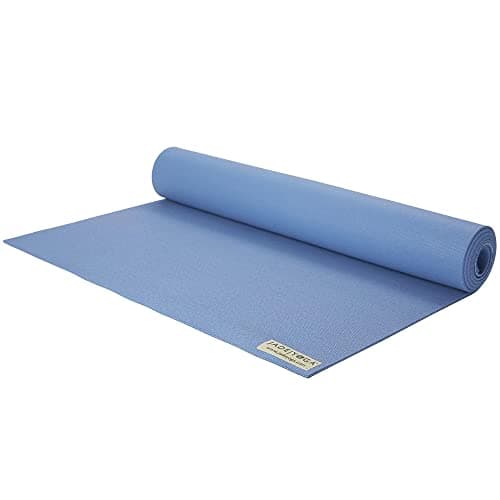
Buy for the grippiest dry surface
JadeYoga Harmony Mat
Open-cell rubber with more bite than anything else at this price. It also wears faster, because that bite is surface texture being used up.
$114.95Amazon#ad · Price as of November 3, 2026 · Affiliate disclosure for the link to JadeYoga Harmony Mat
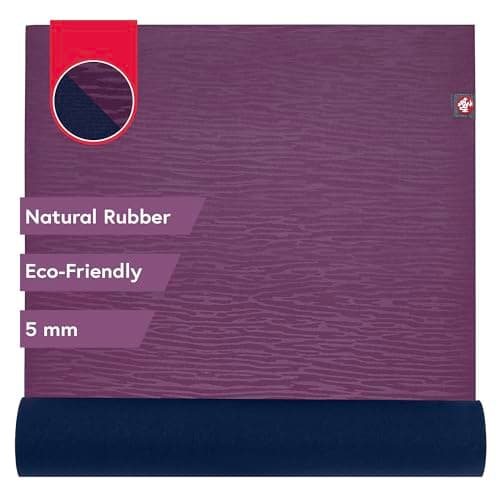
Buy for rubber that lasts
Manduka eKO 5mm
A closed-cell rubber surface: slightly less immediate grab, considerably more life, and easier to keep clean.
$87.54Amazon#ad · Price as of November 3, 2026 · Affiliate disclosure for the link to Manduka eKO 5mm
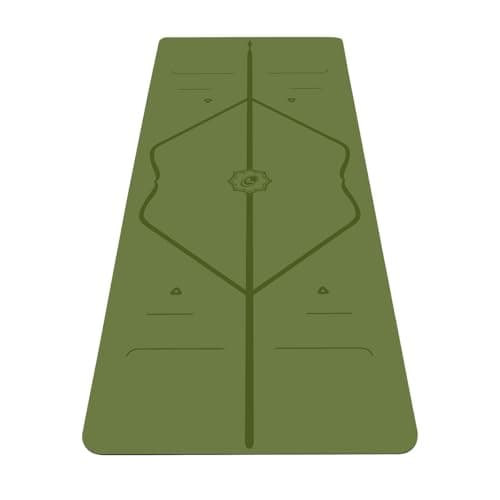
Buy if sweat is the real problem
Liforme Original Yoga Mat
Not rubber on top at all. A polyurethane layer that grips wet hands better than either of these, at a higher price.
$165.00Amazon#ad · Price as of November 3, 2026 · Affiliate disclosure for the link to Liforme Original Yoga Mat
The verdict
Buy the JadeYoga Harmony if you want maximum grip on a dry mat. Buy the Manduka eKO if you want a rubber mat that is still good in five years. Both grip from the first session, which is the main reason to choose natural rubber over PVC. They differ in how the top surface is built, and that single difference drives everything else.
If your actual problem is sweat rather than grip in general, neither is the best answer. A polyurethane surface like the Liforme Original handles wet hands better than any rubber mat, and the sweaty hands roundup ranks the full set of options.
Side by side
| JadeYoga Harmony | Manduka eKO | Liforme Original | |
|---|---|---|---|
| Thickness (maker) | 4.8 mm | 5 mm | 4.2 mm |
| Top surface | Open-cell natural rubber | Closed-cell natural rubber | Polyurethane over rubber |
| Grip, dry | Exceptional | Very good | Very good |
| Grip, sweating | Good at first, then slick | Good | Excellent |
| Break-in | None | None | None |
| Surface durability | Wears visibly with use | Holds up for years | Holds up, scuffs show |
| Easy to clean | Absorbs, needs care | Wipes clean | Wipes clean |
| Contains natural rubber latex | Yes | Yes | Yes, in the base |
Specifications as the makers list them. The two rows worth reading together are grip and durability, because on a rubber mat they are the same property viewed from opposite ends.
Open cell against closed cell
An open-cell surface has microscopic pores. They grab skin, and they absorb a little moisture, which is why the Harmony feels almost tacky underhand from the first minute. Nothing in this category grips a dry palm better.
A closed-cell surface is sealed. It cannot absorb anything, so it grips by texture rather than by suction. The eKO gives up a fraction of that immediate grab and gets two things back: it does not drink your sweat, and it does not hold what it drinks.
In practice the open-cell advantage is real but has a ceiling. Once there is standing water on the surface — a genuinely sweaty practice, a heated room — the pores are full and the Harmony goes slick like anything else. The eKO degrades more gently. If you practice hot, read the hot yoga picks, where a towel does more than either mat choice.
Why the grippier mat dies first
The grip you feel on an open-cell mat is surface structure, and using the mat wears that structure down. Hands and feet land in the same four places every practice, and over a couple of years of regular use those places go smooth and shiny first. The mat does not fall apart; it just stops being the grippiest mat you have ever used.
A closed-cell rubber surface has less to lose, so it loses it more slowly. That is the whole durability story, and it is why the eKO is the better value over a long horizon even though the Harmony is the better mat on day one. The same logic, with different materials, runs through how long a mat lasts.
Cleaning accelerates or delays this. Open-cell rubber hates being soaked and hates alcohol; wipe it, do not drench it, and keep it out of the sun. Both makers are specific about this and both are right — the cleaning guide covers rubber properly.
Smell, weight and latex
Smell. Both arrive smelling strongly of rubber. It is not a defect and it fades over a few weeks of use and airing. The Harmony's open surface holds it slightly longer. Why new mats smell, and what shortens it.
Weight. Both are heavier than a comparable PVC mat, because rubber is dense. That is good on a slippery floor and bad on a shoulder. Neither is a travel mat; if you need one that packs, the travel roundup has thin rubber options from both makers.
Latex. Natural rubber contains latex proteins, and both mats are therefore unsuitable for anyone with a latex allergy. This is the one genuine disqualifier in the comparison rather than a preference, and if it applies to you the answer is a cork or TPE mat instead — cork versus rubber is the page for that.
The difference underneath this whole comparison is cell structure rather than brand, and it is worth understanding on its own terms in open cell versus closed cell.
If the Manduka in your shortlist is actually the PRO rather than the eKO, that is a different comparison — closed-cell PVC against open-cell rubber rather than rubber against rubber. It is settled in the PRO against the Harmony.
In detail
Both, in full
Buy for the grippiest dry surface
JadeYoga Harmony Mat
As the manufacturer lists it · JadeYoga
What it gets right
- Hands and feet stop sliding, immediately
- Three lengths, including a genuinely long option
- Jade states it plants a tree for every mat sold
What it does not
- Open cell absorbs sweat and needs drying between sessions
- Sheds a little rubber dust early on
- Wears faster than a closed-cell PVC mat
Skip it if
you practice hot and cannot air the mat properly afterwards.
#ad · Price as of November 3, 2026 · Affiliate disclosure for the link to JadeYoga Harmony Mat
Buy for rubber that lasts
Manduka eKO 5mm
As the manufacturer lists it · Manduka
What it gets right
- Grippy immediately, dry or lightly damp
- Enough cushion for most floor work
- Natural rubber rather than PVC
What it does not
- Distinct rubber smell for the first weeks
- Heavier than a PVC mat of the same thickness
- Natural rubber contains latex proteins
Skip it if
you have a latex allergy, or a strong rubber smell in a small room would put you off practicing.
#ad · Price as of November 3, 2026 · Affiliate disclosure for the link to Manduka eKO 5mm
Buy if sweat is the real problem
Liforme Original Yoga Mat
As the manufacturer lists it · Liforme
What it gets right
- Grip holds up as you sweat, not just when dry
- Alignment markers are a real teaching aid at the start
- Wider and longer than a standard mat
What it does not
- Expensive enough to be a considered purchase
- The top layer wears faster than PVC over years
- Heavy to carry regularly
Skip it if
you are not yet sure you will keep practicing — buy a cheap mat first and upgrade to this one.
#ad · Price as of November 3, 2026 · Affiliate disclosure for the link to Liforme Original Yoga Mat
How we picked
Chosen on published criteria, and we say so
Most gear sites open by telling you how many hours they spent with the products. We have not used most of these, and we would rather say so than imply otherwise. Every pick here is chosen against criteria we publish — grip, cushioning, size options, what buyers report after a year of use, and whether the thing is still actually sold — and every manufacturer figure on the page is labeled as the maker's claim.
Nobody pays for a place on this page, no product was supplied free in exchange for coverage, and a specification the maker does not publish is never guessed at. See the full criteria and weighting.
FAQ
Questions people ask
Which grips better, the Jade Harmony or the Manduka eKO?
Which natural rubber mat lasts longer?
Do natural rubber yoga mats smell?
Can I use a rubber yoga mat with a latex allergy?
Related
Keep reading
Update log
What changed
- First published.
Receipts
Sources
- 1.JadeYoga — product information
- 2.Manduka — product information
- 3.Liforme — product information
- 4.OutdoorGearLab — The Best Yoga Mats
- 5.AAAAI — Latex allergy
We have not used every product on this page, and we do not pretend otherwise. Thicknesses, materials, sizes and warranty terms are the manufacturer's published figures, shown as their claims. Anything about materials, skin or injury is linked to a source. Prices are set by Amazon and change constantly, so we never type one into the text — every figure comes from Amazon's own data, dated, and disappears rather than going stale. Read the full method.