Yoga Mats Guide
How Long Does a Yoga Mat Last?
Lifespan is set by material and practice frequency, and almost nobody replaces a mat on time. Here is the realistic range for each material and the signs to watch.
We earn a commission when you buy through links on this page, at no extra cost to you. It never decides a ranking: the method is published. How we are funded
The short answer
Expect about a year from a soft foam mat, three to five years from a mid-range PVC or rubber mat, and close to a decade from a dense PVC mat such as the Manduka PRO — all assuming three to five practices a week. Daily hot yoga roughly halves every figure. Twice-a-month practice roughly doubles them.
Material sets the ceiling and frequency sets where you land under it. The two things that pull a mat below its range are heat and bad cleaning, and both are avoidable.
Lifespan by material
| Material | Regular practice | Fails by |
|---|---|---|
| NBR / open foam | Around a year | Flattening and crumbling at the edges |
| TPE | One to three years | Losing its texture, then tearing at creases |
| Standard PVC | Two to four years | Compression dents where hands and feet land |
| Dense PVC | Five to ten years | Barely does; the surface polishes smooth |
| Natural rubber, open cell | Two to four years | Surface grip wearing away first |
| Natural rubber, closed cell | Four to six years | Thinning, then splitting at a fold |
| Cork over rubber | Four to eight years | Cork shedding at the high-wear spots |
These are the ranges the makers and the mainstream review outlets describe, not measurements of our own. The pattern underneath them is simple: the denser the material, the longer it lasts, which is why weight is a decent proxy for lifespan when you are comparing two mats you cannot touch.
The grip paradox is worth noticing. The grippiest surfaces are open-cell, and open-cell surfaces wear fastest, because the texture doing the gripping is the texture being used up. That trade is the heart of Jade Harmony versus Manduka eKO.
Four signs it is finished
A mat rarely breaks. It degrades, and the four signals below are the ones that mean it is no longer doing its job rather than simply looking tired.
- Permanent dents where your hands and feet land. Press a thumb into the worn spot and into a fresh edge. If the worn spot gives noticeably more, the cushioning there is gone and your wrists are carrying it.
- Slipping that cleaning no longer fixes. A polished, shiny patch in the hand positions means the surface texture has worn off. That is terminal, unlike a film of cleaner, which is not — tell the two apart here.
- Flaking, shedding or crumbling. Foam mats start leaving crumbs on the floor. Cork sheds at the high-wear spots. Both mean the surface is breaking down.
- A smell that survives a proper clean. Odor that comes back within a day of cleaning has soaked into an open-cell surface rather than sitting on it — more on that here.
One sign people act on that they should not: creases from storage. Almost every creased mat flattens if you leave it unrolled for a week, and rolling it the other way round helps.
What shortens a mat's life
Sunlight. The worst of them, and the one people do without thinking. Drying a rubber mat on a sunny balcony degrades it faster than a year of practice. Dry mats flat, in shade, with air moving.
Alcohol, vinegar and bleach. All three strip natural rubber and dull PVC. A mild soap solution or a mat cleaner formulated for the material is the whole requirement, and the cleaning guide is specific about which products suit which surface.
Soaking an open-cell mat. Open-cell rubber absorbs water, and water inside a mat takes days to leave and encourages mold. Wipe rather than submerge, and never put a yoga mat in a washing machine unless it is a cotton rug.
Storing it rolled tight in a hot car. Heat plus compression sets permanent creases in TPE and PVC.
Practicing in shoes, or doing conditioning work on a yoga mat. Dragging weights or pivoting in trainers tears a yoga surface quickly. A dedicated firm mat handles that better — the exercise mat comparison covers the difference.
The picks
Mats that outlast the average
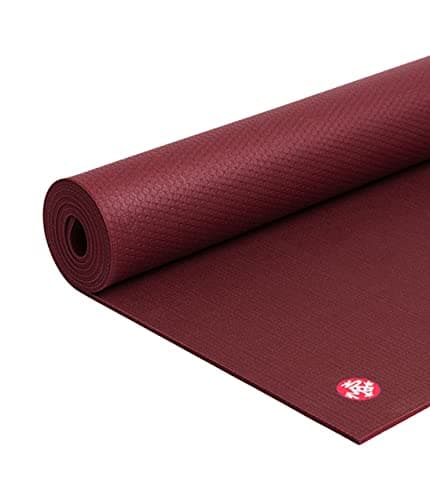
Sensitive knees and wrists
Manduka PRO 6mm
The most cushioned mat most people will ever need, and the one that outlives every other mat in this list. It is also heavy, and it is slippery until you break it in.
$144.00Amazon#ad · Price as of November 3, 2026 · Affiliate disclosure for the link to Manduka PRO 6mm
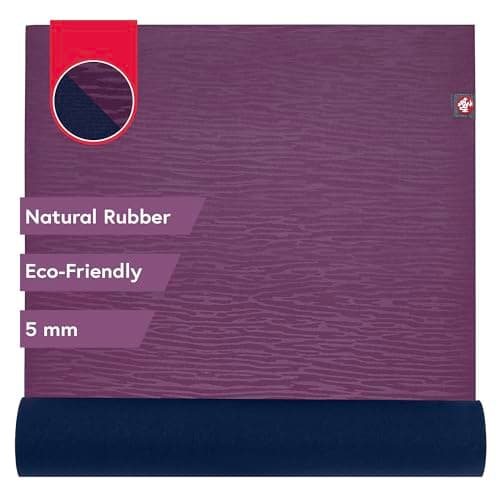
Grip without a break-in
Manduka eKO 5mm
Natural rubber with real grip from the first session and no break-in. The rubber smell is strong for the first couple of weeks and then fades.
$87.54Amazon#ad · Price as of November 3, 2026 · Affiliate disclosure for the link to Manduka eKO 5mm
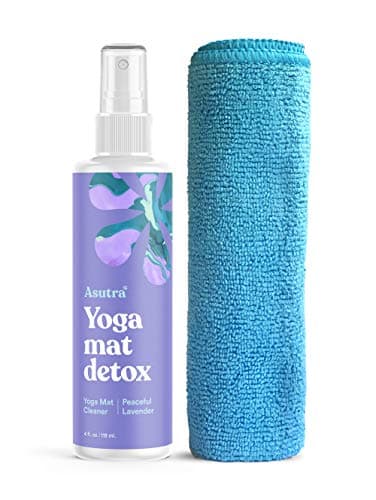
Routine cleaning
ASUTRA Natural Yoga Mat Cleaner
A plant-based spray that ships with a microfiber cloth, so it is the whole job in one purchase. Light scent, and it does not leave a film that makes the mat slicker.
$13.99Amazon#ad · Price as of November 3, 2026 · Affiliate disclosure for the link to ASUTRA Natural Yoga Mat Cleaner
Replace or rescue?
Three rescues are worth trying before you spend anything. A proper clean removes the film that mild slipping usually comes from. A week unrolled fixes curling and creases. And a skidless towel over a mat whose cushioning is fine but whose grip has gone buys you another year for a fraction of a new mat.
Replace it when the cushioning is gone in the places you actually use, when the surface is shiny and smooth in the hand positions, or when it is shedding. Those three are not fixable, and the second one is a genuine slip risk rather than an annoyance.
If you are replacing a foam mat that lasted a year, the useful question is whether to buy the same thing again or buy once. Dense PVC and rubber cost more up front and last several times as long; the arithmetic favors them clearly if you are still practicing in year two, which is exactly the argument in PRO versus Premium. And an old mat is not rubbish — it makes a decent knee pad cut in half, a doormat, or a liner for a plant shelf.
How we picked
Chosen on published criteria, and we say so
Most gear sites open by telling you how many hours they spent with the products. We have not used most of these, and we would rather say so than imply otherwise. Every pick here is chosen against criteria we publish — grip, cushioning, size options, what buyers report after a year of use, and whether the thing is still actually sold — and every manufacturer figure on the page is labeled as the maker's claim.
Nobody pays for a place on this page, no product was supplied free in exchange for coverage, and a specification the maker does not publish is never guessed at. See the full criteria and weighting.
FAQ
Questions people ask
How often should you replace a yoga mat?
Do yoga mats wear out if you do not use them?
How long do cork yoga mats last?
Does cleaning a yoga mat make it last longer?
Related
Keep reading
Update log
What changed
- First published.
Receipts
Sources
- 1.Manduka — product information
- 2.JadeYoga — product information
- 3.OutdoorGearLab — The Best Yoga Mats
- 4.Healthline — The Best Workout Mats
- 5.Reviewed — The Best Yoga Mats
We have not used every product on this page, and we do not pretend otherwise. Thicknesses, materials, sizes and warranty terms are the manufacturer's published figures, shown as their claims. Anything about materials, skin or injury is linked to a source. Prices are set by Amazon and change constantly, so we never type one into the text — every figure comes from Amazon's own data, dated, and disappears rather than going stale. Read the full method.