Yoga Mats Best picks
The Best Entry-Level Yoga Mats
An entry-level mat is not a worse mat, it is a mat with fewer promises. Here is what the cheapest tier actually gives up, and which of them gives up the least.
We earn a commission when you buy through links on this page, at no extra cost to you. It never decides a ranking: the method is published. How we are funded
Quick picks
The short answer
1 · Best entry-level mat overall
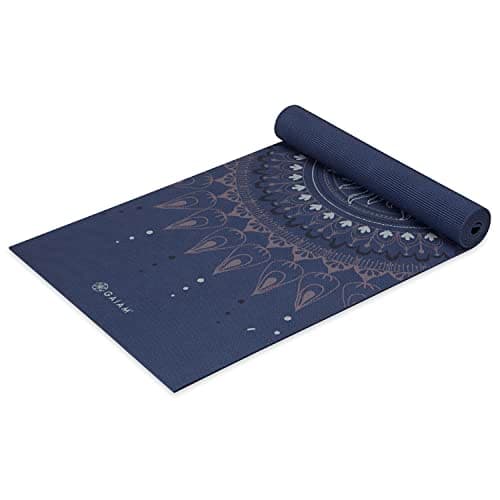
Gaiam Premium 6mm Yoga MatThe default first mat for a reason: 6 mm of cushioning, grip that works dry, and no break-in period to explain away.
Maker lists thickness: 6 mm
2 · Best entry-level grip
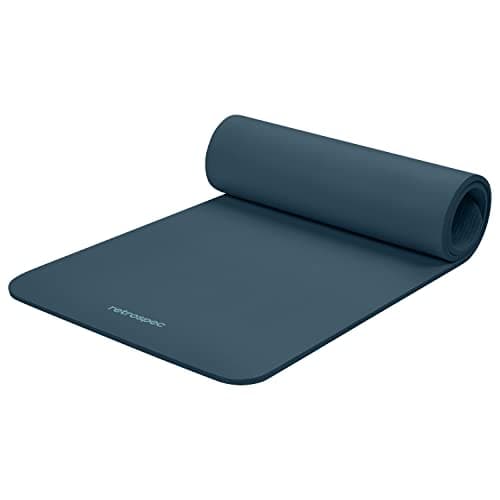
Retrospec Solana Yoga MatA textured top sheet rather than a smooth one, which is the single thing most inexpensive mats get wrong.
Maker lists thickness: 1/2 in (about 12.7 mm)
3 · The least you can spend and still be fine
BalanceFrom GoYoga All-Purpose MatThick, soft foam with a carry strap in the box. Light on grip, generous on padding.
Maker lists thickness: 1/2 in (about 12.7 mm)
4 · The no-decision option
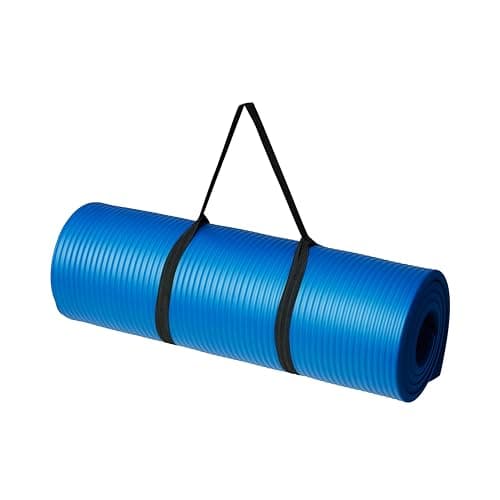
Amazon Basics 1/2-Inch Extra Thick Exercise MatHalf an inch of foam, nothing else to think about. Comfortable for floor work, wobbly for standing balances.
Maker lists thickness: 1/2 in (about 12.7 mm)
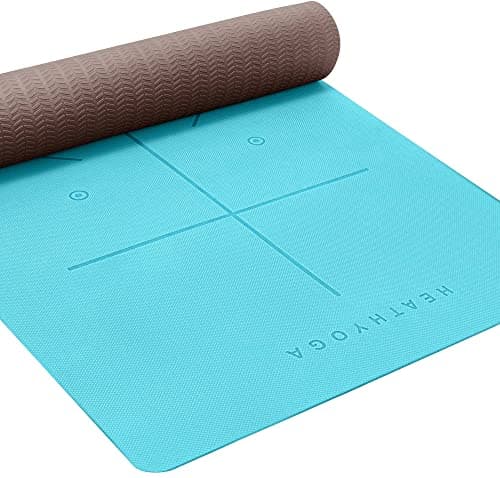
5 · Best entry-level mat with alignment lines
Heathyoga Eco Friendly TPE MatTPE rather than PVC, with printed guide lines that genuinely help when you are learning where your feet go.
Maker lists thickness: 6 mm
#ad · Prices come live from Amazon, last checked November 3, 2026. Figures here are the manufacturer's own. The ranking is editorial, made against the criteria on our How We Pick page, not from lab work. Photos come from Amazon, and the slot is left empty where a pick has no listing photograph. Tap a pick for the full write-up.
The short answer
Buy the Gaiam Premium 6mm. It is the entry-level mat that behaves most like a mat two tiers up: enough cushioning to kneel on a wooden floor, enough grip to hold a dry downward dog, and a 6 mm thickness that is the standard rather than a compromise. For someone who has never owned a mat, it is the lowest-risk purchase on this page.
If you want more texture under a sweaty palm, the Retrospec Solana has a patterned top sheet instead of a smooth one. If the only question is how little you can spend, the BalanceFrom GoYoga is thick, soft and comes with a strap, and it will not embarrass itself in a beginner class.
What the entry tier gives up
It helps to know exactly where the money goes in a mat, because inexpensive does not mean worse at everything. Entry-level mats give up three things, in this order.
Wet grip. This is the first and biggest gap. Almost every inexpensive mat is smooth PVC or smooth TPE, and both go slick the moment sweat appears. Premium mats solve this with natural rubber or a polyurethane top layer, and that material is most of their cost. If you already know you sweat heavily, this page is the wrong page and the sweaty hands roundup is the right one.
Lifespan. A low-density foam mat flattens where your hands and feet land. That takes a year or two of regular practice rather than a month, but it does happen, and nobody replaces a mat before it looks obviously worn. Dense PVC and rubber mats stay flat for years, which is the whole argument behind the PRO versus Premium comparison.
Edge and surface finish. Inexpensive mats curl at the corners out of the box, and some keep a faint factory smell for a few weeks. Both settle. Neither affects the practice, and the smell has a simple explanation.
What the entry tier does not give up is cushioning. Thickness is cheap to manufacture, which is why the thickest mats on the market are frequently the least expensive ones. If your knees are the limiting factor rather than your grip, entry-level is genuinely a good place to shop.
The five, side by side
| Mat | Thickness (maker) | Material | Grip when dry | Why you would pick it |
|---|---|---|---|---|
| Gaiam Premium | 6 mm | PVC | Good | The all-round default |
| Retrospec Solana | 6 mm | PVC | Good, textured | Most texture in the tier |
| BalanceFrom GoYoga | 6 mm or 12 mm | NBR foam | Fair | Spending the least |
| Amazon Basics Extra Thick | 13 mm | NBR foam | Fair | Maximum padding, no decisions |
| Heathyoga TPE | 6 mm | TPE | Good | Alignment lines while you learn |
Every number above is the figure the maker publishes, not a measurement of our own. The useful column is the last one: in this tier the mats are close enough on paper that the deciding factor is which single feature you care about.
The one spec worth paying for
If you stretch on exactly one thing, make it density, not thickness. A dense 6 mm mat compresses under a knee and then stops; a soft 13 mm mat keeps giving until the kneecap is effectively on the floor, while also making standing balances harder. That is the trade the extra-thick foam mats make, and it is the reason a 6 mm PVC mat frequently feels better than a 13 mm foam one in the same pose.
Density is not printed on the box. The usable proxy is weight: for the same size, a heavier mat is a denser mat, and PVC and rubber are denser than NBR foam. The full version of this argument is in the thickness guide, and if you are still choosing between materials rather than models, start with how to choose a yoga mat.
In detail
Every pick, in full
1
Best entry-level mat overall
Gaiam Premium 6mm Yoga Mat
As the manufacturer lists it · Gaiam
What it gets right
- Cushioned enough that floor work is comfortable on day one
- Light and easy to roll
- Cheap enough to be a low-risk first purchase
What it does not
- Grip fades as you sweat
- 68 in is short if you are tall
- Will not last the years a Manduka or Jade will
Skip it if
you already know you sweat heavily, or you are over about 5 ft 10 in.
#ad · Price as of November 3, 2026 · Affiliate disclosure for the link to Gaiam Premium 6mm Yoga Mat
2
Best entry-level grip
Retrospec Solana Yoga Mat
As the manufacturer lists it
What it gets right
- More surface texture than a plain foam mat
- Long enough at 72 in for most people
- Cheap and widely stocked
What it does not
- Foam still dents under knees over time
- Not a hot-yoga surface
- Colors vary in finish between batches, buyers report
Skip it if
you want a mat that will still be flat in three years.
#ad · Price as of November 3, 2026 · Affiliate disclosure for the link to Retrospec Solana Yoga Mat
3
The least you can spend and still be fine
BalanceFrom GoYoga All-Purpose Mat
As the manufacturer lists it
What it gets right
- Costs less than almost anything else here
- Very soft for kneeling and floor work
- Strap included
What it does not
- Too squishy for balancing
- Foam compresses and creases within months of regular use
- Little grip when your hands sweat
Skip it if
you already know you are committed — buy once instead of twice.
#ad · Price as of November 3, 2026 · Affiliate disclosure for the link to BalanceFrom GoYoga All-Purpose Mat
4
The no-decision option
Amazon Basics 1/2-Inch Extra Thick Exercise Mat
As the manufacturer lists it
What it gets right
- One of the longest cheap mats at 74 in
- Foam is soft enough for knees straight away
- Easy to replace when it wears out
What it does not
- Slippery once your hands are damp
- Foam edges curl after a few months
- No grip texture worth the name
Skip it if
you sweat much at all — you will be sliding within ten minutes.
#ad · Price as of November 3, 2026 · Affiliate disclosure for the link to Amazon Basics 1/2-Inch Extra Thick Exercise Mat
5
Best entry-level mat with alignment lines
Heathyoga Eco Friendly TPE Mat
As the manufacturer lists it
What it gets right
- Body-alignment lines help you square up without a teacher
- 26 in wide, which is roomier than a standard mat
- TPE has almost no smell compared with rubber
What it does not
- Grip is average and drops off when damp
- TPE is softer and marks more easily than rubber
- Printed lines fade with heavy use
Skip it if
grip is your main problem — lines will not stop you sliding.
#ad · Price as of November 3, 2026 · Affiliate disclosure for the link to Heathyoga Eco Friendly TPE Mat
What to look for
- 6 mm, unless your knees say otherwise. It is the standard band for a reason, and going to 13 mm costs you stability for padding you probably do not need.
- A textured top sheet beats a smooth one. In this tier nothing grips when wet, but texture buys you a margin before that happens.
- Check the length. Most entry-level mats are 68 inches. If you are much above average height your heels will hang off the end, and the size guide covers the longer options.
- A strap in the box is worth having. Several mats in this tier include one, which saves a separate purchase if you ever carry the mat anywhere.
- Do not buy the cheapest mat twice. Replacing a flattened foam mat every year is the one way an entry-level mat ends up costing more than a good one. If you are still practicing in six months, that is the moment to upgrade.
And if the honest answer is that you are not sure yoga is for you yet, that is fine, and it is the exact situation this tier exists for. Buy here, practice for a season, and let the mat tell you what you actually want next. The first-month plan is in your first 30 days at home.
If what you actually want to know is where this tier sits relative to everything above it, what a yoga mat should cost lays out all three tiers and what each one buys.
How we picked
Chosen on published criteria, and we say so
Most gear sites open by telling you how many hours they spent with the products. We have not used most of these, and we would rather say so than imply otherwise. Every pick here is chosen against criteria we publish — grip, cushioning, size options, what buyers report after a year of use, and whether the thing is still actually sold — and every manufacturer figure on the page is labeled as the maker's claim.
Nobody pays for a place on this page, no product was supplied free in exchange for coverage, and a specification the maker does not publish is never guessed at. See the full criteria and weighting.
FAQ
Questions people ask
What is a good entry-level yoga mat?
Is an inexpensive yoga mat bad for you?
How long will an entry-level yoga mat last?
Should I buy a thick entry-level mat or a thin one?
Related
Keep reading
Update log
What changed
- First published.
Receipts
Sources
- 1.OutdoorGearLab — The Best Yoga Mats
- 2.Reviewed — The Best Yoga Mats
- 3.Healthline — The Best Workout Mats
- 4.Gaiam — product information
- 5.Yoga Journal — Best Yoga Mats
We have not used every product on this page, and we do not pretend otherwise. Thicknesses, materials, sizes and warranty terms are the manufacturer's published figures, shown as their claims. Anything about materials, skin or injury is linked to a source. Prices are set by Amazon and change constantly, so we never type one into the text — every figure comes from Amazon's own data, dated, and disappears rather than going stale. Read the full method.