Yoga Mats Guide
How Much Should a Yoga Mat Cost?
Mats run from pocket change to a small appliance, and the jumps are not gradual. Three tiers, what each one buys, and where the money stops working.

We earn a commission when you buy through links on this page, at no extra cost to you. It never decides a ranking: the method is published. How we are funded
The short answer
Most people should buy in the middle tier, and most people buy in the entry tier twice instead. The entry tier gets you a usable mat. The middle tier gets you a mat you stop thinking about. The top tier solves one specific problem each — wet grip, or extreme cushioning, or alignment markings — and if you do not have that problem, it buys you nothing you will notice.
This site does not write prices into its articles, because they move. What follows is the structure of the market in tiers, which does not move, and there is a live price on every product card below.
The three tiers
The entry tier. Foam and basic PVC, usually 6 mm, often with a carry strap in the box. Grip is fine dry and gone wet. Lifespan is a year or two of regular practice before the high-wear spots flatten. This tier exists for one honest reason: you do not yet know whether this becomes a habit, and that is a perfectly good reason to shop here. The full list is in the entry-level roundup.
The middle tier. Denser PVC, TPE with some engineering behind it, or a lighter natural rubber mat. This is where mats stop having an obvious weakness. Grip holds up through a normal sweaty session, density means kneeling does not hurt, and the mat stays flat for years rather than months. If you practice weekly and expect to keep going, this is the tier that costs the least over five years.
The top tier. Polyurethane-faced mats, premium natural rubber, mats with etched alignment systems, and the heaviest dense mats with lifetime guarantees. Each one is the best available answer to a specific problem. None of them is a general upgrade, and that is the thing the tier is most often bought as.
What each tier buys
| Tier | Typical material | Grip when wet | Lifespan | Buy it if |
|---|---|---|---|---|
| Entry | NBR foam, basic PVC | Poor | One to two years | You are finding out whether you like yoga |
| Middle | Dense PVC, engineered TPE, light rubber | Adequate to good | Several years | You practice regularly and want to stop thinking about it |
| Top | Polyurethane, premium rubber, dense PVC | Excellent, or irrelevant | Many years | You have one specific problem it solves |
The column that actually predicts cost per year is lifespan, not price. A mat replaced every eighteen months is not the cheap option it looks like, which is the argument laid out in how long a mat lasts.
Where the money stops working
Three things stop improving once you leave the middle tier, and it is worth knowing which they are so you do not pay for them twice.
Cushioning. Thickness is cheap to manufacture. The thickest mats sold are frequently the least expensive ones, and past 6 mm of dense material, more padding actively costs you stability in standing poses. The spec worth paying for is density, not depth — the thickness guide has the whole argument.
Size. A longer mat costs a little more and that is the end of it. There is no premium version of being tall, just a longer mat, and the size guide lists which models offer one.
Appearance. Pattern and color are priced like features and are not features. A printed mat and a plain one wear identically.
What keeps improving all the way up the market is wet grip. That is the one property where the top tier is genuinely in a different class, because the solution is a different surface material rather than more of the same one. If slipping is your problem, the money is well spent; if it is not, you are buying grip you will never test.
The picks
One mat per tier
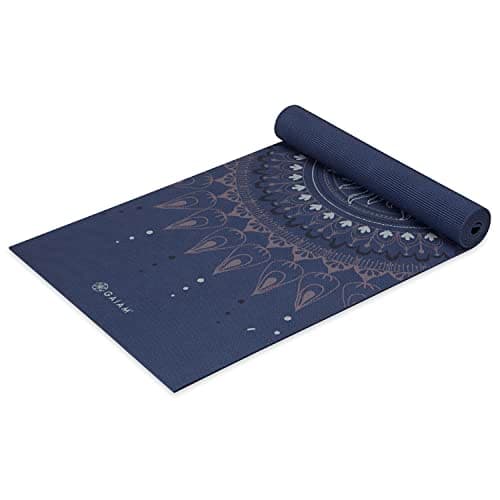
A first mat
Gaiam Premium 6mm Yoga Mat
The default first mat. Enough cushion for a beginner, a printed design you will not hate, and a price that makes quitting after a month painless.
$21.90Amazon#ad · Price as of November 3, 2026 · Affiliate disclosure for the link to Gaiam Premium 6mm Yoga Mat
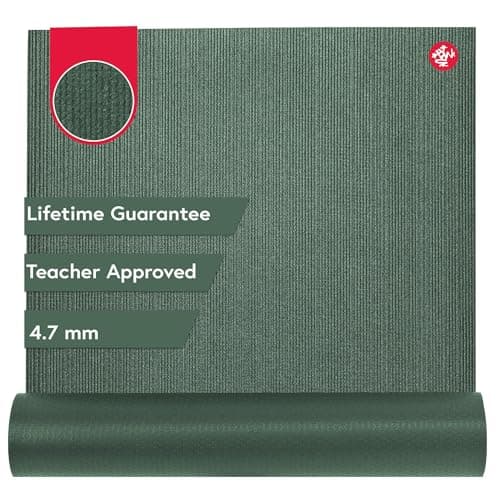
The PRO without the weight
Manduka PROlite 4.7mm
The PRO with about a third of the weight taken out. You lose some cushion and keep the durability, which is the right trade for most people who ever move their mat.
$112.00Amazon#ad · Price as of November 3, 2026 · Affiliate disclosure for the link to Manduka PROlite 4.7mm
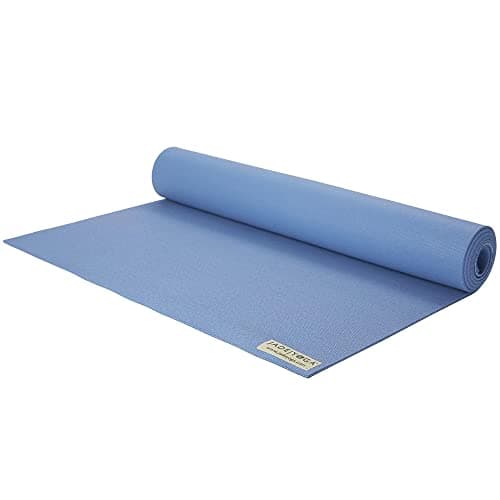
The grippiest dry surface
JadeYoga Harmony Mat
Open-cell natural rubber with the stickiest dry grip here. It drinks sweat rather than shedding it, so it needs proper airing and eventually wears out.
$114.95Amazon#ad · Price as of November 3, 2026 · Affiliate disclosure for the link to JadeYoga Harmony Mat
When to spend more
- You sweat. This is the only reason that justifies the top tier on its own. Wet grip is the one thing a cheap mat cannot be made to do, and the sweaty hands roundup is the right page.
- Your knees or wrists hurt. Dense cushioning is a middle-to-top-tier property and it is worth paying for, because the alternative is not practicing.
- You practice almost daily. At that frequency, lifespan dominates and the middle tier is cheaper per year than the entry tier.
- You practice at home with no teacher. Alignment markings are a real benefit in the first year — see the marked mats.
- You want a specific material. Avoiding PVC puts a floor under what you can spend; the options are in the non-toxic roundup.
And when not to: if you are buying your first mat this month, buy in the entry or middle tier, practice for a season, and let the mat tell you which of the problems above is actually yours. The choosing guide walks that decision in order, and the kit question covers what else to buy at the same time.
If you have decided the top tier is where you are shopping, the field narrows to three mats very quickly. The PRO against the Liforme against the Jade Harmony sets out which of the three each type of buyer should take, and why the most expensive one is not automatically the answer.
How we picked
Chosen on published criteria, and we say so
Most gear sites open by telling you how many hours they spent with the products. We have not used most of these, and we would rather say so than imply otherwise. Every pick here is chosen against criteria we publish — grip, cushioning, size options, what buyers report after a year of use, and whether the thing is still actually sold — and every manufacturer figure on the page is labeled as the maker's claim.
Nobody pays for a place on this page, no product was supplied free in exchange for coverage, and a specification the maker does not publish is never guessed at. See the full criteria and weighting.
FAQ
Questions people ask
How much should I spend on a yoga mat?
Is an expensive yoga mat worth it?
Is a cheap yoga mat bad?
What is the most important thing to pay for in a yoga mat?
Why does this site not print prices in its articles?
Related
Keep reading
Update log
What changed
- First published.
Receipts
Sources
- 1.OutdoorGearLab — The Best Yoga Mats
- 2.Yoga Journal — Best Yoga Mats
- 3.Reviewed — The Best Yoga Mats
- 4.Treeline Review — Best Yoga Mats
- 5.Healthline — The Best Workout Mats
We have not used every product on this page, and we do not pretend otherwise. Thicknesses, materials, sizes and warranty terms are the manufacturer's published figures, shown as their claims. Anything about materials, skin or injury is linked to a source. Prices are set by Amazon and change constantly, so we never type one into the text — every figure comes from Amazon's own data, dated, and disappears rather than going stale. Read the full method.