Yoga Mats Comparison
Manduka PRO vs Liforme vs Jade Harmony
Three mats that each win one argument outright. Knowing which argument you are actually having is the whole decision.
We earn a commission when you buy through links on this page, at no extra cost to you. It never decides a ranking: the method is published. How we are funded
Side by side
The two, next to each other
Buy for grip when wet
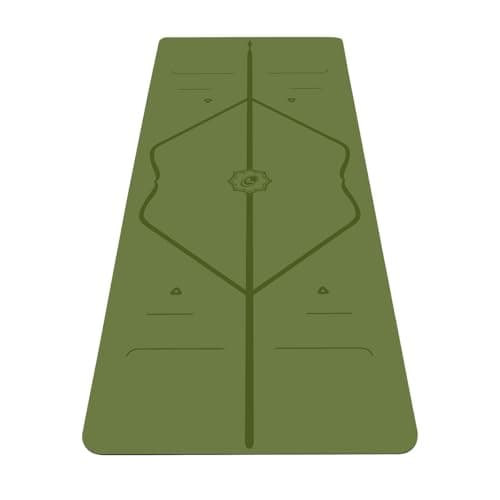
Liforme Original Yoga Mat
The only one of the three that holds on once your palms are actually sweating, and the one with alignment markings. Also the most expensive thing on this site.
$165.00Amazon#ad · Price as of November 3, 2026 · Affiliate disclosure for the link to Liforme Original Yoga Mat
Buy for cushion and lifespan
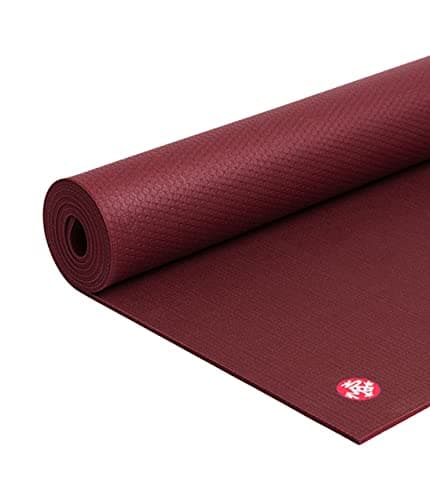
Manduka PRO 6mm
The most comfortable to kneel on and the one most likely to outlive the other two. Slippery until broken in, and heavy forever.
$144.00Amazon#ad · Price as of November 3, 2026 · Affiliate disclosure for the link to Manduka PRO 6mm
Buy for grip on day one
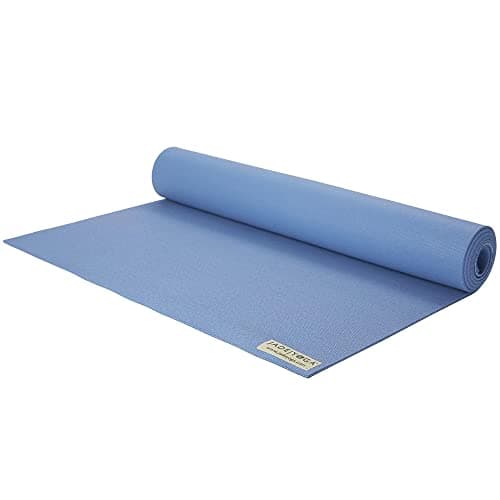
JadeYoga Harmony Mat
Sticky from the moment you unroll it, with no break-in at all. Open-cell rubber drinks sweat, so it needs airing and wears out sooner.
$114.95Amazon#ad · Price as of November 3, 2026 · Affiliate disclosure for the link to JadeYoga Harmony Mat
The verdict
Sweaty hands: Liforme. Sore knees: Manduka PRO. Grip from the first minute, without paying the most: Jade Harmony. All three are genuinely good mats, none is the best mat, and the reason people agonize over this choice for weeks is that the mats are not competing on the same axis.
Each has one property the other two cannot match. The Liforme grips when wet. The PRO cushions and lasts. The Jade grips immediately without a break-in period. Work out which of those three sentences describes your problem and the decision takes about a minute.
The three two-way versions of this comparison exist on this site because that is how people search it — Liforme against the PRO, the PRO against the Jade and the Jade against Manduka's rubber mat. This page is the three-way, because a buyer at this budget is usually holding all three tabs open at once.
All three, side by side
| Liforme Original | Manduka PRO | JadeYoga Harmony | |
|---|---|---|---|
| Thickness (maker) | 4.2 mm | 6 mm | 3/16 in, about 4.8 mm |
| Material | Natural rubber with a grip-top layer | Closed-cell PVC | Open-cell natural rubber |
| Grip, dry | Excellent | Fair until broken in | Excellent |
| Grip, wet | Excellent | Poor | Fair |
| Break-in needed | No | Yes, one to three weeks | No |
| Kneeling comfort | Fair | Best | Fair |
| Sweat behavior | Sheds, wipes clean | Sheds, wipes clean | Absorbs, needs airing |
| Size | About 73 in x 27 in | 71 in and 85 in lengths | 68 in, 71 in and 74 in lengths |
| Alignment markings | Yes | No | No |
| Latex in the mat | Natural rubber base | No | Natural rubber |
| Relative price | Highest | High | High |
Every figure above is the one its maker publishes. The price row is deliberately relative: these are three mats whose prices move with sales and colorways, and the ranking between them is stable in a way any specific number would not be.
The row that decides most purchases is the fourth one. Wet grip is the only property here where the three mats are not merely different but genuinely far apart, and it is also the property most buyers do not think to check until the first warm class.
Grip is three different questions
"Grippy" gets used for three unrelated things, and conflating them is how people buy the wrong mat at this price point.
Dry grip is whether your palm slides on a clean, dry surface. The Jade and the Liforme both have it immediately. The PRO does not, out of the box, and that is a factory residue on dense PVC rather than a defect — it wears off in one to three weeks of use. If you cannot tolerate a few slippery weeks, that alone eliminates the PRO, and breaking it in deliberately is the alternative.
Wet grip is whether the mat holds when there is sweat between your hand and the surface. This is where the Liforme is alone. Its polyurethane-style top layer grips better wet than dry, which is an unusual property and the actual reason it costs what it does. The PRO is closed-cell PVC: sweat sits on top of it and your hands hydroplane. The Jade is open-cell rubber, so it absorbs some sweat and keeps partial grip — better than the PRO, not close to the Liforme.
Stability is whether the mat itself moves on the floor, and it is a question about density rather than surface. All three are dense enough that none of them creeps, and the PRO is the most planted of the three simply because it is the heaviest object. On carpet the calculus changes entirely — practicing on carpet covers that.
If your honest answer is "my hands sweat and I slide", the Liforme is the pick and the other two are compromises. The sweaty hands roundup includes cheaper routes to the same outcome, including the towel-over-mat approach that costs a fraction of any of these.
Cushioning and what it costs
The PRO wins this outright, and the margin is larger than the thickness numbers suggest. At 6 mm of dense closed-cell PVC it is the only mat here that a knee or a forearm can press into without reaching the floor. The Liforme at 4.2 mm and the Jade at about 4.8 mm are both firm mats that transmit a hard floor fairly directly.
The cost of that cushion is weight. The PRO is a heavy object and it is heavy in a way that matters on a commute and not at all at home. If you carry a mat anywhere regularly, that is a real argument against it, and the PROlite comparison is the version of this decision that takes weight seriously.
It is also worth knowing that none of these three is the right answer to badly painful knees. The better answer is a firm mat plus a dedicated pad under the joint, which costs less and works better than buying thickness you then have to balance on — see the knee pad roundup and the mats we pick for sore knees.
How long each one lasts
The PRO is the durability pick, and Manduka backs it with a lifetime guarantee on its own terms. Closed-cell PVC does not flake, does not absorb and does not thin out the way softer materials do; a PRO that is looked after genuinely can outlast a decade of regular practice.
The Liforme's top layer is the wearing part. It is the layer doing the gripping, and over years of heavy use it wears before the rubber base does. That is the honest trade for the wet grip — a consumable surface rather than a permanent one.
The Jade wears fastest of the three, and open-cell rubber is why. It absorbs sweat, which is what gives it grip, and absorption plus organic material means it needs airing between sessions and eventually breaks down. Jade is open about this, and it is the reason the mat is a poor choice for a heated practice in a room you cannot ventilate.
Two practical notes that follow from the materials. The Jade and the Liforme both contain natural rubber, so neither suits a latex allergy; the PRO is the only latex-free mat of the three. And how you clean each one differs — an open-cell mat must not be soaked, and the wrong cleaner on a grip-top layer removes the grip you paid for.
The case for buying none of them
Spending this much on a first mat is usually a mistake, and it is worth saying plainly on a page designed to help you spend it. All three of these reward a practice that already exists: the PRO rewards years, the Liforme rewards a sweaty regular habit, the Jade rewards someone who knows they want rubber. None of them makes a beginner better, and a beginner who stops practicing after two months has bought an expensive floor covering.
The sensible order is a competent mat first, then this decision a year later with real information about your own hands and knees. The entry-level picks are the mats for that first year, and what a mat should cost sets out what each tier actually buys you.
If you are past that stage and genuinely choosing between these three, the shortest version is the one at the top of this page: wet hands point to the Liforme, sore knees to the PRO, and immediate grip at a lower price to the Jade. For the general version of the material argument, cork against rubber and how to choose a mat both widen the field past these three brands.
In detail
Both, in full
Buy for grip when wet
Liforme Original Yoga Mat
As the manufacturer lists it · Liforme
What it gets right
- Grip holds up as you sweat, not just when dry
- Alignment markers are a real teaching aid at the start
- Wider and longer than a standard mat
What it does not
- Expensive enough to be a considered purchase
- The top layer wears faster than PVC over years
- Heavy to carry regularly
Skip it if
you are not yet sure you will keep practicing — buy a cheap mat first and upgrade to this one.
#ad · Price as of November 3, 2026 · Affiliate disclosure for the link to Liforme Original Yoga Mat
Buy for cushion and lifespan
Manduka PRO 6mm
As the manufacturer lists it · Manduka
What it gets right
- Dense enough that kneeling and forearm work stop hurting
- Closed cell, so sweat sits on top instead of soaking in
- Genuinely lasts — the lifetime guarantee is the maker's own
- An 85 in version exists if you are tall
What it does not
- Heavy. This is not a mat you carry far
- Slippery out of the box until the surface is broken in
- Closed-cell grip drops away once your hands are wet
Skip it if
you want grip on day one, practice hot, or need to carry the mat anywhere.
#ad · Price as of November 3, 2026 · Affiliate disclosure for the link to Manduka PRO 6mm
Buy for grip on day one
JadeYoga Harmony Mat
As the manufacturer lists it · JadeYoga
What it gets right
- Hands and feet stop sliding, immediately
- Three lengths, including a genuinely long option
- Jade states it plants a tree for every mat sold
What it does not
- Open cell absorbs sweat and needs drying between sessions
- Sheds a little rubber dust early on
- Wears faster than a closed-cell PVC mat
Skip it if
you practice hot and cannot air the mat properly afterwards.
#ad · Price as of November 3, 2026 · Affiliate disclosure for the link to JadeYoga Harmony Mat
How we picked
Chosen on published criteria, and we say so
Most gear sites open by telling you how many hours they spent with the products. We have not used most of these, and we would rather say so than imply otherwise. Every pick here is chosen against criteria we publish — grip, cushioning, size options, what buyers report after a year of use, and whether the thing is still actually sold — and every manufacturer figure on the page is labeled as the maker's claim.
Nobody pays for a place on this page, no product was supplied free in exchange for coverage, and a specification the maker does not publish is never guessed at. See the full criteria and weighting.
FAQ
Questions people ask
Which is the best premium yoga mat?
Is the Liforme worth the price?
Does the Manduka PRO grip better than the Jade Harmony?
Which of these mats is best for hot yoga?
Are any of these mats latex-free?
Related
Keep reading
Update log
What changed
- First published.
Receipts
Sources
- 1.Manduka — product information
- 2.Liforme — product information
- 3.JadeYoga — product information
- 4.OutdoorGearLab — The Best Yoga Mats
- 5.Reviewed — The Best Yoga Mats
- 6.Treeline Review — Best Yoga Mats
- 7.AAAAI — Latex allergy
We have not used every product on this page, and we do not pretend otherwise. Thicknesses, materials, sizes and warranty terms are the manufacturer's published figures, shown as their claims. Anything about materials, skin or injury is linked to a source. Prices are set by Amazon and change constantly, so we never type one into the text — every figure comes from Amazon's own data, dated, and disappears rather than going stale. Read the full method.