Yoga Mats Comparison
Liforme vs Manduka PRO: Which Mat Wins?
Two mats at the top of the market that solve opposite problems. One grips when your hands are wet; the other cushions your knees for a decade.
We earn a commission when you buy through links on this page, at no extra cost to you. It never decides a ranking: the method is published. How we are funded
Side by side
The two, next to each other
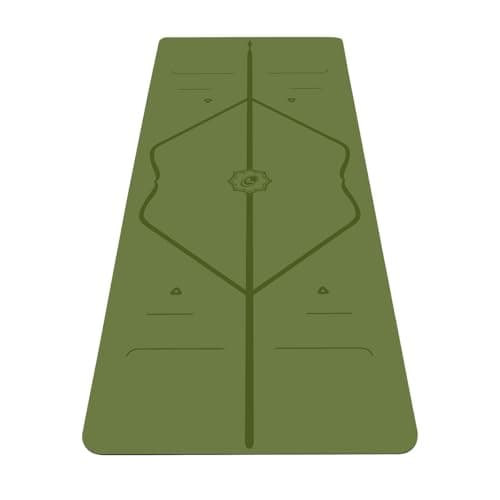
Grip when your hands are wet
Liforme Original Yoga Mat
The one mat that stays grippy when your hands are actually wet, with alignment markings that genuinely help a beginner square up. It is the priciest thing on this site.
$165.00Amazon#ad · Price as of November 3, 2026 · Affiliate disclosure for the link to Liforme Original Yoga Mat
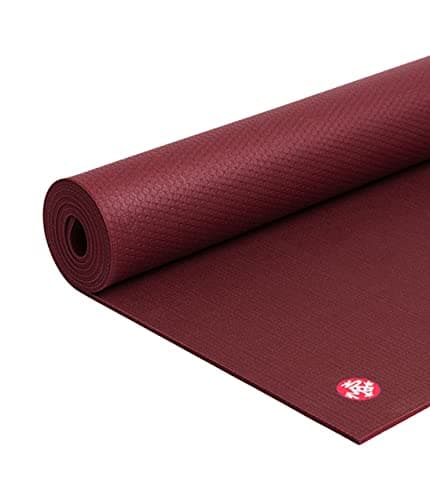
Sensitive knees and wrists
Manduka PRO 6mm
The most cushioned mat most people will ever need, and the one that outlives every other mat in this list. It is also heavy, and it is slippery until you break it in.
$144.00Amazon#ad · Price as of November 3, 2026 · Affiliate disclosure for the link to Manduka PRO 6mm
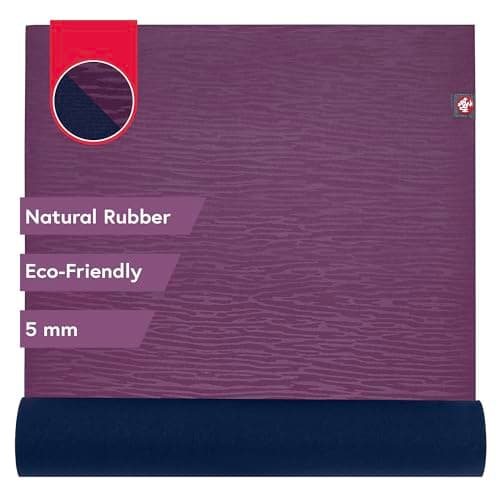
Grip without a break-in
Manduka eKO 5mm
Natural rubber with real grip from the first session and no break-in. The rubber smell is strong for the first couple of weeks and then fades.
$87.54Amazon#ad · Price as of November 3, 2026 · Affiliate disclosure for the link to Manduka eKO 5mm
The short answer
If your hands slip, buy the Liforme Original. If your knees hurt, buy the Manduka PRO. That single sentence settles this comparison for most people, because these two mats are not competing on the same axis. The Liforme has a polyurethane face that grips harder as it gets damp and a complete set of etched alignment markings. The PRO is 6 mm of dense closed-cell PVC that cushions better than almost anything and carries a lifetime guarantee on the maker's terms.
Both sit at the top of the market. Neither is a mistake. But they fail in opposite directions: the PRO is slippery until you break it in and ineffective once your palms are wet, and the Liforme is thinner, softer underfoot, and will not see out a decade the way the PRO will.
Grip, which is the whole argument
Grip is two different properties and the mats split on both.
Dry grip. The PRO is genuinely slippery out of the box. This is not a defect — the surface is a sealed PVC skin that needs wearing in before it holds a hand, and Manduka publishes a break-in method for it. Several weeks of regular practice fixes it, and there are ways to accelerate it. The Liforme grips on day one with no break-in at all.
Wet grip. This is where the two mats separate permanently. A closed-cell surface has nowhere for moisture to go, so sweat forms a film and your hands slide on the film rather than on the mat. The Liforme's polyurethane layer takes up a thin amount of moisture and becomes tackier as a result. A broken-in PRO is fine for a dry hatha practice and will never be fine for a sweaty one, which is the reason a towel or a different surface keeps coming up in the same conversation.
If you have one of these mats already and it suddenly stopped gripping, the cause is usually a cleaning mistake rather than the mat — that is worth ruling out first.
Side by side
| Liforme Original | Manduka PRO 6mm | Manduka eKO 5mm | |
|---|---|---|---|
| Thickness (maker) | 4.2 mm | 6 mm | 5 mm |
| Surface | Polyurethane over natural rubber | Closed-cell PVC | Closed-cell natural rubber |
| Grip when dry | Excellent, immediately | Poor until broken in | Very good, immediately |
| Grip when wet | Excellent | Poor | Fair to good |
| Cushioning | Moderate | The most of any mat here | Between the two |
| Weight | Heavy | Heaviest | Heavy |
| Alignment markings | Etched, full system | None | None |
| Maker's warranty | Published on the maker's site | Lifetime guarantee, maker's terms | Published on the maker's site |
| Contains latex | Yes, in the base | No | Yes |
Every figure above is the number the maker publishes rather than a measurement of our own, and both brands are linked on the cards below so you can check them.
Cushioning and weight
Six millimeters against four point two is not a small gap when your kneecap is the thing pressing into it. The PRO is also dense rather than soft, which is the combination that actually protects a joint: a soft mat keeps compressing until you are effectively on the floor, while a dense one compresses and then stops. That is why the PRO appears on the sore knees roundup and the Liforme does not.
The Liforme is not thin, and it is perfectly comfortable for standing and seated work. It is noticeably less forgiving in anything kneeling, in forearm work, and in long restorative holds. If a large part of your practice happens on your knees, that difference will decide this for you within a week.
Neither mat is portable. Both are heavy, both are awkward rolled, and both are mats you leave in a room rather than carry to a class. If carrying is part of the picture, the honest answer is that neither of these is the right mat and a travel mat is a better second purchase than either.
Which one lasts
The PRO wins this outright and it is not close. Dense closed-cell PVC is the most durable mat surface sold, Manduka backs it with a lifetime guarantee on its own published terms, and well-kept PRO mats are routinely still in service many years in. Nothing wears visibly except the finish.
The Liforme has a polyurethane top layer bonded to a rubber base, and a bonded top layer is a wear surface. It holds up well, and it will not hold up for a decade of daily practice the way the PRO does. The usual failure is the grip layer going smooth at the hands, which is the exact spot you rely on. The general picture by material is in how long a mat lasts.
The third mat on this page
A head-to-head between these two tends to end with a reader who wants both things and can only buy one mat, so the Manduka eKO 5mm is listed below as well. It is the middle ground and it is a real one: closed-cell natural rubber, which grips immediately the way the Liforme does and far better than the PRO when your hands are damp, at 5 mm with more cushioning than the Liforme and less than the PRO.
What it gives up is the extremes. It will not match the Liforme in a properly sweaty class, it will not match the PRO under a kneecap, and it has no markings at all. What it gives you is a mat with no glaring weakness and no break-in period, from the same maker as the PRO and with the same approach to durability. If your answer to "do you sweat?" is "sometimes", this is the mat this page is actually recommending — and the rubber comparison puts it against the open-cell alternative.
If the third tab open on your screen is the JadeYoga Harmony rather than a Manduka, all three premium mats are compared here on the one row that separates them: whether the grip survives sweat.
In detail
Both, in full
Grip when your hands are wet
Liforme Original Yoga Mat
As the manufacturer lists it · Liforme
What it gets right
- Grip holds up as you sweat, not just when dry
- Alignment markers are a real teaching aid at the start
- Wider and longer than a standard mat
What it does not
- Expensive enough to be a considered purchase
- The top layer wears faster than PVC over years
- Heavy to carry regularly
Skip it if
you are not yet sure you will keep practicing — buy a cheap mat first and upgrade to this one.
#ad · Price as of November 3, 2026 · Affiliate disclosure for the link to Liforme Original Yoga Mat
Sensitive knees and wrists
Manduka PRO 6mm
As the manufacturer lists it · Manduka
What it gets right
- Dense enough that kneeling and forearm work stop hurting
- Closed cell, so sweat sits on top instead of soaking in
- Genuinely lasts — the lifetime guarantee is the maker's own
- An 85 in version exists if you are tall
What it does not
- Heavy. This is not a mat you carry far
- Slippery out of the box until the surface is broken in
- Closed-cell grip drops away once your hands are wet
Skip it if
you want grip on day one, practice hot, or need to carry the mat anywhere.
#ad · Price as of November 3, 2026 · Affiliate disclosure for the link to Manduka PRO 6mm
Grip without a break-in
Manduka eKO 5mm
As the manufacturer lists it · Manduka
What it gets right
- Grippy immediately, dry or lightly damp
- Enough cushion for most floor work
- Natural rubber rather than PVC
What it does not
- Distinct rubber smell for the first weeks
- Heavier than a PVC mat of the same thickness
- Natural rubber contains latex proteins
Skip it if
you have a latex allergy, or a strong rubber smell in a small room would put you off practicing.
#ad · Price as of November 3, 2026 · Affiliate disclosure for the link to Manduka eKO 5mm
The verdict, by buyer
- You sweat, or you practice hot: Liforme. There is no version of this where a closed-cell PVC mat wins a wet-hands argument.
- Your knees or wrists are why you are shopping: Manduka PRO. Dense 6 mm is the answer and the markings are irrelevant.
- You practice at home without a teacher: Liforme, for the markings. They are worth real money in the first year.
- You want to buy one mat and never think about it again: Manduka PRO, and break it in properly before you judge it.
- You have a latex allergy: Manduka PRO. The Liforme and the eKO both have natural rubber in them.
- You sweat sometimes and kneel sometimes: Manduka eKO 5mm, the third mat above. No glaring weakness, no break-in, no markings.
- You are buying your first mat: neither, yet. Both of these are third-mat purchases. Start with the beginner roundup and come back when you know which of the two problems above is yours.
If this comparison felt like it was missing an option, it probably was: the PROlite is the PRO with a third of the weight removed, and the rubber mats sit between these two on both grip and cushioning.
How we picked
Chosen on published criteria, and we say so
Most gear sites open by telling you how many hours they spent with the products. We have not used most of these, and we would rather say so than imply otherwise. Every pick here is chosen against criteria we publish — grip, cushioning, size options, what buyers report after a year of use, and whether the thing is still actually sold — and every manufacturer figure on the page is labeled as the maker's claim.
Nobody pays for a place on this page, no product was supplied free in exchange for coverage, and a specification the maker does not publish is never guessed at. See the full criteria and weighting.
FAQ
Questions people ask
Is Liforme better than Manduka?
Is the Liforme mat worth the money?
Does the Manduka PRO need breaking in?
Which is better for hot yoga, Liforme or Manduka PRO?
Which mat is heavier?
Related
Keep reading
Update log
What changed
- First published.
Receipts
Sources
- 1.Liforme — product information
- 2.Manduka — product information
- 3.OutdoorGearLab — The Best Yoga Mats
- 4.Yoga Journal — Best Yoga Mats
- 5.Treeline Review — Best Yoga Mats
We have not used every product on this page, and we do not pretend otherwise. Thicknesses, materials, sizes and warranty terms are the manufacturer's published figures, shown as their claims. Anything about materials, skin or injury is linked to a source. Prices are set by Amazon and change constantly, so we never type one into the text — every figure comes from Amazon's own data, dated, and disappears rather than going stale. Read the full method.