Yoga Mats Best picks
The Best Non-Toxic Yoga Mats
Non-toxic is a marketing word with no legal definition, so the only useful question is what the mat is made of. Five mats whose materials answer it.
We earn a commission when you buy through links on this page, at no extra cost to you. It never decides a ranking: the method is published. How we are funded
Quick picks
The short answer
1 · Best non-toxic mat overall
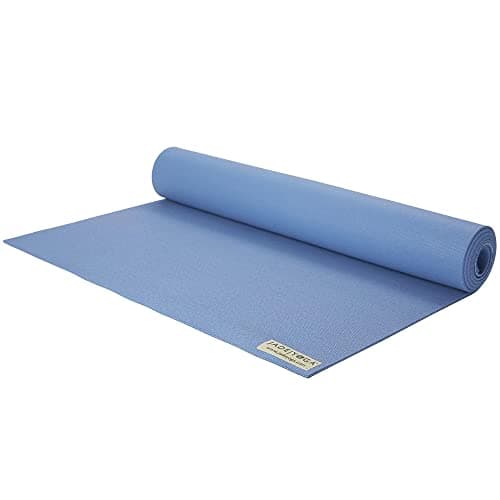
JadeYoga Harmony MatOpen-cell natural rubber, made in the United States, and the grippiest surface on this page. The smell is the price of admission.
Maker lists thickness: 3/16 in (about 4.8 mm)
2 · Best rubber mat that stays sealed
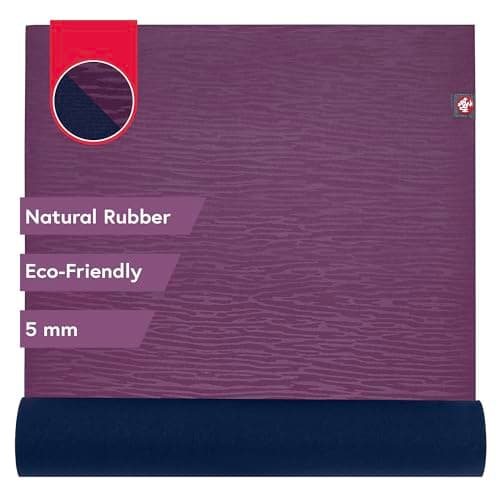
Manduka eKO 5mmThe same natural rubber base with a closed surface, so sweat sits on top instead of soaking in. Easier to live with than the Harmony.
Maker lists thickness: 5 mm
3 · Best cork surface
Yoloha Original Cork Yoga MatCork over a recycled-rubber base. Naturally antimicrobial, almost odorless, and it grips harder the wetter your hands get.
Maker lists top surface: Cork
4 · The simpler cork option
Gurus Roots Cork Yoga MatCork on natural rubber with less going on and less to pay for. A thinner feel underfoot than the Yoloha.
Maker lists top surface: Cork
5 · Best latex-free pick
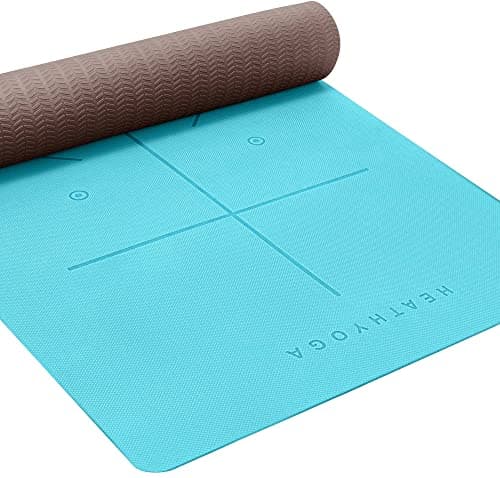
Heathyoga Eco Friendly TPE MatTPE is a manufactured material rather than a natural one, but it carries no latex and no PVC, which is the combination a rubber allergy needs.
Maker lists thickness: 6 mm
#ad · Prices come live from Amazon, last checked November 3, 2026. Figures here are the manufacturer's own. The ranking is editorial, made against the criteria on our How We Pick page, not from lab work. Photos come from Amazon, and the slot is left empty where a pick has no listing photograph. Tap a pick for the full write-up.
The short answer
Buy the JadeYoga Harmony. It is open-cell natural rubber with no PVC, no phthalates and no plasticizers, it is made in the United States rather than shipped from an unnamed factory, and it happens to be one of the grippiest mats sold anywhere. If you want a mat whose ingredient list is one word, this is it.
Two caveats decide whether you want something else. The Harmony smells strongly of rubber for the first week or two, and its open-cell surface absorbs sweat, which means it needs real cleaning rather than a quick wipe. If either of those matters, the Manduka eKO is the same rubber with a sealed surface. If you cannot have latex in the house at all, skip rubber entirely and read the cork and TPE picks below.
What non-toxic actually means
In practice, people searching for a non-toxic mat are avoiding one material and one process. The material is PVC, and the process is the softening that makes PVC pleasant to roll out.
PVC itself. Polyvinyl chloride is the standard mat material because it is durable, cheap and easy to texture. Rigid PVC is hard, so it is softened with plasticizers, and older mats used phthalates for that job. Major brands have moved away from phthalates, and a mat that says phthalate-free is telling the truth, but it is still PVC, and PVC is not biodegradable or recyclable in any ordinary municipal stream. If your objection is landfill rather than skin contact, PVC is the thing to avoid.
Latex, which cuts the other way. Natural rubber is the leading non-PVC material and it contains latex proteins. For anyone with a latex allergy, the greenest mat on the market is the one they cannot use, and this is the most common mistake in this category. The materials guide covers which surfaces carry latex and which do not.
Smell, which is not the same as harm. A new natural rubber mat smells powerfully of rubber and a new PVC mat smells faintly of plastic. Both fade. Neither smell is a safety signal, and the stronger smell belongs to the more natural material, which trips people up constantly.
So the honest version of this page is: here are five mats made without PVC, sorted by how well they work as mats, with the trade-off each material asks of you stated out loud.
The five, by material
| Mat | Material (maker) | Latex? | Surface | Main trade-off |
|---|---|---|---|---|
| JadeYoga Harmony | Natural rubber | Yes | Open cell | Strong smell, absorbs sweat |
| Manduka eKO | Natural rubber | Yes | Closed cell | Heavy to carry |
| Yoloha Original Cork | Cork over recycled rubber | Yes, in the base | Cork | Firm underfoot |
| Gurus Roots Cork | Cork over natural rubber | Yes, in the base | Cork | Thinner than the Yoloha |
| Heathyoga TPE | TPE | No | Closed cell | Manufactured, not natural |
Every entry in the material column is the description the maker publishes, not a laboratory finding of ours. The latex column is the one most worth reading twice: cork mats are cork on top and rubber underneath, so a cork mat is not automatically a latex-free mat.
Claims that mean nothing
Four phrases appear on mat listings constantly and carry no information at all.
Eco-friendly. Unregulated and unmeasurable. A PVC mat can and does carry this label. Look for the material name instead.
Non-toxic. Also unregulated, and strictly speaking true of almost every mat sold, because nothing on the market is acutely poisonous to touch. It tells you the brand knows what you are searching for.
SGS tested. SGS is a testing company, not a standard. A mat can be checked by SGS against a specification the brand itself chose. Without naming the specification, the phrase is decoration.
Biodegradable. True of natural rubber and cork over a long horizon in the right conditions, and essentially meaningless for a mat that will spend a decade in a cupboard. Buying a mat that lasts is the greener move, which is the argument in how long a mat actually lasts.
What does carry information: the material name, the country of manufacture, whether the brand publishes a take-back or recycling route, and whether the surface is open or closed cell. Those four facts tell you more than any badge, and they are the four things the cards below list.
In detail
Every pick, in full
1
Best non-toxic mat overall
JadeYoga Harmony Mat
As the manufacturer lists it · JadeYoga
What it gets right
- Hands and feet stop sliding, immediately
- Three lengths, including a genuinely long option
- Jade states it plants a tree for every mat sold
What it does not
- Open cell absorbs sweat and needs drying between sessions
- Sheds a little rubber dust early on
- Wears faster than a closed-cell PVC mat
Skip it if
you practice hot and cannot air the mat properly afterwards.
#ad · Price as of November 3, 2026 · Affiliate disclosure for the link to JadeYoga Harmony Mat
2
Best rubber mat that stays sealed
Manduka eKO 5mm
As the manufacturer lists it · Manduka
What it gets right
- Grippy immediately, dry or lightly damp
- Enough cushion for most floor work
- Natural rubber rather than PVC
What it does not
- Distinct rubber smell for the first weeks
- Heavier than a PVC mat of the same thickness
- Natural rubber contains latex proteins
Skip it if
you have a latex allergy, or a strong rubber smell in a small room would put you off practicing.
#ad · Price as of November 3, 2026 · Affiliate disclosure for the link to Manduka eKO 5mm
3
Best cork surface
Yoloha Original Cork Yoga Mat
As the manufacturer lists it · Yoloha
What it gets right
- Moisture improves the grip rather than destroying it
- Cork does not hold smell the way open-cell rubber does
- Looks like a piece of furniture rather than gym kit
What it does not
- Heavy
- Curls at the corners for the first week or two
- Cork surface is firm — not a cushioning mat
Skip it if
you need cushion for sore knees, or you carry your mat daily.
#ad · Price as of November 3, 2026 · Affiliate disclosure for the link to Yoloha Original Cork Yoga Mat
4
The simpler cork option
Gurus Roots Cork Yoga Mat
As the manufacturer lists it
What it gets right
- Cheapest honest route into a cork mat
- Grip improves as hands get damp
- Easy to wipe down after a sweaty session
What it does not
- Heavier than most mats
- Takes several uses to lie flat
- Firm underfoot
Skip it if
you want to unroll a mat and use it properly on day one.
#ad · Price as of November 3, 2026 · Affiliate disclosure for the link to Gurus Roots Cork Yoga Mat
5
Best latex-free pick
Heathyoga Eco Friendly TPE Mat
As the manufacturer lists it
What it gets right
- Body-alignment lines help you square up without a teacher
- 26 in wide, which is roomier than a standard mat
- TPE has almost no smell compared with rubber
What it does not
- Grip is average and drops off when damp
- TPE is softer and marks more easily than rubber
- Printed lines fade with heavy use
Skip it if
grip is your main problem — lines will not stop you sliding.
#ad · Price as of November 3, 2026 · Affiliate disclosure for the link to Heathyoga Eco Friendly TPE Mat
What to look for
- Read the material, ignore the adjective. Natural rubber, cork and TPE are the three PVC-free options in common use. If a listing never names the material, that is the answer.
- Decide about latex before anything else. A latex allergy rules out rubber and rules out the rubber base under every cork mat. TPE is the PVC-free, latex-free corner of the market, and it is a small corner.
- Open cell grips better and absorbs more. That is one decision, not two, and it is covered in full in open cell versus closed cell.
- Expect weight. Natural rubber is dense. A rubber mat is heavier than a PVC mat of the same thickness, every time, and that is the one practical cost of the material.
- Allow for a break-in period. Rubber and cork both arrive with a factory film and a smell, and both improve over the first few weeks — here is how to speed that up.
If you are choosing a first mat and the material question is one decision too many, the honest advice is to start with the general choosing guide and come back here when you know whether you sweat, whether you kneel, and whether you will carry the thing.
How we picked
Chosen on published criteria, and we say so
Most gear sites open by telling you how many hours they spent with the products. We have not used most of these, and we would rather say so than imply otherwise. Every pick here is chosen against criteria we publish — grip, cushioning, size options, what buyers report after a year of use, and whether the thing is still actually sold — and every manufacturer figure on the page is labeled as the maker's claim.
Nobody pays for a place on this page, no product was supplied free in exchange for coverage, and a specification the maker does not publish is never guessed at. See the full criteria and weighting.
FAQ
Questions people ask
What is the most non-toxic yoga mat?
Are PVC yoga mats dangerous?
Is TPE a non-toxic yoga mat material?
Do non-toxic yoga mats grip better?
Does a cork yoga mat contain latex?
Related
Keep reading
Update log
What changed
- First published.
Receipts
Sources
- 1.JadeYoga — product information
- 2.Manduka — product information
- 3.Yoloha Yoga — cork mats
- 4.AAAAI — Latex allergy
- 5.OutdoorGearLab — The Best Yoga Mats
- 6.Treeline Review — Best Yoga Mats
We have not used every product on this page, and we do not pretend otherwise. Thicknesses, materials, sizes and warranty terms are the manufacturer's published figures, shown as their claims. Anything about materials, skin or injury is linked to a source. Prices are set by Amazon and change constantly, so we never type one into the text — every figure comes from Amazon's own data, dated, and disappears rather than going stale. Read the full method.