Yoga Mats Comparison
Open Cell vs Closed Cell Yoga Mats
One surface takes up your sweat and grips because of it. The other seals it out and stays easy to clean. This is the most useful spec nobody explains.

We earn a commission when you buy through links on this page, at no extra cost to you. It never decides a ranking: the method is published. How we are funded
Side by side
The two, next to each other
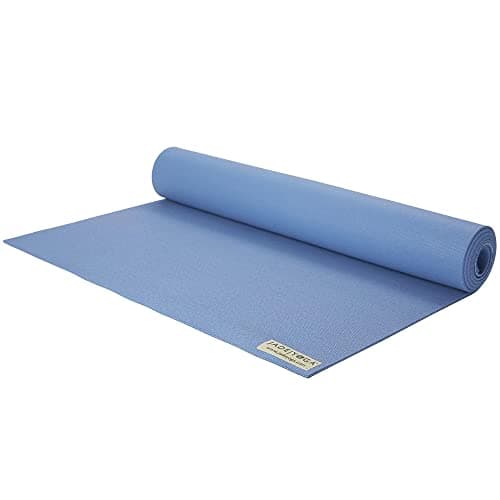
The grippiest dry surface
JadeYoga Harmony Mat
Open-cell natural rubber with the stickiest dry grip here. It drinks sweat rather than shedding it, so it needs proper airing and eventually wears out.
$114.95Amazon#ad · Price as of November 3, 2026 · Affiliate disclosure for the link to JadeYoga Harmony Mat
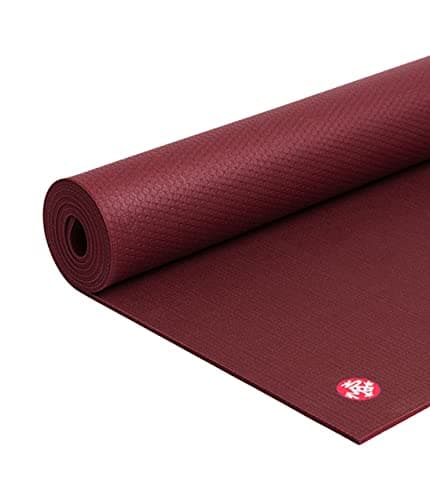
Sensitive knees and wrists
Manduka PRO 6mm
The most cushioned mat most people will ever need, and the one that outlives every other mat in this list. It is also heavy, and it is slippery until you break it in.
$144.00Amazon#ad · Price as of November 3, 2026 · Affiliate disclosure for the link to Manduka PRO 6mm
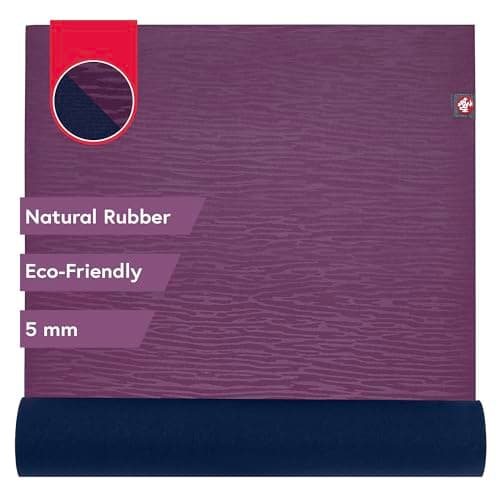
Grip without a break-in
Manduka eKO 5mm
Natural rubber with real grip from the first session and no break-in. The rubber smell is strong for the first couple of weeks and then fades.
$87.54Amazon#ad · Price as of November 3, 2026 · Affiliate disclosure for the link to Manduka eKO 5mm
The short answer
Open cell means the surface has tiny open pores that take up moisture, which is why open-cell mats grip when your hands are wet. Closed cell means the surface is sealed, which is why closed-cell mats wipe clean and rarely smell, and why they go slick the moment you sweat. That is the entire trade, and every other difference follows from it.
If you sweat, practice hot, or slip in downward dog, buy open cell and accept that it needs proper cleaning. If you practice dry, share the mat, or care most about hygiene and lifespan, buy closed cell and accept that you may need a towel on the hot days.
What the terms mean
Both describe the foam or rubber structure at the surface, and the difference is whether the bubbles in that structure are open to the air.
Open cell. The pores at the surface are open, so liquid is pulled in rather than sitting on top. In practice: your palm sweats, the moisture is wicked away from the contact patch, and skin stays in contact with rubber instead of floating on a film of water. This is the reason the grippiest mats in a heated room are nearly all open cell, and it is a structural advantage no amount of surface texture can replicate.
Closed cell. The surface is a sealed skin. Nothing goes in, which means nothing — sweat, bacteria, cleaning fluid, odor — gets inside the mat. In practice: the mat is hygienic, durable, easy to clean and completely reliant on texture and friction for grip. When a film of sweat forms, there is nowhere for it to go and your hand slides on the film.
Neither is a quality signal. The grippiest mat on this site is open cell and the longest-lived one is closed cell. They are two solutions to two different practices.
Side by side
| Open cell | Closed cell | |
|---|---|---|
| Grip when dry | Very good | Good once broken in |
| Grip when wet | Very good — improves | Poor |
| Takes up sweat | Yes, by design | No |
| Cleaning | Gentle, thorough, slow to dry | Wipe and go |
| Odor over time | Can develop | Rarely |
| Shared or studio use | Not ideal | Ideal |
| Typical materials | Natural rubber, cork, polyurethane | PVC, TPE, some rubber |
| Break-in needed | No | Usually |
The hygiene trade
The thing that makes an open-cell mat grip is the thing that makes it harder to look after, and there is no way around that.
Sweat goes into the surface. Sweat is mostly water and salt and does not smell much on its own, but what grows in it does, and an open-cell mat rolled up damp is a warm humid tube with the moisture already inside it. That is the single most common cause of a mat that has started to smell, and it is also why cleaning an open-cell mat is a slower, gentler process than wiping a sealed one — the method differs by surface.
Three habits make an open-cell mat a non-issue: wipe it after sweaty sessions, never roll it up before it is genuinely dry, and use a towel in heated classes so most of the sweat lands somewhere washable. Whether you need the towel is largely this question in another form.
Closed cell has the opposite profile. It is the right surface for a mat that lives in a shared space, gets lent out, or sits on a studio floor, because nothing penetrates it and a disinfectant wipe genuinely finishes the job. The cost is paid in a heated room.
How to tell which you have
Listings often do not say, so here are three checks that work.
The water-drop test. Put a few drops on the mat and wait a minute. If the drops bead and sit there, it is closed cell. If they darken the surface and sink in, it is open cell. This is the reliable one.
Material and brand language. PVC is closed cell essentially always. Natural rubber could be either, and the maker usually says so. If a listing talks about moisture-wicking or sweat-activated grip, it is describing an open cell. If it talks about being easy to wipe clean and non-absorbent, it is closed.
Break-in. A mat that arrives slippery and improves over weeks is almost certainly closed cell. An open-cell mat grips from the first session.
In detail
Both, in full
The grippiest dry surface
JadeYoga Harmony Mat
As the manufacturer lists it · JadeYoga
What it gets right
- Hands and feet stop sliding, immediately
- Three lengths, including a genuinely long option
- Jade states it plants a tree for every mat sold
What it does not
- Open cell absorbs sweat and needs drying between sessions
- Sheds a little rubber dust early on
- Wears faster than a closed-cell PVC mat
Skip it if
you practice hot and cannot air the mat properly afterwards.
#ad · Price as of November 3, 2026 · Affiliate disclosure for the link to JadeYoga Harmony Mat
Sensitive knees and wrists
Manduka PRO 6mm
As the manufacturer lists it · Manduka
What it gets right
- Dense enough that kneeling and forearm work stop hurting
- Closed cell, so sweat sits on top instead of soaking in
- Genuinely lasts — the lifetime guarantee is the maker's own
- An 85 in version exists if you are tall
What it does not
- Heavy. This is not a mat you carry far
- Slippery out of the box until the surface is broken in
- Closed-cell grip drops away once your hands are wet
Skip it if
you want grip on day one, practice hot, or need to carry the mat anywhere.
#ad · Price as of November 3, 2026 · Affiliate disclosure for the link to Manduka PRO 6mm
Grip without a break-in
Manduka eKO 5mm
As the manufacturer lists it · Manduka
What it gets right
- Grippy immediately, dry or lightly damp
- Enough cushion for most floor work
- Natural rubber rather than PVC
What it does not
- Distinct rubber smell for the first weeks
- Heavier than a PVC mat of the same thickness
- Natural rubber contains latex proteins
Skip it if
you have a latex allergy, or a strong rubber smell in a small room would put you off practicing.
#ad · Price as of November 3, 2026 · Affiliate disclosure for the link to Manduka eKO 5mm
Which to buy
- Hot yoga or heavy sweating: open cell, every time. The Jade Harmony is the standard answer and the hot roundup covers the rest.
- Dry practice, long holds, sore knees: closed cell. The Manduka PRO is the dense, sealed, decade-long option.
- A mat other people will use: closed cell, for the cleaning alone.
- You want both: closed-cell rubber such as the Manduka eKO sits between them — rubber grip, sealed surface — and that compromise is what the Jade versus eKO comparison is really about.
- You already own a closed-cell mat and slip: buy a skidless towel before you buy another mat. It solves the problem for a small fraction of the outlay.
One last point worth making: an open-cell mat is not more fragile, it is more absorbent. Looked after, it lasts years. It simply asks for ten seconds of attention after a sweaty class, and a sealed mat does not.
For what to actually spray on it, the mat cleaner roundup sorts four sprays by the surface each maker says they suit.
How we picked
Chosen on published criteria, and we say so
Most gear sites open by telling you how many hours they spent with the products. We have not used most of these, and we would rather say so than imply otherwise. Every pick here is chosen against criteria we publish — grip, cushioning, size options, what buyers report after a year of use, and whether the thing is still actually sold — and every manufacturer figure on the page is labeled as the maker's claim.
Nobody pays for a place on this page, no product was supplied free in exchange for coverage, and a specification the maker does not publish is never guessed at. See the full criteria and weighting.
FAQ
Questions people ask
What is the difference between open cell and closed cell yoga mats?
Is open cell or closed cell better for hot yoga?
Are closed cell yoga mats more hygienic?
Is the Manduka PRO open cell or closed cell?
How do I know if my yoga mat is open cell?
Related
Keep reading
Update log
What changed
- First published.
Receipts
Sources
- 1.Manduka — product information
- 2.JadeYoga — product information
- 3.OutdoorGearLab — The Best Yoga Mats
- 4.Treeline Review — Best Yoga Mats
- 5.Healthline — The Best Workout Mats
We have not used every product on this page, and we do not pretend otherwise. Thicknesses, materials, sizes and warranty terms are the manufacturer's published figures, shown as their claims. Anything about materials, skin or injury is linked to a source. Prices are set by Amazon and change constantly, so we never type one into the text — every figure comes from Amazon's own data, dated, and disappears rather than going stale. Read the full method.