Pilates at Home Best picks
The Best Pilates Reformer Accessories
Five pages on this site help you choose a reformer. This is the one for after it arrives: what actually adds exercises, what fits what, and what to skip.
We earn a commission when you buy through links on this page, at no extra cost to you. It never decides a ranking: the method is published. How we are funded
Quick picks
The short answer
1 · Best first accessory
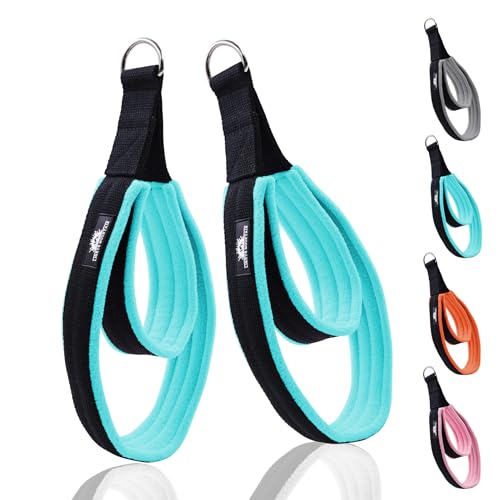
Lights Mountain Pilates Double Loop StrapsPadded double loops in two lengths, attaching to rope hardware that every reformer has. The cheapest thing here and the one you will use every session.
Maker lists format: Double loop with a D-ring (listing-stated)
2 · Best for new exercises
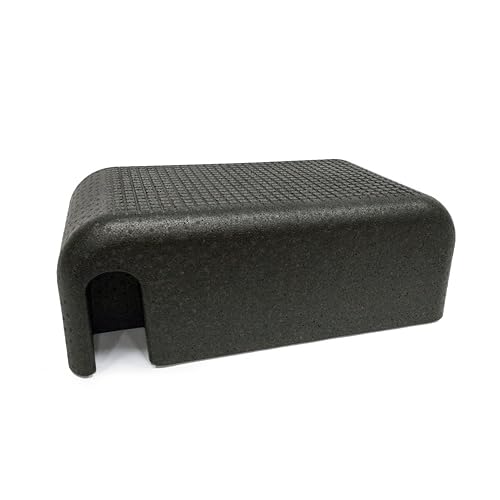
Balanced Body Sitting Box LiteA foam box over the shoulder rests adds prone, side-lying and seated work to a machine you already own. The biggest jump in repertoire per purchase.
Maker lists dimensions: 31 in L x 17 in W x 10.75 in H (maker-listed)
3 · Best for a shared machine
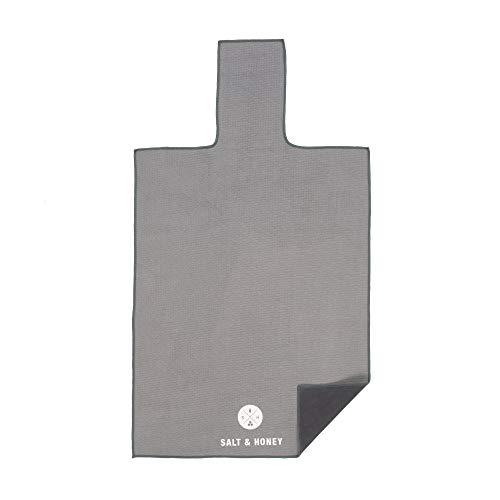
Salt & Honey Non-Slip Pilates Reformer Mat TowelA microfiber cover with a gripping backing that stays on the carriage. Solves a damp vinyl surface and shoulder blocks somebody else just used.
Maker lists size: About 30.5 in x 23 in (retailer-listed)
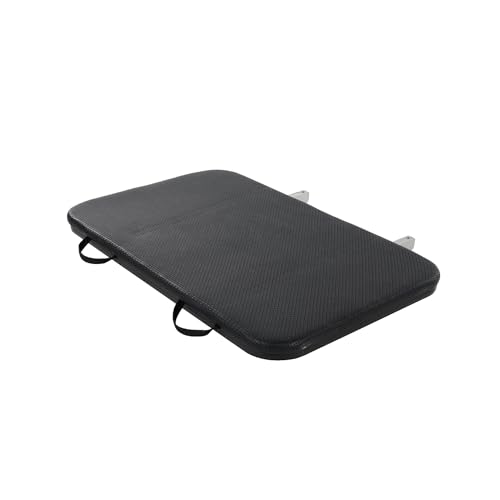
4 · Best for cardio
Balanced Body Allegro 2 Padded JumpboardA padded board in the footbar position turns the carriage into a jumping surface with your spine supported. Model-specific, and the priciest thing here.
Maker lists board size: 31.5 in x 20.5 in (80 x 52 cm, maker-listed)
#ad · Prices come live from Amazon, last checked November 28, 2026. Figures here are the manufacturer's own. The ranking is editorial, made against the criteria on our How We Pick page, not from lab work. Photos come from Amazon. Tap a pick for the full write-up.
The short answer
Buy padded loop straps first, a box second, and nothing else until you have run out of things to do with those two. That is the honest order, and it is not the order the accessory aisle is arranged in. The straps cost about what a pair of grip socks does and improve every session you already do; the box is the one purchase that genuinely adds exercises you cannot otherwise perform.
Everything beyond those two is specific: a carriage cover if you share a machine or sweat on it, a jumpboard if you want cardio and your machine has a board made for it. Neither is a general upgrade, and the jumpboard in particular sits in a bracket of its own — several times the cost of everything else on this page, and in the same territory as some of the machines on the home reformer page.
What actually decides it
Four things, in this order. Notice that two of the four are about your machine rather than the accessory, which is what makes this category different from every other list on this site:
- Does it fit your machine? The single biggest filter. Straps and covers are close to universal because they attach to rope hardware or sit on the carriage. Boxes and boards are model-specific, and a board for one reformer will not sit in another’s footbar position.
- How many exercises does it add? A box adds a whole family of prone, side-lying and seated work. A cover adds none — it makes the ones you already do more pleasant. Both are legitimate purchases; they are not the same kind of purchase.
- How often will it be on the machine? Straps stay attached. A cover goes on every session. A box comes out for part of a session. A jumpboard replaces the footbar and comes off again. The further down that list, the more honest you have to be about whether you will bother.
- What the maker publishes. This category is split cleanly: Balanced Body publishes dimensions, weights and materials, and the generic accessory sellers publish a listing title. We have labeled which is which on every card, and it is the main reason the two Balanced Body picks here carry specifications and the other two carry retailer figures.
The fit problem
This is the part that generates returns, so it is worth being blunt. Reformer accessories divide into two groups and the division is not obvious from the listings.
| Accessory | Fit | What to measure first |
|---|---|---|
| Loop and handle straps | Close to universal | That your ropes end in a clip or a loop you can attach to |
| Carriage cover or towel | Close to universal | Carriage length and width; a long machine may need a bigger cover |
| Sitting or short box | Brand-specific | The distance between the shoulder rests, and their height |
| Jumpboard | Model-specific | Nothing. Buy the board your machine's maker lists for your model |
| Footbar or spring upgrades | Model-specific, often not retrofittable | Whether the maker sells a retrofit kit at all |
The practical rule for the box: measure the gap between your shoulder rests before you buy anything box-shaped. A box that is specified to sit over Balanced Body shoulder rests may or may not sit comfortably over another brand’s, and the generic boxes sold under a dozen names are a gamble with a return label attached. The Balanced Body box in this list publishes its own dimensions, which is exactly why it is the one we point at: you can compare 17 inches of width against your own machine before you spend anything.
For a jumpboard the rule is simpler and stricter: buy the one your machine’s maker lists for your model, and if they do not list one, your machine does not take a jumpboard. Balanced Body publishes a different board for the Allegro 2, the Studio Reformer, the Metro IQ and half a dozen others, and Merrithew does the same for its own SPX line. That is not an upsell; the board has to meet the carriage at the right height.
The order to buy in
Assume the machine is paid for and the enthusiasm is fresh. This is the sequence that gets the most out of it without buying anything twice:
- 1. Padded loop straps. Bare nylon loops cut into an instep in footwork and into a wrist in arm work, and the padded versions cost very little. Two lengths matter more than the padding: short for feet, long for arms and the kneeling series.
- 2. A box. The point at which the machine stops being a leg press with a view. Short box work, prone work over the box and side-lying work are a whole half of the classical repertoire, and none of it happens without one.
- 3. A pole or dowel, if you want the full short-box series. Cheap, and the thing everybody forgets they need after buying the box. A broom handle genuinely works.
- 4. A carriage cover, if you sweat or share. Not an upgrade to what the machine does, but the difference between wanting to lie on it and not.
- 5. A jumpboard, only if cardio on the reformer is specifically the goal, and only if your maker sells a board for your model.
What is deliberately not on that list: a second set of springs, a half-barrel, a tower attachment. All three are real pieces of equipment and all three cost more than most of the accessory budget a home owner has. If you are at the point of wanting a tower, you have outgrown this page and you are shopping for equipment rather than accessories — start from how to choose a reformer again with a different brief.
What each one adds
Worth separating, because accessory listings describe everything as versatile and none of them say which exercises you actually gain.
- Straps: nothing new, everything better. You already do footwork in the straps and arm work in the straps. Padding changes whether the last five repetitions are about your core or about the strap edge against your instep.
- A box: the biggest single jump. Short box series — round back, flat back, side to side, twist, tree. Prone work with the chest supported. Side-lying leg work at a height. Long box pulling straps and swan. This is the one accessory where the repertoire genuinely doubles.
- A cover: comfort and hygiene. A dry microfiber surface instead of damp vinyl, and something washable between your shoulders and a shared shoulder block. No new exercises at all, and it is still the accessory most likely to be used every single session.
- A jumpboard: a different kind of session. Jumping supine, side-lying and in a plank position, with the carriage taking the landing instead of your joints. It is cardio you can do with a spine injury history that rules out running, which is the real argument for it.
A note on the jumpboard that the price tag earns: it is the only accessory here that changes what the machine is for rather than what you can do on it. If you bought a reformer partly to get out of running and your machine takes a board, it is a reasonable purchase. If you bought one for strength and control, it will sit against a wall. Be honest about which of those you are before you spend reformer money on an accessory.
What to skip
Four things sold as reformer accessories that are not worth your money, at least not yet:
- A generic unbranded box. Several are sold at a fraction of a real one and the dimensions are published by nobody. On a prop that has to sit stably over shoulder rests while you load it with your body weight, an unverifiable measurement is the wrong place to economize.
- Reformer-specific grip socks. Grip socks are worth owning, but they are not a reformer accessory — they are the same socks you would wear to a mat class. Pick them from the grip socks page rather than paying a machine premium.
- A padded headrest cover sold separately. The carriage cover in this list already covers the head end on most machines. Two overlapping layers slide against each other.
- Spring upgrades, early. If the springs that came with the machine already feel light, that is worth solving. If they feel heavy, you have not finished growing into them. Give it six months before you decide the hardware is the limit.
One more category worth naming: the small props. A ring, a mini ball and a flat band all get used on a reformer and all cost less than the box or the board here. They are not reformer accessories, strictly, but if the question behind your search was what else to buy now that the machine is here, they are a better answer than a fourth strap.
In detail
Every pick, in full
1
Best first accessory
Lights Mountain Pilates Double Loop Straps
As the manufacturer lists it
What it gets right
- In the cheapest bracket of anything a reformer owner can add
- Padding where a bare nylon loop cuts into an instep or a wrist
- Two lengths, which is the difference between footwork and arm work
- Nothing to fit or measure — they attach to the rope hardware
What it does not
- No maker spec sheet: every figure here comes from the listing
- Generic hardware, so the clip quality is the gamble
- Padded loops are bulkier in the hand than a plain strap
- Will not fix a machine whose ropes are the wrong length
Skip it if
your machine came with padded loops already — check the box before you buy a second pair.
#ad · Price as of November 28, 2026 · Affiliate disclosure for the link to Lights Mountain Pilates Double Loop Straps
2
Best for new exercises
Balanced Body Sitting Box Lite
As the manufacturer lists it · Balanced Body
What it gets right
- Opens up prone, side-lying and seated work on a machine you already have
- Light enough to lift onto the carriage one-handed
- Foam rather than plywood, so there is nothing to bruise a shin on
- Balanced Body publishes the dimensions, weight and material, which this category rarely does
What it does not
- Specified for Balanced Body frames, so fit on another brand's reformer is not guaranteed
- Foam is not a surface you can press a spring-loaded footbar against
- The short-box repertoire needs a strap you may not own
- It still costs several times what the small accessories here do
Skip it if
your reformer is not a Balanced Body — measure your shoulder rests before you order anything box-shaped.
#ad · Price as of November 28, 2026 · Affiliate disclosure for the link to Balanced Body Sitting Box Lite
3
Best for a shared machine
Salt & Honey Non-Slip Pilates Reformer Mat Towel
As the manufacturer lists it
What it gets right
- Stays on the carriage instead of traveling with your shoulders
- Washes, which a vinyl carriage does not really do
- Makes a studio machine feel like yours without carrying a mat
- Thin enough that it does not change how the footbar work feels
What it does not
- Listings disagree about the exact size, and the maker's own site is hard to reach
- A rubber-backed towel is a warm layer, which a hot studio does not need
- Costs several times what a plain gym towel does
- Does not cover the full carriage on a longer machine
Skip it if
you practice alone at home and wipe the carriage down anyway — this solves a shared-machine problem.
#ad · Price as of November 28, 2026 · Affiliate disclosure for the link to Salt & Honey Non-Slip Pilates Reformer Mat Towel
4
Best for cardio
Balanced Body Allegro 2 Padded Jumpboard
As the manufacturer lists it · Balanced Body
What it gets right
- Jumping with your spine supported, which is the whole argument for a jumpboard
- Padded rather than bare board, so the ball of the foot is not taking a flat impact
- Fits the home Allegro 2 this site already ranks, so there is no guesswork
- Turns an existing machine into a cardio machine with no extra floor space
What it does not
- Model-specific: a board for one reformer will not fit another
- The most expensive accessory on this page, by a long way
- Balanced Body does not publish a weight or a padding material
- Stock on the exact variant comes and goes
Skip it if
you do not own an Allegro 2 — buy the board your own machine's maker lists, not this one.
#ad · Price as of November 28, 2026 · Affiliate disclosure for the link to Balanced Body Allegro 2 Padded Jumpboard
What to look for
- The maker’s own accessory list, first. Before any marketplace search, open your reformer’s product page and read what the maker sells for it. For a box and a board that is not a preference, it is the fit.
- Published dimensions, not published adjectives. If a box listing says sturdy and universal but gives no width, you cannot check it against your shoulder rests. Walk away.
- Two strap lengths, not one. Short for feet, long for arms. A single-length pair will do half the repertoire well and the other half badly.
- A cover sized to your carriage, not to a standard. Machines differ by several inches. Measure the carriage before ordering, especially on a longer frame.
- Washable, for anything that touches skin. Covers and strap padding both. The whole argument for a cover is that vinyl does not really wash and a textile does.
- Nothing that needs drilling. Retrofit hardware that modifies the frame is a different decision from an accessory, and on most home machines it voids the warranty.
A caveat about this category rather than any one product. Two of the four picks here come from Balanced Body, which publishes dimensions, weights and materials; the other two come from sellers whose entire specification is a listing title. That is the state of the accessory market, not an oversight on this page: every figure is labeled with where it came from, and where no maker publishes anything the card says so. If you want a prop you can verify before buying, you are choosing between a small number of brands.
If you do not own a machine yet, this is the wrong page. Space and cost come first — how much room a reformer needs and what one costs are the two decisions that actually matter, and a reformer board answers the question for a fraction of a machine if you are still deciding.
One last practical note for anyone with a reformer in an apartment. The carriage itself is quieter than people expect, but the footbar, the springs and a jumpboard landing are not, and a machine on bare floorboards transmits all three downward. A resilient layer under the frame helps, and the same reasoning is set out at length on the quiet-floor page. If a jumpboard is on your list and somebody lives below you, read that first.
How we picked
Chosen on published criteria, and we say so
Most gear sites open by telling you how many hours they spent with the products. We have not used most of these, and we would rather say so than imply otherwise. Every pick here is chosen against criteria we publish — grip, cushioning, size options, what buyers report after a year of use, and whether the thing is still actually sold — and every manufacturer figure on the page is labeled as the maker's claim.
Nobody pays for a place on this page, no product was supplied free in exchange for coverage, and a specification the maker does not publish is never guessed at. See the full criteria and weighting.
FAQ
Questions people ask
What accessories do I actually need for a Pilates reformer?
Are Pilates reformer boxes universal?
Will any jumpboard fit my reformer?
Do I need a reformer towel or carriage cover?
What is a sitting box used for?
Should I buy springs or a tower attachment instead?
Related
Keep reading
Update log
What changed
- First published.
Receipts
Sources
- 1.Balanced Body — Sitting Box Lite (published 31 x 17 x 10.75 in dimensions, 4.5 lb weight, high-density foam build and the reformers it fits)
- 2.Balanced Body — padded jumpboards (which board is specified for which reformer, and what each one is used for)
- 3.Balanced Body — Pilates equipment
- 4.Kmart — Salt & Honey Non-Slip Pilates Reformer Mat Towel (microfiber top over a gripping backing, and the published cold-wash, low-heat care)
- 5.Merrithew — Pilates equipment shop
- 6.NBC Select — The best Pilates reformers
- 7.Saran Pilates — Which reformer should I buy?
We have not used every product on this page, and we do not pretend otherwise. Thicknesses, materials, sizes and warranty terms are the manufacturer's published figures, shown as their claims. Anything about materials, skin or injury is linked to a source. Prices are set by Amazon and change constantly, so we never type one into the text — every figure comes from Amazon's own data, dated, and disappears rather than going stale. Read the full method.