Yoga Mats Best picks
The Best Yoga Mat Bags and Carriers
Carrying a mat is a two-decision problem: does it need to be covered, and does your mat actually fit. Three carriers that answer it differently.
We earn a commission when you buy through links on this page, at no extra cost to you. It never decides a ranking: the method is published. How we are funded
Quick picks
The short answer
1 · Best mat carrier overall
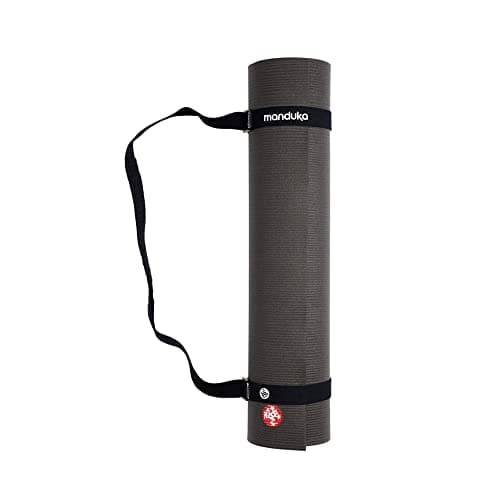
Manduka Commuter Mat CarrierA cotton sling with a padded shoulder section and cinch loops that tighten under the mat's own weight. The comfortable one on a long carry.
Maker lists material: 100% cotton twill and webbing
2 · The simplest thing that works
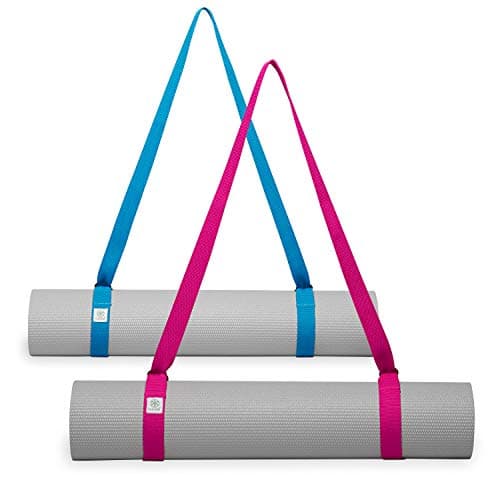
Gaiam Easy-Cinch Yoga Mat SlingTwo loops and a strap. Nothing to zip, nothing to dry, and it costs less than a studio drop-in class.
Maker lists format: Adjustable cinch sling
3 · Best bag for a mat that goes away damp
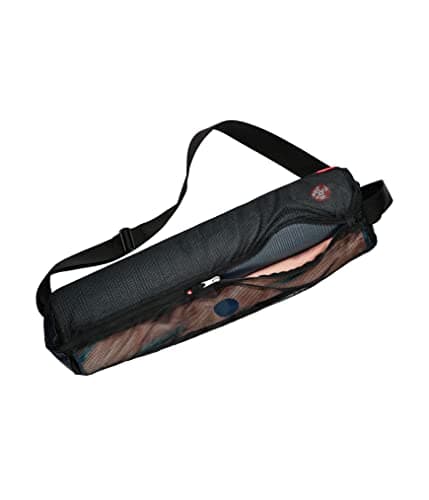
Manduka Breathe Easy Yoga BagOpen mesh and a long zipper, so a mat that came off a hot-room floor can air out instead of sitting sealed in its own sweat.
Maker lists dimensions: 26.5 in x 6.5 in x 6.5 in
#ad · Prices come live from Amazon, last checked November 3, 2026. Figures here are the manufacturer's own. The ranking is editorial, made against the criteria on our How We Pick page, not from lab work. Photos come from Amazon. Tap a pick for the full write-up.
The short answer
Buy the Manduka Commuter Mat Carrier. It is a cotton sling with a padded section where the webbing crosses your shoulder, and cinch loops that tighten as the mat hangs instead of a buckle you have to thread. On a dense 6 mm mat and a twenty-minute walk, that padding is the whole difference between a carrier you use and one that lives in a cupboard.
If you only ever carry a mat from the car to a studio door, the Gaiam Easy-Cinch sling does that for the least money and weighs nothing. If your mat comes off the floor of a heated room and goes straight into a bag, buy the Manduka Breathe Easy instead: it is mesh, so the mat is enclosed without being sealed in. All three are listed in full below.
A strap or a bag?
There are only three questions, and they are worth answering honestly before looking at products, because the answers point at completely different things.
Does the mat need to be covered? A strap leaves the mat exposed to rain, road spray and the floor of a bus. For a five-minute walk in dry weather that is irrelevant. For a daily commute on public transit, it is the reason people switch to a bag — and the reason a mat gets grubby enough to need a proper clean every week.
Do you need somewhere to put things? Keys, a phone, a water bottle and a towel add up to a second bag if your carrier has no pockets. A sling has none, by design. If you want one object to leave the house with, you want a bag with a pocket, and you will pay for it in bulk.
How heavy is the mat? This is the question people skip. A dense 6 mm mat is a genuinely heavy object, and a bare nylon strap concentrates that weight on one narrow line across your shoulder. Padding, or a wide cotton webbing, is what makes a heavy mat portable. A light travel mat does not need any of it — the travel mat roundup covers the mats that fold into a suitcase instead.
Will your mat actually fit?
More carriers are returned over fit than over quality, and the specification that catches people is width rather than length.
A standard mat is 24 inches wide. A Manduka PRO is 26 inches wide. Most mat bags are cut for the standard figure — the Breathe Easy, for instance, is listed as fitting mats 24 inches wide or narrower, which rules out a PRO. A wider mat rolls to a fatter cylinder, and two inches of extra width is enough that the zipper will not close.
Thickness compounds it. A 6 mm mat rolls thicker than a 4 mm mat of the same width, and a 10 mm foam mat is thicker again. Slings handle this without complaint because they cinch to whatever is there; bags do not. Check the rolled diameter of your mat against the bag's stated dimensions before ordering, and read the thickness guide if you are buying the mat and the bag at the same time.
Length is the easy one. A 68-inch mat fits anything sold as a mat bag; a 79 or 85 inch mat needs the extra large version, and there are fewer of those. The size guide lists which mats come in those lengths.
The three, side by side
| Carrier | Format | Covers the mat | Pockets | Fit as listed |
|---|---|---|---|---|
| Manduka Commuter Mat Carrier | Padded cotton sling | No | None | All mat sizes (maker's claim) |
| Gaiam Easy-Cinch Sling | Cinch strap | No | None | Most standard rolled mats |
| Manduka Breathe Easy | Mesh zippered bag | Yes, mesh | None | Mats up to 24 in wide |
Note what none of the three has: a pocket. That is deliberate. Carriers with cargo pockets exist, and they add enough bulk that most people end up carrying a normal bag as well — so the honest recommendation is to pick the carrier on fit and comfort and keep using the bag you already own for your keys.
The damp-mat problem
Here is the failure mode nobody warns you about. You finish a hot class, roll the mat while it is still wet, zip it into a closed bag and leave it in a car until tomorrow. That is how a mat starts to smell, and once a mat smells, it mostly stays that way.
Three things fix it. Wipe the mat down before rolling, which takes ten seconds — see the mat cleaner roundup for what to use on your particular surface. Use a towel on top during practice so most of the sweat ends up in something you can put through a wash, which the towel roundup covers. And carry the mat in something that breathes — a mesh bag or an open sling — rather than a sealed tube.
If the mat already smells, the carrier is not the culprit and a new bag will not help. Why does my yoga mat smell works through what is recoverable and what is not.
In detail
Every pick, in full
1
Best mat carrier overall
Manduka Commuter Mat Carrier
As the manufacturer lists it · Manduka
What it gets right
- The padded section is the difference on a long carry
- Cinch loops tighten under the weight, so there is nothing to adjust
- Takes a dense 6 mm mat without straining
What it does not
- No cover, so the mat gets whatever the weather is doing
- Nowhere to put keys, a phone or a towel
- Cotton webbing stays damp if you get caught in rain
Skip it if
you want your mat enclosed, or you need a pocket.
#ad · Price as of November 3, 2026 · Affiliate disclosure for the link to Manduka Commuter Mat Carrier
2
The simplest thing that works
Gaiam Easy-Cinch Yoga Mat Sling
As the manufacturer lists it · Gaiam
What it gets right
- Nothing to zip, dry or clean
- Adjusts to thick and thin mats
- Doubles as a stretching strap in a pinch
What it does not
- No protection from weather or dirt
- No pocket for keys or a phone
- Slips on very thick foam mats
Skip it if
you commute in bad weather or want somewhere to put your keys.
#ad · Price as of November 3, 2026 · Affiliate disclosure for the link to Gaiam Easy-Cinch Yoga Mat Sling
3
Best bag for a mat that goes away damp
Manduka Breathe Easy Yoga Bag
As the manufacturer lists it · Manduka
What it gets right
- Mesh means a wet mat is not sealed in with its own moisture
- The long zipper makes getting the mat out a one-handed job
- Slim enough to sit on a shoulder without swinging
What it does not
- Mesh is not weather protection - rain goes straight through
- Will not take a mat wider than two feet, so a PRO does not fit
- No padding, so it protects against dust rather than knocks
Skip it if
your mat is 26 inches wide, or you need somewhere dry to put a phone.
#ad · Price as of November 3, 2026 · Affiliate disclosure for the link to Manduka Breathe Easy Yoga Bag
What to look for
- Measure the rolled mat first. Width and rolled diameter decide whether a bag is possible at all. Slings fit everything; bags fit what they say they fit.
- Pay for padding if the mat is heavy. A wide, padded shoulder section is the one feature that changes how a dense mat feels on a real walk.
- Prefer something that breathes. Mesh or an open strap lets a damp mat dry. A sealed bag with a wet mat in it is a smell waiting to happen.
- Decide about pockets before you shop. If you want one object to leave the house with, that is a different and bulkier product than any of these three.
- Check how it closes. Cinch loops tighten under weight and need no adjusting; buckles have to be set each time and slip on thick foam mats.
A carrier is also a storage answer at home: a strap around a rolled mat keeps it from unrolling in a cupboard and is easier to live with than a bag. Setting up a practice space covers where the mat goes between practices, which is usually the real problem in a small apartment.
A carrier only earns its keep if the mat goes into it rolled and dry, which is most of what storing a yoga mat is about — a bag is where a folded, damp mat quietly turns into a creased, smelly one.
How we picked
Chosen on published criteria, and we say so
Most gear sites open by telling you how many hours they spent with the products. We have not used most of these, and we would rather say so than imply otherwise. Every pick here is chosen against criteria we publish — grip, cushioning, size options, what buyers report after a year of use, and whether the thing is still actually sold — and every manufacturer figure on the page is labeled as the maker's claim.
Nobody pays for a place on this page, no product was supplied free in exchange for coverage, and a specification the maker does not publish is never guessed at. See the full criteria and weighting.
FAQ
Questions people ask
What is the best yoga mat carrier?
Will a yoga mat bag fit a Manduka PRO?
Do I need a yoga mat bag at all?
Can you put a wet yoga mat in a mat bag?
Related
Keep reading
Update log
What changed
- First published.
Receipts
Sources
- 1.Manduka — Commuter Mat Carrier (material, dimensions, fit)
- 2.Manduka — Breathe Easy Yoga Bag (dimensions, mat width, care)
- 3.Manduka — yoga mat bags, straps and carriers
- 4.Gaiam — product information
- 5.Manduka — product information
We have not used every product on this page, and we do not pretend otherwise. Thicknesses, materials, sizes and warranty terms are the manufacturer's published figures, shown as their claims. Anything about materials, skin or injury is linked to a source. Prices are set by Amazon and change constantly, so we never type one into the text — every figure comes from Amazon's own data, dated, and disappears rather than going stale. Read the full method.