Yoga Mats Guide
How to Store a Yoga Mat
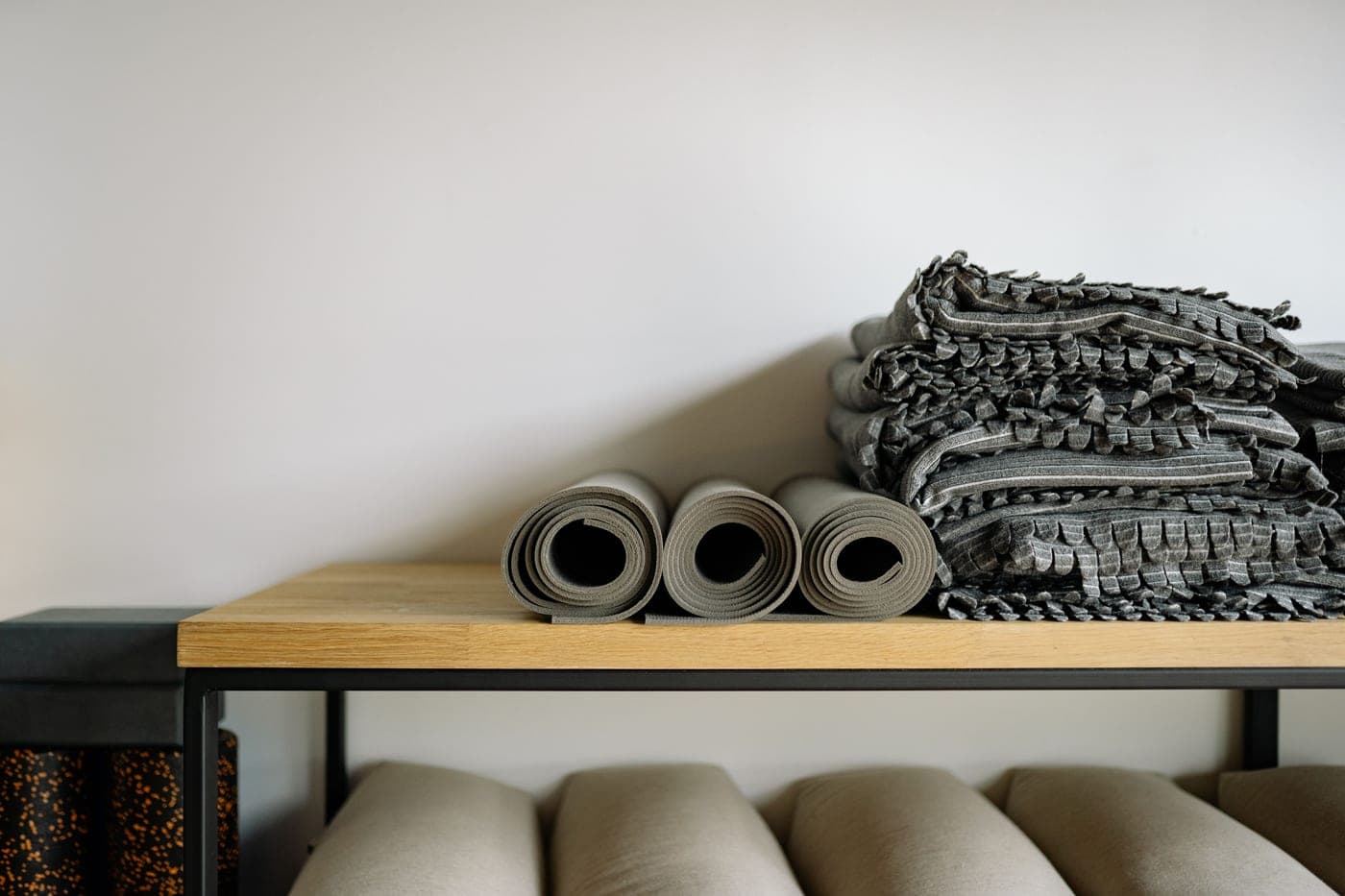
Most mats are ruined between sessions rather than during them. Four small storage decisions decide whether yours is flat and grippy in three years or creased and crumbling.
We earn a commission when you buy through links on this page, at no extra cost to you. It never decides a ranking: the method is published. How we are funded
The short answer
Roll it loosely with the top surface facing outward, stand it upright or lay it flat, and keep it somewhere dry, shaded and room temperature. Never fold it, never store it damp, never leave it in a hot car, and never hang it over a rail by its middle for weeks at a time.
That is the entire answer and it costs nothing. A strap or a bag makes it easier to keep to, which is the only reason to buy either.
Roll it, never fold it
A fold is a crease and a crease is a hinge. Every time you unroll the mat, that hinge flexes in the same place, and in a foam or TPE mat it eventually goes white, then thin, then splits. In a PVC mat it becomes a permanent raised ridge that sits under your hand in downward dog forever. Rubber is the most forgiving and still does not forgive a six-month fold.
Roll loosely rather than tightly. A mat crushed into the smallest possible cylinder and left there for months takes on a curl that fights you at the edges every session — the same memory problem as a fold, spread out. Loose enough that the roll holds its own shape without being cinched to its limit is right.
The honorable exception is the travel mat, which is sold to be folded and built for it. Those are thin, unbacked and designed around the crease, and they are a different product — the travel mats are here. Folding a 6 mm mat because a travel mat folds is the mistake.
Which side out
Top surface outward. Two reasons, and the second one is the one nobody mentions.
First, a roll pulls the inner face tighter than the outer one, so the surface on the inside takes the curl. You want the curl in the underside, where it does not matter, rather than in the face your hands grip. Second, a mat rolled top-out unrolls and lies flat straight away, while a mat rolled top-in lifts at the corners for the first few minutes of every practice. That sounds trivial until you have chased a curling corner through three sun salutations.
If your mat has alignment lines or a printed face, this also keeps the print on the outside of the roll, where it is under less tension — the printed mats are the ones where this shows up soonest.
Where in the house
Three things damage a stored mat: heat, ultraviolet light and moisture. Avoid all three and the location barely matters.
Out of direct sunlight. A sunny window is the worst spot in the house for a mat. Ultraviolet light hardens natural rubber and fades and embrittles PVC and TPE. A mat airing outdoors for an afternoon is fine and useful; a mat living in a sunbeam is slowly being destroyed.
Room temperature, not a car and not a loft. A closed car in summer reaches temperatures that soften and deform a rolled mat permanently, and the roll takes on whatever shape it was pressed into. An unheated garage or loft swings the other way and makes foam brittle.
Somewhere it can breathe. A rubber or cork mat sealed inside a zipped bag for a week develops the smell this site gets asked about constantly. If you store it in a bag, store it dry and open the bag, or use a sling rather than a sealed bag. The full explanation is in why your mat smells.
Standing upright in a corner, a basket or an umbrella stand is the best of the easy options: nothing presses on it, air reaches it, and it is visible, which genuinely does make you more likely to practice. Flat under a sofa is the next best. Hanging over a towel rail is fine for a day of drying and bad as a permanent home, because the rail becomes a crease.
Storage by material
| Material | Roll or fold | Main risk in storage | What to do |
|---|---|---|---|
| Natural rubber | Roll, loosely | Sunlight hardens it; sealed bags make it smell | Upright in shade, out of a zipped bag |
| Closed-cell PVC | Roll | Heat deforms it; creases are permanent | Upright or flat, room temperature |
| TPE | Roll | Creases turn white and split | Never fold; loose roll only |
| NBR and EVA foam | Roll | Dents and compression set | Nothing heavy on top of it |
| Cork with a rubber base | Roll, cork outward | Moisture in the backing | Fully dry before rolling |
| Cotton rug or towel | Fold is fine | Mildew if damp | Dry completely, then fold |
The cotton row is the only one where folding is correct, which is worth knowing if you own a rug as well as a mat. Everything with a closed surface gets rolled.
The picks
What makes storing it easy
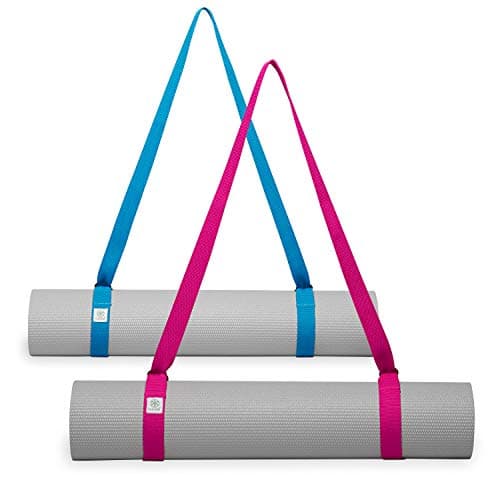
Carrying a mat without a bag
Gaiam Easy-Cinch Yoga Mat Sling
A strap, not a bag. It weighs nothing, it never needs drying out, and it costs less than a coffee round. The mat gets rained on, which is the trade.
$9.99Amazon#ad · Price as of November 3, 2026 · Affiliate disclosure for the link to Gaiam Easy-Cinch Yoga Mat Sling
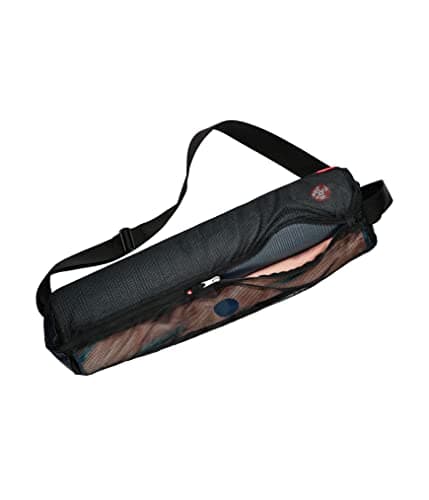
A mat that goes away damp
Manduka Breathe Easy Yoga Bag
An open-mesh bag with a long contoured zipper, so a damp mat can air out instead of souring inside a closed tube. The slimmest bag here that still encloses the mat.
$38.00Amazon#ad · Price as of November 3, 2026 · Affiliate disclosure for the link to Manduka Breathe Easy Yoga Bag

Routine cleaning
ASUTRA Natural Yoga Mat Cleaner
A plant-based spray that ships with a microfiber cloth, so it is the whole job in one purchase. Light scent, and it does not leave a film that makes the mat slicker.
$13.99Amazon#ad · Price as of November 3, 2026 · Affiliate disclosure for the link to ASUTRA Natural Yoga Mat Cleaner
Four ways people wreck a mat
- Putting it away damp. The most common one by a distance. Unroll it, let it dry fully, then roll it. After a heated class that means half an hour, not five minutes.
- Folding it into a gym bag. One trip is survivable; a habit is not. Use a sling or a bag sized for a rolled mat instead — the carriers are ranked here.
- Leaving it in the car. Heat in summer, cold in winter, and ultraviolet light through the glass all year. A mat that lives in a trunk ages at several times the normal rate.
- Stacking things on it. A rolled foam mat under a box of books takes a flat spot that never fully recovers. Stand it up and the problem disappears.
Two habits do the opposite. Wipe the mat down before it goes away rather than after it comes out, because sweat left to dry on a surface is what degrades it — the cleaning routine takes under a minute. And unroll the mat the other way round occasionally so any curl it has picked up is working against itself rather than deepening.
A mat that is stored well still does not last forever, and it is worth knowing roughly when to expect the end — how long a mat lasts sets out the signs by material.
How we picked
Chosen on published criteria, and we say so
Most gear sites open by telling you how many hours they spent with the products. We have not used most of these, and we would rather say so than imply otherwise. Every pick here is chosen against criteria we publish — grip, cushioning, size options, what buyers report after a year of use, and whether the thing is still actually sold — and every manufacturer figure on the page is labeled as the maker's claim.
Nobody pays for a place on this page, no product was supplied free in exchange for coverage, and a specification the maker does not publish is never guessed at. See the full criteria and weighting.
FAQ
Questions people ask
Should you roll or fold a yoga mat?
Which side of a yoga mat should face out when rolled?
Can you store a yoga mat in a car?
Is it bad to hang a yoga mat over a rail?
How do you store a yoga mat in a small apartment?
Related
Keep reading
Update log
What changed
- First published.
Receipts
Sources
- 1.Manduka — how to clean your yoga mat (per-surface guidance, what not to use)
- 2.Manduka — product information
- 3.JadeYoga — product information
- 4.Manduka — yoga mat bags, straps and carriers
- 5.OutdoorGearLab — The Best Yoga Mats
- 6.Gaiam — product information
We have not used every product on this page, and we do not pretend otherwise. Thicknesses, materials, sizes and warranty terms are the manufacturer's published figures, shown as their claims. Anything about materials, skin or injury is linked to a source. Prices are set by Amazon and change constantly, so we never type one into the text — every figure comes from Amazon's own data, dated, and disappears rather than going stale. Read the full method.