Start Here Comparison
Yoga vs Stretching: What Is Actually Different?
Both get you on the floor reaching for your toes, so the obvious conclusion is that yoga is stretching with better marketing. The overlap is real and it is smaller than it looks.
We earn a commission when you buy through links on this page, at no extra cost to you. It never decides a ranking: the method is published. How we are funded
Side by side
The two, next to each other
A first mat
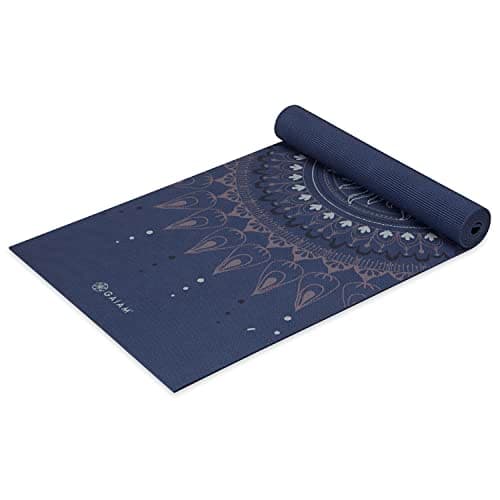
Gaiam Premium 6mm Yoga Mat
The default first mat. Enough cushion for a beginner, a printed design you will not hate, and a price that makes quitting after a month painless.
$21.90Amazon#ad · Price as of November 4, 2026 · Affiliate disclosure for the link to Gaiam Premium 6mm Yoga Mat
If you pick stretching
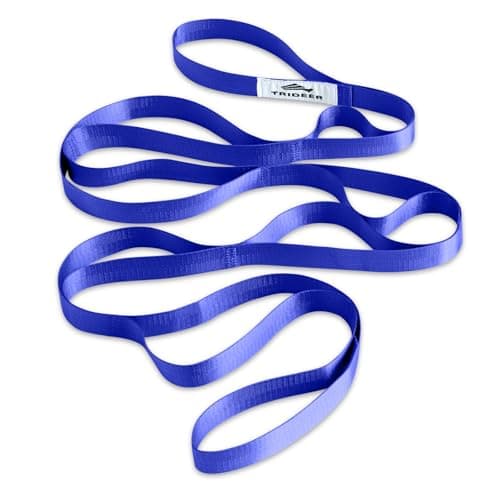
Trideer Yoga Strap
A strap is the stretching tool, not a yoga one. It lets you hold a hamstring or shoulder stretch at a length you cannot reach unaided, and it costs very little.
$6.39Amazon#ad · Price as of November 4, 2026 · Affiliate disclosure for the link to Trideer Yoga Strap
- GaiamNo image
Useful for either
Gaiam Yoga Essentials Foam Block
A pair of foam blocks shortens the distance to the floor, which is what makes the first month of either practice possible rather than discouraging.
Check price on Amazon#ad · Price as of November 4, 2026 · Affiliate disclosure for the link to Gaiam Yoga Essentials Foam Block
The short answer
Stretching is one thing done to one muscle. Yoga is a whole-body shape held under your own weight, with breathing and balance attached. If your goal is "touch my toes", a stretching routine is the shorter path and you need almost no equipment. If your goal is anything broader — move better, feel steadier, have a thing you do most days — yoga does more per session, because holding a shape loads muscles while it lengthens others.
The clearest way to see the difference is to look at what each one asks of you. A hamstring stretch asks one joint to go further. A standing forward fold asks the same hamstrings to lengthen while your feet grip, your legs hold you up, your spine decides how to organize itself and you keep breathing through all of it. That is why ten minutes of yoga leaves you warm and ten minutes of stretching usually does not.
Neither is better in the abstract. Stretching is more targeted, easier to do badly without consequence and easier to fit into a lunch break. Yoga is harder to start, gives you more at once, and is a practice rather than a routine — which matters mostly because people stick with practices and abandon routines.
What each one actually is
Stretching is a category of movement with one aim: increase the available length or range at a joint. The two common kinds are static stretching, where you hold a lengthened position still for twenty or thirty seconds, and dynamic stretching, where you move through a range repeatedly to warm up. Both are usually done one body part at a time, often lying down or sitting, and neither asks you to balance or support yourself.
Yoga is wider than that by definition. The US National Center for Complementary and Integrative Health describes it as "an ancient and complex practice, rooted in Indian philosophy", and notes that as it is practiced in this country it mainly involves physical postures, breathing techniques and meditation. The physical postures are the part that looks like stretching. The breathing and the attention are not decoration bolted on — they are what makes the same shapes a different activity.
That same source makes a point worth carrying into any comparison: yoga styles vary so widely that research results are hard to compare across them. A slow restorative class and a fast heated flow share a vocabulary and little else. So "is yoga better than stretching" is not quite a well-formed question; "is this kind of yoga better for this goal" is.
Side by side
| Stretching | Yoga | |
|---|---|---|
| Aim | Range at one joint | Whole-body movement, breath, attention |
| Unit of work | One muscle or joint at a time | A pose using most of you at once |
| Load | Little to none | Your own body weight, often on fewer limbs |
| Balance involved | Rarely | Constantly |
| Breathing | Incidental | Deliberate and paced |
| Typical session | Five to fifteen minutes | Twenty to sixty minutes |
| Gear needed | A strap, maybe a mat | A mat, ideally two blocks |
| Learning curve | Low | Real, and worth a few guided sessions |
The load row is the one that changes what you should expect. Yoga holds you up — a plank, a lunge, a one-legged balance — which is why people find it tiring and why it does something to strength that stretching does not attempt. If you want the lengthening without the work, that is a legitimate preference and it points at stretching.
What the research supports
Worth being careful here, because this is the part of the comparison that most often gets oversold. Taking the NCCIH summary of the yoga research at face value:
- Low-back pain is the most-studied use, and the evidence suggests a slight benefit. A 2022 review found yoga slightly better than no exercise, with the caveat in NCCIH's own words that "the small difference may not be important to patients". A 2017 American College of Physicians guideline does list yoga among the nondrug options for chronic low-back pain.
- Balance has the more supportive picture. In a 2014 review of healthy people, 11 of 15 studies showed improvement in at least one balance-related outcome, and later studies support benefits for older adults living independently.
- Stress looks consistent: a 2020 review of 12 studies in healthy adults found beneficial effects on perceived stress in all of them.
- Sleep has been helped in multiple studies across several different groups.
- Flexibility in general is the gap worth naming honestly. The NCCIH page does not make a general flexibility claim; the closest it gets is a 2019 neck pain review reporting improved range of motion in the neck. So if flexibility specifically is your goal, nobody should be telling you yoga has better evidence behind it than stretching does.
There is one more framing difference worth knowing about. The US Physical Activity Guidelines are built around two adult targets: at least 150 to 300 minutes a week of moderate-intensity aerobic activity, and muscle-strengthening activity on at least two days a week. Flexibility work is not one of the two targets at all. A vigorous yoga practice can plausibly contribute to the second; a static stretching routine is not aimed at either. That does not make stretching pointless — it makes it a different kind of thing from exercise, and it is worth not expecting it to replace exercise.
Pick by your goal
| If your goal is | Pick | Because |
|---|---|---|
| Touch my toes | Stretching | One target, one muscle group, fastest route |
| Undo a day at a desk | Either, honestly | Both open a chest and hips; yoga adds the standing work |
| Feel steadier on my feet | Yoga | Balance is built into the postures; stretching does not involve it |
| Calm down in the evening | Yoga, slow styles | The breathing and attention are the active ingredient |
| A back that aches | Yoga, with a clinician's input | Slight benefit in the evidence, and form matters |
| Recover between runs | Stretching, plus a roller | Targeted, short, and it does not add fatigue |
| Something I will keep doing | Yoga | A practice with variety survives longer than a fixed routine |
| Ten minutes, no equipment | Stretching | Needs a floor and nothing else |
The last two rows pull in opposite directions, and that tension is real. Yoga asks more of you up front — a mat, some floor space, probably a few guided sessions to learn what the instructions mean — and gives back more variety, which is the thing that keeps people going past week three. Stretching starts tonight with no purchase and gets boring faster. Which of those two problems you would rather have is the actual decision.
If you are weighing yoga against something else entirely rather than against stretching, yoga versus pilates is the other comparison most beginners need, and it splits along different lines: pilates is core-led and equipment-curious, yoga is whole-body and prop-light.
Where they really do overlap
Three places, and it is worth knowing them so you do not buy two solutions to one problem.
The passive floor poses are stretches. A seated forward fold, a reclined figure-four, a supine twist — in a slow class these are held still for a minute or more with no balance and little load. Functionally that is static stretching, done on a mat, with someone counting your breaths. If this is the part of yoga you like, you are allowed to notice that a stretching routine gets you the same thing in less time.
Warm-up movement is dynamic stretching. The flowing sequences at the start of a class — moving between two shapes on a breath — are dynamic stretching with better names. Same mechanism, same purpose.
Both use the same two props. A strap to reach what you cannot reach, and a block to bring the floor closer. Those two objects serve either practice, which is why the gear answer below is mostly shared and why how to use a yoga strap is as useful to a stretcher as to a yoga student.
What each one needs
Stretching needs almost nothing. A floor, something soft enough to lie on, and a strap if your hands do not reach your feet. You can do a full routine on a carpet. The strap is the one purchase that genuinely changes what you can do, because it converts "I cannot reach" into a stretch you can actually hold and progress.
Yoga needs a mat, and the mat matters. Standing poses put your hands and feet on the floor with weight through them, and a surface that slides turns a lunge into a slow accident. This is the one place where cheap equipment actively limits the practice — see the beginner mat picks for what to look for, or how to choose a yoga mat if you would rather understand the decision than be handed an answer.
Both benefit from two blocks. A block is a fixed height that shortens the distance to the floor, and in the first month that is the difference between a pose you can hold and one you cannot get into. Two, not one, because about half the placements use a pair. Are yoga blocks worth it makes the case, including when the answer is no.
What neither needs: an app subscription on day one, a wheel, a bolster, or special clothing. If you want the honest week-by-week version of what gets used and what does not, the first 30 days at home is written from that angle, and the beginner kit puts the short list in buying order.
In detail
Both, in full
A first mat
Gaiam Premium 6mm Yoga Mat
As the manufacturer lists it · Gaiam
What it gets right
- Cushioned enough that floor work is comfortable on day one
- Light and easy to roll
- Cheap enough to be a low-risk first purchase
What it does not
- Grip fades as you sweat
- 68 in is short if you are tall
- Will not last the years a Manduka or Jade will
Skip it if
you already know you sweat heavily, or you are over about 5 ft 10 in.
#ad · Price as of November 4, 2026 · Affiliate disclosure for the link to Gaiam Premium 6mm Yoga Mat
If you pick stretching
Trideer Yoga Strap
As the manufacturer lists it
What it gets right
- D-ring holds without creeping mid-stretch
- Cotton is kinder on bare skin than nylon
- Cheap enough to buy alongside blocks
What it does not
- No loops, so you set the length by hand each time
- Cotton frays at the cut end eventually
- 6 ft is short if you are tall
Skip it if
you want fixed loops to put a foot through — get a multi-loop strap.
#ad · Price as of November 4, 2026 · Affiliate disclosure for the link to Trideer Yoga Strap
Useful for either
Gaiam Yoga Essentials Foam Block
As the manufacturer lists it · Gaiam
What it gets right
- Light enough to hold overhead without fatigue
- Soft edges for hips, shoulders and the back of the head
- Cheap enough to buy two
What it does not
- Compresses under standing weight
- Dents and scuffs quickly
- Slides on a hard floor
Skip it if
you want to stand on the block in half-moon or standing splits.
#ad · Price as of November 4, 2026 · Affiliate disclosure for the link to Gaiam Yoga Essentials Foam Block
How we picked
Chosen on published criteria, and we say so
Most gear sites open by telling you how many hours they spent with the products. We have not used most of these, and we would rather say so than imply otherwise. Every pick here is chosen against criteria we publish — grip, cushioning, size options, what buyers report after a year of use, and whether the thing is still actually sold — and every manufacturer figure on the page is labeled as the maker's claim.
Nobody pays for a place on this page, no product was supplied free in exchange for coverage, and a specification the maker does not publish is never guessed at. See the full criteria and weighting.
FAQ
Questions people ask
Is yoga just stretching?
Which is better for flexibility, yoga or stretching?
Can I do yoga instead of stretching after a workout?
Does yoga count as exercise?
Do I need a mat for stretching?
How long should I hold a stretch?
Related
Keep reading
Update log
What changed
- First published.
Receipts
Sources
- 1.NCCIH (US National Institutes of Health) — Yoga: What You Need To Know
- 2.ODPHP (US Dept of Health and Human Services) — Physical Activity Guidelines, Top 10 Things to Know (the adult aerobic and muscle-strengthening targets)
- 3.US Physical Activity Guidelines for Americans
- 4.OutdoorGearLab — The Best Yoga Mats
- 5.OutdoorGearLab — The Best Yoga Blocks
We have not used every product on this page, and we do not pretend otherwise. Thicknesses, materials, sizes and warranty terms are the manufacturer's published figures, shown as their claims. Anything about materials, skin or injury is linked to a source. Prices are set by Amazon and change constantly, so we never type one into the text — every figure comes from Amazon's own data, dated, and disappears rather than going stale. Read the full method.