Blocks, Straps & Props Best picks
The Best Foam Rollers for Yoga
Most roller roundups are written for runners, so they rank firmness. A yoga practice mostly wants a roller to lie along, which makes length the first decision and density the second.
We earn a commission when you buy through links on this page, at no extra cost to you. It never decides a ranking: the method is published. How we are funded
Quick picks
The short answer
1 · Best for spine work
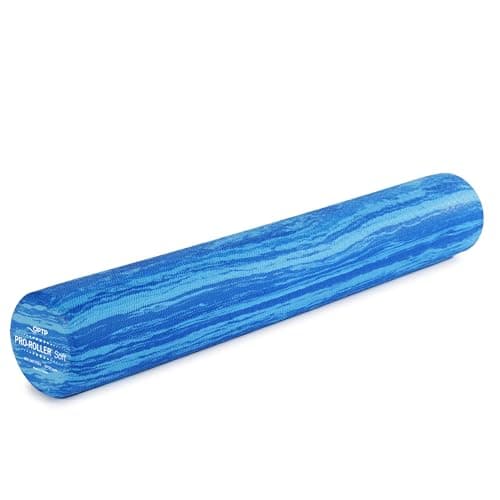
OPTP PRO-ROLLER Soft 36 inFull 36 in length in a soft density, which is the specific combination the yoga use needs and the one hardest to find: long enough to lie along, gentle enough to stay there.
Maker lists length: 36 in
2 · Best for tight legs
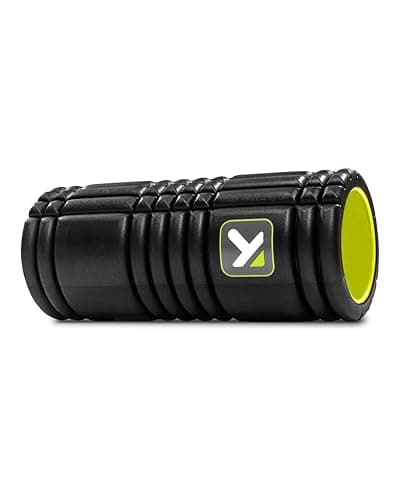
TriggerPoint GRID 1.0 13 inFirm, textured, hollow-cored and short. The right roller if quads and calves are the complaint, and the wrong shape for anything involving your spine.
Maker lists length: 13 in
3 · Best first roller
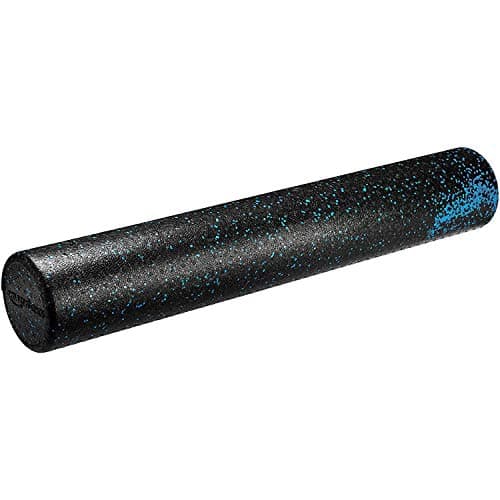
Amazon Basics High Density Foam Roller 36 inA plain molded cylinder at the full length. The cheapest honest way to find out whether a roller earns its floor space before you spend properly.
Maker lists length: 36 in
4 · Best for balance and feet
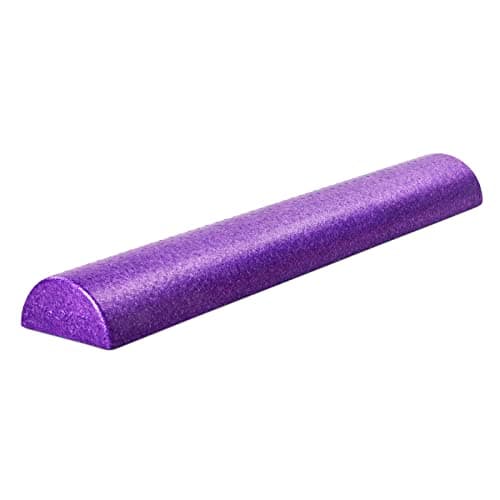
Yes4All Half Foam Roller 36 inA flat-based half cylinder, which does not roll at all. That is the point: it is a stable wedge for arches, balance drills and propping a pelvis.
Maker lists length: 36 in
#ad · Prices come live from Amazon, last checked November 4, 2026. Figures here are the manufacturer's own. The ranking is editorial, made against the criteria on our How We Pick page, not from lab work. Photos come from Amazon. Tap a pick for the full write-up.
The short answer
Buy a 36 inch roller in a soft or medium density. Not the short firm knobbly one at the front of every recovery roundup — that roller is designed for a runner working on an IT band, and it is the wrong length for the thing a yoga practice mostly wants a roller to do, which is to lie along it from tailbone to head and let your chest open while gravity does the work.
The confusion is understandable, because the category is named after the one use it shares with the gym. Rolling a tight quad is real and useful and a short firm roller is better at it. But a yoga reader asking for a foam roller is usually asking for one of three things: a chest opener for a body that spends the day at a desk, a thoracic mobility tool for the upper back, or something to roll out tight hamstrings between practices. The first two need 36 inches. Only the third does not.
So the honest order is: if you want the roller for your spine and chest, buy the long soft one. If you want it for your legs, buy the short firm one. If you are not sure which, buy the inexpensive long one and find out, because a roller that is too long for leg work still does leg work, and a roller that is too short for spine work cannot do spine work at all.
What actually decides it
Four properties, and they matter in this order. Nothing else on a listing page is worth reading.
- Length. This decides which exercises are physically possible. A 36 inch roller supports your whole spine lengthwise and both legs at once crosswise. A 12 or 13 inch roller supports one leg, or your upper back across it, and nothing that needs length.
- Density. This decides whether you keep using it. A firm roller on week one hurts enough that a lot of people quietly stop, and a roller in a cupboard does nothing for anybody.
- Surface. Smooth spreads the load across the whole contact patch. A raised pattern concentrates it into ridges, which is more pressure from the same body weight — useful for a stubborn knot, unpleasant everywhere else.
- Shape. Round rolls. Half-round does not, and a flat base turns the same object into a stability prop instead: something to stand on, balance across or wedge under a hip.
What does not matter: color, the carry bag, the QR code pointing at an exercise app, and the word "professional" anywhere in the title. Diameter matters a little — 6 inches is the standard and the one all the instructions assume. A 4 inch roller sits you lower and is gentler; a 3 inch half-round sits you barely off the floor on purpose.
Length is the first decision
Lie down on your back, put a 36 inch roller under your spine so it runs from your tailbone to the back of your head, bend your knees and let your arms fall open. That is the single most useful thing a roller does for somebody whose complaint is a rounded upper back and a tight chest, and it requires the roller to be longer than your torso. On a 13 inch roller the same setup leaves your head hanging off the end with your neck extended, which is both uncomfortable and the opposite of the point.
The 36 inch length also buys you the crosswise placements. Both calves at once, both hamstrings at once, the whole upper back rolling side to side without the roller squirting out from under you. Each of those is possible on a short roller one limb at a time, and doing them one limb at a time is how a five minute routine becomes a fifteen minute one you skip.
What a 36 inch roller costs you is storage and portability. It is a three foot cylinder. It does not fit in a drawer, it does not go in a suitcase, and in a small apartment it becomes furniture — which is worth knowing before you order, and is the honest case for the short one. If your floor space is already the constraint on your practice, read setting up a space in a normal room first; the roller is not the first thing to solve.
The middle option exists: 18 inches, which fits across a shoulder blade or under both calves, stores upright in a closet, and still cannot support a spine lengthwise. It is a reasonable compromise and it is nobody's first answer, which is why it is not a pick here.
How firm is too firm
Density is where this category loses people. The firm high-density rollers are the cheapest to make and the most heavily sold, and they are also the ones that make a first session genuinely unpleasant if you are bony, deconditioned or sore. Cleveland Clinic's guidance on this is blunt and worth repeating: start with a lightweight, smooth roller, and start out light on pressure. Softer foam is for beginners; the firmer, textured surfaces are for people who already do this regularly and want to reach deep knots.
In practice the tiers work like this:
| Density | Feels like | Right for |
|---|---|---|
| Soft | Noticeable pressure, no wincing | Spine and chest work, first month, anyone bony |
| Medium | Pressure you breathe through | General use once you are used to it |
| Firm / high-density | Sharp in a tight spot | Legs and glutes, people who roll regularly |
| Textured firm | Localized and pointed | One stubborn knot, not a whole routine |
The trap in the table is the top row. Soft rollers are harder to find and more expensive, because the market for them is smaller, so almost every search result points you one or two tiers firmer than you should start. If you are buying for spine and chest work, pay the premium for soft foam — it is the one place in this category where the expensive option is also the correct one.
The cost of soft foam is honest and worth stating: it compresses permanently where you use it most. A soft roller used daily for two years will have a visible flat spot. A high-density molded one will not, which is part of why the cheap ones feel like better value and part of why they get used less.
Smooth, textured or half
A smooth cylinder spreads your body weight across the whole strip of foam touching you. A textured roller puts the same weight through a smaller area, which is more pressure per square inch without you doing anything differently. That is the entire mechanism, and it explains both why textured rollers work on a knot and why they are a bad default: you cannot dial the pressure down.
The hollow-cored firm rollers deserve a specific note, because they solve a real problem. Solid soft foam flattens; a hard plastic core with foam wrapped around it keeps its shape for years and can carry a rated load the maker is willing to publish. That is why the firm textured roller in this list is the one with a stated weight limit, and why it is the pick that will still be the same shape in five years.
The half-round is the odd one out and the most misunderstood. It is a cylinder cut lengthwise, so it has a flat base and does not roll at all. Nobody buys it to roll. You buy it to stand on with the curve under your arches, to balance across in a single-leg hold, or to lay flat side down as a long low wedge under a pelvis or a pair of feet. It is a stability prop that happens to be made of roller foam, and if what you wanted was rolling, it will disappoint you completely.
There is a fourth shape worth naming so you can rule it out: the contoured wheel, which has a channel down the middle so the raised edges sit either side of your spine rather than on it. If your actual complaint is a tight mid-back and you want to roll it rather than rest on it, that shape is better than any cylinder here. We cover it separately in the yoga wheel roundup and whether a wheel is worth it.
What rolling does and does not do
Worth being precise, because this category is sold on claims that outrun what is actually established. Cleveland Clinic's summary is that foam rolling can ease muscle pain and soreness, increase range of motion, and help you relax, and that it primes muscles before a workout. It also says, in the same piece, that the research is thin on whether rolling prevents delayed-onset muscle soreness, and that there is no real evidence for the cellulite claims attached to it.
So: a roller is a reasonable way to make a stiff body feel looser before a practice and less sore afterward. It is not a treatment, it does not break down scar tissue, and it will not fix the reason your hamstrings are tight if that reason is that you sit for nine hours. The thing that actually changes range of motion over months is the practice, and the roller is a tool that makes the practice more comfortable to start.
On dose, the same guidance is specific and useful: about one to two minutes per muscle group, no more than about three minutes on any single area, and a whole session that should not take more than ten minutes. Roll slowly, and for a sore spot repeat the movement three to five times rather than grinding at it. More is not better here, and a thirty minute rolling session is a sign something else is wrong.
The four placements
These are the four things a home yoga practice realistically uses a roller for, in the order most people find them useful. The first two are why length matters.
| Placement | What it is for | Roller it needs |
|---|---|---|
| Lengthwise under the spine, knees bent | Chest opening, thoracic extension | 36 in, soft or medium |
| Crosswise under the shoulder blades | Rolling the upper back, segment by segment | Any length, 18 in and up |
| Under one calf, quad or hamstring | Working a specific tight muscle | Short and firm is better |
| Flat side down under the feet | Arches, balance, standing work | Half-round only |
A note on the first row, because it is the one people get wrong. The roller runs along your spine, your head is supported on it, your knees are bent and your feet are on the floor. You are not rolling — you are resting there and breathing, usually for a minute or two, and letting your arms open sideways. It is closer to a restorative pose than to a massage, which is also why a soft roller is the right one: you are going to be still on it, and a firm cylinder along the spine is not restful.
If that description sounds like what you actually wanted, it is worth knowing a bolster does a gentler version of the same thing, and a folded blanket a gentler one still. Our bolster picks and blanket picks cover those, and blanket versus bolster settles which of the two you want. If restorative support is the goal rather than mobility work, a bolster is the better buy than a roller.
The third row is the one a roller does better than any prop. Nothing else on this site puts sustained, movable pressure into a specific tight muscle. If that is your complaint, the short firm textured roller is the pick, and the length argument above does not apply to you.
In detail
Every pick, in full
1
Best for spine work
OPTP PRO-ROLLER Soft 36 in
As the manufacturer lists it · OPTP
What it gets right
- Long enough to support the whole spine lengthwise, which is the main yoga use for a roller
- Soft density, so a first session does not hurt enough to put you off
- Wide 6 in diameter keeps your head supported instead of tipping back
- The maker publishes the size, the material and the density tier
What it does not
- The most expensive roller here by a wide margin
- Soft foam compresses permanently where you use it most
- Too gentle if what you want is deep pressure in a quad or a calf
- A 36 in cylinder is awkward to store and impossible to pack
Skip it if
you want deep, targeted pressure — a soft roller is the wrong tool and a firm short one is the right one.
#ad · Price as of November 4, 2026 · Affiliate disclosure for the link to OPTP PRO-ROLLER Soft 36 in
2
Best for tight legs
TriggerPoint GRID 1.0 13 in
As the manufacturer lists it · TriggerPoint
What it gets right
- Raised pattern concentrates pressure, which is what a stubborn quad or calf needs
- Hollow core keeps its shape instead of flattening like solid soft foam
- Short enough to live in a drawer or a carry-on
- The maker publishes a load rating, which almost nobody in this category does
What it does not
- Firm and textured, which is genuinely uncomfortable on a first attempt
- Too short to lie along lengthwise — it supports your chest or your hips, not both
- The pattern collects dust and skin, so it needs wiping more often than smooth foam
Skip it if
the chest-opening and thoracic work is why you want a roller — you need 36 in of it, not 13.
#ad · Price as of November 4, 2026 · Affiliate disclosure for the link to TriggerPoint GRID 1.0 13 in
3
Best first roller
Amazon Basics High Density Foam Roller 36 in
As the manufacturer lists it
What it gets right
- Full 36 in length at a fraction of what a studio-brand roller costs
- Molded closed-cell foam holds its shape and wipes clean
- Sold in shorter lengths too, if 36 in is more than your floor space allows
What it does not
- Firm with no softer version of the same product, so there is no gentle way in
- No published density figure, so firmness is a word rather than a number
- The surface marks and scuffs quickly; it will look used within a month
Skip it if
you have a sore back or a bony frame — start soft, because a firm roller on week one is how people decide rolling is not for them.
#ad · Price as of November 4, 2026 · Affiliate disclosure for the link to Amazon Basics High Density Foam Roller 36 in
4
Best for balance and feet
Yes4All Half Foam Roller 36 in
As the manufacturer lists it
What it gets right
- Stays put, which is what you want underfoot or under a pelvis
- The flat side makes it a low prop as well as a balance tool
- A low half-profile is far easier to store upright than a full cylinder
- Closed-cell EPP wipes clean and does not soak up sweat
What it does not
- It does not roll, so it cannot replace a round roller for the leg work
- High-density EPP is firm underfoot, and there is no softer density of the same shape
- The published figures come from the retail listing rather than a maker spec sheet
Skip it if
rolling tight muscles is the whole reason you are buying — this is a stability prop, not a roller.
#ad · Price as of November 4, 2026 · Affiliate disclosure for the link to Yes4All Half Foam Roller 36 in
What to look for
- A stated length, and the right one. 36 inches if you want spine and chest work, 12 to 18 inches if you want legs and storage. This is the decision; everything below is detail.
- A density word, at minimum. Almost nobody in this category publishes a number, so what you are looking for is a maker that at least labels its tiers — soft, medium, firm — and sells more than one. A single product described only as "high density" gives you no way in if firm turns out to be too much.
- Closed-cell foam, molded or EVA. It wipes clean and does not absorb sweat. Open-cell foam in this shape goes gray and smells, and a roller lives on the floor.
- A published load rating if you are heavier. Rare, and when a maker does state one it is a sign of a hollow structural core rather than solid foam. A rated roller keeps its shape; an unrated solid soft one eventually does not.
- Skip the vibrating and the app-connected ones. They add a battery and a failure point to a cylinder of foam, and nothing in the guidance above gets easier because the roller buzzes.
- Measure your floor first. A 36 inch roller needs somewhere to live and a clear three feet plus body length to use. In a small room that is a real constraint, not a detail.
One substitution worth knowing before you buy anything. A tightly rolled blanket or a firm bolster will approximate the lengthwise spine placement well enough to tell you whether you like it, which is a free experiment most people can run tonight. What it cannot do is roll, so it tells you nothing about the leg work.
And the opposite caution: a roller is not a block substitute, in either direction. A block is a fixed height you build a pose around and a roller is a moving surface you put tissue over, and people buy the wrong one of the two surprisingly often. Block versus foam roller works through the distinction, and if you own neither, the block is still the first prop to buy for a yoga practice.
How we picked
Chosen on published criteria, and we say so
Most gear sites open by telling you how many hours they spent with the products. We have not used most of these, and we would rather say so than imply otherwise. Every pick here is chosen against criteria we publish — grip, cushioning, size options, what buyers report after a year of use, and whether the thing is still actually sold — and every manufacturer figure on the page is labeled as the maker's claim.
Nobody pays for a place on this page, no product was supplied free in exchange for coverage, and a specification the maker does not publish is never guessed at. See the full criteria and weighting.
FAQ
Questions people ask
What size foam roller is best for yoga?
Should a beginner get a soft or firm foam roller?
Can you use a foam roller on your lower back?
How long should you foam roll for?
What is a half-round foam roller for?
Is a foam roller or a yoga wheel better for a tight back?
Related
Keep reading
Update log
What changed
- First published.
Receipts
Sources
- 1.OPTP — PRO-ROLLER Soft Foam Roller (published sizes, EVA construction and soft density label)
- 2.Implus / TriggerPoint — GRID 1.0 Foam Roller (published 13 in length, 5.5 in diameter and 300 lb hollow-core rating)
- 3.Cleveland Clinic — foam rolling: what it does, how long to roll, and which density to start with
- 4.NCCIH (US National Institutes of Health) — Yoga: What You Need To Know
- 5.NBC Select — The best yoga props and apparel
We have not used every product on this page, and we do not pretend otherwise. Thicknesses, materials, sizes and warranty terms are the manufacturer's published figures, shown as their claims. Anything about materials, skin or injury is linked to a source. Prices are set by Amazon and change constantly, so we never type one into the text — every figure comes from Amazon's own data, dated, and disappears rather than going stale. Read the full method.