Blocks, Straps & Props Comparison
Yoga Blanket vs Bolster: Which One Do You Need?
Every bolster page on the internet mentions that folded blankets would do. That is true for about two thirds of the placements, and the other third is the whole argument.
We earn a commission when you buy through links on this page, at no extra cost to you. It never decides a ranking: the method is published. How we are funded
Side by side
The two, next to each other
The blanket side
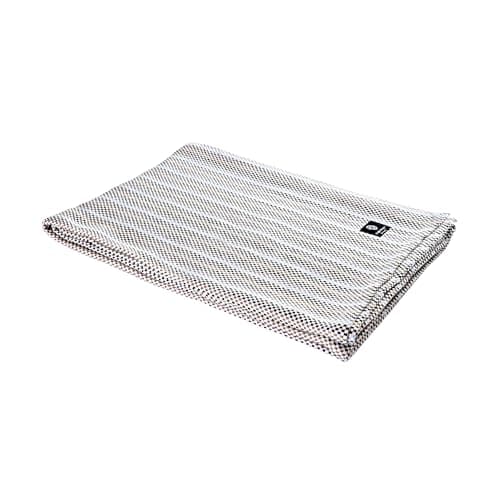
Hugger Mugger Cotton Yoga Blanket
Tight-woven studio cotton at a published weight. Folds to any height you want, which is the thing a bolster cannot do at all.
$76.00Amazon#ad · Price as of November 4, 2026 · Affiliate disclosure for the link to Hugger Mugger Cotton Yoga Blanket
The bolster side
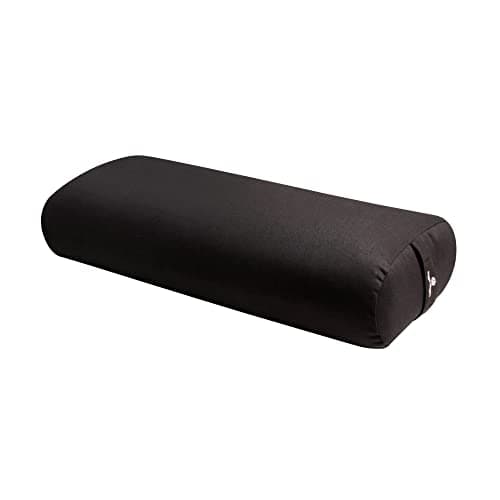
Hugger Mugger Standard Yoga Bolster
Rectangular and flat-topped, so it sits under knees, under a spine or under you. One height, held under load — the thing a blanket cannot do.
$114.00Amazon#ad · Price as of November 4, 2026 · Affiliate disclosure for the link to Hugger Mugger Standard Yoga Bolster
The cheap way to test the question
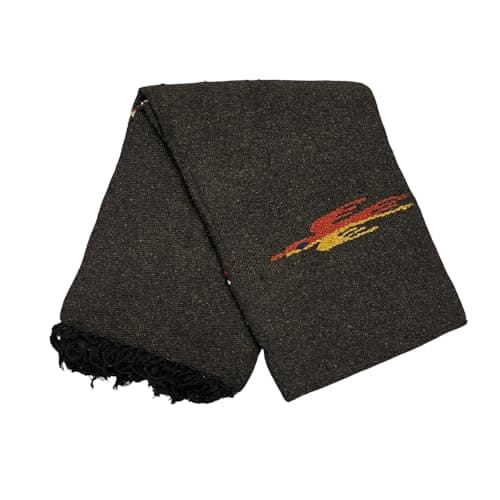
Open Road Goods Thunderbird Yoga Blanket
The handwoven blanket most studios already own. Heavy enough to behave like a prop, inexpensive enough to buy before you decide about a bolster.
$39.99Amazon#ad · Price as of November 4, 2026 · Affiliate disclosure for the link to Open Road Goods Thunderbird Yoga Blanket
The short answer
Buy the blanket first. Buy the bolster when a specific placement keeps failing. A blanket folds to whatever height you need and does five or six jobs, which makes it the better first purchase for almost everybody. A bolster does one thing a stack of blankets genuinely cannot: it holds a single consistent height under your full body weight for twenty minutes without compressing or sliding apart.
If you already own one and are wondering whether to add the other, the test is specific. Fold your blanket into a stack, set up the pose you keep struggling with, and notice what goes wrong. If the stack squashes to a lower height than you set up with, or slides out from under you, or you spend the first two minutes of a five minute hold rebuilding it — that is the bolster-shaped problem. If the complaint is instead that the height is wrong, a blanket is the answer, because you can refold it and a bolster is whatever height it is forever.
The one real difference
Strip away the material and the price and there is exactly one difference that matters: a blanket is adjustable and compressible, a bolster is fixed and incompressible.
Everything else follows from that. The blanket's adjustability is why it substitutes for a block, a neck roll, a seat lift and a layer of warmth — four props in one object, each at a height you choose on the day. Its compressibility is why a four-fold stack that measures four inches when you build it measures noticeably less once your hips are on it, and why the stack creeps outward the longer you lie there.
The bolster's fixed height is a limitation you feel immediately — it is too tall for some people under the knees and too short for others along the spine, and there is nothing to be done about either. Its incompressibility is the thing you are actually paying for. A firm cotton-batting bolster holds its loft with a body across it, which means the shape you set up in is the shape you are still in at the end of the hold. For a long restorative pose that difference is the whole experience.
Side by side
| Yoga blanket | Yoga bolster | |
|---|---|---|
| Height | Anything from one fold to six | One, fixed |
| Under load | Compresses and spreads | Holds its loft |
| Jobs it does | Five or six | Two or three, properly |
| Storage | Folds flat on a shelf | A large fixed object |
| Washing | Cotton usually machine washes | Removable cover only |
| Price bracket | Entry to mid | Mid to high |
| Doubles as warmth | Yes — the main secondary use | No |
The storage row decides more purchases than people expect. A bolster is roughly the size of a sofa cushion and does not compress, so in a small apartment it has to earn permanent floor or shelf space. Two blankets fold into the volume of one sweater. If your practice space is a corner of a living room, that is a real argument and not a minor one — see setting up a space in a normal room.
Placement by placement
Here is the honest breakdown across the placements a restorative practice actually uses. "Either" means a blanket genuinely does the job, not that it is a sad approximation.
| Placement | What it needs | Which prop |
|---|---|---|
| Under the hips, seated | Height, firm edge | Either — blanket is more adjustable |
| Under the knees, lying on your back | Low, soft, wide | Either |
| Along the spine, supported backbend | Sustained loft, full torso length | Bolster |
| Across the back, chest opener | Fixed height that does not spread | Bolster |
| Under the shoulders, shoulderstand | Firm level platform | Blanket — folded, by design |
| Under the forehead, child's pose | A couple of inches | Either |
| Over you, final rest | Warmth | Blanket |
| Between knees, side-lying | Compressible bulk | Either |
Five of the eight are "either", which is why the blanket-first recommendation holds for most readers. The two bolster rows are both long supported holds along or across the torso, and they are the rows where a blanket stack visibly fails: it is being asked to stay a specific shape under a specific load for a long time, which is the one thing it cannot do.
The shoulderstand row goes the other way and is worth noticing. The standard Iyengar setup uses folded blankets specifically, because what the shoulders need is a firm, flat, level platform with a clean edge for the neck to clear, and a bolster's rounded loft is the wrong shape for it entirely. That is a placement where the cheaper prop is not a compromise — it is the correct tool.
Where the blanket wins
When you do not yet know what height you need. This is most beginners, and it is the strongest argument in the whole comparison. Restorative setups are height-sensitive and bodies differ, so the prop that lets you try four heights in one session teaches you something a fixed prop cannot.
When warmth is part of the reason. Body temperature drops during a long still hold, and a lot of people who think they want more support actually want to not be cold. A bolster does nothing for that. If this is your situation, the blanket picks sort by weave and fiber, which is the axis that decides warmth.
When you need two of something. Supported setups frequently want one prop under you and another over or beside you, and two blankets cost a fraction of two bolsters while folding away to nothing.
When it has to be washable. A prop that touches bare skin and a floor needs washing. Most cotton blankets machine wash; a bolster has a removable cover and a core you cannot clean at all.
Where the bolster wins
Long supported backbends. Lying lengthwise along a firm bolster with your spine on it is the signature restorative shape, and no stack of blankets reproduces it. The blanket roll either flattens or rolls out from under you, and the fix each time is to sit up and rebuild it.
Holds over five minutes. The longer the hold, the more compression matters. A blanket stack is fine for a two minute pose and noticeably worse at ten, which is exactly when restorative practice starts doing what it is for.
When rebuilding the prop breaks the practice. This is the honest, unglamorous argument. Restorative work asks you to be still and not fiddle. If you spend every setup folding and adjusting, you never get the thing you came for, and a bolster removes the fiddling entirely. How to use a bolster runs through the six placements, and whether you need one at all is the page to read if you are still undecided.
When you want a seat that holds its height. Sitting on a folded blanket works and the height drifts as you sit. A firm bolster on its side, or a purpose-made cushion, does not — and if sitting is the only reason you are reading this, a meditation cushion is a better buy than either prop here.
What to buy first
The order that wastes the least money: one heavy woven blanket, then a second blanket if restorative practice sticks, then a bolster once you can name the placement that keeps failing. Most people stop at two blankets, and that is not a failure of ambition — it is what two blankets can do.
The exception is somebody who already knows they want restorative practice specifically, perhaps because they have done it in a studio on a studio's props. If that is you, buy the bolster first and a blanket alongside it, because you will use both from the first week and the discovery process above is one you have already been through. The bolster roundup covers which shape, which is a real decision: rectangular for general use, long and narrow for spine work.
One thing neither prop replaces: a block. Anything you press weight through wants a hard edge, and both of these compress under a hand or a hip. How to use yoga blocks covers those placements, and for a first prop purchase a pair of blocks still beats both items on this page.
In detail
Both, in full
The blanket side
Hugger Mugger Cotton Yoga Blanket
As the manufacturer lists it · Hugger Mugger
What it gets right
- Tight weave holds a four-fold stack without spreading under your shoulders
- Big enough to fold small and firm, or to open out over you in savasana
- Machine washable, unlike most wool props
- The maker publishes the size, the weight and the fiber content
What it does not
- The most expensive blanket here by a wide margin
- Cotton creases, and a creased blanket folds less evenly
- Some shrinkage after washing, per the maker's own care note
Skip it if
you want warmth more than structure — wool does that better for less.
#ad · Price as of November 4, 2026 · Affiliate disclosure for the link to Hugger Mugger Cotton Yoga Blanket
The bolster side
Hugger Mugger Standard Yoga Bolster
As the manufacturer lists it · Hugger Mugger
What it gets right
- Flat top makes seated practice genuinely comfortable
- Stable — it does not roll away under you
- Holds firmness longer than a cheap stuffed bolster
What it does not
- Heavy
- Takes real cupboard space
- Costs more than a folded blanket that would half-do the job
Skip it if
you are short on storage — two folded blankets get you most of the way.
#ad · Price as of November 4, 2026 · Affiliate disclosure for the link to Hugger Mugger Standard Yoga Bolster
The cheap way to test the question
Open Road Goods Thunderbird Yoga Blanket
As the manufacturer lists it · Open Road Goods
What it gets right
- Heavy enough to stay where you fold it, which thin throws do not
- Handwoven, and priced below the studio cotton blankets
- Survives being sat on, knelt on and dragged across a floor
- Works as a floor covering for practicing on a hard surface
What it does not
- The maker publishes no weight and no fiber content
- Handmade, so thickness and exact size vary between pieces
- Loose-woven enough that it is not as firm a fold as a studio cotton blanket
Skip it if
you want a published weight and fiber content before you buy.
#ad · Price as of November 4, 2026 · Affiliate disclosure for the link to Open Road Goods Thunderbird Yoga Blanket
How we picked
Chosen on published criteria, and we say so
Most gear sites open by telling you how many hours they spent with the products. We have not used most of these, and we would rather say so than imply otherwise. Every pick here is chosen against criteria we publish — grip, cushioning, size options, what buyers report after a year of use, and whether the thing is still actually sold — and every manufacturer figure on the page is labeled as the maker's claim.
Nobody pays for a place on this page, no product was supplied free in exchange for coverage, and a specification the maker does not publish is never guessed at. See the full criteria and weighting.
FAQ
Questions people ask
Can folded blankets replace a yoga bolster?
Which should I buy first, a blanket or a bolster?
How many blankets equal one bolster?
Is a bolster worth it if I only do a short practice?
Can I use a pillow instead of either?
Related
Keep reading
Update log
What changed
- First published.
Receipts
Sources
- 1.Hugger Mugger — Cotton Yoga Blanket (published size, weight, fiber content and care)
- 2.Hugger Mugger — product information
- 3.Manduka — Recycled Wool Blanket (published size, weight, fiber split and care)
- 4.NBC Select — The best yoga props and apparel
- 5.NCCIH (US National Institutes of Health) — Yoga: What You Need To Know
We have not used every product on this page, and we do not pretend otherwise. Thicknesses, materials, sizes and warranty terms are the manufacturer's published figures, shown as their claims. Anything about materials, skin or injury is linked to a source. Prices are set by Amazon and change constantly, so we never type one into the text — every figure comes from Amazon's own data, dated, and disappears rather than going stale. Read the full method.