Blocks, Straps & Props Guide
Do I Need a Yoga Bolster?
A bolster is the one prop that is genuinely optional for most people and transformative for a few. Here is which group you are in.
We earn a commission when you buy through links on this page, at no extra cost to you. It never decides a ranking: the method is published. How we are funded
The short answer
No, unless you practice restorative or yin, you are pregnant, or lying flat on your back is uncomfortable. In those three cases, yes, and it is the prop that will change your practice most. For an active vinyasa or mat pilates practice, a bolster will sit in the corner of the room and you would get more from a second block.
The reason is specific. A bolster is dense, heavy and holds its shape under body weight for twenty minutes. No pillow does that, and the entire point of a restorative pose is that the prop takes the load so your muscles can stop working. A prop that compresses is a prop that quietly hands the job back to you.
Who actually needs one
Restorative and yin practitioners. Not optional. These styles are built around holding supported shapes for three to ten minutes, and the support is the practice. Without a bolster you are doing long passive holds unsupported, which is a different and much less restful thing.
Anyone pregnant. A bolster makes side-lying positions comfortable and supports the chest in anything that would otherwise be face-down. This is the use case where a bolster goes from nice to necessary fastest.
People whose lower back objects to lying flat. A bolster under the knees takes the lumbar spine out of extension, and for a lot of people that is the difference between savasana being restful and being an endurance test.
People who do not sit comfortably cross-legged. Sitting on the end of a bolster tilts the pelvis forward and makes a long spine available without effort. A folded blanket does some of this; a bolster does more of it, for longer. If this is the only reason you are considering one, a meditation cushion is the purpose-built version and costs less.
Anyone working on backbends gently. Lying over a bolster lengthwise is a supported chest opener that asks nothing of your back muscles. It is also the one use where a wheel competes directly, and the bolster is the gentler of the two.
Why cushions do not work
This is the objection everyone has, and it is worth answering properly rather than dismissing.
Density. A bolster is firmly packed cotton or dense foam. A sofa cushion is soft on purpose. Under the weight of a torso, the cushion flattens to an inch within a minute and the support disappears exactly when the pose is supposed to be settling.
Shape retention. A bolster has a fixed cross-section. A pillow deforms around you, which feels pleasant for thirty seconds and then leaves your spine in a shape nobody chose.
Height. Most bolsters stand six to nine inches. That is far higher than a pillow and the height is what creates the opening in a supported backbend.
Washability. A proper bolster has a removable cover. A sofa cushion used for yoga becomes a sofa cushion that has been used for yoga.
What does substitute, reasonably well: a tightly rolled wool blanket, or two or three firm bed pillows stacked and compressed inside a pillowcase. Both are covered at the end of this page.
Round vs rectangular
| Round (pranayama) bolster | Rectangular bolster | |
|---|---|---|
| Cross-section | Cylindrical | Flat-sided |
| Height under the spine | Taller, more opening | Lower, broader |
| Stability | Can roll | Stays put |
| Best for | Chest and heart openers, under the knees | Sitting on, supported folds, side-lying |
| Easier first bolster | No | Yes |
If you are buying one bolster and cannot decide, buy rectangular. It sits still, it is easier to sit on, and it does nine out of ten jobs. The round one is the specialist, and it is the better chest opener. Both styles are ranked in the bolster roundup.
The picks
If the answer is yes
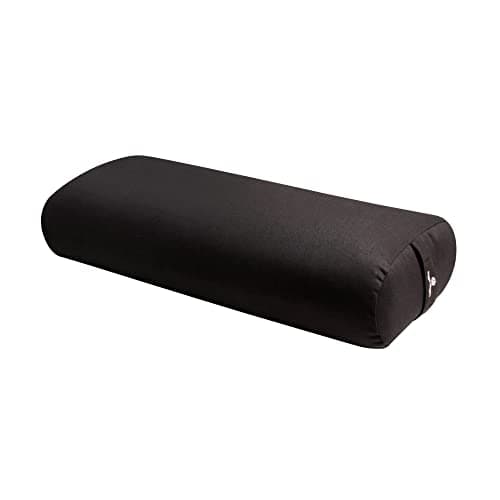
One bolster for everything
Hugger Mugger Standard Yoga Bolster
The rectangular all-rounder: flat top to sit on, enough width to lie across, firm enough to hold its shape. The default choice if you are buying one bolster.
$114.00Amazon#ad · Price as of November 3, 2026 · Affiliate disclosure for the link to Hugger Mugger Standard Yoga Bolster
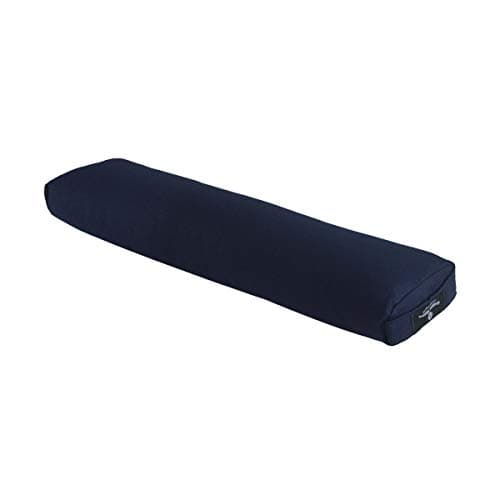
Supported chest opening
Hugger Mugger Pranayama Yoga Bolster
Long and narrow so it runs along your spine rather than across your back. If the reason you want a bolster is supported backbends and breathing, this is the shape.
$78.00Amazon#ad · Price as of November 3, 2026 · Affiliate disclosure for the link to Hugger Mugger Pranayama Yoga Bolster
- MandukaNo image
A bolster that stays firm
Manduka Enlight Rectangular Bolster
A firm rectangular bolster with a removable cover, from a maker whose products tend to still be usable years later. Firmer than most, which is what stops a bolster going flat.
Check price on Amazon#ad · Price as of November 3, 2026 · Affiliate disclosure for the link to Manduka Enlight Rectangular Bolster
If you would rather not buy one
- A rolled wool blanket is the best substitute. Roll it tightly and bind it with a yoga strap so it cannot unroll under you. Dense, shapeable, and already in the house.
- Two firm pillows inside one pillowcase. Compressing them in a single case stops them sliding apart. Good for under the knees, not good for lying over.
- A stack of folded blankets. Three or four folded to the same size gives you adjustable height, which a bolster cannot. Studios use this for exactly that reason — and it only works with blankets dense enough to hold a fold.
- A block on its lowest setting plus a blanket. Height from the block, comfort from the blanket. Covered in the block placements guide.
- What not to use: a couch cushion or a duvet. Both compress to nothing and both put your spine somewhere unplanned.
And if you have tried the blanket version and found yourself reaching for it every session, that is the signal to buy the real thing. A bolster is one purchase that lasts a decade with no moving parts to fail — the opposite of the calculation in the yoga wheel question.
If the answer came out yes, the next thing to read is not a shopping page. Most bolsters sit unused because nobody showed their owner the positions — the six placements are here.
How we picked
Chosen on published criteria, and we say so
Most gear sites open by telling you how many hours they spent with the products. We have not used most of these, and we would rather say so than imply otherwise. Every pick here is chosen against criteria we publish — grip, cushioning, size options, what buyers report after a year of use, and whether the thing is still actually sold — and every manufacturer figure on the page is labeled as the maker's claim.
Nobody pays for a place on this page, no product was supplied free in exchange for coverage, and a specification the maker does not publish is never guessed at. See the full criteria and weighting.
FAQ
Questions people ask
Do I really need a yoga bolster?
Can I use a pillow instead of a yoga bolster?
Should I buy a round or rectangular yoga bolster?
What size yoga bolster should I get?
Is a yoga bolster good for lower back pain?
Related
Keep reading
Update log
What changed
- First published.
Receipts
Sources
- 1.Hugger Mugger — product information
- 2.Manduka — product information
- 3.NBC Select — The best yoga props and apparel
- 4.Yoga Journal — The Best Yoga Blocks
- 5.NCCIH (US National Institutes of Health) — Yoga: What You Need To Know
We have not used every product on this page, and we do not pretend otherwise. Thicknesses, materials, sizes and warranty terms are the manufacturer's published figures, shown as their claims. Anything about materials, skin or injury is linked to a source. Prices are set by Amazon and change constantly, so we never type one into the text — every figure comes from Amazon's own data, dated, and disappears rather than going stale. Read the full method.