Blocks, Straps & Props Guide
How to Use a Yoga Bolster
A bolster is not a big cushion, it is a firm support with a handful of specific positions. Learn six of them and the thing earns its cupboard space.
We earn a commission when you buy through links on this page, at no extra cost to you. It never decides a ranking: the method is published. How we are funded
The short answer
A bolster has about six useful placements, and five of them put it under you rather than behind you. Under the knees when you lie on your back, lengthwise along the spine for a supported chest opening, across the thighs in a seated forward fold, under the hips in a supported bridge, under the top knee when you lie on your side, and under the sitting bones when you sit. If you use it for those six, a bolster is one of the best props on this list. If you use it as a pillow, it is an expensive pillow.
The shape decides what it is good at. A rectangular, flat-topped bolster is the all-rounder and the right thing to buy if you are buying one. A long, narrow round bolster is better along the spine and worse for everything else.
Six placements
Two refinements that make all six better. Put something under your head whenever your chin is tipping back — a folded blanket or a flat foam block is enough, and it changes a supported backbend from tolerable to genuinely restful. And stay in these positions far longer than you would hold an active pose: three to ten minutes is the point, not thirty seconds.
A block pairs with a bolster constantly, mostly to raise one end of it or to support a head or a hand. Block placements cover the combinations.
Which shape for which use
| Placement | Rectangular bolster | Round or narrow bolster |
|---|---|---|
| Under the knees, on your back | Good | Good |
| Lengthwise along the spine | Good | Better — it fits the spine |
| Across the thighs, seated fold | Better — flat top to land on | Rolls under the weight |
| Under the hips, supported bridge | Better — stable and flat | Unstable |
| Under the top knee, side-lying | Good | Good |
| Sitting on it | Better — flat top | Too narrow to sit on |
Which is why the recommendation is the rectangular one if you buy a single bolster, and the narrow one only as a second. The full ranking is in the bolsters roundup, and whether you need one at all is answered honestly in do I need a yoga bolster.
How firm is firm enough
Firmer than feels appealing in the shop. The test is simple: sit on the bolster with your full weight and see how far it compresses. If it squashes to half its height, it will not hold a supported bridge and it will not keep your hips above your knees when you sit on it, which are two of the six placements gone immediately.
A soft bolster is also the one that goes flat. Stuffing settles, and a bolster that was marginal when new is useless after a year. This is the single reason to prefer a firm one even though the first five minutes on it are less pleasant.
The other spec that actually matters is a removable, washable cover. A bolster spends its life under a face, a hip and bare legs, and the ones without a removable cover cannot be cleaned properly.
The picks
The bolsters these placements are written for
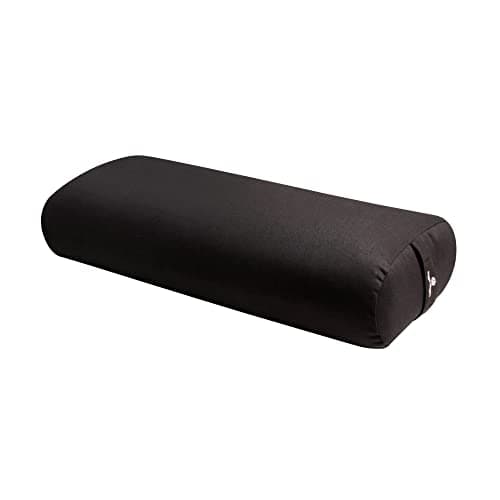
One bolster for everything
Hugger Mugger Standard Yoga Bolster
The rectangular all-rounder: flat top to sit on, enough width to lie across, firm enough to hold its shape. The default choice if you are buying one bolster.
$114.00Amazon#ad · Price as of November 3, 2026 · Affiliate disclosure for the link to Hugger Mugger Standard Yoga Bolster
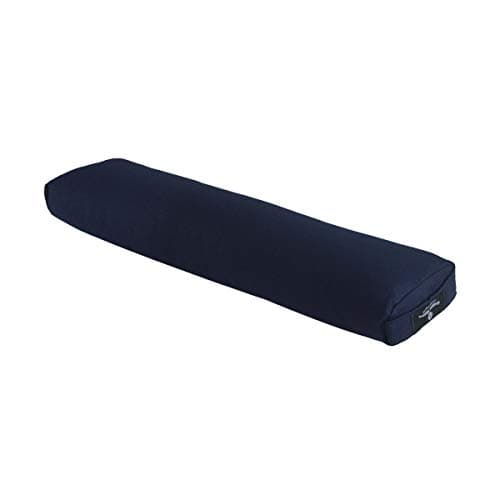
Supported chest opening
Hugger Mugger Pranayama Yoga Bolster
Long and narrow so it runs along your spine rather than across your back. If the reason you want a bolster is supported backbends and breathing, this is the shape.
$78.00Amazon#ad · Price as of November 3, 2026 · Affiliate disclosure for the link to Hugger Mugger Pranayama Yoga Bolster
- MandukaNo image
A bolster that stays firm
Manduka Enlight Rectangular Bolster
A firm rectangular bolster with a removable cover, from a maker whose products tend to still be usable years later. Firmer than most, which is what stops a bolster going flat.
Check price on Amazon#ad · Price as of November 3, 2026 · Affiliate disclosure for the link to Manduka Enlight Rectangular Bolster
What to use instead for now
You can get most of the way with things you already own, and it is a reasonable way to find out which of the six placements you actually use before spending anything.
- Two or three folded wool blankets stacked is the classic studio substitute and genuinely good. Firm, adjustable in height, and it does the seated and under-knee placements well.
- A firm sofa cushion works under the knees and under the top knee when you are side-lying, and nowhere else, because it is not firm enough to sit on or to hold a bridge.
- A rolled-up yoga mat inside a towel approximates the narrow round bolster for lengthwise spine work. Not comfortable, but it tells you whether you like the position.
- A stack of books under a blanket replaces the sitting placement. Height is what matters there, not softness — and if sitting is the placement you use most, a meditation cushion is purpose-built for it.
Where the substitutes fail is firmness under load and the flat top, which is why people who practice restorative or yin regularly end up buying a real one. If your practice is mostly active, you may well never need it, and the two blocks and a strap in the beginner kit are the better place for the money.
A last note on storage, because it is the honest objection to a bolster. They are bulky and they do not collapse. Standing one upright in a corner or behind a door is the usual answer, and the same logic as setting up a practice space in a normal room applies.
How we picked
Chosen on published criteria, and we say so
Most gear sites open by telling you how many hours they spent with the products. We have not used most of these, and we would rather say so than imply otherwise. Every pick here is chosen against criteria we publish — grip, cushioning, size options, what buyers report after a year of use, and whether the thing is still actually sold — and every manufacturer figure on the page is labeled as the maker's claim.
Nobody pays for a place on this page, no product was supplied free in exchange for coverage, and a specification the maker does not publish is never guessed at. See the full criteria and weighting.
FAQ
Questions people ask
How do you use a yoga bolster?
What shape of bolster should I buy?
How firm should a yoga bolster be?
How long should you stay in a supported pose?
Can I use pillows instead of a yoga bolster?
Related
Keep reading
Update log
What changed
- First published.
Receipts
Sources
- 1.Hugger Mugger — product information
- 2.NBC Select — The best yoga props and apparel
- 3.Yoga Journal — The Best Yoga Blocks
- 4.Manduka — product information
- 5.NCCIH (US National Institutes of Health) — Yoga: What You Need To Know
We have not used every product on this page, and we do not pretend otherwise. Thicknesses, materials, sizes and warranty terms are the manufacturer's published figures, shown as their claims. Anything about materials, skin or injury is linked to a source. Prices are set by Amazon and change constantly, so we never type one into the text — every figure comes from Amazon's own data, dated, and disappears rather than going stale. Read the full method.