Blocks, Straps & Props Guide
Are Yoga Wheels Worth It?
A wheel is the only prop that supports a spine in a continuous curve. That is a real and narrow benefit, and whether it is worth buying depends entirely on whether you want it.
We earn a commission when you buy through links on this page, at no extra cost to you. It never decides a ranking: the method is published. How we are funded
The short answer
A yoga wheel is worth it if you have a stiff upper back and want to spend time extended over a curve. Nothing else does that job. A block is a point of support, a bolster is a soft wedge, and a wheel is a continuous arc that lets your thoracic spine drape over it while your hands and feet stay on the floor.
It is not worth it as a first prop. Two blocks and a strap will change more poses for less money, which is why they come first in the beginner kit. A wheel is a second-year purchase for most people, and a never purchase for plenty of perfectly happy practitioners.
What a wheel does that props cannot
Three things, and it is worth being precise because the marketing around wheels is vague.
It supports a continuous curve. Lie back over a wheel and your spine extends over a smooth arc from mid-back to shoulders. A bolster does something similar but softer and shorter; a block gives you one contact point and lets the rest of the spine hang. If opening the thoracic spine is the goal, the shape of the prop is the point.
It rolls. That turns a static stretch into a moving one — you can roll along the length of the upper back rather than hanging in one spot. That is also what makes the narrower, more heavily padded wheels useful for working either side of the spine.
It is a moving surface to balance against. Hands or feet on a wheel in a plank or a lunge turns a stable pose into an unstable one, which is a legitimate way to add difficulty without adding weight. This is the use case people buy a wheel for and then rarely use.
What it does not do is replace a bolster for restorative work. A wheel is hard, and twenty minutes lying over something hard is not restful. If long supported rest is what you want, buy a bolster and keep your money.
Wheel, bolster or block
| Yoga wheel | Bolster | Block | |
|---|---|---|---|
| Shape under the spine | Continuous arc | Soft wedge or cylinder | Single flat point |
| Opens the thoracic spine | Best | Good, gentler | Limited |
| Comfortable for long holds | No | Yes | No |
| Can roll along the back | Yes | No | No |
| Adds instability for strength work | Yes | Slightly | No |
| Useful in standing poses | Rarely | No | Constantly |
| Storage footprint | Awkward, bulky | Bulky | Tiny |
| Buy it first? | No | Second or third | Yes, first |
Read the last row as the honest summary. The wheel is the most specialized of the three and the least versatile, and it is also the only one that does its particular job at all.
Who should skip one
- Complete beginners. Blocks and a strap first. A wheel used without the shoulder mobility to support yourself on the way down is where most wheel injuries come from.
- Anyone with a disc issue, spinal condition or recent back injury. Loading a spine into deep extension over a hard arc is not a neutral thing to do. This is a conversation for a clinician who knows your back, not for a product page.
- People with very little storage. A wheel does not fold, stack or hide. It is the most awkward prop in this category to live with in a small flat — space planning here.
- Anyone wanting it for restorative practice. Wrong tool. Bolster.
- People who already have a foam roller and use it. A roller covers much of the rolling-the-back use. The wheel's advantage is being able to extend fully over it, so buy one only if that is specifically what you want.
The picks
If the answer is yes, these three
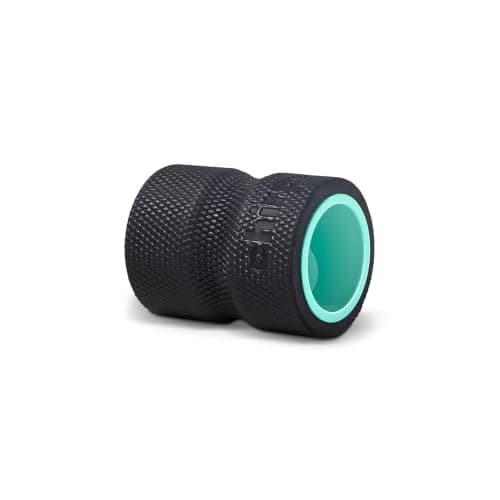
Rolling out a stiff back
Chirp Wheel
A wheel with a groove down the middle so your spine drops into it instead of being pressed on. Sold in three diameters, and the diameter changes the experience completely.
$29.99Amazon#ad · Price as of November 3, 2026 · Affiliate disclosure for the link to Chirp Wheel
- UpCircleSevenNo image
Supported backbends
UpCircleSeven Yoga Wheel
A conventional padded yoga wheel at a sane price. Wide enough to lie back over with some confidence, and the padding is thick enough that it does not dig in.
Check price on Amazon#ad · Price as of November 3, 2026 · Affiliate disclosure for the link to UpCircleSeven Yoga Wheel
- GaiamNo image
Trying a wheel cheaply
Gaiam Yoga Wheel
A plain padded wheel from a brand that is easy to buy and easy to return. Nothing clever, which is the right specification for a prop you are not sure you will use.
Check price on Amazon#ad · Price as of November 3, 2026 · Affiliate disclosure for the link to Gaiam Yoga Wheel
Using one without hurting yourself
A wheel is the prop most capable of doing damage, not because it is dangerous but because it invites you straight into deep extension with your head below your heart. Four rules cover almost all of it.
- Get on and off with your hands, slowly. Sit in front of the wheel, place it at your mid-back, and lower yourself with your hands behind you. Never flop backwards over it.
- Keep the wheel on the thoracic spine, not the lower back. The upper back is built to extend; the lumbar spine is not, and arching from there is where the ache the next day comes from.
- Have the wheel against a wall at first. A wheel rolls, and that is the point and the hazard. A wall behind it removes the main failure mode while you learn.
- Short holds, not long ones. Thirty seconds to a minute, repeated. This is a mobility prop, not a place to rest.
On diameter: around 12 to 13 inches is the standard and suits most people and most uses. Larger wheels give a deeper arc and suit taller practitioners; narrow, heavily padded wheels in the 6 to 10 inch range are built for rolling either side of the spine rather than for backbends. The ranked options and what each diameter is for are in the wheel roundup.
If the answer turns out to be yes, read how to use one before the first session. If it turns out to be no, the gentler route to the same chest opening is a bolster.
Two follow-on questions if the answer came out yes. Diameter changes the experience more than any other spec, and smaller is more intense rather than gentler — wheel sizing has the bands. And if you are choosing between a wheel, a roller and a block for the same stiff back, the block against the roller is the comparison to read first.
How we picked
Chosen on published criteria, and we say so
Most gear sites open by telling you how many hours they spent with the products. We have not used most of these, and we would rather say so than imply otherwise. Every pick here is chosen against criteria we publish — grip, cushioning, size options, what buyers report after a year of use, and whether the thing is still actually sold — and every manufacturer figure on the page is labeled as the maker's claim.
Nobody pays for a place on this page, no product was supplied free in exchange for coverage, and a specification the maker does not publish is never guessed at. See the full criteria and weighting.
FAQ
Questions people ask
Is a yoga wheel worth buying?
What does a yoga wheel actually do?
Is a yoga wheel good for your back?
What size yoga wheel should I buy?
Can a beginner use a yoga wheel?
Related
Keep reading
Update log
What changed
- First published.
Receipts
Sources
- 1.NBC Select — The best yoga props and apparel
- 2.OutdoorGearLab — The Best Yoga Blocks
- 3.Hugger Mugger — product information
- 4.Gaiam — product information
- 5.NCCIH (US National Institutes of Health) — Yoga: What You Need To Know
We have not used every product on this page, and we do not pretend otherwise. Thicknesses, materials, sizes and warranty terms are the manufacturer's published figures, shown as their claims. Anything about materials, skin or injury is linked to a source. Prices are set by Amazon and change constantly, so we never type one into the text — every figure comes from Amazon's own data, dated, and disappears rather than going stale. Read the full method.