Blocks, Straps & Props Guide
Yoga Block vs Foam Roller: Which Do You Need?
They look like they overlap and they barely do. One is a fixed height you build a pose around; the other is a moving surface you roll tissue over. Owning the wrong one is a common waste.
We earn a commission when you buy through links on this page, at no extra cost to you. It never decides a ranking: the method is published. How we are funded
The short answer
If you are buying one thing for a yoga practice, buy the block. A block is a fixed, stable height that lets you get into a shape you cannot currently reach, and roughly a third of the instructions you will hear in a beginner class assume you have one. A foam roller does something genuinely different: it moves along a muscle under your own body weight, which is recovery work rather than practice work.
Buy a roller instead if your actual problem is a tight, sore back or tight quads between sessions rather than an unreachable pose. And if the back is the problem, the closest thing this site covers is a contoured wheel with a channel down the middle, which keeps pressure off the spine itself in a way a plain cylinder does not.
What a block does
A block is a brick-shaped prop, standardly 9 by 6 by 4 inches, which gives you three usable heights depending on which face it sits on. All of its value comes from being rigid and staying where you put it.
It raises the floor. Hands on blocks in a standing forward fold means you can keep a long spine instead of rounding to reach, and that is the difference between a stretch in the hamstrings and a strain in the lower back. It supports you where you cannot support yourself: a block under a hip in pigeon, under the sacrum in bridge, under the head in a supported reclining shape. It gives you something to press against — a block between the thighs is the classic way to find the inner-thigh engagement nobody can describe usefully. And it makes poses harder when you want that, with hands on blocks turning a plank into a deeper shoulder exercise.
What it cannot do is move. A block is a static height. You do not roll on a block, you do not glide along a muscle with it, and it will not reach the middle of your back.
What a roller does
A foam roller is a cylinder you put part of your body on and then move over, so pressure travels along the length of a muscle. Quads, calves, the outside of the thigh, the upper back: you are applying sustained pressure and sliding it.
It is a recovery and mobility tool rather than a yoga prop, which is why it lives in a different part of the shop. The two things it does well that a block cannot touch are broad pressure along a long muscle, and extension over a curved surface for the thoracic spine. Lying back over a roller placed across the upper back opens the chest in a way no block does.
Its weaknesses are the mirror image of the block's. A cylinder rolls, so it is a poor support: anything you try to balance on it moves. It is bulky to store. And a plain cylinder under the spine presses directly on the vertebrae, which is the reason the grooved designs exist. The wheel-shaped version of this argument, including whether it is worth owning at all, is in are yoga wheels worth it.
Side by side
| Yoga block | Foam roller | |
|---|---|---|
| Primary job | A fixed height to build a pose around | Pressure moving along a muscle |
| Stability | Stays exactly where you put it | Rolls by design |
| Used during practice | Constantly, in class instructions | Rarely; before or after |
| Upper back extension | Limited | Its best trick |
| Support under a hip or head | Yes | No, it rolls away |
| Something to press into | Yes | Not usefully |
| Storage | Fits on a shelf | Bulky |
| Typical number owned | Two | One |
Read the first two rows and the decision is usually made. If the sentence in your head is "I cannot reach the floor," that is a block. If it is "my back is tight," that is a roller or a wheel.
Where they overlap
There are three honest overlaps, and it is worth knowing them so you do not buy twice for the same job.
Supported chest opening. A roller across the upper back and two blocks — one under the shoulder blades, one under the head — both open the chest while you lie on your back. The blocks hold a position; the roller lets you move within it. Most people prefer the blocks because nothing is trying to escape underneath them.
Under the sacrum in bridge. A block on its lowest height is the standard support. A roller technically fits and immediately rolls, so a block wins outright here.
Calf and foot work. A roller is better for calves. For feet, a block is the thing you stand the ball of your foot on to stretch an arch, and that is genuinely useful if you are dealing with tight feet.
What has no overlap at all: the moment a class says "take a block." There is no roller improvisation for that, and a bolster is a different prop again — bolsters are here.
The picks
The block to buy, and the rolling option
- GaiamNo image
A first block
Gaiam Yoga Essentials Foam Block
The standard foam block. Light, cheap, soft enough to rest against, and it will compress under your standing weight. For most beginners that is fine.
Check price on Amazon#ad · Price as of November 3, 2026 · Affiliate disclosure for the link to Gaiam Yoga Essentials Foam Block
Blocks you stand on
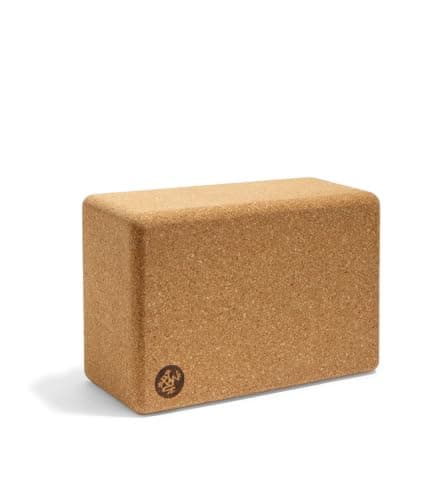
Manduka Cork Yoga Block
Heavy, grippy and it does not move when you put weight on it. That stability is the whole argument for cork over foam, and it is a good argument.
$26.00Amazon#ad · Price as of November 3, 2026 · Affiliate disclosure for the link to Manduka Cork Yoga Block
Rolling out a stiff back
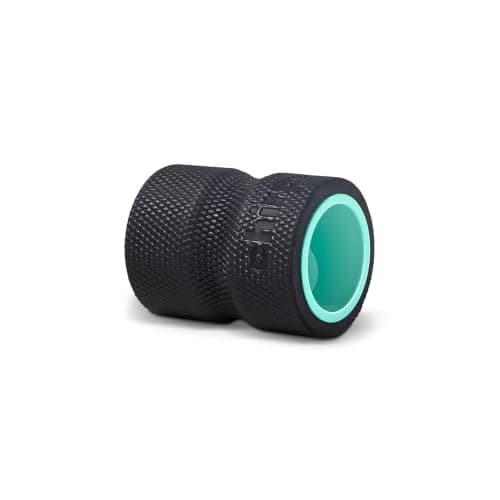
Chirp Wheel
A wheel with a groove down the middle so your spine drops into it instead of being pressed on. Sold in three diameters, and the diameter changes the experience completely.
$29.99Amazon#ad · Price as of November 3, 2026 · Affiliate disclosure for the link to Chirp Wheel
What to buy first
- You are starting yoga: two blocks and a strap. That is the whole beginner prop list and a roller is not on it — the set guide covers buying them together.
- You cannot reach your toes, the floor or your back foot: blocks, and then a strap. Both solve reach; neither is a roller problem.
- Your upper back is stiff and sitting all day is why: a contoured wheel or a roller, and the wheel is the kinder of the two on the spine.
- Your wrists hurt in plank: blocks, specifically rigid ones — the wrist page is here.
- You want to lie back and be supported: neither. That is a bolster, and it does the job better than both.
- You already own a roller and use it: good. Keep using it and buy blocks for the practice itself. They are not competing for the same minutes of your week.
One practical note on sizes. If you do buy both, buy the blocks in cork if your hands will press weight through them and foam if they are mostly resting against you — cork versus foam is the whole of that decision. For the rolling side, the diameter changes the experience completely, and wheel sizing explains why a smaller one is more intense rather than gentler.
How we picked
Chosen on published criteria, and we say so
Most gear sites open by telling you how many hours they spent with the products. We have not used most of these, and we would rather say so than imply otherwise. Every pick here is chosen against criteria we publish — grip, cushioning, size options, what buyers report after a year of use, and whether the thing is still actually sold — and every manufacturer figure on the page is labeled as the maker's claim.
Nobody pays for a place on this page, no product was supplied free in exchange for coverage, and a specification the maker does not publish is never guessed at. See the full criteria and weighting.
FAQ
Questions people ask
Can a yoga block replace a foam roller?
Can a foam roller replace a yoga block?
Which should I buy first for yoga?
Is a yoga wheel the same as a foam roller?
Do I need both a block and a foam roller?
Related
Keep reading
Update log
What changed
- First published.
Receipts
Sources
- 1.OutdoorGearLab — The Best Yoga Blocks
- 2.Gear Patrol — The Best Yoga Blocks
- 3.Yoga Journal — The Best Yoga Blocks
- 4.NBC Select — The best yoga props and apparel
- 5.Hugger Mugger — product information
- 6.NCCIH (US National Institutes of Health) — Yoga: What You Need To Know
We have not used every product on this page, and we do not pretend otherwise. Thicknesses, materials, sizes and warranty terms are the manufacturer's published figures, shown as their claims. Anything about materials, skin or injury is linked to a source. Prices are set by Amazon and change constantly, so we never type one into the text — every figure comes from Amazon's own data, dated, and disappears rather than going stale. Read the full method.