Blocks, Straps & Props Best picks
The Best Yoga Blocks for Wrist Pain
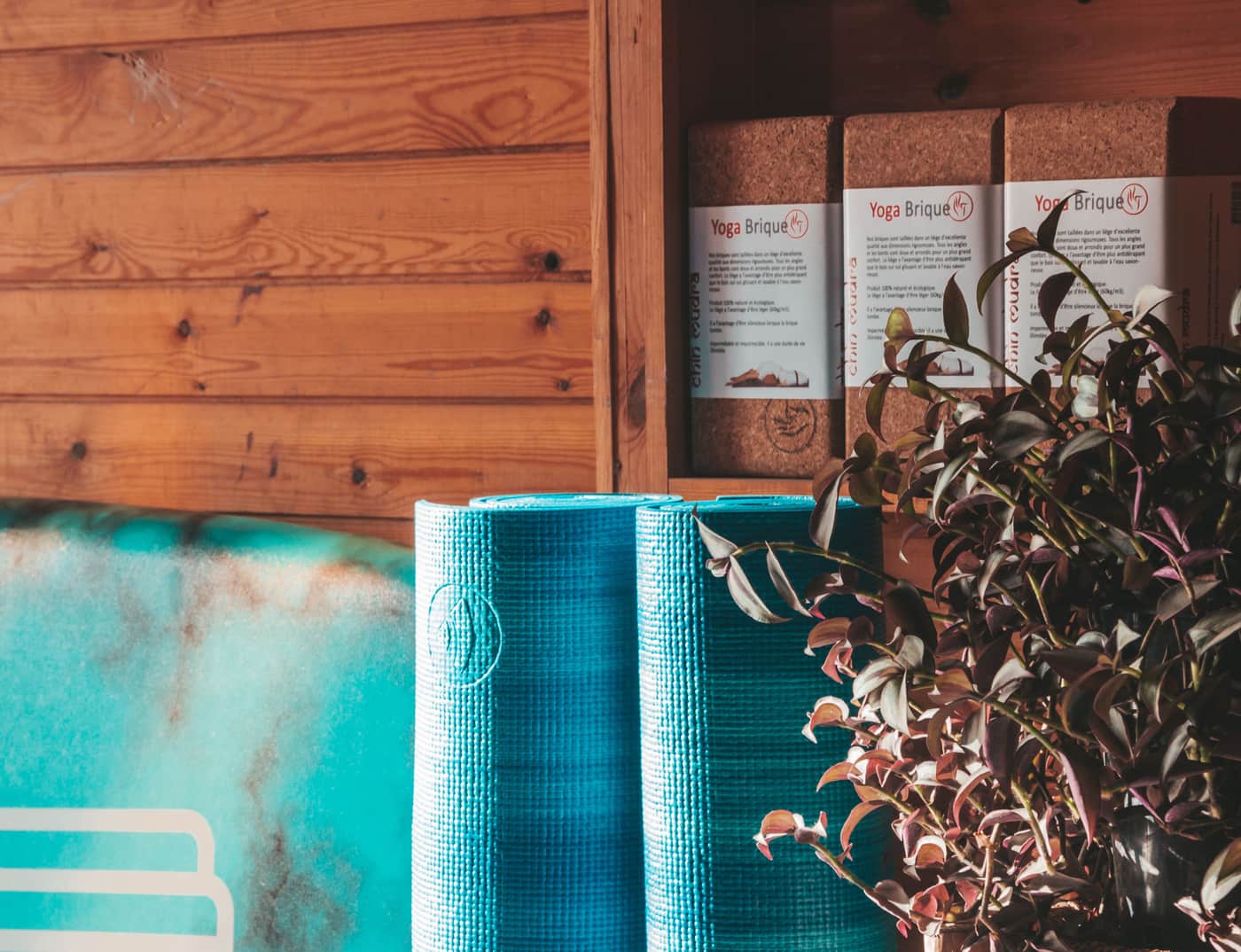
Wrists complain about one thing above all others: the angle. A block fixes the angle, which is why it helps at all — and why a soft block that sinks does not.
We earn a commission when you buy through links on this page, at no extra cost to you. It never decides a ranking: the method is published. How we are funded
Quick picks
The short answer
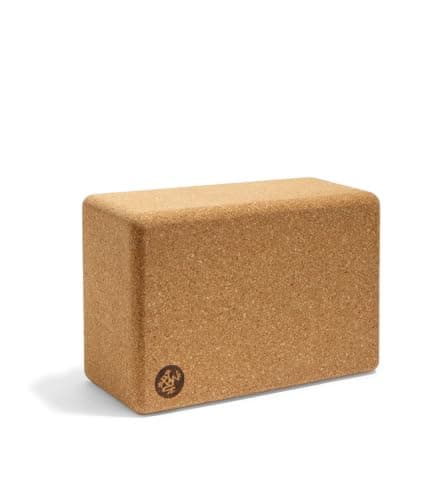
1 · Best block for sore wrists
Manduka Cork Yoga BlockIt does not compress and it does not skid, which is the entire requirement. Grippy enough to hold a damp palm, and heavy enough that it stays where you put it.
Maker lists material: Recycled cork
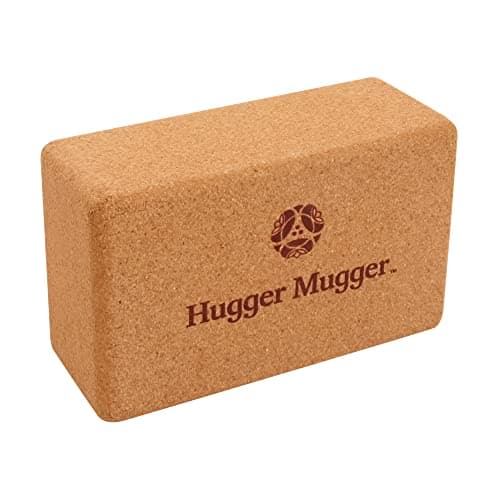
2 · Best if you also lean on it
Hugger Mugger Cork Yoga BlockThe same rigidity with the edges rounded off, which matters the moment the block moves from under a hand to under a shoulder or a hip.
Maker lists material: Cork
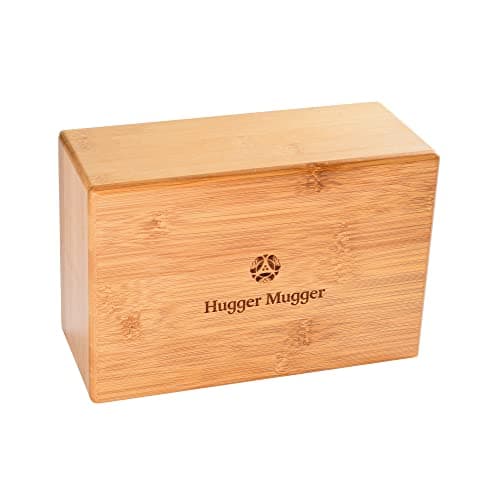
3 · Most rigid option
Hugger Mugger Bamboo Yoga BlockHollow bamboo, so there is zero give under a hand and it weighs less than solid wood. Hard and cold against bare skin, and it can be slick when your hands are damp.
Maker lists material: Bamboo, hollow construction
4 · Best pair for the money
REEHUT High Density Yoga Blocks (2-Pack)Two denser-than-average foam blocks, which is what you actually need, because wrist relief wants one under each hand. Still compresses under full weight.
Maker lists material: High-density EVA foam
5 · If you need something soft too
Gaiam Yoga Essentials Foam BlockThe standard foam block. Too squashy to hold a wrist angle under full load, but the right thing under a forearm, a shoulder or the back of your head.
Maker lists material: EVA foam
#ad · Prices come live from Amazon, last checked November 3, 2026. Figures here are the manufacturer's own. The ranking is editorial, made against the criteria on our How We Pick page, not from lab work. Photos come from Amazon, and the slot is left empty where a pick has no listing photograph. Tap a pick for the full write-up.
The short answer
Buy two Manduka cork blocks. Wrist pain in yoga is overwhelmingly a wrist-angle problem: plank, downward dog and chaturanga all ask the hand to bend back toward the forearm under load, and the further back it bends the more the joint complains. A block raises the heel of your hand, reduces that angle, and shifts load toward the base of the fingers. Cork does it best because cork does not squash — a block that compresses under your weight gives the angle straight back.
If the block will also go under a hip or a shoulder, the Hugger Mugger cork block has the edges rounded off and is kinder to lean into. If you want the most unyielding surface available, the Hugger Mugger bamboo block has literally no give. If the money matters, the REEHUT pair is denser than the usual cheap foam and comes as two, which is the number you need.
Why a block helps a wrist
In a flat-handed plank, your body weight passes through a joint held at close to ninety degrees of extension. That is near the end of the wrist's comfortable range before you have added any load at all, which is why the same pose that feels fine for ten seconds hurts after forty.
A block changes the geometry in one of three ways. Put the block under the heel of each hand and the wrist extends less far, because the base of the palm is now higher than the fingers. Grip the long edge of a block with the whole hand and the wrist stays close to neutral while the fingers do the holding — the same trick push-up handles use. Or move off the hands entirely: blocks under the forearms turn a plank into a forearm plank, and the wrist stops being in the circuit.
None of those three works if the block changes shape under you. A foam block compressing even a quarter of an inch under one palm re-introduces most of the angle you were trying to remove, and it does it unevenly, which is worse than doing it at all. That is the whole case for cork or bamboo here, and it is the opposite of the advice on the cork versus foam page, where foam wins for anything resting against skin.
Worth saying before you spend anything: the cheapest fixes are free. Spread your fingers wide and grip the mat, press the knuckle at the base of the index finger down rather than letting weight fall into the heel of the hand, and shift your shoulders back so less of your weight is forward over the hands. If the mat itself is slipping you are also gripping harder than you need to, and a slippery mat has its own fixes.
Why rigid beats soft here
This is the one page on this site where the premium block is the right recommendation for a beginner, and it is worth being clear about why, because normally it is not.
A block has two completely different jobs. One is to be a surface you bear weight through — standing on it, pressing a hand into it, loading it in half moon. The other is to be a surface you rest against — a block under a hip in pigeon, under the head in supported fish, between the thighs in bridge. Foam is better at the second job and worse at the first, because softness is comfort when you lean and instability when you press.
Wrist relief is entirely the first job. You are putting a meaningful fraction of your body weight through a small contact area and you need the surface not to move, not to tilt, and not to skid across the mat when you shift. Cork manages all three; cheap foam manages none of them reliably. Bamboo is the most rigid of all and its only real drawback is that it is cold, hard and occasionally slick under damp hands.
The practical consequence is that most people with sore wrists end up owning both materials, and that is a reasonable place to land — two cork blocks for the weight-bearing work, one foam block for everything else. How many of each is worked through in how many blocks you need.
The five, side by side
| Block | Material | Give under load | Edges | Why you would pick it |
|---|---|---|---|---|
| Manduka Cork | Recycled cork | None | Square | The default for weight-bearing |
| Hugger Mugger Cork | Cork | None | Contoured | Also comfortable to lean on |
| Hugger Mugger Bamboo | Hollow bamboo | None at all | Square | Maximum rigidity, least weight for it |
| REEHUT (2-pack) | High-density EVA foam | Some | Beveled | A matching pair for the least money |
| Gaiam Essentials Foam | EVA foam | Noticeable | Soft | The block for everything that is not a wrist |
Materials and dimensions are as the makers publish them. The column that decides this page is the third one, and it is the only page on the site where that is true.
Three placements worth knowing
Blocks under the heels of the hands, lowest height, long edge forward. This is the default. Hands on the blocks, fingers over the front edge and onto the mat. It takes maybe fifteen degrees out of the wrist angle in plank and downward dog, which is usually the difference between uncomfortable and fine.
Blocks on their tall end, gripped like handles. Hands wrap the narrow face, thumb one side, fingers the other. The wrist stays almost neutral and the grip muscles take the load instead. Only cork, bamboo or a very dense block is stable enough on end to do this safely.
Blocks under the forearms. The bail-out, and a good one. Forearms on the blocks, hands relaxed, and the wrist is out of the loop entirely. This is the version to use on a day when the joint is already sore, and it is also a genuinely harder core exercise than the hands-down version.
A strap belongs in this conversation too, for the other half of the problem: tight shoulders push weight forward into the hands, and the shoulder-opening work that fixes that is strap work — how to use a strap has the sequence. Full placement detail for the blocks themselves is in how to use yoga blocks.
In detail
Every pick, in full
1
Best block for sore wrists
Manduka Cork Yoga Block
As the manufacturer lists it · Manduka
What it gets right
- Does not compress or skid under body weight
- Grippy even when your hands are damp
- Feels substantial rather than disposable
What it does not
- Hard edges are uncomfortable under a shoulder or hip
- Heavy to carry two of them
- Costs several times a foam block
Skip it if
you mainly want a block to lie on in restorative poses — foam is kinder there.
#ad · Price as of November 3, 2026 · Affiliate disclosure for the link to Manduka Cork Yoga Block
2
Best if you also lean on it
Hugger Mugger Cork Yoga Block
As the manufacturer lists it · Hugger Mugger
What it gets right
- Rounded edges make weight-bearing far more comfortable
- Naturally grippy surface for sweaty hands
- Stable enough to stand on
What it does not
- Still heavy
- Cork surface can shed slightly at the corners over years
- Premium price for a block
Skip it if
you need two blocks and a strap on a tight budget.
#ad · Price as of November 3, 2026 · Affiliate disclosure for the link to Hugger Mugger Cork Yoga Block
3
Most rigid option
Hugger Mugger Bamboo Yoga Block
As the manufacturer lists it · Hugger Mugger
What it gets right
- Zero give under weight
- Lighter than a solid wood block
- Looks good enough to leave out in a living room
What it does not
- Hard and cold against skin
- Can be slippery under damp hands
- The most expensive way to buy a block
Skip it if
you want a prop for restorative or supported poses.
#ad · Price as of November 3, 2026 · Affiliate disclosure for the link to Hugger Mugger Bamboo Yoga Block
4
Best pair for the money
REEHUT High Density Yoga Blocks (2-Pack)
As the manufacturer lists it
What it gets right
- Two blocks, which is what most beginners actually need
- Denser than the cheapest foam blocks
- Beveled edges are comfortable enough
What it does not
- Still compresses under full body weight
- Colors and finish vary between batches
- Foam surface picks up marks
Skip it if
you want one block you will keep for a decade — buy cork.
#ad · Price as of November 3, 2026 · Affiliate disclosure for the link to REEHUT High Density Yoga Blocks (2-Pack)
5
If you need something soft too
Gaiam Yoga Essentials Foam Block
As the manufacturer lists it · Gaiam
What it gets right
- Light enough to hold overhead without fatigue
- Soft edges for hips, shoulders and the back of the head
- Cheap enough to buy two
What it does not
- Compresses under standing weight
- Dents and scuffs quickly
- Slides on a hard floor
Skip it if
you want to stand on the block in half-moon or standing splits.
#ad · Price as of November 3, 2026 · Affiliate disclosure for the link to Gaiam Yoga Essentials Foam Block
What to look for
- Rigid, not soft. Cork or bamboo. If a block squashes under your palm it has given back the angle you bought it to remove.
- Buy two. Wrists come in pairs and so do hands. One block under one hand puts you crooked.
- Standard 9 by 6 by 4 inches. The four-inch height is the one you want under a hand; the three-inch versions are not tall enough to change much.
- Check how it behaves on your mat. Cork grips; lacquered wood and bamboo can slide. A block that skids mid-plank is worse than no block.
- Rounded edges if it doubles up. Square cork under a hip is unpleasant. Contoured edges cost nothing and widen what the block is good for.
- Add one foam block, not five. You want one soft block for restorative placements and that is all.
Two things that are not blocks but belong in the same budget. A thicker, denser mat reduces how hard your hands have to work to feel stable, and the dense cushioned mats help wrists for the same reason they help knees. And a small kneeling pad under the heel of each hand is a crude but effective stand-in while you decide.
If you are still unconvinced that props are worth it at all, that argument is made properly in are yoga blocks worth it. Wrist pain is one of the two or three cases where the answer is an unambiguous yes.
How we picked
Chosen on published criteria, and we say so
Most gear sites open by telling you how many hours they spent with the products. We have not used most of these, and we would rather say so than imply otherwise. Every pick here is chosen against criteria we publish — grip, cushioning, size options, what buyers report after a year of use, and whether the thing is still actually sold — and every manufacturer figure on the page is labeled as the maker's claim.
Nobody pays for a place on this page, no product was supplied free in exchange for coverage, and a specification the maker does not publish is never guessed at. See the full criteria and weighting.
FAQ
Questions people ask
Do yoga blocks help with wrist pain?
What kind of yoga block is best for wrists?
How do you do plank with sore wrists?
How many blocks do I need for wrist support?
Should I use foam or cork blocks for wrist pain?
Related
Keep reading
Update log
What changed
- First published.
Receipts
Sources
- 1.NCCIH (US National Institutes of Health) — Yoga: What You Need To Know
- 2.OutdoorGearLab — The Best Yoga Blocks
- 3.Yoga Journal — The Best Yoga Blocks
- 4.Gear Patrol — The Best Yoga Blocks
- 5.Hugger Mugger — product information
- 6.Manduka — product information
We have not used every product on this page, and we do not pretend otherwise. Thicknesses, materials, sizes and warranty terms are the manufacturer's published figures, shown as their claims. Anything about materials, skin or injury is linked to a source. Prices are set by Amazon and change constantly, so we never type one into the text — every figure comes from Amazon's own data, dated, and disappears rather than going stale. Read the full method.