Blocks, Straps & Props Guide
How Many Yoga Blocks Do I Need?
The answer is two, and it is two for a reason that has nothing to do with upselling: pairs of blocks are used in pairs, and mismatched blocks are a small permanent irritation.
We earn a commission when you buy through links on this page, at no extra cost to you. It never decides a ranking: the method is published. How we are funded
The short answer
Buy two, matching, bought at the same time. A large share of the poses that use a block use one under each hand or one under each hip, and two blocks of slightly different height or firmness is worse than two identical ones in a way you will notice every session.
Buy one only if you are certain your practice is restorative or seated, where a single prop under a hip or a knee covers almost everything. Buy three if you are working on a specific long-term shape — a supported bridge, a handstand drill, a bolster substitute — and already know which placements you use.
Why pairs, not singles
A block has three heights because it has three dimensions, and the whole design assumes you can set it on any face. That works with one block. What does not work with one block is symmetry.
The poses where this bites are the common ones, not the exotic ones. A supported forward fold wants a block under each hand so your shoulders stay level. Bridge pose with a block between the thighs is one block, but bridge supported under the sacrum while the feet are raised is two. A seated forward bend with a block under each knee keeps the pelvis square; one block tilts you. Supported fish, legs-up-the-wall with a block under the hips and another under the feet, half moon with a hand on a block and a second to extend a short reach — all two.
The mismatch problem is the other half of the argument. Foam blocks vary batch to batch in firmness and very slightly in dimension, dyes shift between production runs, and a block bought three months later will frequently be a touch firmer or a shade off in color. Under your hands, a firmness difference is not cosmetic: one side compresses more than the other and the pose goes crooked. The specific placements are set out in how to use yoga blocks.
How many for which practice
| Your practice | Blocks | Why |
|---|---|---|
| Beginner vinyasa or hatha at home | 2 foam | Hands, hips and knees all want pairs |
| Restorative or yin | 1-2, plus a bolster | The bolster does most of the work; blocks prop its ends |
| Seated and breathing practice | 1 foam | One block under the sitting bones, nothing else |
| Mat pilates | 1 foam, or none | Mostly between the thighs or under the head |
| Iyengar-influenced classes | 2 cork, plus a strap | Standing on blocks is routine, and foam compresses |
| Working toward inversions | 2-3 cork | Hands on blocks, plus one for a head or hip |
The material matters as much as the count. Foam is right when the block is under skin — a hip, a shoulder, a forehead — and cork is right when you stand on it or press real weight through it, because foam compresses and cork does not. That decision has its own page: cork versus foam.
When one is enough
There are three honest cases, and in all three a second block would sit in a cupboard.
A seated practice. If you sit to breathe or meditate and that is the practice, you need one block or a cushion under your sitting bones to tilt the pelvis forward. A second one has no job.
Pilates rather than yoga. Mat pilates uses a block between the thighs, under the head, or under the sacrum, and almost never as a pair. If pilates is the practice, one block and a small ball is a more useful pair of purchases than two blocks.
You are testing whether props help at all. Fair enough, and that question deserves a straight answer before you spend anything. Buy one cheap foam block, use it for a month, and buy its twin if you find yourself reaching for a second.
The picks
A pair, and the one you stand on
- GaiamNo image
A first block
Gaiam Yoga Essentials Foam Block
The standard foam block. Light, cheap, soft enough to rest against, and it will compress under your standing weight. For most beginners that is fine.
Check price on Amazon#ad · Price as of November 3, 2026 · Affiliate disclosure for the link to Gaiam Yoga Essentials Foam Block
- REEHUTNo image
Two blocks, least money
REEHUT High Density Yoga Blocks (2-Pack)
Two denser-than-average foam blocks for the price of one branded one. Denser foam means less squash, which is the only thing that matters in a block this cheap.
Check price on Amazon#ad · Price as of November 3, 2026 · Affiliate disclosure for the link to REEHUT High Density Yoga Blocks (2-Pack)
Blocks you stand on
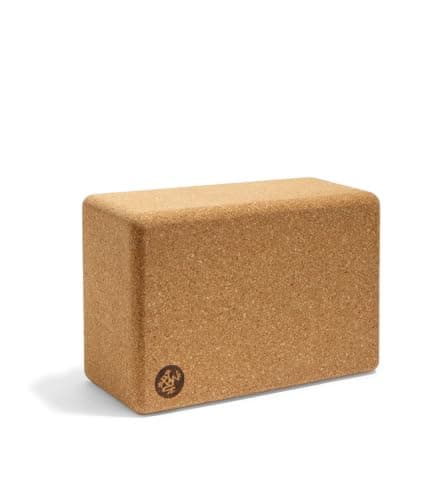
Manduka Cork Yoga Block
Heavy, grippy and it does not move when you put weight on it. That stability is the whole argument for cork over foam, and it is a good argument.
$26.00Amazon#ad · Price as of November 3, 2026 · Affiliate disclosure for the link to Manduka Cork Yoga Block
The case for a third
Three blocks is not a beginner recommendation, and it is not a waste either. The practices where it earns its place are specific.
- Restorative set-ups. Two blocks holding a bolster at an angle and a third under the head is a standard supported reclining shape. A folded blanket substitutes, until you want to stop folding blankets.
- Inversion and arm-balance drills. Hands on two blocks, head or hip supported by a third, is how a lot of people build toward a shape safely.
- Two people practicing. Obvious, frequently forgotten, and the reason a pair gets borrowed and never returned.
- Mixed materials. Two foam for anything against skin plus one cork for standing is a genuinely good three-block set, and better than three of either.
Where to stop: four blocks is a studio, not a home practice. Past three, a bolster or a strap will do more for your practice than another block — bolsters are here and straps here. If you want blocks and a strap together, the bundles are compared in the set guide.
How we picked
Chosen on published criteria, and we say so
Most gear sites open by telling you how many hours they spent with the products. We have not used most of these, and we would rather say so than imply otherwise. Every pick here is chosen against criteria we publish — grip, cushioning, size options, what buyers report after a year of use, and whether the thing is still actually sold — and every manufacturer figure on the page is labeled as the maker's claim.
Nobody pays for a place on this page, no product was supplied free in exchange for coverage, and a specification the maker does not publish is never guessed at. See the full criteria and weighting.
FAQ
Questions people ask
How many yoga blocks do beginners need?
Do I need two yoga blocks or just one?
How many yoga blocks do I need for pilates?
Can I buy the second yoga block later?
Are yoga blocks a standard size?
Related
Keep reading
Update log
What changed
- First published.
Receipts
Sources
- 1.OutdoorGearLab — The Best Yoga Blocks
- 2.Yoga Journal — The Best Yoga Blocks
- 3.Gear Patrol — The Best Yoga Blocks
- 4.NBC Select — The best yoga props and apparel
- 5.Hugger Mugger — product information
We have not used every product on this page, and we do not pretend otherwise. Thicknesses, materials, sizes and warranty terms are the manufacturer's published figures, shown as their claims. Anything about materials, skin or injury is linked to a source. Prices are set by Amazon and change constantly, so we never type one into the text — every figure comes from Amazon's own data, dated, and disappears rather than going stale. Read the full method.