Yoga Mats Best picks
The Best Thick Yoga Mats
Thickness is the one mat spec that changes how a floor feels under a knee. It is also the spec that makes standing on one leg harder. Here is where the trade sits.
We earn a commission when you buy through links on this page, at no extra cost to you. It never decides a ranking: the method is published. How we are funded
Quick picks
The short answer
1 · Best overall
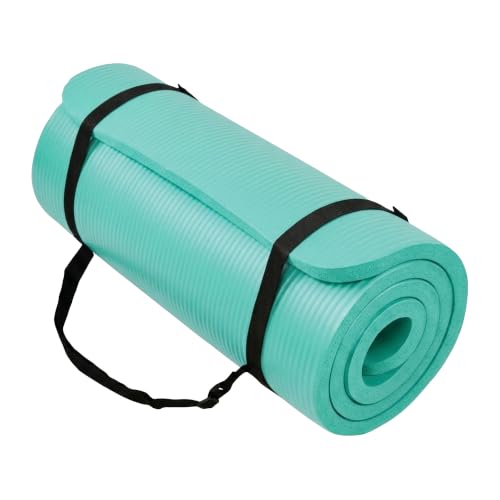
BalanceFrom Extra Thick Yoga Mat 1-InchA full inch of high-density foam: the most cushion available in a mat you can still roll up and put away. Floor work stops hurting. Standing balance gets harder.
Maker lists thickness: 1 in (listing-stated)
2 · Best middle ground
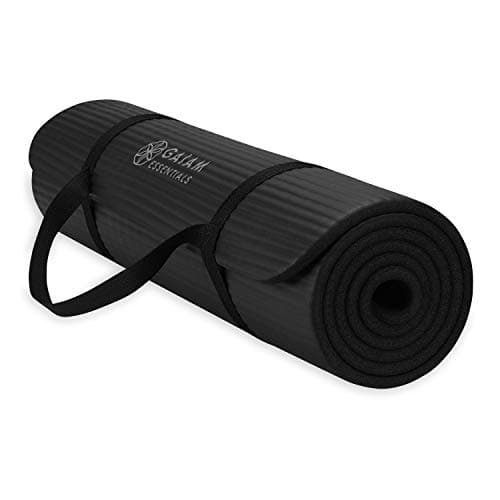
Gaiam Essentials Thick Yoga MatHalf an inch is the thickness most people actually want. Enough to kneel on without flinching, firm enough that a lunge does not sink.
Maker lists thickness: 2/5 in (about 10 mm)
3 · Best dense cushion
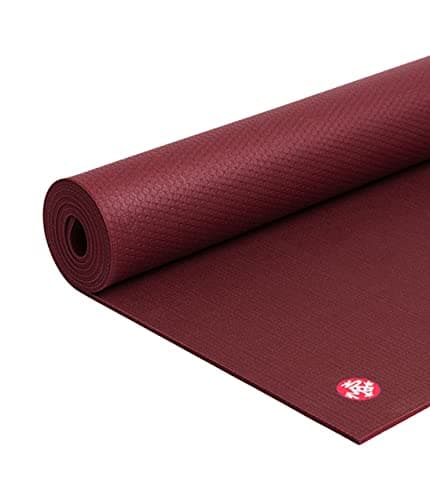
Manduka PRO 6mmOnly 6 mm, but dense closed-cell PVC rather than soft foam, so it cushions without compressing. The thick mat for someone who still wants to balance.
Maker lists thickness: 6 mm
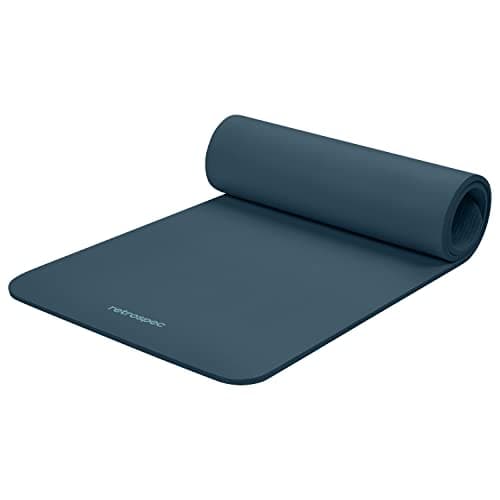
4 · Best to move between rooms
Retrospec Solana Yoga MatThicker than a studio mat, thinner than a floor pad, and light enough to carry upstairs. The compromise pick.
Maker lists thickness: 1/2 in (about 12.7 mm)
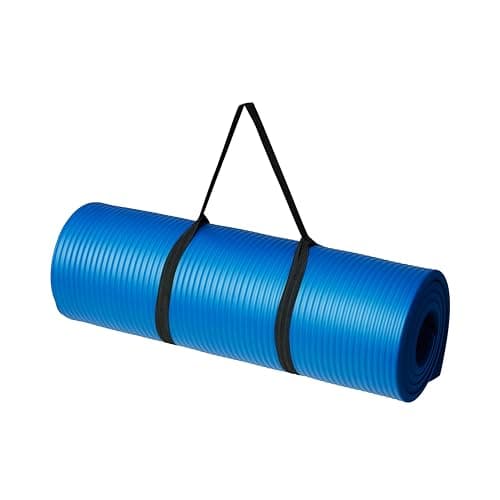
5 · Budget pick
Amazon Basics 1/2-Inch Extra Thick Exercise MatHalf an inch of foam for the least money in this list. The cheapest mat here that genuinely does the cushioning job, with a shorter life than the rest.
Maker lists thickness: 1/2 in (about 12.7 mm)
#ad · Prices come live from Amazon, last checked November 28, 2026. Figures here are the manufacturer's own. The ranking is editorial, made against the criteria on our How We Pick page, not from lab work. Photos come from Amazon. Tap a pick for the full write-up.
The short answer
Buy the BalanceFrom Extra Thick at a full inch if your knees, hips or spine are the reason you are reading this, and the Gaiam Essentials at half an inch if they are not. The inch is the most cushion on the market in a mat you can roll up; the half inch is the thickness that keeps floor work comfortable without turning every standing pose into a balance drill. If money is the constraint, the Amazon Basics mat is the cheapest thing here that still does the job, and it is named as the budget pick for that reason.
Everybody shopping for a thick mat is solving the same problem: something hurts when it touches the floor. The answer is almost never the thickest mat sold. It is the thinnest mat that makes the pain stop, because every millimeter past that point costs you stability.
What thickness actually buys
A standard studio mat is 4 to 5 mm. Anything described as thick starts around 6 mm and runs to about 25 mm, which is the full inch at the top of this list. What you buy with the extra material is simple and worth stating plainly.
- Knees and shins. Kneeling poses, lunges, cat-cow, anything on all fours. This is the single most common reason people upgrade, and 6 mm to 13 mm is where most of the relief lives.
- Spine and hips on the floor. Bridges, supine twists, mat Pilates. Hard floors telegraph every vertebra. More foam flattens that out.
- Cold and hard floors. A thicker mat insulates. On a concrete slab or a tiled room that matters more than people expect.
- Impact for anyone below you. If you practice above a neighbor, thickness is the only mat spec that changes what they hear. That has a page of its own: mats for a shared floor.
The trade nobody warns you about
Thick mats make standing poses harder, and the effect is not subtle. Balance works by your foot sensing small shifts in pressure and your ankle correcting them. Put 25 mm of compressible foam between the foot and the floor and the signal arrives late and blurred. Tree pose on an inch of foam is a different pose from tree pose on 4 mm.
That is not a reason to avoid a thick mat. It is a reason to be honest about which practice you are buying for. A floor-based restorative or mat Pilates practice loses almost nothing to thickness. A standing-heavy vinyasa practice loses a lot. If your week contains both, the two-mat answer is cheaper than it sounds: a thick mat for floor days and a firm one for standing days still costs less than one premium mat.
The other cost is bulk. An inch-thick mat does not roll tight. It will not fit a normal mat sling and it is awkward to carry anywhere. These are home mats. If you need to take one to a studio, read the travel mat page instead.
The thickness bands, compared
| Thickness | What it is for | What you give up |
|---|---|---|
| 3 mm and under | Travel, standing practice, grip-first mats | Any real joint protection |
| 4-5 mm | The studio default. Most classes, most bodies | Comfort in long kneeling work |
| 6 mm | Sore knees and wrists without wrecking balance | A little standing stability |
| 10-13 mm | Mat Pilates, floor work, hard or cold floors | Noticeable balance, and portability |
| 20-25 mm | Joint pain, impact absorption, home-only use | Standing poses become a balance drill |
The full millimeter-by-millimeter version of this argument, including why studio mats settled on 4-5 mm, is in the thickness guide.
Thick is not the same as soft
This is the distinction that decides whether a thick mat works or annoys you. Two mats can be the same thickness and feel nothing alike, because what matters is how the material responds under load.
Low-density foam compresses fast and then bottoms out. Under a kneecap that means you feel the floor anyway, which defeats the purpose. High-density foam and dense closed-cell PVC compress slowly and keep pushing back, so the cushion is still there at the bottom of the movement. That is why the Manduka PRO at 6 mm can feel more protective than a cheap 10 mm mat, and why it sits third in a list sorted by thickness.
The practical check when the mat arrives: kneel on it and put your full weight through one knee. If you can feel the hard floor through it, the foam has bottomed out and no amount of listed thickness is going to help you.
What to look for
- Decide floor-first or standing-first before you shop. It settles the thickness question in one move and saves you from buying twice.
- Treat an inch as a home-only mat. It will not travel, and it will not store neatly.
- Check the surface, not just the depth. Thick foam mats are often slick when new. A thick mat you slide on is worse than a thin one you do not, and the grip page explains why.
- Expect a shorter life from soft foam. Dense PVC and rubber outlast cheap foam by years. How long a mat lasts has the comparison.
In detail
Every pick, in full
1
Best overall
BalanceFrom Extra Thick Yoga Mat 1-Inch
As the manufacturer lists it · BalanceFrom
What it gets right
- An inch of resilient foam under every landing, knee and elbow
- Textured on both faces, so the side against the floor grips too
- Rolls and straps like a mat rather than needing floor space of its own
- Cheap enough to own alongside a proper practice mat
What it does not
- Standing balances are genuinely hard on this much foam
- An inch of foam creases where it is rolled and the creases stay
- Foam compresses under knees and elbows with regular use
- BalanceFrom publishes no density figure, so this foam cannot be compared with another maker's
Skip it if
your sequence is mostly standing work — the wobble will bother you more than the neighbors do.
#ad · Price as of November 28, 2026 · Affiliate disclosure for the link to BalanceFrom Extra Thick Yoga Mat 1-Inch
2
Best middle ground
Gaiam Essentials Thick Yoga Mat
As the manufacturer lists it · Gaiam
What it gets right
- The most forgiving surface here for knees and elbows
- Long enough for most people at 72 in
- Comes with a strap, so nothing extra to buy
What it does not
- Standing balances wobble on this much foam
- Foam dents and compresses over time
- Not a grippy surface once damp
Skip it if
your practice is mostly standing poses and balances.
#ad · Price as of November 28, 2026 · Affiliate disclosure for the link to Gaiam Essentials Thick Yoga Mat
3
Best dense cushion
Manduka PRO 6mm
As the manufacturer lists it · Manduka
What it gets right
- Dense enough that kneeling and forearm work stop hurting
- Closed cell, so sweat sits on top instead of soaking in
- Genuinely lasts — the lifetime guarantee is the maker's own
- An 85 in version exists if you are tall
What it does not
- Heavy. This is not a mat you carry far
- Slippery out of the box until the surface is broken in
- Closed-cell grip drops away once your hands are wet
Skip it if
you want grip on day one, practice hot, or need to carry the mat anywhere.
#ad · Price as of November 28, 2026 · Affiliate disclosure for the link to Manduka PRO 6mm
4
Best to move between rooms
Retrospec Solana Yoga Mat
As the manufacturer lists it
What it gets right
- More surface texture than a plain foam mat
- Long enough at 72 in for most people
- Cheap and widely stocked
What it does not
- Foam still dents under knees over time
- Not a hot-yoga surface
- Colors vary in finish between batches, buyers report
Skip it if
you want a mat that will still be flat in three years.
#ad · Price as of November 28, 2026 · Affiliate disclosure for the link to Retrospec Solana Yoga Mat
5
Budget pick
Amazon Basics 1/2-Inch Extra Thick Exercise Mat
As the manufacturer lists it
What it gets right
- One of the longest cheap mats at 74 in
- Foam is soft enough for knees straight away
- Easy to replace when it wears out
What it does not
- Slippery once your hands are damp
- Foam edges curl after a few months
- No grip texture worth the name
Skip it if
you sweat much at all — you will be sliding within ten minutes.
#ad · Price as of November 28, 2026 · Affiliate disclosure for the link to Amazon Basics 1/2-Inch Extra Thick Exercise Mat
If the thickness question is really a pain question, the mat is only part of the answer. A knee pad gives you an inch of foam exactly where you need it and nowhere else, which keeps your mat thin enough to stand on. That route is covered in the knee pad roundup, and mats for sore knees compares the two approaches directly.
Shopping to a ceiling rather than a spec? Every mat in this list except the Manduka PRO sits inside the most common starting budget, and the entry price band page ranks that tier on its own terms.
How we picked
Chosen on published criteria, and we say so
Most gear sites open by telling you how many hours they spent with the products. We have not used most of these, and we would rather say so than imply otherwise. Every pick here is chosen against criteria we publish — grip, cushioning, size options, what buyers report after a year of use, and whether the thing is still actually sold — and every manufacturer figure on the page is labeled as the maker's claim.
Nobody pays for a place on this page, no product was supplied free in exchange for coverage, and a specification the maker does not publish is never guessed at. See the full criteria and weighting.
FAQ
Questions people ask
Is a thicker yoga mat better?
What is the thickest yoga mat you can buy?
Is 6 mm thick enough for yoga?
Are thick yoga mats bad for balance?
What thickness is best for mat Pilates?
Related
Keep reading
Update log
What changed
- First published.
Receipts
Sources
- 1.OutdoorGearLab — The Best Yoga Mats
- 2.Healthline — The Best Workout Mats
- 3.BalanceFrom — exercise and yoga mats, including the interlocking EVA tile and extra-thick roll-up lines
- 4.Gaiam — product information
- 5.Manduka — product information
- 6.Reviewed — The Best Yoga Mats
We have not used every product on this page, and we do not pretend otherwise. Thicknesses, materials, sizes and warranty terms are the manufacturer's published figures, shown as their claims. Anything about materials, skin or injury is linked to a source. Prices are set by Amazon and change constantly, so we never type one into the text — every figure comes from Amazon's own data, dated, and disappears rather than going stale. Read the full method.