Blocks, Straps & Props Best picks
The Best Yoga Props for a Tight Back
Three different shapes of prop get sold for the same complaint. They do not do the same thing, and picking the wrong one is why people decide props do not work.

We earn a commission when you buy through links on this page, at no extra cost to you. It never decides a ranking: the method is published. How we are funded
Quick picks
The short answer
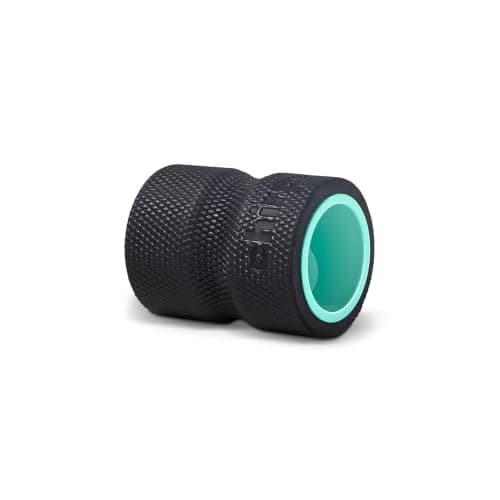
1 · Best overall
Chirp WheelThe narrow channel down the middle is the point: it lets the wheel press either side of the spine rather than on it. The most back-specific shape here.
Maker lists design: Center spinal groove
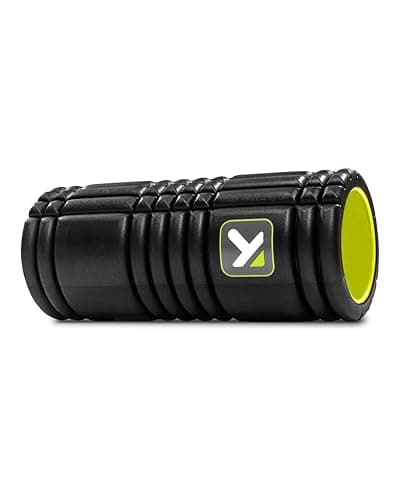
2 · Best for a firm release
TriggerPoint GRID 1.0 13 inA hollow-core roller with a textured surface, short enough to work one side at a time. Firmer than it looks on a first attempt.
Maker lists length: 13 in
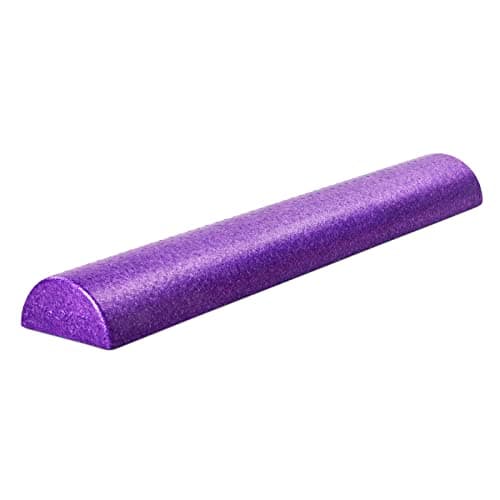
3 · Best for beginners
Yes4All Half Foam Roller 36 inA flat-bottomed half roller does not roll away under you, which makes it the least intimidating thing on this page.
Maker lists length: 36 in
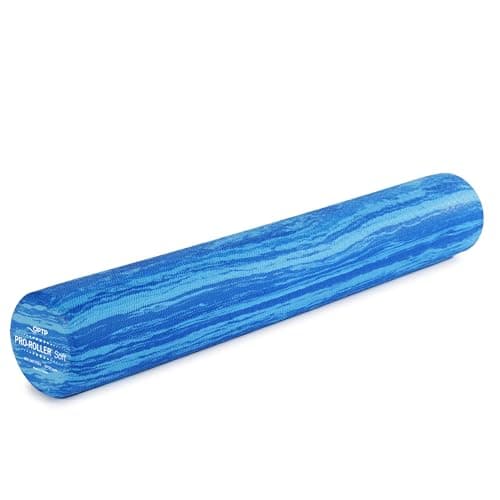
4 · Best for a sensitive back
OPTP PRO-ROLLER Soft 36 inA soft-density full-length roller. Less intense, long enough to lie along the whole spine, and the pick if a firm roller made things worse.
Maker lists length: 36 in
5 · Best passive option
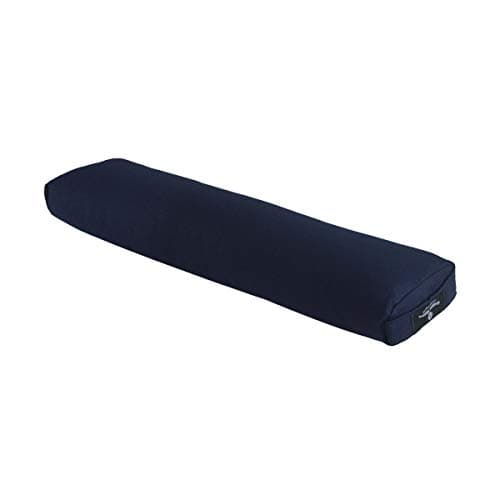
Hugger Mugger Pranayama Yoga BolsterNo pressure at all: a supported shape held for minutes while the low back stops working. Different mechanism, and for many people the better one.
Maker lists shape: Long and narrow
6 · Budget pick
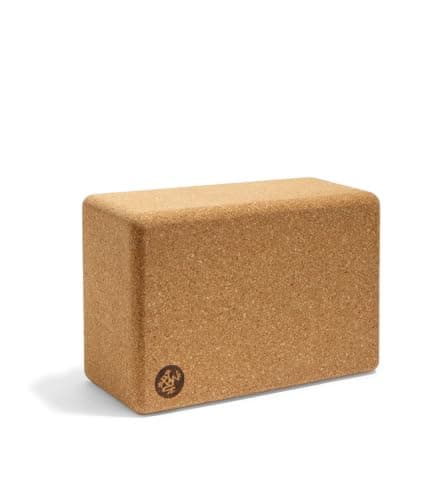
Manduka Cork Yoga BlockThe cheapest thing here that genuinely helps: under the hips in a supported bridge, or between the knees in a side-lying twist.
Maker lists material: Recycled cork
#ad · Prices come live from Amazon, last checked November 28, 2026. Figures here are the manufacturer's own. The ranking is editorial, made against the criteria on our How We Pick page, not from lab work. Photos come from Amazon. Tap a pick for the full write-up.
The short answer
Buy the Chirp Wheel if you want pressure, and a bolster if you want support. Those are two different approaches to the same complaint and most people only need one. The wheel has a narrow channel down its middle so the pressure lands on the muscles either side of the spine rather than on the bones themselves, which is the most back-specific shape in this list. The bolster takes the opposite route: no pressure at all, just a supported shape your low back can stop holding. The cork block is the budget pick, and under the hips it does more than its price suggests.
Three shapes, three jobs
The confusion in this category is that wheels, rollers and bolsters are all marketed for the same words — tight back, stiff spine — while doing genuinely different things.
- A wheel is a fixed-diameter arc. You lie back over it and it extends your spine at a set curve. The good ones have a channel so nothing presses on the vertebrae. It opens the front of the body and mobilizes the mid-back.
- A foam roller is a cylinder you move along. It applies pressure to soft tissue, and you control how much by how much weight you put through it. It is a massage tool more than a mobility tool.
- A bolster applies no pressure. It holds a shape so the muscles can switch off for several minutes, which is a slower and gentler mechanism than either of the other two.
The deeper comparisons live in block versus foam roller and are yoga wheels worth it.
Pressure or support
Decide this first and the shopping becomes easy. If what you want is the feeling of something digging into a tight spot, you want pressure: a wheel or a roller. If what you want is the feeling of your back finally being held, you want support: a bolster, a blanket, blocks.
A useful rule of thumb that many people arrive at on their own: a back that feels stiff and stuck often responds to pressure and movement, while a back that feels tired and achy often responds better to being supported and left alone. Neither is a diagnosis, and if the first approach makes things worse, the other one is the next thing to try rather than a firmer version of the same.
Choosing by what your back is doing
| What you notice | Start with | Why |
|---|---|---|
| Stiff through the mid-back | Wheel | Extends the thoracic spine at a set curve |
| A specific tight band of muscle | Short firm roller | You can work one side at a time |
| Nervous about rolling at all | Half round roller | Flat bottom, it does not roll away |
| Everything feels too intense | Soft full-length roller | Lower density, more surface contact |
| Tired, achy low back | Bolster under the knees | Removes the pull rather than adding pressure |
| Spending the least | Cork block under the hips | A supported bridge, for very little |
Where gear stops being the answer
Worth saying clearly on a page that sells things. A prop can make a stiff back feel better for a while, and a daily few minutes with one is a genuinely good habit. What a prop cannot do is change the hours you spend seated, the strength of the muscles that hold you up, or anything structural.
The general-health guidance most people are working against is unglamorous and free: regular movement through the day plus a couple of strengthening sessions a week. The props on this page are worth owning as part of that, not instead of it. And if the pain is severe, new, radiating, or comes with numbness or weakness, this page is not the right place to be looking.
What to look for
- On a wheel, look for a spinal channel. A smooth wheel presses directly on the vertebrae, which is the thing most people dislike about wheels.
- On a roller, start softer than you think. People give up on rollers because the first one was too firm, not because rolling does not suit them.
- Diameter sets the stretch on a wheel. Bigger is a deeper arc. Wheel sizing has the numbers.
- Length matters on a roller. Short rollers work one side at a time; a full-length one lies along the whole spine and is easier to balance on.
In detail
Every pick, in full
1
Best overall
Chirp Wheel
As the manufacturer lists it
What it gets right
- The groove keeps pressure off the spine itself
- Three sizes let you choose how intense it is
- Useful on days you will not do a full practice
What it does not
- Narrower than a yoga wheel, so less stable for poses
- The small size is uncomfortable for beginners
- Really a massage tool rather than a yoga prop
Skip it if
you want a wheel to support backbends rather than to roll on.
#ad · Price as of November 28, 2026 · Affiliate disclosure for the link to Chirp Wheel
2
Best for a firm release
TriggerPoint GRID 1.0 13 in
As the manufacturer lists it · TriggerPoint
What it gets right
- Raised pattern concentrates pressure, which is what a stubborn quad or calf needs
- Hollow core keeps its shape instead of flattening like solid soft foam
- Short enough to live in a drawer or a carry-on
- The maker publishes a load rating, which almost nobody in this category does
What it does not
- Firm and textured, which is genuinely uncomfortable on a first attempt
- Too short to lie along lengthwise — it supports your chest or your hips, not both
- The pattern collects dust and skin, so it needs wiping more often than smooth foam
Skip it if
the chest-opening and thoracic work is why you want a roller — you need 36 in of it, not 13.
#ad · Price as of November 28, 2026 · Affiliate disclosure for the link to TriggerPoint GRID 1.0 13 in
3
Best for beginners
Yes4All Half Foam Roller 36 in
As the manufacturer lists it
What it gets right
- Stays put, which is what you want underfoot or under a pelvis
- The flat side makes it a low prop as well as a balance tool
- A low half-profile is far easier to store upright than a full cylinder
- Closed-cell EPP wipes clean and does not soak up sweat
What it does not
- It does not roll, so it cannot replace a round roller for the leg work
- High-density EPP is firm underfoot, and there is no softer density of the same shape
- The published figures come from the retail listing rather than a maker spec sheet
Skip it if
rolling tight muscles is the whole reason you are buying — this is a stability prop, not a roller.
#ad · Price as of November 28, 2026 · Affiliate disclosure for the link to Yes4All Half Foam Roller 36 in
4
Best for a sensitive back
OPTP PRO-ROLLER Soft 36 in
As the manufacturer lists it · OPTP
What it gets right
- Long enough to support the whole spine lengthwise, which is the main yoga use for a roller
- Soft density, so a first session does not hurt enough to put you off
- Wide 6 in diameter keeps your head supported instead of tipping back
- The maker publishes the size, the material and the density tier
What it does not
- The most expensive roller here by a wide margin
- Soft foam compresses permanently where you use it most
- Too gentle if what you want is deep pressure in a quad or a calf
- A 36 in cylinder is awkward to store and impossible to pack
Skip it if
you want deep, targeted pressure — a soft roller is the wrong tool and a firm short one is the right one.
#ad · Price as of November 28, 2026 · Affiliate disclosure for the link to OPTP PRO-ROLLER Soft 36 in
5
Best passive option
Hugger Mugger Pranayama Yoga Bolster
As the manufacturer lists it · Hugger Mugger
What it gets right
- The right shape for lying along, not across
- Firm enough to still support after a year
- Cover comes off for washing
What it does not
- Too narrow to sit on comfortably
- Bulky to store in a small flat
- Expensive for a cushion
Skip it if
you want a bolster mainly to sit on for meditation — get a rectangular one.
#ad · Price as of November 28, 2026 · Affiliate disclosure for the link to Hugger Mugger Pranayama Yoga Bolster
6
Budget pick
Manduka Cork Yoga Block
As the manufacturer lists it · Manduka
What it gets right
- Does not compress or skid under body weight
- Grippy even when your hands are damp
- Feels substantial rather than disposable
What it does not
- Hard edges are uncomfortable under a shoulder or hip
- Heavy to carry two of them
- Costs several times a foam block
Skip it if
you mainly want a block to lie on in restorative poses — foam is kinder there.
#ad · Price as of November 28, 2026 · Affiliate disclosure for the link to Manduka Cork Yoga Block
Two neighboring pages are worth reading before you commit: the foam roller roundup covers density and length properly, and the wheel roundup covers diameters and build. This page exists to tell you which of the two categories you should be shopping in.
If the answer turns out to be support rather than pressure, restorative props is the list to buy from, and a strap for posture covers the upper back and shoulders.
How we picked
Chosen on published criteria, and we say so
Most gear sites open by telling you how many hours they spent with the products. We have not used most of these, and we would rather say so than imply otherwise. Every pick here is chosen against criteria we publish — grip, cushioning, size options, what buyers report after a year of use, and whether the thing is still actually sold — and every manufacturer figure on the page is labeled as the maker's claim.
Nobody pays for a place on this page, no product was supplied free in exchange for coverage, and a specification the maker does not publish is never guessed at. See the full criteria and weighting.
FAQ
Questions people ask
What is the best prop for a tight back?
Is a yoga wheel or a foam roller better for the back?
Can rolling make back pain worse?
How long should I spend on a wheel or roller?
Will a bolster help a sore low back?
Related
Keep reading
Update log
What changed
- First published.
Receipts
Sources
- 1.Cleveland Clinic — foam rolling: what it does, how long to roll, and which density to start with
- 2.OPTP — PRO-ROLLER Soft Foam Roller (published sizes, EVA construction and soft density label)
- 3.Implus / TriggerPoint — GRID 1.0 Foam Roller (published 13 in length, 5.5 in diameter and 300 lb hollow-core rating)
- 4.Brett Larkin Yoga — What is a yoga wheel? (diameters and what each one is for)
- 5.NCCIH (US National Institutes of Health) — Yoga: What You Need To Know
- 6.ODPHP (US Dept of Health and Human Services) — Physical Activity Guidelines, Top 10 Things to Know (the adult aerobic and muscle-strengthening targets)
We have not used every product on this page, and we do not pretend otherwise. Thicknesses, materials, sizes and warranty terms are the manufacturer's published figures, shown as their claims. Anything about materials, skin or injury is linked to a source. Prices are set by Amazon and change constantly, so we never type one into the text — every figure comes from Amazon's own data, dated, and disappears rather than going stale. Read the full method.