Yoga Mats Best picks
The Best Yoga Mats for Men
Nothing about a mat is gendered. But the default mat is 68 inches long, 24 inches wide and sized for a 150-pound body, and if you are none of those things it is the wrong mat.
We earn a commission when you buy through links on this page, at no extra cost to you. It never decides a ranking: the method is published. How we are funded
Quick picks
The short answer
1 · Best mat for a taller build
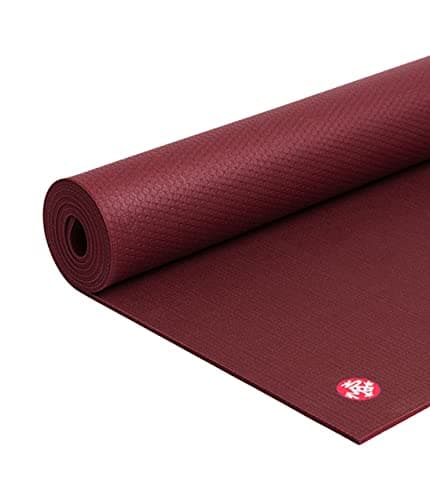
Manduka PRO 6mmThe 85 in version is the longest mainstream mat sold, and 6 mm of dense PVC does not bottom out under a heavier knee. It is slippery until broken in and it is a heavy thing to carry.
Maker lists thickness: 6 mm
2 · Best if you sweat heavily
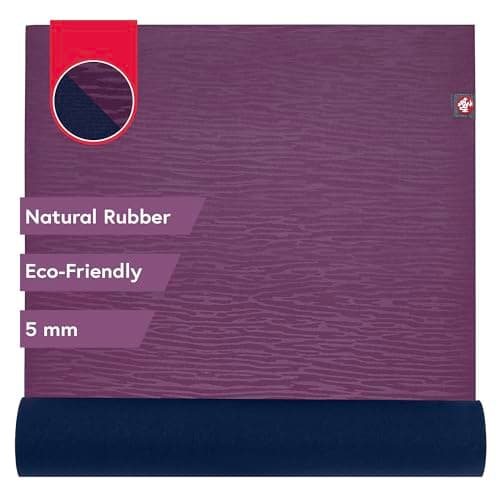
Manduka eKO 5mmA 79 in option and natural rubber that grips from the first session rather than the tenth. Heavier again, and it smells of rubber for a few weeks.
Maker lists thickness: 5 mm
3 · Grippiest surface at 74 in
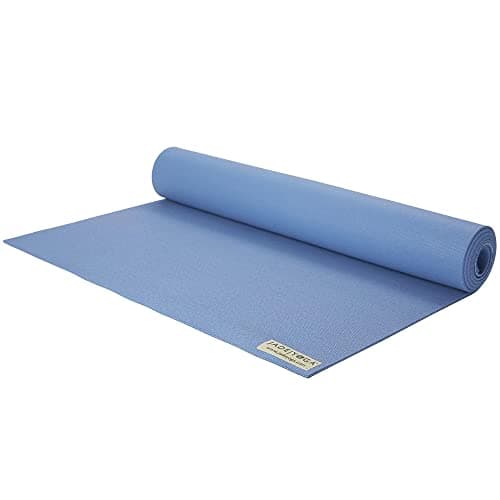
JadeYoga Harmony MatThe stickiest dry surface here in a length that covers most people. Open cell, so it drinks sweat and has to be aired properly.
Maker lists thickness: 3/16 in (about 4.8 mm)
4 · Best for shoulder width
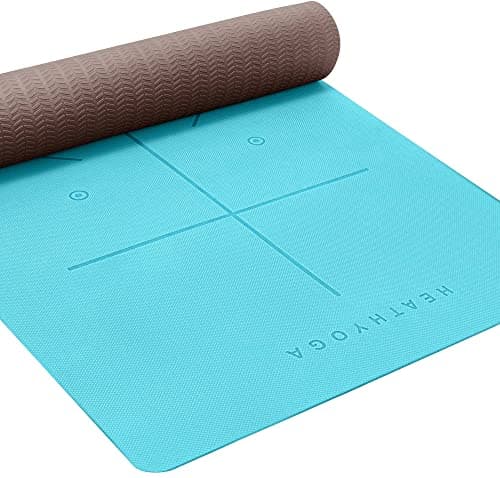
Heathyoga Eco Friendly TPE Mat26 in across instead of 24, with alignment lines printed on it. Grip is average and that is the trade.
Maker lists thickness: 6 mm
5 · Best for lifting and floor work
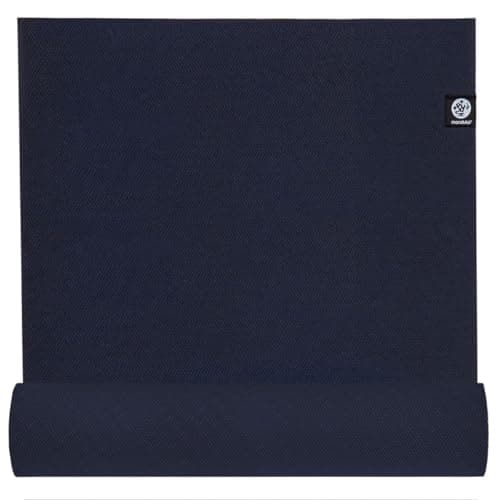
Manduka X Mat 5mmTextured both sides so it does not travel on the floor under shifting weight. Firm — this is a cross-training surface, not a cushion.
Maker lists thickness: 5 mm
6 · Longest cheap mat
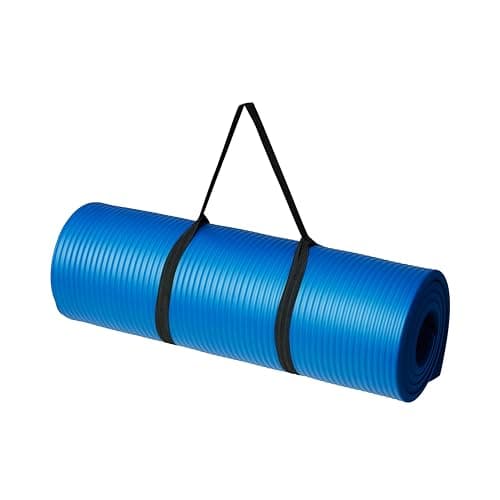
Amazon Basics 1/2-Inch Extra Thick Exercise Mat74 in of thick foam with a strap, for finding out whether you will keep going. It has no grip worth the name once your hands are damp.
Maker lists thickness: 1/2 in (about 12.7 mm)
#ad · Prices come live from Amazon, last checked November 3, 2026. Figures here are the manufacturer's own. The ranking is editorial, made against the criteria on our How We Pick page, not from lab work. Photos come from Amazon. Tap a pick for the full write-up.
The short answer
If you are over about six feet, buy the Manduka PRO in its 85 in length. It is the longest mainstream mat on sale, it is dense enough that a heavier knee does not press through to the floor, and it outlasts everything else here. The two costs are real: it is slippery for the first couple of weeks until the factory surface wears off, and it weighs enough that you will not want to carry it far.
If your hands sweat, take the Manduka eKO instead — a 79 in option, natural rubber, grip from session one. If your problem is shoulder width rather than height, the widest mat here is 26 in rather than the usual 24.
There is no men’s mat
No maker builds a mat for men. Search the phrase and you will be shown the same mats everybody else is shown, sometimes in darker colors. The colors are not the problem.
What is real is that the industry default — roughly 68 in long, 24 in wide, 4 to 5 mm thick — was settled around a body that is shorter and lighter than the average adult man. Four things go wrong as a result, and every one of them has a fix:
| What goes wrong | Why | What fixes it |
|---|---|---|
| Hands or heels off the end | 68 in is shorter than a lot of people are tall | A 74 to 85 in mat |
| Hands off the sides in a wide stance | 24 in is narrow for broad shoulders | A 26 in or wider mat |
| Feeling the floor through the mat | Thin foam compresses further under more weight | Dense 5 to 6 mm, not thicker foam |
| Sliding once you warm up | More body mass makes more sweat | Rubber, cork, or an absorbent layer |
That table is the whole page. The rest is detail on each row, and the picks are mats that get the relevant row right rather than mats that are marketed at anyone in particular.
Length: the one that matters
A mat should be a little longer than you are tall, because a mat is not just somewhere to stand — it is somewhere to lie down. In a supine stretch your head is on one end and your heels are on the other, and the mat has to cover both.
| Your height | Shortest mat that works | What is available |
|---|---|---|
| Up to 5 ft 8 in | 68 in | Almost everything |
| 5 ft 8 in to 5 ft 11 in | 71 to 72 in | Most mid-price mats |
| 6 ft to 6 ft 3 in | 74 to 79 in | A smaller set — several picks here |
| Over 6 ft 3 in | 85 in | Effectively one mainstream option |
That shortlist narrows fast past six feet, and it is the single most common reason a tall beginner dislikes a mat they otherwise chose well. The size guide has the full height-to-length table, including the extra-long versions that exist in lines whose standard size is shorter.
One practical note: the long version of a mat is usually a separate listing rather than a size dropdown on the standard one. Check the stated length on the exact listing you are buying and do not assume the line’s longest version is what you are looking at.
Width and shoulders
Width gets almost no attention and is the second most common complaint. A 24 in mat is 12 in either side of your spine. In a wide-legged forward fold, a side plank or a low lunge with the hands planted outside the front foot, broad shoulders put a palm on the floor rather than the mat — and on a hard floor that hand slips.
Twenty-six inches is the realistic upgrade and it is not common. One mat here is 26 in; so are a few specialist mats and the oversized exercise mats sold for home gyms, which are wider still and worse at everything else. If you want to understand the trade, the yoga mat versus exercise mat comparison is the page for it.
An honest alternative: stay on 24 in and accept that a few poses put one hand on the floor. Plenty of tall people do exactly that for years. It is only worth paying for width if the poses in question are ones you actually practice.
Density under load
This is the row people get wrong, because the intuitive fix is wrong. More weight pressing into a mat means more compression, so the instinct is to buy a thicker mat. What a heavier body actually needs is a denser one.
Cheap thick mats are low-density foam. Under a 130-pound frame, half an inch of that foam still has give left when your knee has sunk in. Under a 220-pound frame it bottoms out — your kneecap reaches the floor through the mat, and the extra thickness bought you nothing but instability in standing poses. A 6 mm closed-cell PVC mat is thinner and will not do that, which is why the PRO rather than a 12 mm foam mat is the pick at the top of this list.
The exception is the opposite problem: if your knees are already the limiting factor, padding is worth some wobble, and the right answer is a dense mat plus a knee pad rather than a soft mat. Mats for sore knees covers that combination, and the thickness guide explains why two 6 mm mats can feel completely different.
Grip when you sweat more
A bigger body generates more heat and more sweat for the same work. That shortens the window in which a dry-friction surface holds on, and it is why grip ends up mattering more, not less, as frame size goes up.
The order of surfaces, driest to wettest hands: closed-cell PVC is excellent dry and poor damp; natural rubber is excellent dry and decent damp; cork is good dry and better damp; cotton and microfiber are mediocre dry and excellent soaked. Pick for the condition your hands are in at minute thirty, not minute one. The full breakdown is in mat materials explained, and if sliding is already your problem, mats for sweaty hands and the mat versus rug comparison both address it directly.
Carrying it
Long and dense means heavy. An 85 in 6 mm PVC mat is a substantial object, and the people who end up disappointed with one are almost always the people who have to carry it to a studio.
If the mat lives in one room, weight is irrelevant and you should ignore it entirely. If it travels, the honest answer is two mats — a heavy one at home and a thin one in the bag — and the thin one belongs on the travel list rather than this one. A strap or sling makes a heavy mat carryable; it does not make it light.
In detail
Every pick, in full
1
Best mat for a taller build
Manduka PRO 6mm
As the manufacturer lists it · Manduka
What it gets right
- Dense enough that kneeling and forearm work stop hurting
- Closed cell, so sweat sits on top instead of soaking in
- Genuinely lasts — the lifetime guarantee is the maker's own
- An 85 in version exists if you are tall
What it does not
- Heavy. This is not a mat you carry far
- Slippery out of the box until the surface is broken in
- Closed-cell grip drops away once your hands are wet
Skip it if
you want grip on day one, practice hot, or need to carry the mat anywhere.
#ad · Price as of November 3, 2026 · Affiliate disclosure for the link to Manduka PRO 6mm
2
Best if you sweat heavily
Manduka eKO 5mm
As the manufacturer lists it · Manduka
What it gets right
- Grippy immediately, dry or lightly damp
- Enough cushion for most floor work
- Natural rubber rather than PVC
What it does not
- Distinct rubber smell for the first weeks
- Heavier than a PVC mat of the same thickness
- Natural rubber contains latex proteins
Skip it if
you have a latex allergy, or a strong rubber smell in a small room would put you off practicing.
#ad · Price as of November 3, 2026 · Affiliate disclosure for the link to Manduka eKO 5mm
3
Grippiest surface at 74 in
JadeYoga Harmony Mat
As the manufacturer lists it · JadeYoga
What it gets right
- Hands and feet stop sliding, immediately
- Three lengths, including a genuinely long option
- Jade states it plants a tree for every mat sold
What it does not
- Open cell absorbs sweat and needs drying between sessions
- Sheds a little rubber dust early on
- Wears faster than a closed-cell PVC mat
Skip it if
you practice hot and cannot air the mat properly afterwards.
#ad · Price as of November 3, 2026 · Affiliate disclosure for the link to JadeYoga Harmony Mat
4
Best for shoulder width
Heathyoga Eco Friendly TPE Mat
As the manufacturer lists it
What it gets right
- Body-alignment lines help you square up without a teacher
- 26 in wide, which is roomier than a standard mat
- TPE has almost no smell compared with rubber
What it does not
- Grip is average and drops off when damp
- TPE is softer and marks more easily than rubber
- Printed lines fade with heavy use
Skip it if
grip is your main problem — lines will not stop you sliding.
#ad · Price as of November 3, 2026 · Affiliate disclosure for the link to Heathyoga Eco Friendly TPE Mat
5
Best for lifting and floor work
Manduka X Mat 5mm
As the manufacturer lists it · Manduka
What it gets right
- Stable under rolling and shifting weight, not just static poses
- Wipes clean quickly
- Textured both sides so it does not slide on the floor
What it does not
- Less cushion than a dedicated pilates mat
- No alignment markings
- Firm surface takes getting used to after a foam mat
Skip it if
your practice is almost entirely seated or kneeling — you will want more padding.
#ad · Price as of November 3, 2026 · Affiliate disclosure for the link to Manduka X Mat 5mm
6
Longest cheap mat
Amazon Basics 1/2-Inch Extra Thick Exercise Mat
As the manufacturer lists it
What it gets right
- One of the longest cheap mats at 74 in
- Foam is soft enough for knees straight away
- Easy to replace when it wears out
What it does not
- Slippery once your hands are damp
- Foam edges curl after a few months
- No grip texture worth the name
Skip it if
you sweat much at all — you will be sliding within ten minutes.
#ad · Price as of November 3, 2026 · Affiliate disclosure for the link to Amazon Basics 1/2-Inch Extra Thick Exercise Mat
How to choose
- Measure yourself, then shop. Lie on the floor and have someone mark head and heels. That number, plus two inches, is your minimum mat length. It is the only specification on this page that cannot be worked around after the fact.
- Read the listed length on the exact listing. Extra-long versions are usually separate products. The standard length is what you get if you do not check.
- Prefer dense over thick. Press your thumb hard into the mat in a store, or read what owners say about kneeling after six months. Low-density foam dents permanently where your knees go.
- Decide the grip question honestly. If your hands are wet by minute twenty, a closed-cell mat will never feel secure no matter how good it is. Buy rubber, cork, or plan on a towel over the top.
- Width only if you need it. 26 in costs you options and weight. Worth it for broad shoulders and wide-stance poses; not worth it otherwise.
- Ignore the color. Every mat here comes in something plain. None of them is a men’s mat, and none of them needs to be.
The mistakes people make
Buying the thickest mat on the page. The usual reasoning is “I am heavier, so I need more padding.” What you need is padding that does not collapse, and that is density. A 12 mm foam mat under a heavy frame is both less supportive and much less stable than a 6 mm dense one.
Buying a 68 in mat because it was on sale. You will notice the length every single session for the life of the mat. Nothing else on the specification sheet is as permanent.
Assuming a bigger exercise mat is the answer. Oversized home-gym mats are wider and longer and uniformly worse at yoga: too soft for balance, too slick for planted hands, and far too bulky. They are the right purchase for floor work with weights, which is a different session. If that is what you are mostly doing, read mats for pilates and floor work instead.
Starting at the top. If you have practiced fewer than ten times, a long cheap foam mat tells you what your actual complaints are for very little money, and the beginner kit page sets out the rest of the first purchase. Buy the expensive long mat when you know you are keeping the habit.
How we picked
Chosen on published criteria, and we say so
Most gear sites open by telling you how many hours they spent with the products. We have not used most of these, and we would rather say so than imply otherwise. Every pick here is chosen against criteria we publish — grip, cushioning, size options, what buyers report after a year of use, and whether the thing is still actually sold — and every manufacturer figure on the page is labeled as the maker's claim.
Nobody pays for a place on this page, no product was supplied free in exchange for coverage, and a specification the maker does not publish is never guessed at. See the full criteria and weighting.
FAQ
Questions people ask
Is there a difference between men's and women's yoga mats?
What size yoga mat do I need if I am 6 feet tall?
Do heavier people need a thicker yoga mat?
What is the widest yoga mat you can buy?
Why does my mat get slippery halfway through a session?
Related
Keep reading
Update log
What changed
- First published.
Receipts
Sources
- 1.Manduka — product information
- 2.JadeYoga — product information
- 3.OutdoorGearLab — The Best Yoga Mats
- 4.Yoga Journal — Best Yoga Mats
- 5.Treeline Review — Best Yoga Mats
- 6.Reviewed — The Best Yoga Mats
- 7.Healthline — The Best Workout Mats
We have not used every product on this page, and we do not pretend otherwise. Thicknesses, materials, sizes and warranty terms are the manufacturer's published figures, shown as their claims. Anything about materials, skin or injury is linked to a source. Prices are set by Amazon and change constantly, so we never type one into the text — every figure comes from Amazon's own data, dated, and disappears rather than going stale. Read the full method.